Inside Portugal’s new bottle return revolution
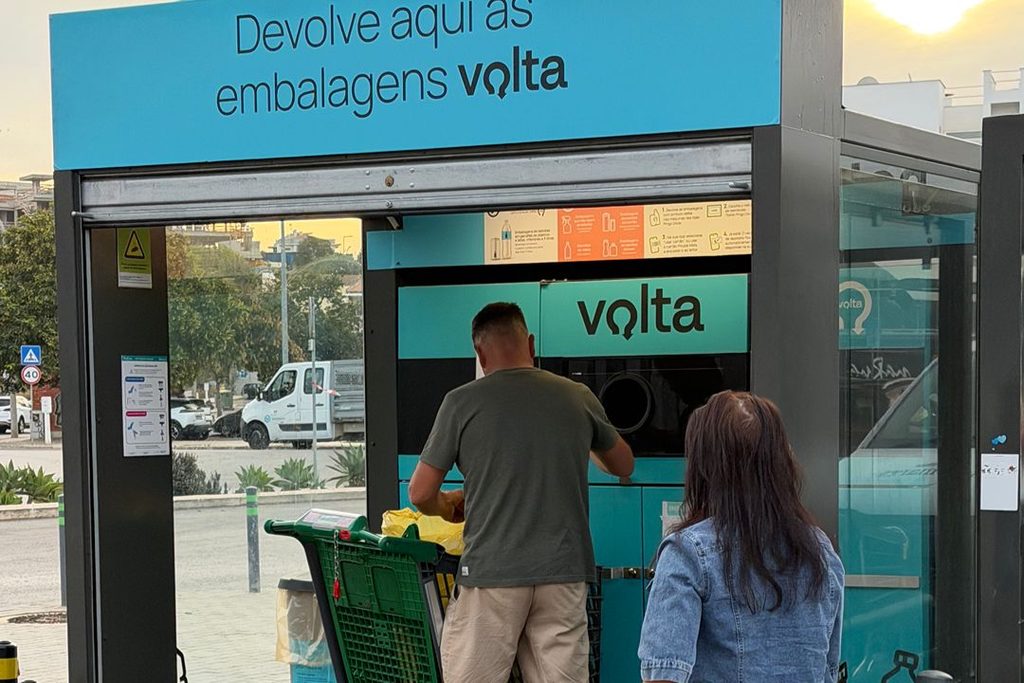
Have you seen the queues in supermarket car parks across the Algarve over the past few weeks? If you have pulled into your local store, you could hardly miss the sleek new reverse vending machines operating in the parking bays, with an eager line of people patiently lined up with bags full of plastic bottles and aluminium cans.
While I was enjoying a glass of wine in Lagos Marina last weekend, I sat watching a gentleman with a supermarket trolley collecting discarded plastic water bottles and soft drink cans before heading off to Pingo Doce to join the long queue at the new recycling machines.
So, what on earth is going on? Why have these automated recycling stations sprung up in every major supermarket in Portugal, and why has packaging discarded as worthless garbage yesterday suddenly acquired tangible value today?
Understanding system Volta
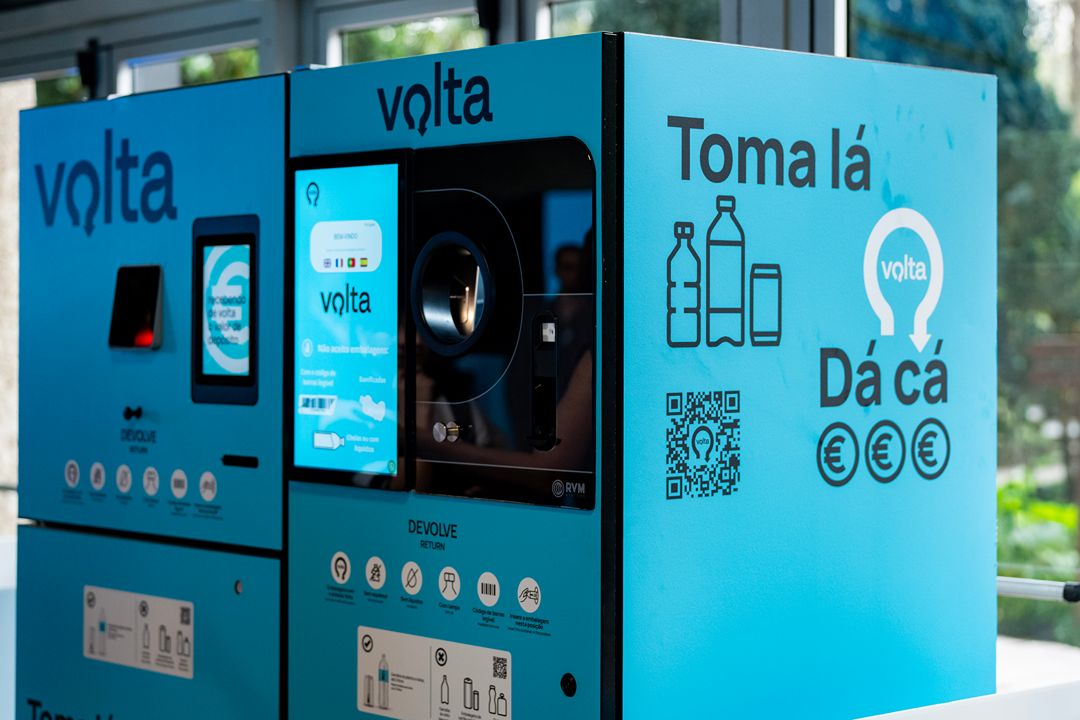
The explanation for these car park queues is the nationwide launch of Volta, Portugal’s Deposit Return System (Sistema de Depósito e Reembolso, or SDR). Managed by SDR Portugal, following a 150-million-euro investment across the retail and beverage sectors, Volta has driven an astonishingly rapid shift in how the Portuguese public handles single-use drink containers.
Under the new legislation, a refundable deposit of €0.10 is added at the till to eligible single-use plastic bottles and metal cans (aluminium and steel) up to three litres. This deposit is listed as a separate line item on your shopping receipt and is completely exempt from VAT. When you return the empty container to any collection point, you receive your €0.10 back in full.
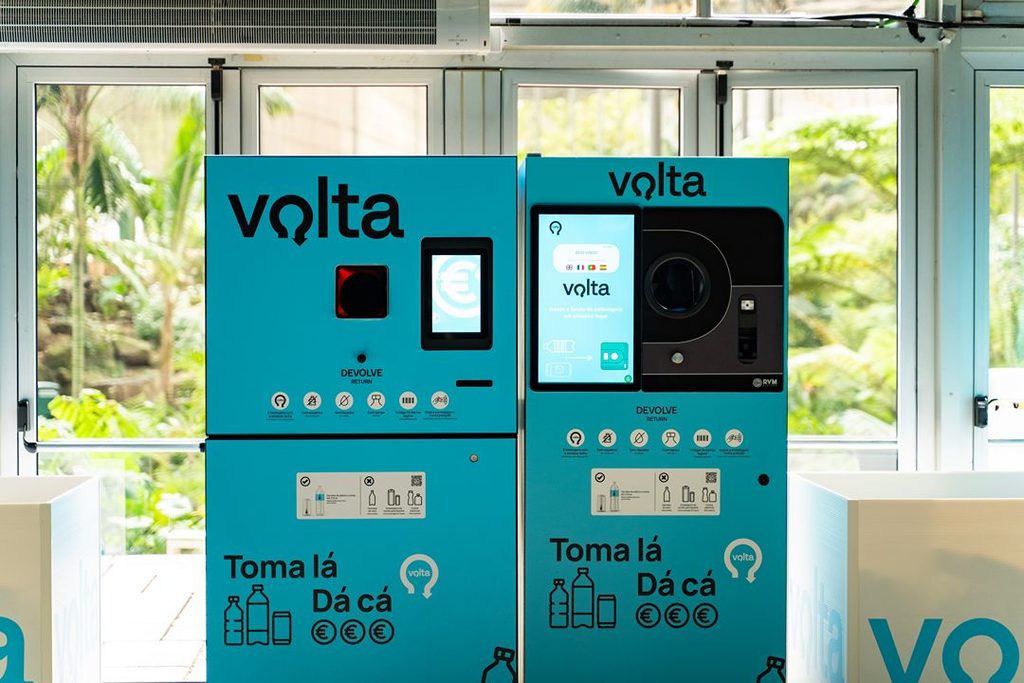
This is a genius system that goes beyond having to pay for plastic bags. It makes being environmentally unaware hurt where it hurts most: in your wallet. By assigning a small monetary value to packaging at the checkout, the system creates a direct financial incentive to ensure that containers are returned to the productive cycle rather than tossed into general refuse or dropped along our coastal footpaths. Across the country, more than 2,500 automated Reverse Vending Machines (RVMs), 8,000 manual collection points in smaller shops, and nearly 50 high-volume kiosks have been distributed. In high-traffic locations, specialised bulk-feed machines – such as the Envipco Quantum units – can process up to 120 containers per minute, allowing shoppers to tip an entire bag of bottles into a hopper without inserting them one by one.
For the Algarve’s hospitality and tourism sector, which serves millions of summer visitors and 10.7 million permanent residents nationwide, this initiative represents the most significant green infrastructure rollout in decades.
Why Portugal needed a financial jolt
To understand why the Portuguese government and European regulators pushed so hard for Volta, one need only look at Portugal’s statistical track record on waste and recycling. Data published by the European Environment Agency reveals that Portugal’s municipal waste recycling rate has stagnated at roughly 30% to 32%, well below the European Union average of 49%. Figures highlighted by MARE environmental researcher Graça Martinho in the Público newspaper reveal that in 2023, an overwhelming 76% of urban waste in Portugal was still tossed directly into unsorted general waste containers, ultimately ending up in landfills. Portugal’s overall landfill rate hovers around 55%, standing in stark contrast to the EU’s long-term target of keeping landfill disposal below 10% by 2035.
This environmental shortfall has brought serious legal consequences. The European Commission issued formal legal notices against Portugal for failing to meet the mandatory 2020 target of 50% municipal waste reuse and recycling, as well as for failing to meet glass packaging recycling thresholds under the EU Waste Framework Directive. Official assessments by the European Environment Agency flagged Portugal as one of 18 member states at high risk of failing the EU’s 2025 benchmark of 55% municipal recycling.
Why money works
For years, policymakers believed that public education, awareness campaigns, and gentle behavioural ‘nudges’ would be enough to encourage households to sort their waste at the ecoponto. However, field research demonstrates that non-monetary nudges often fail to deliver lasting change.
A comprehensive field study conducted by academic researchers Eduardo Cardadeiro, Catarina Roseta-Palma and Tito Laneiro across six parishes in northern Portugal evaluated whether sending social comparison messages – comparing a community’s recycling output to neighbouring parishes or regional targets – could boost household recycling. The experimental results proved contradictory and inconclusive, demonstrating that community-level comparative feedback alone is insufficient to shift ingrained habits without structural and financial mechanisms.
By contrast, economic incentives have proven extraordinarily effective in Portugal. A long-term study conducted by researchers Ângela Pereira and Jorge Cunha at the University of Minho evaluated the Pay-As-You-Throw (PAYT) system in Guimarães, where waste fees were decoupled from water bills and charged based on the actual amount of unsorted waste produced. When financial consequences were attached to waste generation, the proportion of unsorted waste dropped dramatically from 87% in 2015 down to just 17% in 2023, while selective recycling soared to 83%.
System Volta applies this exact economic principle nationwide. By offering a direct 10-cent reward, Volta transforms recycling from a civic duty into an instant economic transaction. And no proof of purchase is required; the return machines and collection points don’t care who originally bought the drink or where it came from, which explains the man I saw at the marina. You do not need a receipt or to return the bottle to the store where it was purchased.
Officials estimate that the system will increase single-use beverage container collection from roughly 40% today to 77% by 2025 and 90% by 2029, preventing an estimated 109,000 tonnes of carbon dioxide emissions each year.
Teething troubles
Despite these ambitious environmental goals, the rollout of System Volta has not been without fierce debate. Not everyone in Portugal is celebrating the new scheme, with municipal leaders raising serious concerns over its unintended consequences on urban cleanliness.
Most prominent among the critics is the Mayor of Lisbon, Carlos Moedas, who has publicly called on the national government to cancel or suspend the Volta system in its current form. Moedas argues that while the initiative is well-intentioned, the 10-cent incentive has placed severe pressure on the city’s hygiene services. Because discarded bottles and cans now have monetary value, individuals frequently search through public street bins to extract eligible containers, often leaving the rest of the trash pulled out and scattered across pavements, historic plazas and tourist districts.
Similar protests have echoed in other municipalities, including Vila Nova de Gaia, where local authorities complain that city councils are left to deal with the additional sanitation burden and cleanup costs without receiving funding from the waste management fees generated by the system. While environmental advocates maintain that these initial friction points are temporary adjustment pains seen in many European deposit launches, municipal leaders insist that without anti-rummaging infrastructure or structural revisions, the scheme risks trading one waste problem for another.
Those in the hospitality industry are also struggling to get to grips with the new system. I spoke to the owner of a tourist accommodation which hosts retreats. She said that at the moment the Volta system doesn’t work for them, as they are a small business and would have to pay for an extra member of staff to take their bottles to the Volta station in Portimão and the money they received back wouldn’t cover the extra staff costs.
Another hospitality manager I spoke to, who runs a poolside bar, was struggling with the SDR Portugal website, which was supposed to collect bottles from her establishment. However, the system wouldn’t accept her IBAN and cancelled her subscription without explanation. She didn’t have the capacity to resolve the issue during the busy summer season in Praia da Luz, so she had to store all the bottles and cans. “Now that it’s less busy, I can send an employee to go to Portimão, where they have a Quiosque Volta where you can dump larger quantities without putting bottles in one by one. But the system still needs some tweaking.”
One happy convert is Susie Wolff, owner of Quay in Lagos, who has embraced the new initiative: “Although it is law for us to enrol in the system regulated by HISA, we are happy to participate. It’s a great system to help the environment. We get a credit note from the supermarket where we deposit the bottles.”
Think before you throw
Although I always put my plastic bottles in the recycling bins, I have now created a separate Volta bottle recycling bin at my house. As they say, ‘take care of the pennies’! And while national and local leaders debate how best to manage street hygiene during this transition, the underlying reality remains unchanged: assigning a financial value to every bottle provides a powerful, practical tool to close Portugal’s recycling gap, meet European climate targets, and keep our coastlines clean. So, the next time you finish a bottle of water, don’t toss those 10 cents away – head to your local RVM and be part of the change!
How to return your bottles
Navigating the new machines is simple once you know the rules.
1. Know what counts (and what doesn’t)
Accepted containers: single-use PET plastic beverage bottles and aluminium or steel beverage cans ranging from 0.1 litres up to 3 litres.
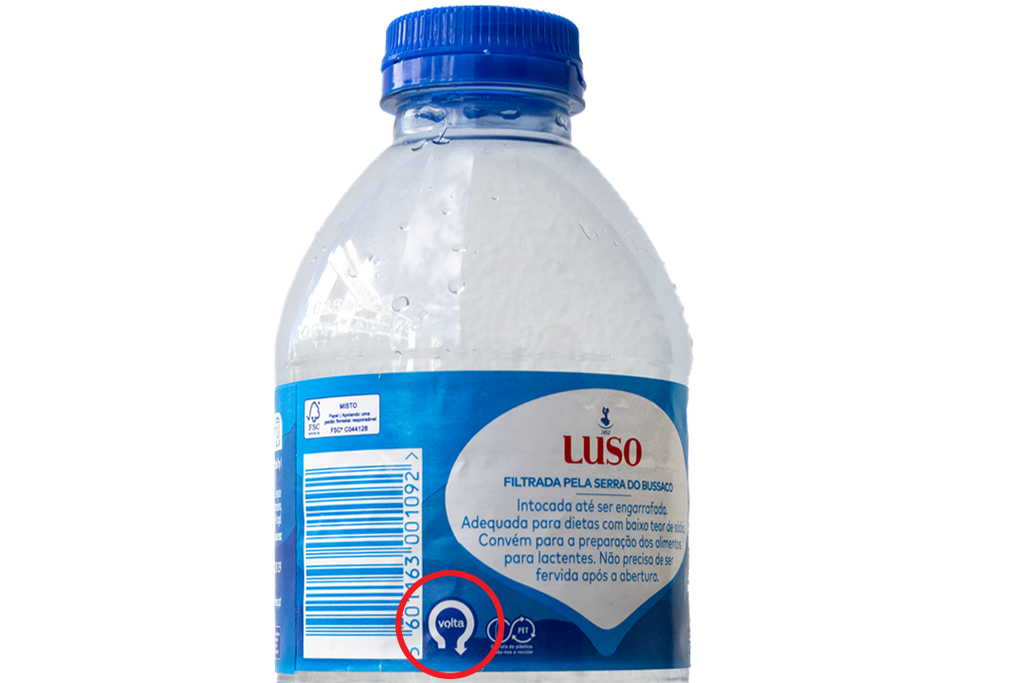
The Volta symbol: look for the official Volta logo on the label – a horseshoe-shaped arrow icon. During the transitional rollout, which ended on 10 August 2026, older stock without the logo should still be placed in your yellow ecoponto bin.
Excluded packaging: glass bottles (which remain in the green ecoponto or traditional glass return channels), dairy and milk-based drink packaging containing over 25% dairy, and carton boxes (such as Tetra Pak).
2. The pre-return checklist
Before heading to the supermarket machine, keep these three golden rules in mind:
Keep it intact: do not crush or flatten your bottles or cans! The RVM machine’s optical sensors must read the barcode and detect the container’s original shape and weight.
Keep the cap on: leave plastic caps attached to the bottle. This ensures the cap is recycled along with the main body, preventing litter.
Empty any remaining liquid: containers must be empty of liquid to prevent machine malfunctions and weight discrepancies.
3. Step-by-step at the machine
Approach any automated Volta RVM machine (usually located near the store entrance or in the covered car park).
Insert your eligible bottles or cans into the intake feed one by one (or pour them into the hopper if using a bulk-feed machine).
Watch the digital screen register each item and accumulate your total refund at €0.10 per piece.
Press the green Finish / Print Voucher button when done.
4. How to claim your payout
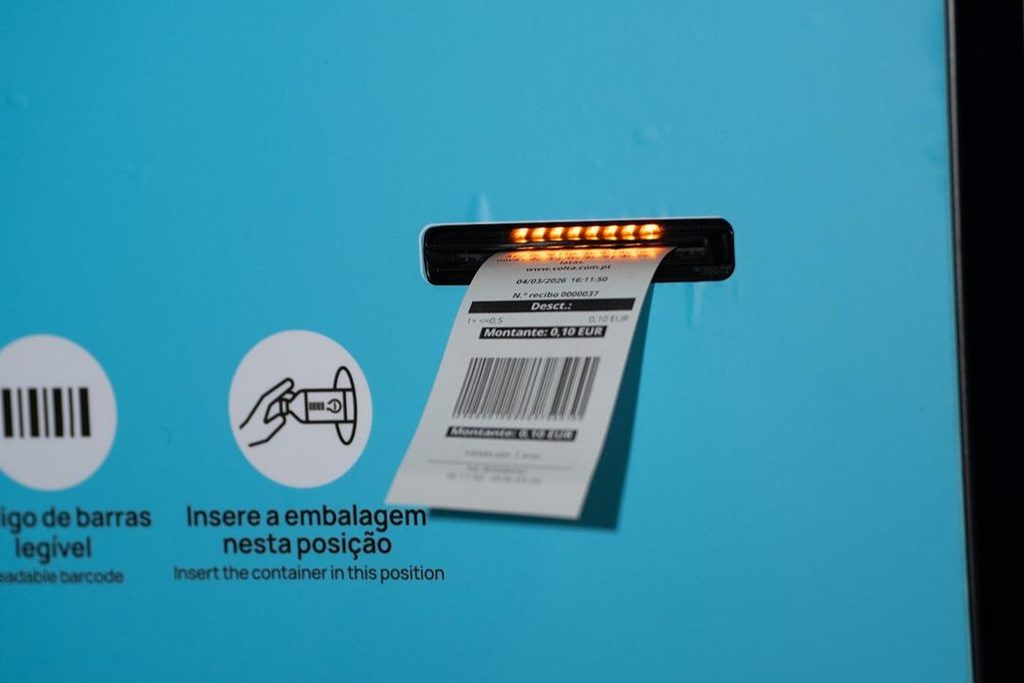
When the machine prints your receipt, you have several choices:
Cash at checkout: hand the printed voucher to the cashier at checkout to receive your refund in cash.
Supermarket discount: apply the voucher value directly toward your grocery bill.
Charity donation: select the option on the machine screen to donate your accumulated deposit directly to participating national and local charities.
Main photo courtesy of SDR Portugal