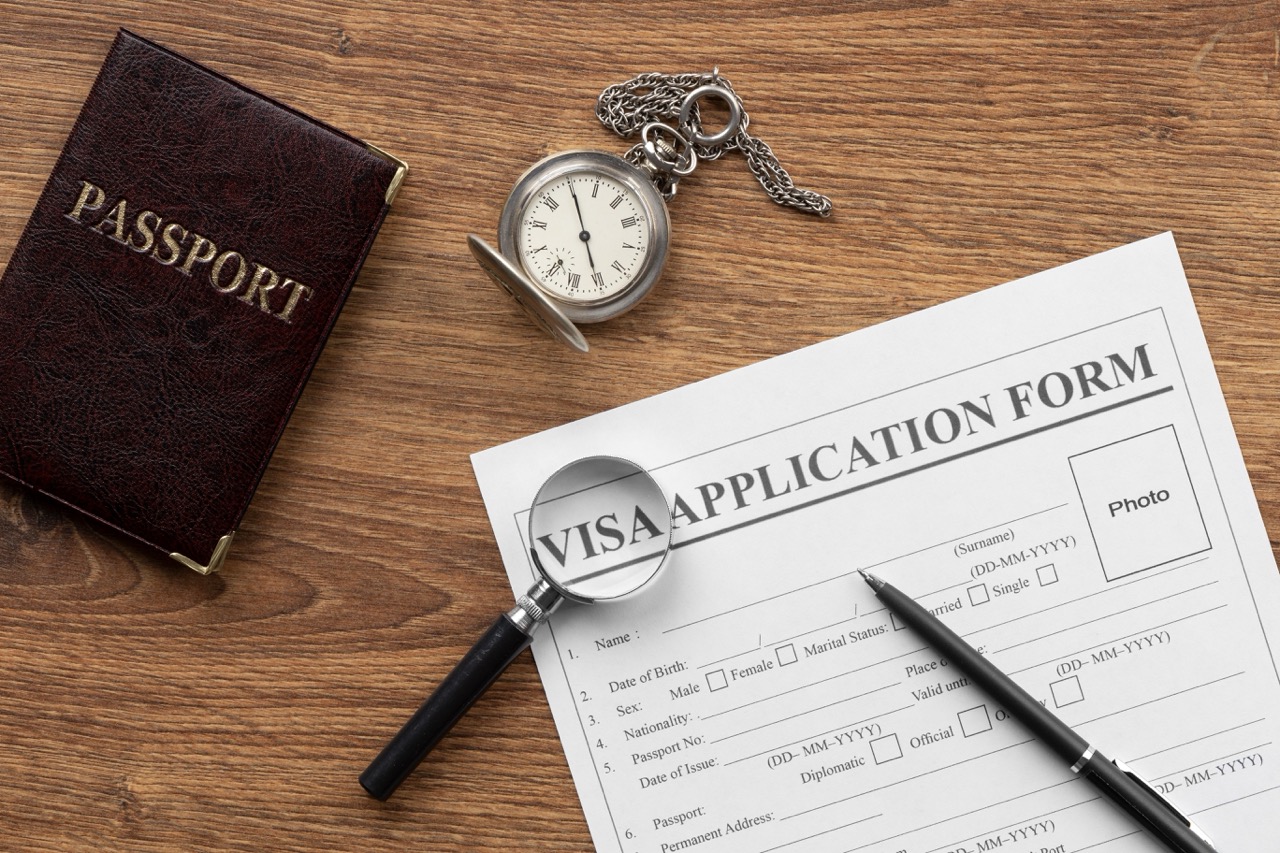
Regular readers may remember my earlier tale, The Battle of Visa Ridge, where I chronicled my first steps through the D7 visa process. For newcomers: since Brexit, UK citizens no longer enjoy automatic freedom of movement in the EU. Anyone wishing to stay in Portugal for more than 90 days in any 180-day period must now secure a residency visa. Stage One of my D7 journey was a battle. Stage Two, as I soon learned, was a full-blown siege.
The waiting game
Fresh from my Stage One approval, I floated around Portugal with the smug glow of a man who believed the worst was behind him. How naïve. How foolish. How … British.
Because then came the wait.
AIMA, the Portuguese Agency for Integration, Migration and Asylum, was responsible for scheduling my Stage Two residency interview. I needed this interview before my temporary visa expired, a visa with the lifespan of a mayfly and the flexibility of a brick.
Weeks passed. Then more weeks. My visa’s expiry date crept closer like a pantomime villain. I refreshed my email so often that Gmail began asking if I was “feeling lucky”. I was not.
Then, at last, an email: my appointment was scheduled. My visa had only days left, but it was enough. I would live to queue another day.
The long march to AIMA
My appointment was at 1pm. Being British, and therefore genetically engineered to arrive early, I turned up at 11 am, armed with a folder so organised it could have been used to teach military logistics.
I checked in. I sat down. I waited.
People who arrived long after me were whisked away like VIPs. Some breezed in at 12.55 pm and were seen by 1.05 pm. Others strolled in at 2 pm, smelling faintly of coffee and confidence.
Meanwhile, I remained in my chair, slowly fossilising.
At 3 pm, still waiting. At 4 pm, questioning whether I had actually checked in or merely hallucinated it. At 4.30 pm, five and a half hours after arrival, my name was finally called.
I rose like a bear emerging from hibernation, joints cracking, legs tingling, faintly craving salmon.
The interview
I had been attending Portuguese lessons twice a week for months, so I greeted my interviewer with my best attempt at falar português. He smiled kindly and suggested we conduct the interview in English “for everyone’s benefit”. He was absolutely right.
I presented my folder with the reverence of a monk offering illuminated manuscripts. He examined each page with forensic precision: bank statements, proof of income, proof of accommodation, passport, NIF, proof that I existed, and proof that I continued to exist.
Then came the camera, the fingerprints, the typing, the photocopying, the printing, and finally the stamp. Which he wielded like a broadsword, bringing it down with satisfying finality.
“Tudo está em ordem,” he said. Everything was in order.
I would have hugged him if not for the thick plexiglass security screen that separated us.
He handed me the official paper confirming my residency approval. I held it like a first-time father holding a newborn child.
Victory … almost
Stepping out of the AIMA office, the sun hit my face. Birds sang. Angels harmonised. Somewhere, a Portuguese man probably muttered “Mais um estrangeiro”, but I didn’t care.
I had survived. Stage Two was complete. My documents had passed inspection. I was officially authorised to reside in Portugal.
Or so I thought ….
The hydra strikes back
One week later, sitting in the warm Portuguese sun, the bureaucratic hydra reared a new head. An email from AIMA informed me that I had not provided all the required documents. I had ten working days to produce an original, translated, apostilled document that had not been requested at the interview and was not on the official list.
Failure meant rejection.
Panic swept through me like a litter of Labrador puppies chasing a roll of toilet paper. I reminded myself: deep breaths, Kev. This is a skirmish, not a full kinetic battle.
What followed was a frenzy of phone calls, emails, and whispered prayers to the visa gods. I delivered the document in person with one day to spare. A shorter wait this time, and once again: “Tudo está em ordem.”
I was informed that my ‘Título de Residencia’ should be ready to collect within 90 days. Based on my experience of the Portuguese mail system being unable to find my house, I had opted to pay an additional fee which would allow me to collect my residents card in person from the issuing office. I left feeling far less confident than before.
The 90 day wait seemed like the queue for a roller coaster, except the roller coaster consisted of endless unanswered emails and enquiring phone calls that on a good day were met with, “Tenta de novo amanhã”… “try again tomorrow”.
My initial 120 day visa had expired, and I needed to travel to the UK. Leaving Portugal wasn’t the problem; it was the return journey that worried me. Re‑entering with an expired visa and no residence card felt like inviting the wrath of the Schengen gate guardians—those stern figures who can, with a single stamp, decide your fate.
After months of wrestling with Portuguese bureaucracy, I began to wonder whether I’d ever be allowed to leave and come back again.
Eventually I accepted the truth: I needed a new plan, I needed help, I needed re-enforcements.
The End of the Lone Battle
The Lone Battle of Visa Ridge was over for this applicant. As General Dwight D. Eisenhower once said, “No battle was won according to plan, but no battle was ever won without one.”
For my new plan, I needed reinforcements. Yes, what I needed was some expert bureaucratic assistance.
A chance meeting pointed me toward a mother‑and‑son team who, like modern‑day resistance fighters armed with local knowledge and decades of experience from countless bureaucratic skirmishes, were reportedly capable of helping me win the final battle.
I met Gracy and Ricardo from GB in Port, in their office in Lagoa. They listened to my story, nodded, and, with an air that suggested this was an easy one, confidently assured me they could help. After months of waiting, I tried not to let them raise my hopes too high, but I left their office feeling cautiously optimistic and awaited instructions from my new allies.
Without giving too much away, after all, loose lips sink ships, in a surprisingly short time I was told to meet Gracy at the AIMA office that had processed my application. It appeared that my Título de Residência was ready for collection.
I arrived at the rendezvous and met Gracy. After a short wait, during which the queue of multinational visa warriors grew longer by the minute, the AIMA door opened. The queue surged forward in a very un‑British manner. The security guard barked instructions in rapid Portuguese; my ability to fala português had not improved enough to catch every word, but their tone made it clear, they were battle‑weary and not in the mood for taking prisoners.
Gracy advanced. A brief exchange of words, a smile, a respectful nod, and suddenly I was inside, told to take a seat and wait, I wondered whether this was the moment the battle would finally turn in my favour.
Then it happened, Gracy moved forward in to no man’s land and instructed me to take cover, (actually, we were called forward and we walked across the office and took a seat in front of the plexiglass screen that separated us from the AIMA official.) A brief exchange of very quick Portuguese, the inspection of my passport, a quick signature and the AIMA official handed me the spoils of the battle, my Título de Residência.
We retreated, I was elated, I thanked Gracy for her help and we parted ways, me to now walk around Portugal as a legal resident free to come and go and Gracey on to her next mission.
If there is a secret to surviving the D7 battle, it is simple: Have a well‑prepared plan. And remember, despite the battles, the sieges, and the hydra‑headed bureaucracy, it is worth it. Beautiful Portugal, and its wonderful people, are worth every form, queue, and stamp.