A story about the union of cultures and friendship.
I’m writing this in the middle of a storm. Rain hammers against the windows like drums building to a crescendo, the wind howls, and the Atlantic feels restless beyond my view. Portugal has endured relentless storms recently, the kind that remind you how exposed life by the sea can feel.
This storm has made me think of another, centuries ago, that altered the relationship between two countries that couldn’t be more different – Portugal and Japan.
A Japanese friend I met here in Portugal about 17 years ago inspired this article. Like me, she comes from a place whose history includes Portuguese ships arriving on its shores. Mine is Mombasa, in Kenya, a port in East Africa that was shaped by Portuguese involvement during the spice trade. Hers is Japan, where that storm‑driven arrival in the mid-16th century left its own mark.
In 1543, a Chinese junk, a traditional sailing vessel with distinctive square sails stiffened by bamboo strips, carrying Portuguese merchants, was blown violently off course by a typhoon. Instead of reaching its intended destination, the ship was pushed into unfamiliar waters and eventually ran aground on Tanegashima, a small island south of Kyushu in Japan.
The men who stepped ashore, António da Mota and Francisco Zeimoto, became the first recorded Europeans to arrive in Japan. A third Portuguese merchant, António Peixoto, was also aboard but likely died before reaching land.
Another Portuguese traveller, Fernão Mendes Pinto, later claimed in his memoir Peregrinação that he was present at this first landing. Historians now doubt this, as his writing is known for exaggeration. His book, published in 1614, was filled with dramatic and often implausible stories, earning him the joking nickname “Fernão, mentes? Minto!”, meaning “Fernão, are you lying? I am!” Whether or not he was truly there, his accounts helped introduce Japan to European readers.
When these men came ashore, they were carrying matchlock firearms called arquebuses in Portuguese, something entirely new to Japan. These firearms were revolutionary, the first allowing both hands to steady the weapon while firing, giving them deadly accuracy that Japan’s traditional weapons couldn’t match.
At the time, Japan was in the middle of a prolonged civil war period, and these weapons immediately caught the attention of local leaders. The daimyō of Tanegashima purchased the guns, and Japanese craftsmen quickly learned how to replicate and improve them. Within a decade, firearms had spread across the country, transforming Japanese warfare.
This accidental arrival marked the beginning of what became known as the Nanban trade, meaning “Southern Barbarian trade”. For nearly a century, Portuguese ships travelled regularly between Japan and the wider trading world.
In 1571, the Portuguese were granted land in what was then a small fishing village called Nagasaki. With Portuguese involvement, Nagasaki developed into a major international port and one of Japan’s primary windows to the outside world.
Alongside trade came religion. Jesuit missionaries, beginning with Francis Xavier in 1549, introduced Catholicism to Japan. The faith spread quickly, with hundreds of thousands converting. Over time, however, Japanese rulers became increasingly uneasy about foreign religious influence and its potential to undermine political authority.
Following the Shimabara Rebellion of 1637–38, a peasant uprising driven by heavy taxation and famine, and unified in part by the Catholic faith, Japan’s ruling shogunate, the Tokugawa military government, came to view Catholicism as a dangerous foreign influence threatening its control. In response, it adopted sakoku, or national seclusion. Catholicism was strictly forbidden, believers were hunted down and punished, and foreign entry was tightly restricted.
In 1639, Portuguese ships were banned entirely from Japanese waters, bringing nearly a century of direct contact between Portugal and Japan to an end.
After the Portuguese expulsion, the Dutch were permitted to continue limited trade because, unlike the Portuguese, the Dutch showed no interest in missionary work, focusing solely on commerce, which made them acceptable to the shogunate. However, trade was confined to the island of Dejima in Nagasaki Bay. This artificial island was built by reclaiming land from the sea, specifically designed to isolate foreign traders while maintaining tightly controlled commerce. The Chinese were also able to continue trading. For over two centuries, this arrangement remained unchanged.
Eventually, in 1873, diplomatic relations between Portugal and Japan were formally re‑established when the governor of Portuguese‑administered Macau became Portugal’s first envoy to meet the Japanese emperor after Japan reopened to the world.
Although Portugal’s direct involvement in Japan lasted less than a century, its influence remains visible, particularly in language. Everyday Japanese words like pan (bread, from Portuguese pão), botan (button, from botão), tempura (likely derived from tempero and Catholic fasting traditions known as tempora), tabako (from tabaco), and karuta (playing cards, from cartas) all trace back to Portuguese origins, quietly embedded in daily life.
One common myth, though, deserves correction: despite the similar sound, arigatō does not come from Portuguese obrigado, as the word appears in Japanese texts as early as the 8th century, long before the Portuguese arrived.
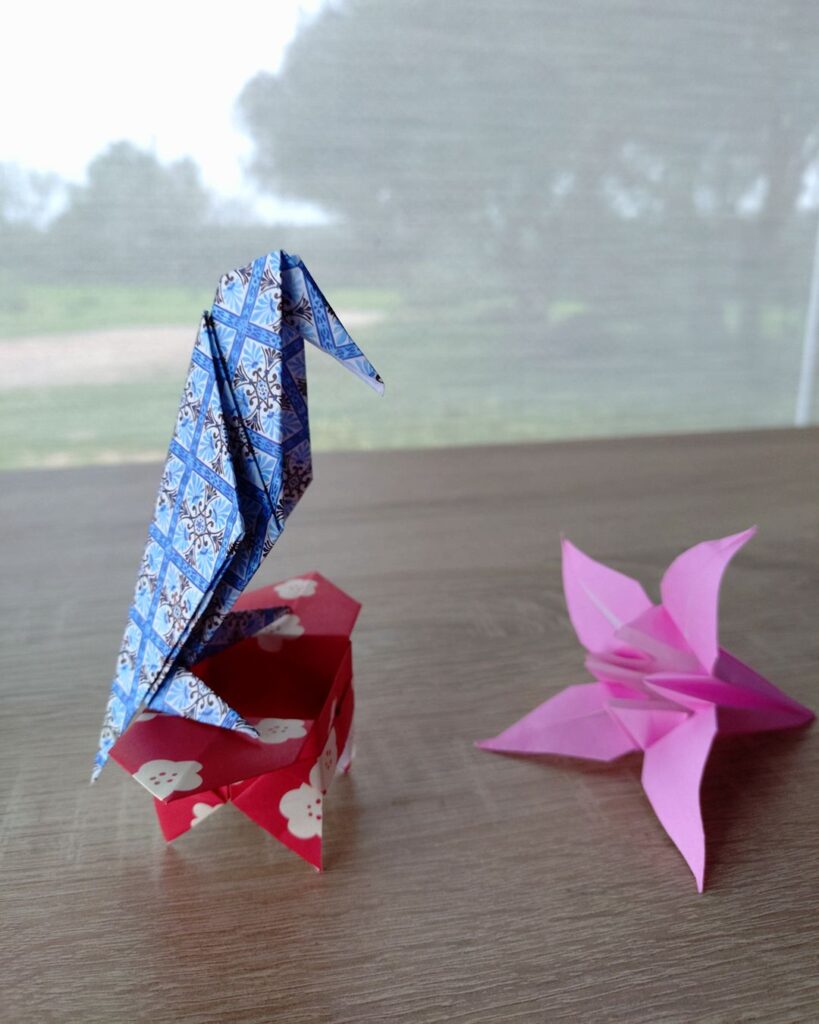
How origami unfolded a cultural bridge
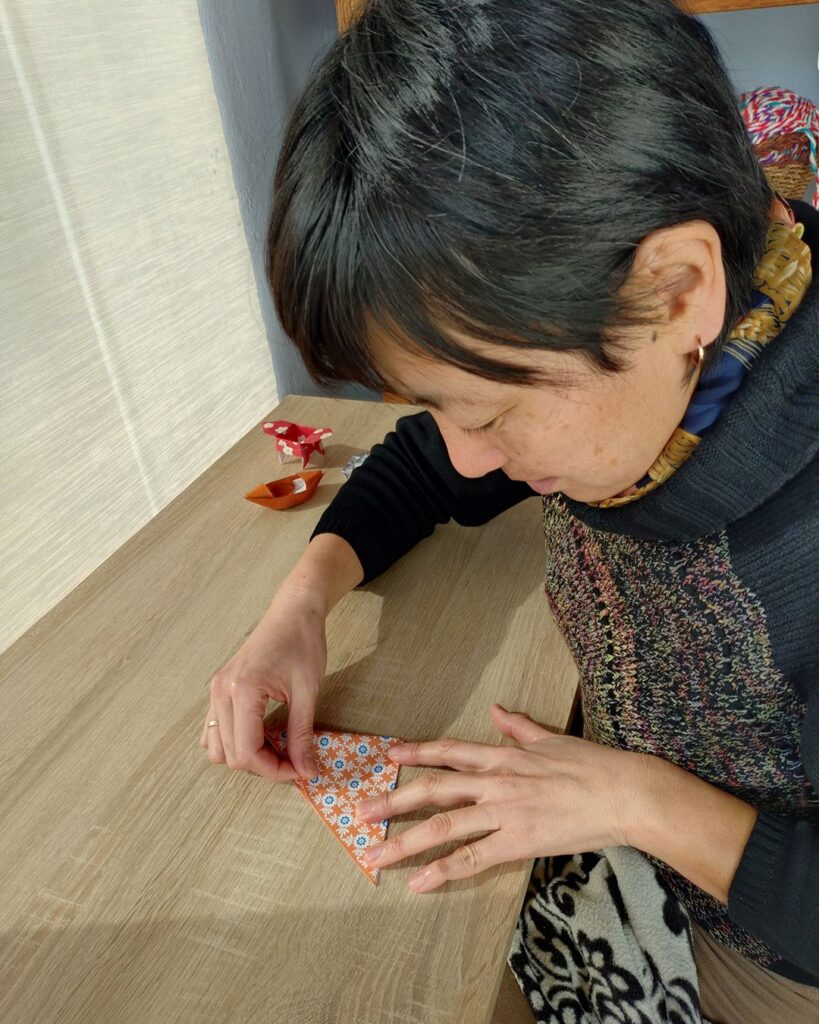
My Japanese friend Reiko has lived here for over 16 years. Through her stories of teaching and sharing her culture, I’ve come to see how strong the local recognition of Japanese culture and its Portuguese connection remains. When Reiko was invited to read a Japanese book to children in her son’s class at Bensafrim Primary School, the teachers were so inspired by Japanese culture that they asked her to teach origami there for a year. She later taught Japanese culture at a primary school in Portimão as well, though COVID eventually brought her teaching to an abrupt halt.
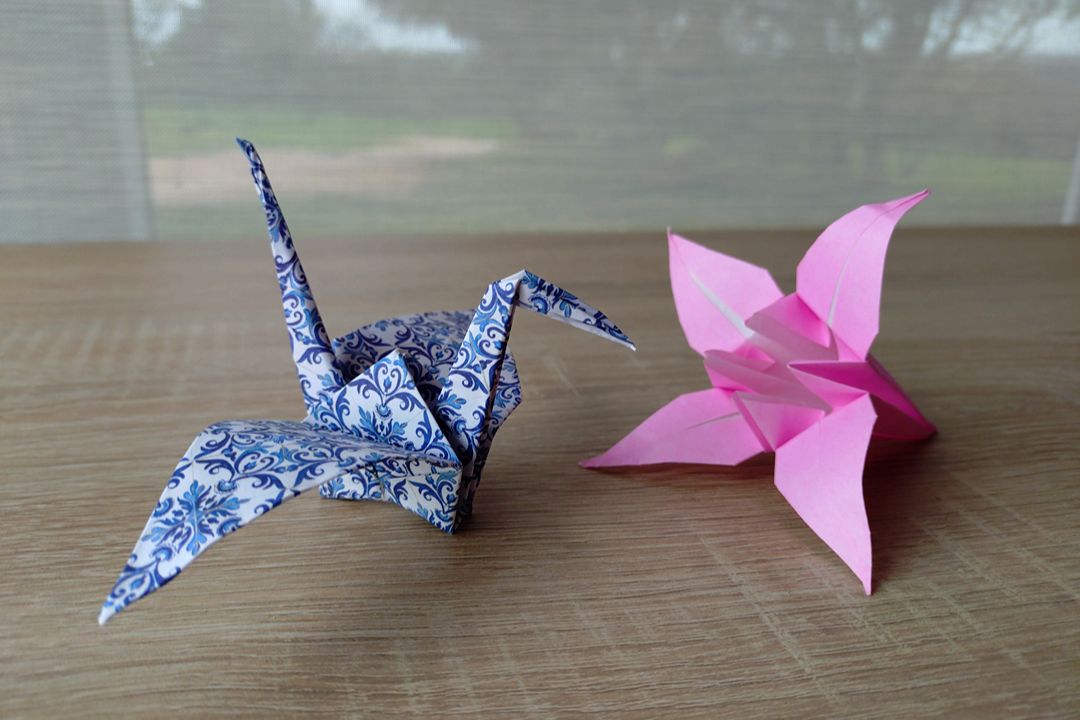
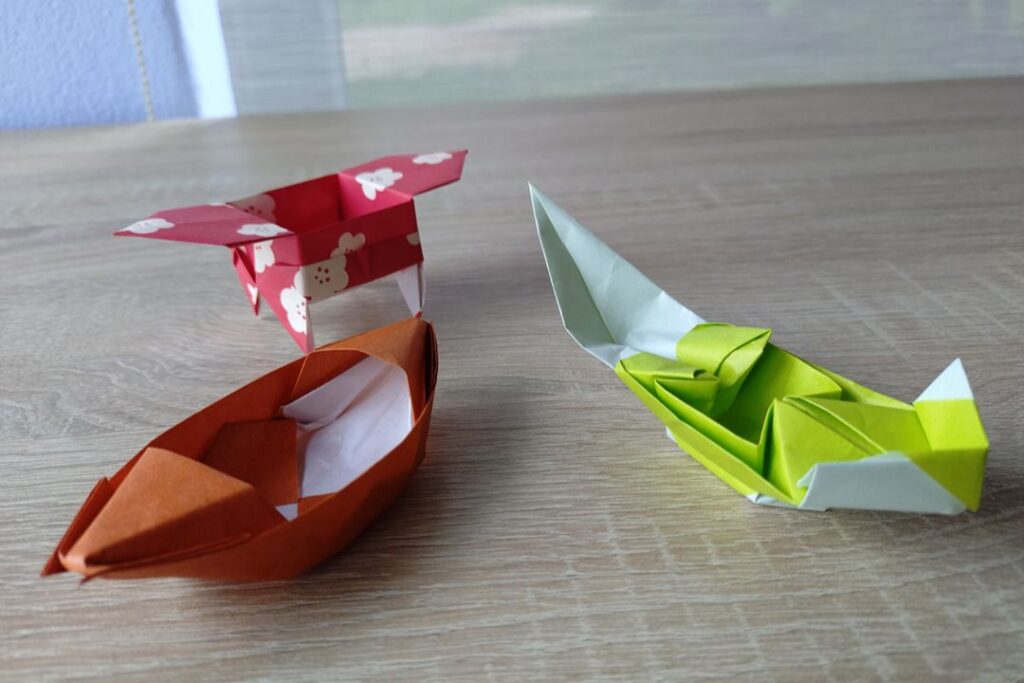
Origami is something I remember her crafting from the first time we met. This traditional art form, rooted in patience, precision and mindfulness, transforms simple paper into animals, symbols and meaningful forms. Through it, she offers not just a skill, but a way of being, calm, focused and intentional, reflecting core aspects of Japanese culture.
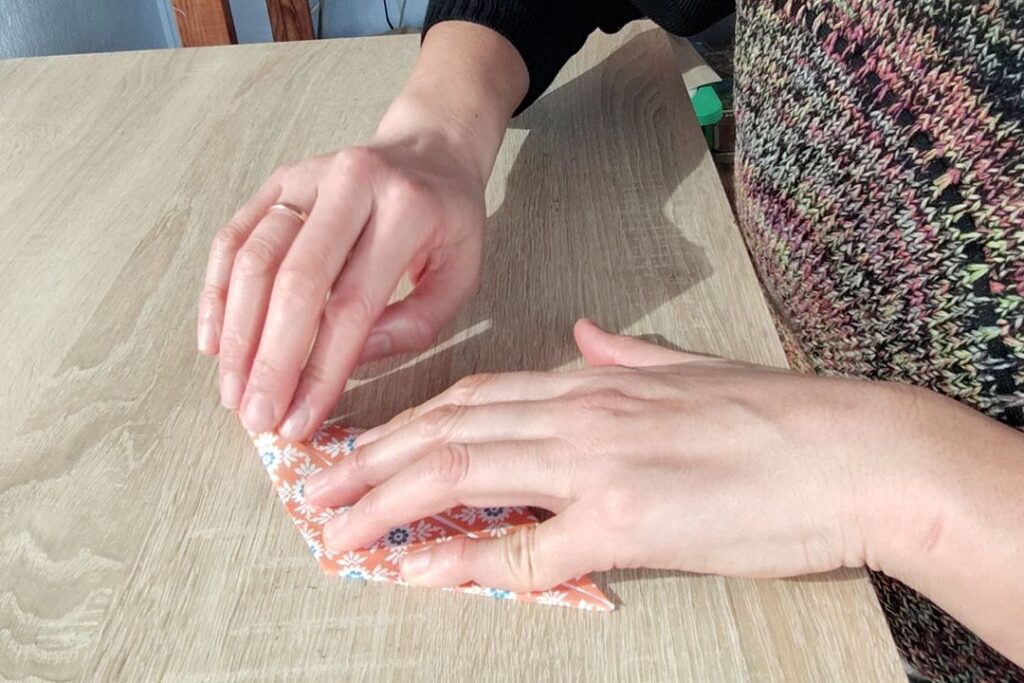
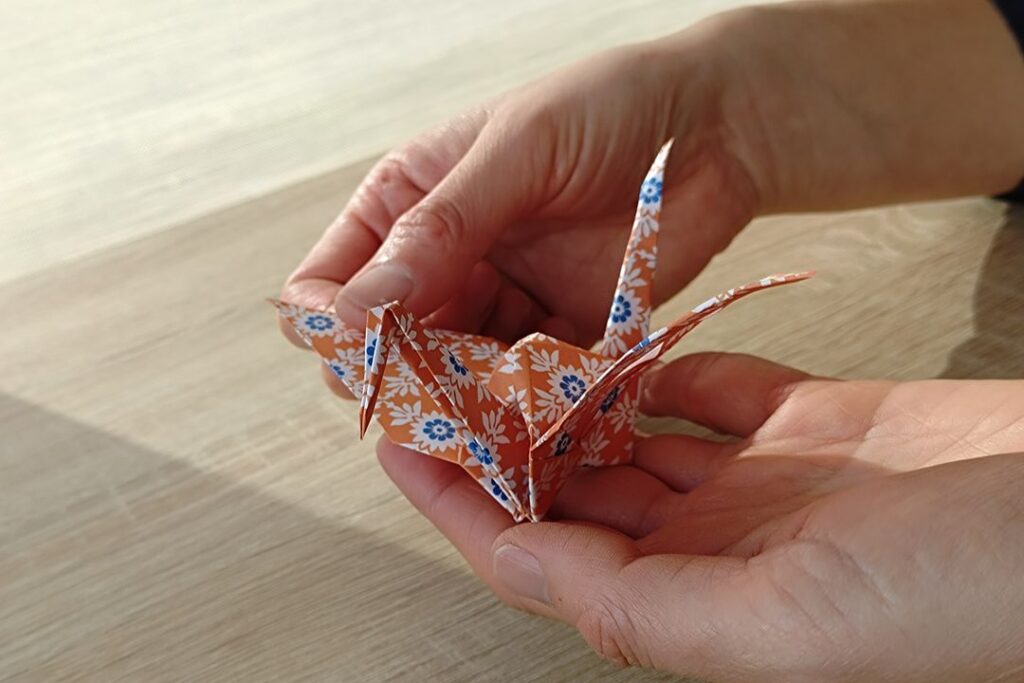
She jokes that this calm intention didn’t quite survive the rowdy primary school children, but she loved watching their joy after creating these little sculptures. She calls origami ‘international fun’. Beyond the fun, she notes that origami is a valuable tool for older people, helping maintain dexterity, sharpen memory, and spark creativity.
Her work is part of a wider recognition of the ties between Portugal and Japan. Last year, Lagos’s Descobrimentos Festival was themed around Japanese culture, publicly acknowledging a shared history that began by accident centuries ago. And Vila do Bispo permanently honours this connection with Jardim da Praça de Tanegashima, named after the island where Portuguese sailors first landed in 1543.
As the storm brews outside, so do my thoughts about this cultural connection. I believe that many historical moments begin with circumstances like bad weather, a wrong turn, or people meeting in places they never expected. That’s how I met Reiko, who became one of my closest friends. In that sense, Portugal’s age of exploration still echoes today, not through conquest but through a different kind of discovery, where people arrive in search of better lives, forming friendships and connections on its shores.
Reiko runs origami workshops for children and adults and welcomes opportunities to collaborate with others who run events as well. If you are interested in learning origami, please email her: ornitoreico06@gmail.com