“I went to see the stars and I’ll be right back.”
When somebody says that in broad daylight, it’s hard not to pay attention.
This wasn’t ideal. I was already trying to get my head around another, equally talented artist. But that’s the trouble with the Loulé Criativo Design Lab, tucked inside the magnificent Palácio Gama Lobo: there’s always someone else, somewhere in the corner, quietly tinkering away at something just as interesting.
My rule is: one artist at a time. But what about those stars?
A celestial chair
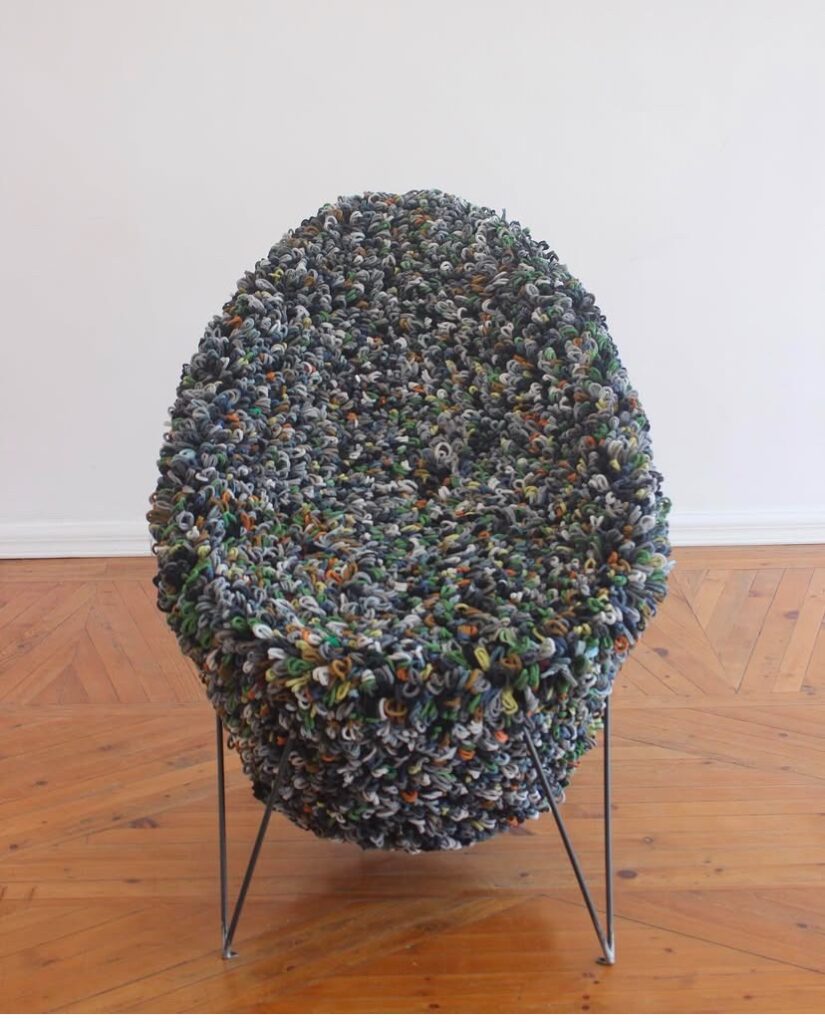
The artist was Margarida Valente. And “Fui ver as estrelas e já volto” wasn’t some dreamy declaration – it was the name of her latest creation: a chair.
A rounded, cocoon-like form built from leftover waste from a sock factory, looped and layered around an iron frame. It looked like just the place to sit back, relax – and stare into space.
But that was about all the attention I could spare that day. It was already clear from our brief encounter that Margarida’s work – with its entwined lines and layered textures – was something I could easily get tangled up in if I stayed too long.
From orbiter to artist
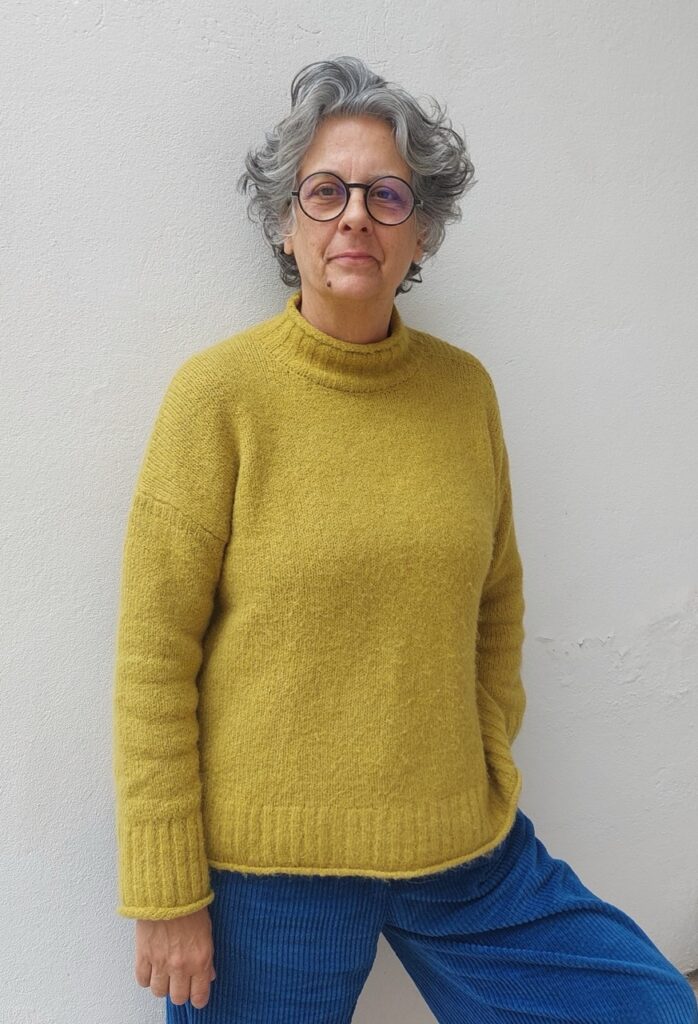
It took a while for us to meet again. Margarida isn’t always in the Algarve; she’s a true Lisboeta, born and raised in Alvalade. When we finally sat down together, her story began to unfold.
Margarida has a background in interior architecture, restoration and furniture, as well as anthropology. She has a postgraduate degree in cultural management and has always been closely tied to the art world – organising it, orbiting it. For over three decades, she worked in an art gallery, spending her days among artists and supporting their work, an experience that, she says, shaped who she is today and what she believed was possible for herself.
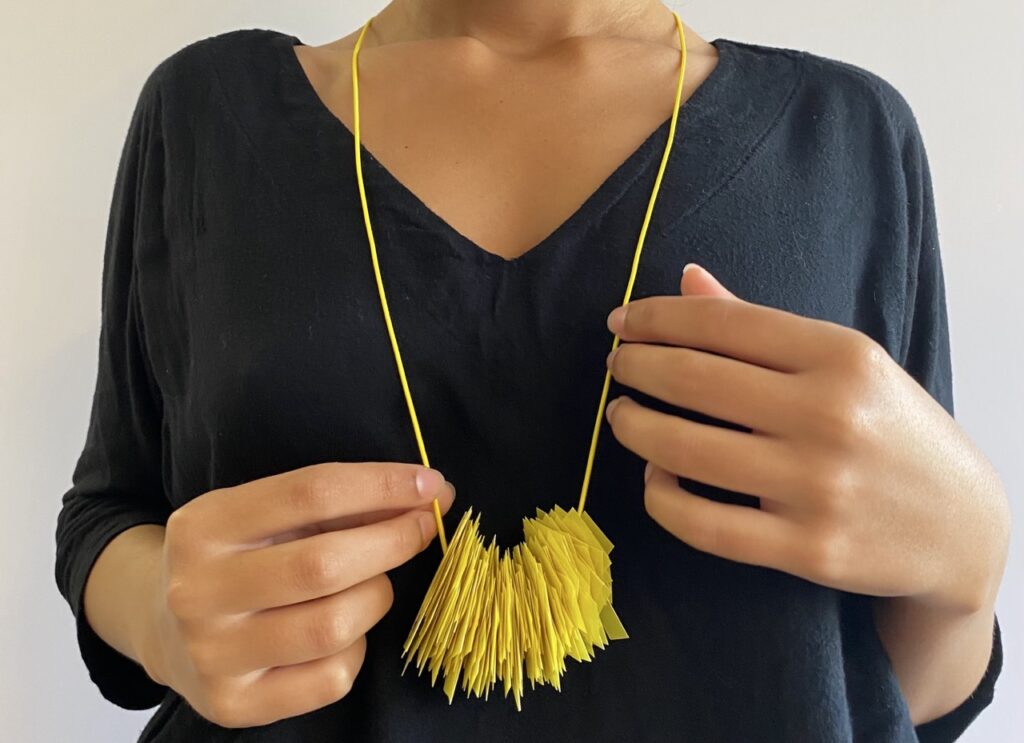
In 2003, while travelling in Spain, she came across materials that inspired her. She made a necklace from nylon netting and unused pills, and the recognition it received gave her the push she needed to move from curating to creating art herself.
Margarida’s work has two defining features: a commitment to using discarded materials and the unique way she weaves wonders with them.
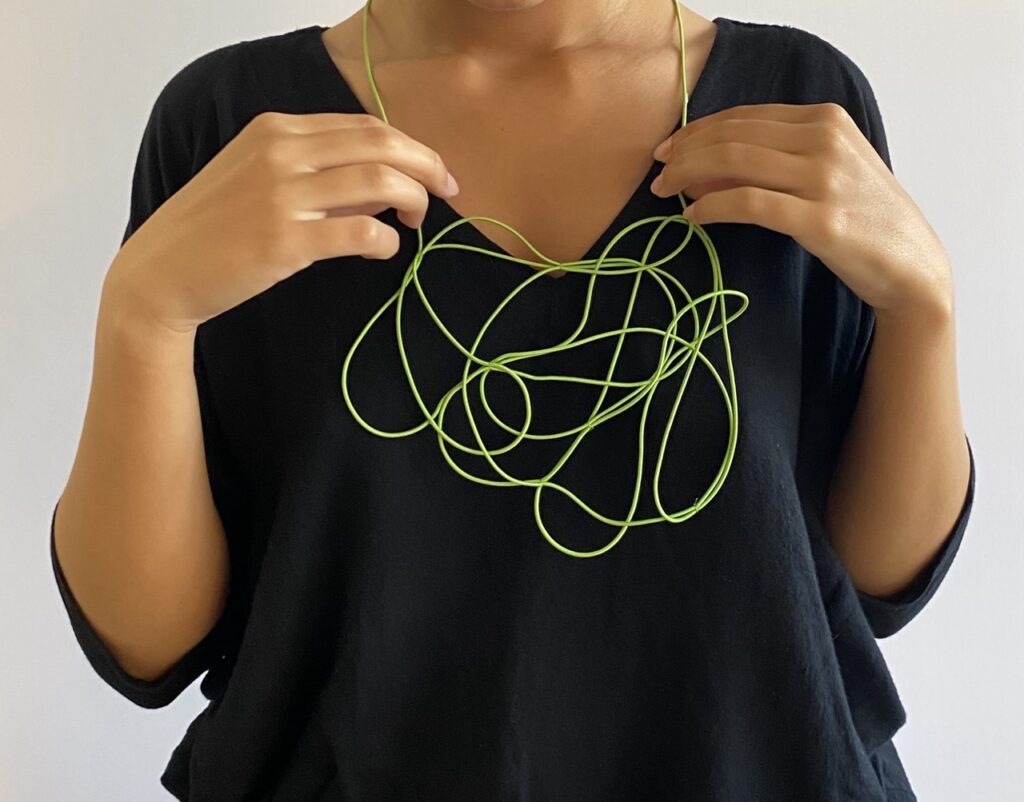
Necklaces remain central to her practice, each one more inventive than the last. And then there are the elaborate lamps – though “elaborate” hardly does them justice.
Let there be light
‘Lamps’ might not even be the right word. They feel more like sculptures.
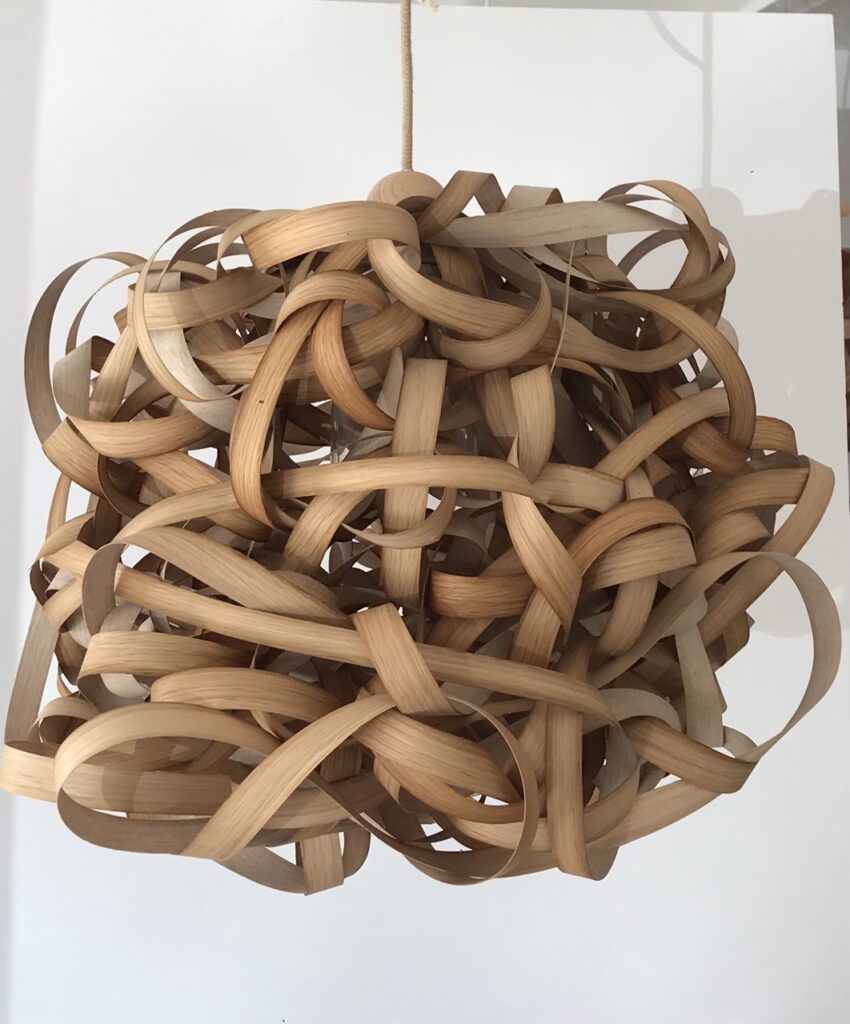
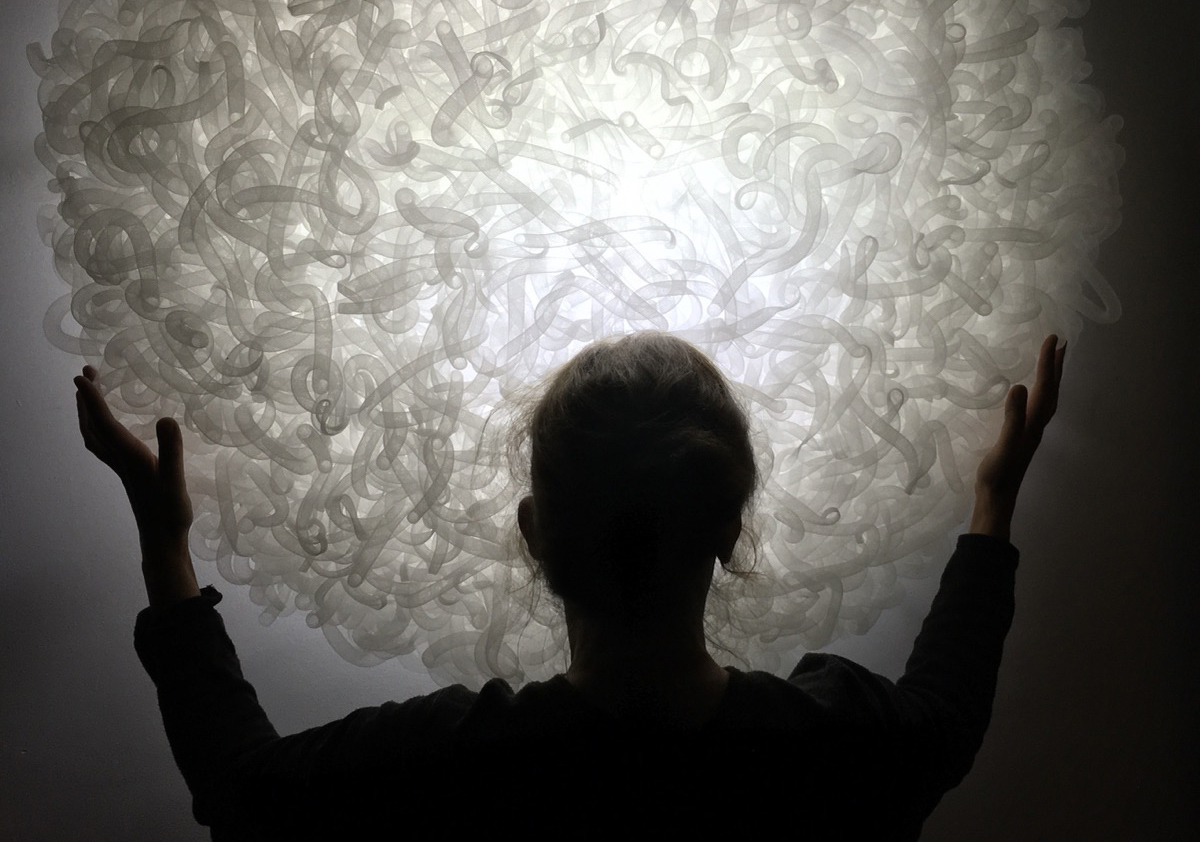
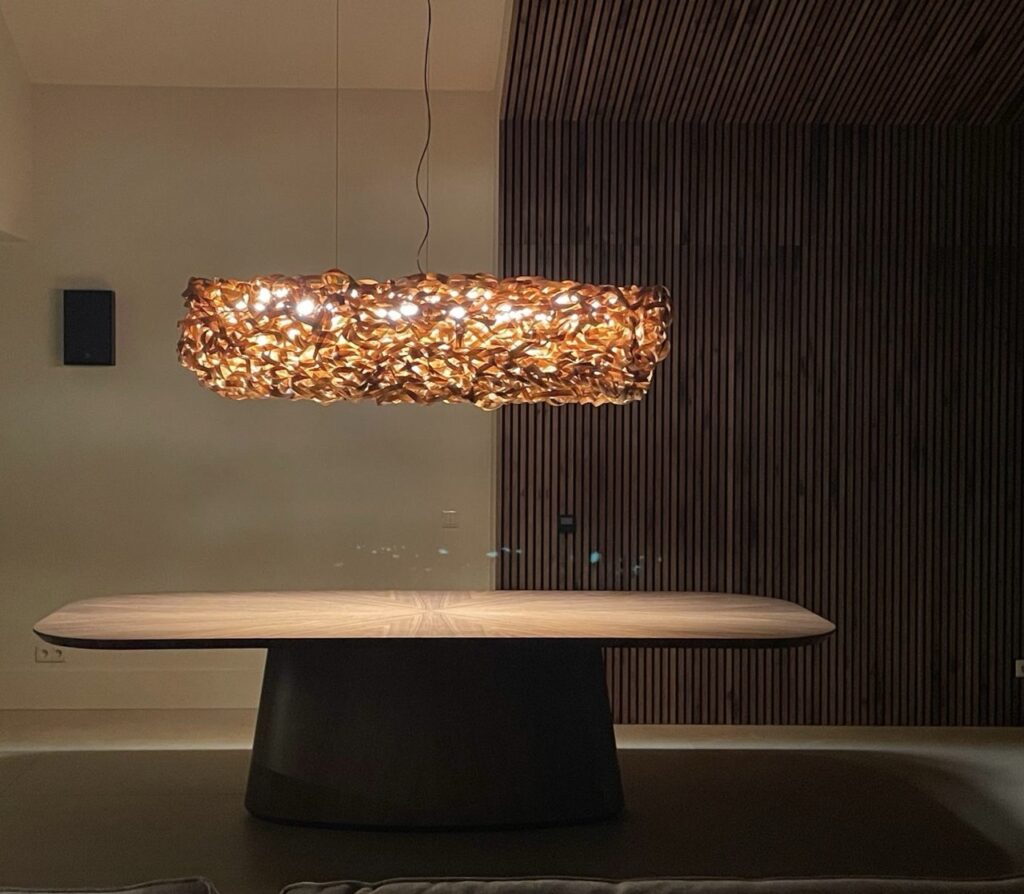
Margarida told me how she came across large amounts of fita de madeira (wood veneer tape) from an old carpentry workshop. She takes these thin, flexible strips of wood and, in her distinctive way, bends, curls and overlaps them into forms that resemble something between a bird’s nest and a tangle of ribbons caught mid-motion.
The pieces hang from simple cords and, when lit, cast intricate, fractured shadows as the light filters through the gaps and curves.
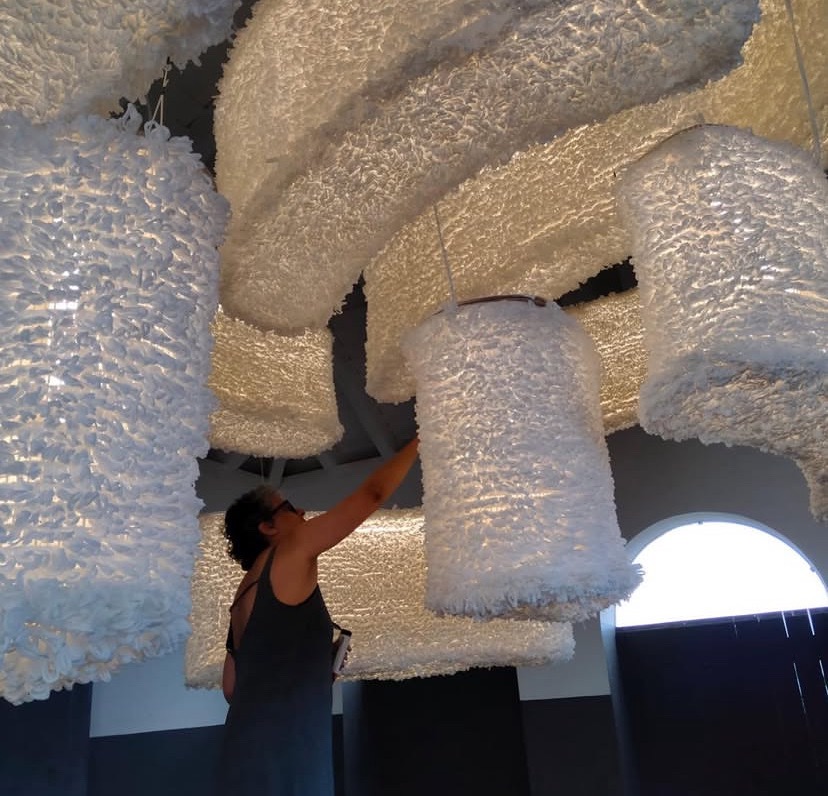
Using waste material from a sock factory, she also created a collection of illuminated cloud-like chandeliers for exhibitions, including Stream Light at Casino de Lisboa and Os teus olhos chegaram aqui on Pico Island in the Azores.
She also makes large, luminous ‘moon-lights’ from the same nylon mesh used in her very first necklace.
From clay to canvas
Margarida moves freely across materials while maintaining a singular style. A creative partnership called Bonnie and Clay prompted her to experiment with ceramics, leading to a series of imaginative porcelain pieces that often adorn her necklaces, alongside sculptural serving dishes and even a porcelain lamp that echoes the looping forms of her wooden works.
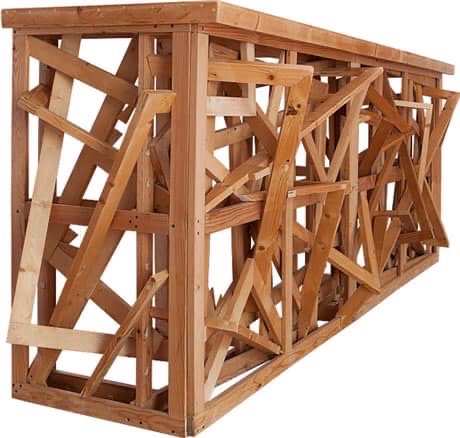
Fabric, too, finds its way into her practice – in handmade bags and ties. She even created a bar counter from interconnected canvas frames.
Natural Curiosity
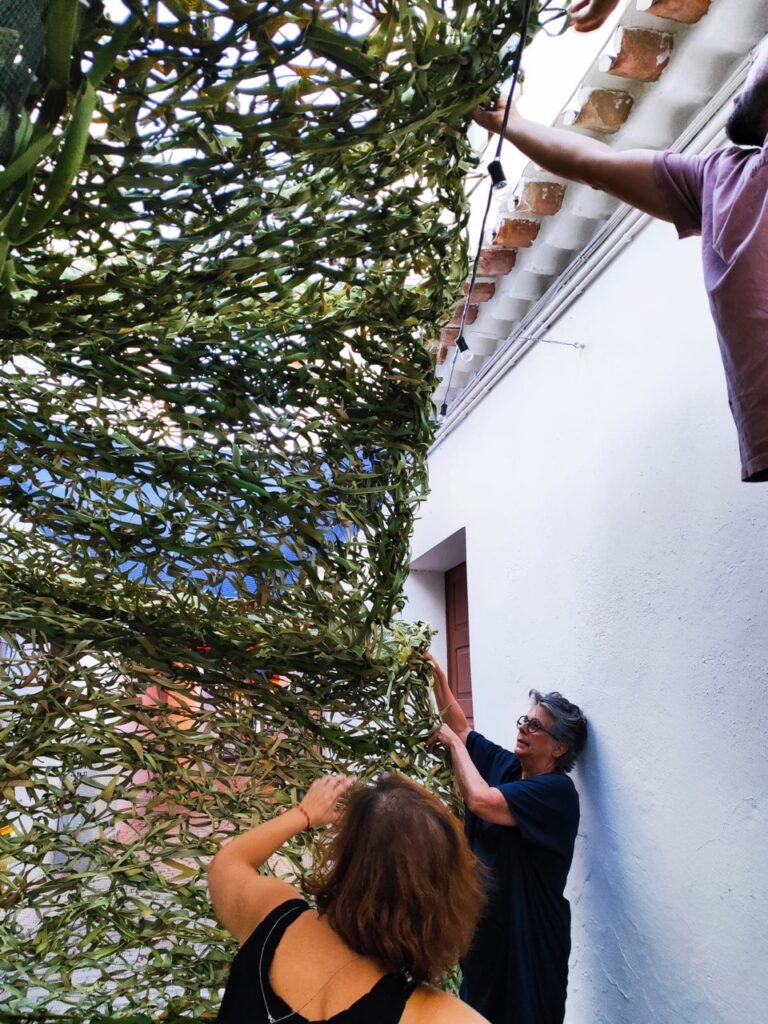
This ability of Margarida’s to move freely between materials was challenged by Loulé Criativo during a natural fibres residency, in which local artisans taught her how to work with esparto (a tough local grass) and palma (palm leaves).
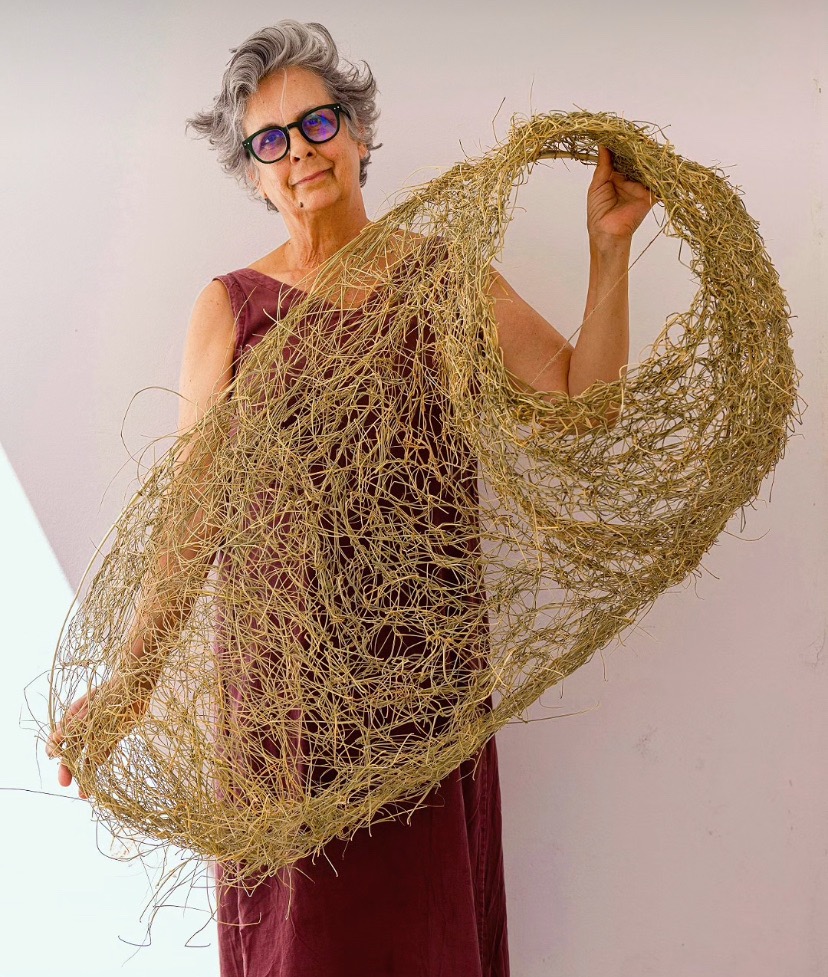
From esparto, she created an abrigo – a shelter inspired by the simple refuges found in the mountains of northern Portugal. Traditionally built to protect weary hikers, Margarida’s version is made using a comparatively fragile natural material. The work demonstrates how even the places we turn to for protection are not always as solid as they seem.
She continued exploring these natural fibres in collaborative works, including KOMOREBI, an awning installation created with Leni Farenzena for Festival MED.
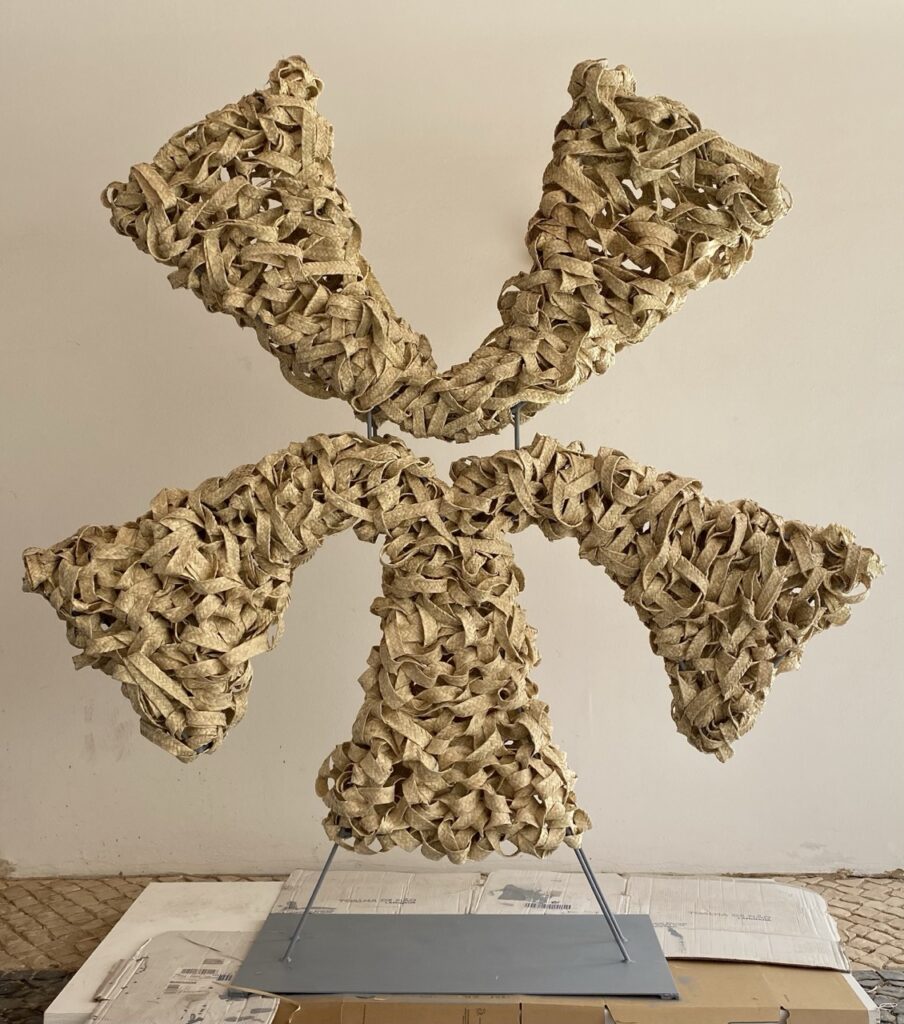
She also collaborated with the palm weavers at the casa da empreita and a local blacksmith to create a large Vilamoura logo, wrapping woven palma around a custom iron structure.
Full circle
These days, Margarida shares a studio in Lisbon with a painter, travelling south whenever she can to collaborate and create with fellow criativos.
Guided by curiosity, she continues to find inspiration in the most unlikely materials. As for the stars, she never really came back. She simply found new ways to reach them.
Instagram: margaridavalente.mgv