Imagine a high-performance car whose only exhaust is pure water vapour. For the multidisciplinary engineering students of Técnico Fuel Cell (TFC), this zero-emission vision is already a reality.
Based at the Instituto Superior Técnico (IST) in Lisbon, Técnico Fuel Cell are driven by the ambitious goal of building the world’s most efficient vehicle — one capable of travelling the greatest distance on the minimum amount of hydrogen. The students aren’t just establishing Portugal as a top-tier reference for academic projects; they are racing to develop the world’s first self-driving hydrogen-powered car and the first fully Portuguese fuel cell.
TFC has been developing its work with the mission to reinforce the talent and ambition of Portuguese engineering youth. Besides building prototypes, the team also trains dozens of students, participates in international competitions, and establishes Portugal as a top-tier reference for academic projects in the field of hydrogen and sustainable mobility.
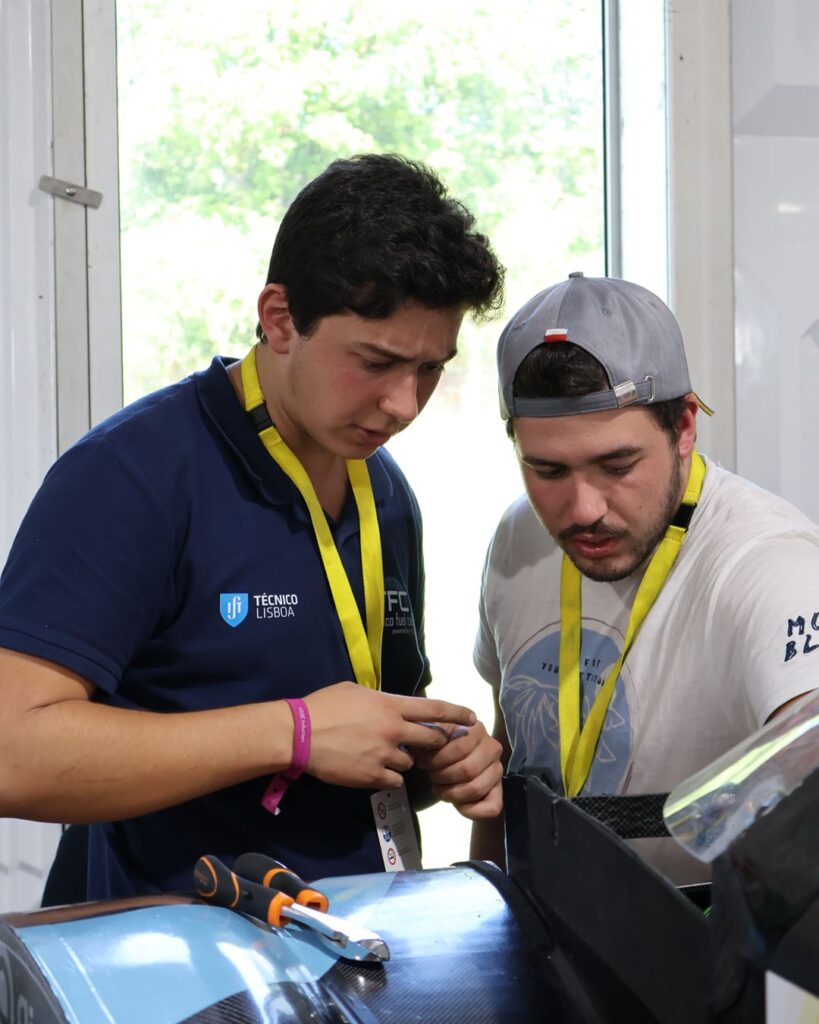
In TFC, students from different engineering fields, such as mechanical, aerospace, electrical, computer, biomedical and chemical, come together at the IST lab to transform ideas into innovative and efficient vehicles. This team is actively redefining sustainable transport.
The human engine: powering innovation
The students involved in this mission are organised into six departments or teams, each with highly distinct functions throughout the long development of this project. Multidisciplinary collaboration across fields like operations, electronics, automation and hydrogen storage allows for a more professional approach and reinforces that, beyond the technology, this project also relies heavily on teamwork, resilience and continuous learning. Beyond being a great opportunity for study and personal growth, the TFC is also the first contact many students have with the practical fields of engineering.
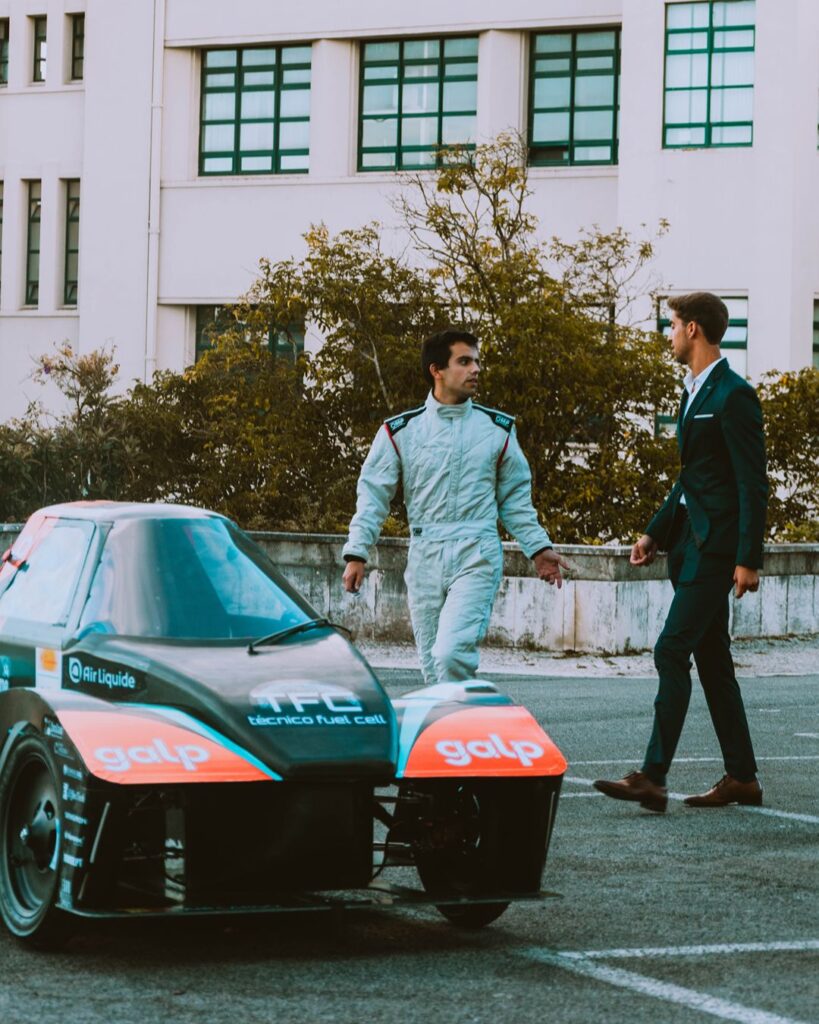
The team’s first major milestone was TFC01, the first Portuguese hydrogen-powered car developed in an academic context. It was publicly presented in 2024 during a rollout that brought together government officials, institutional partners and professors from the IST, including the president, Rogério Colaço. Besides building and designing prototypes, this moment marked the beginning of technical advancement, as the team began to cement new work processes, project management, and system integration, preparing itself for an international, competitive environment.
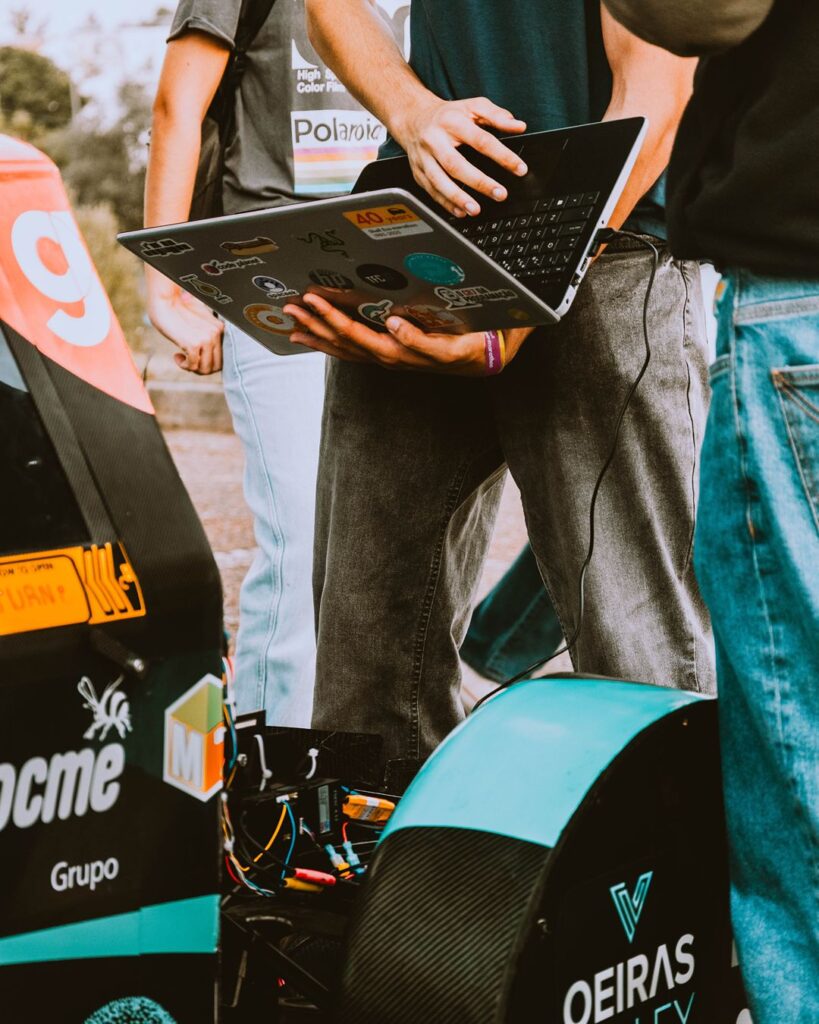
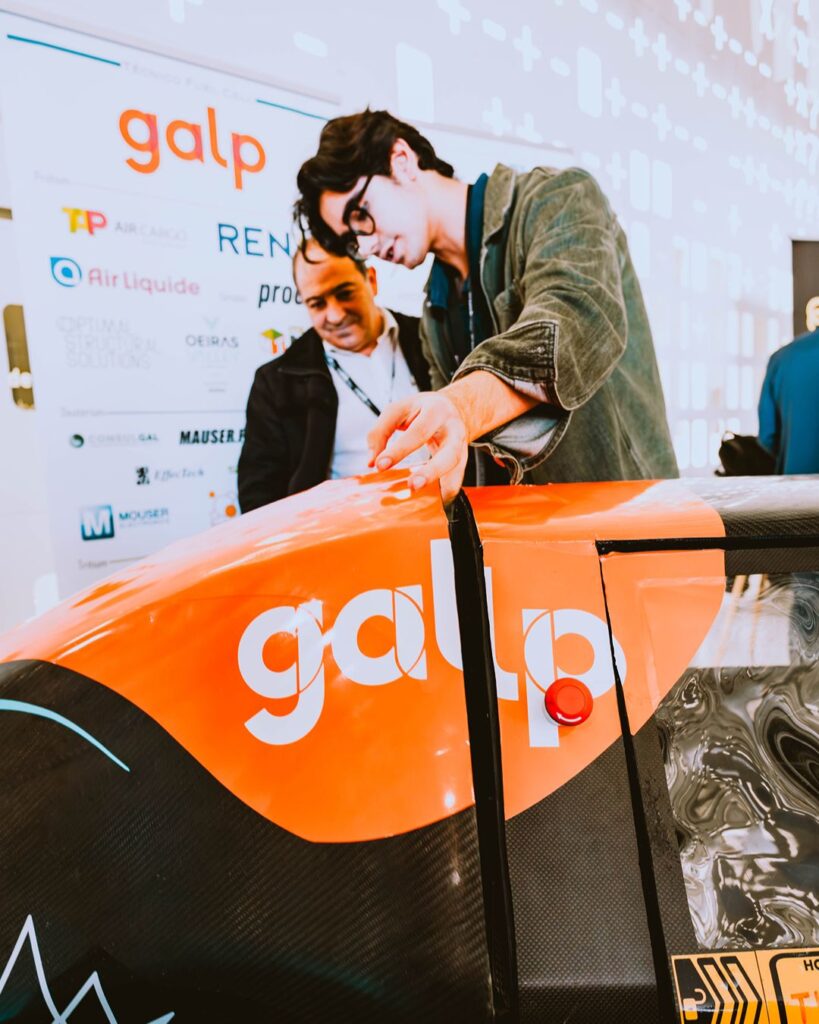
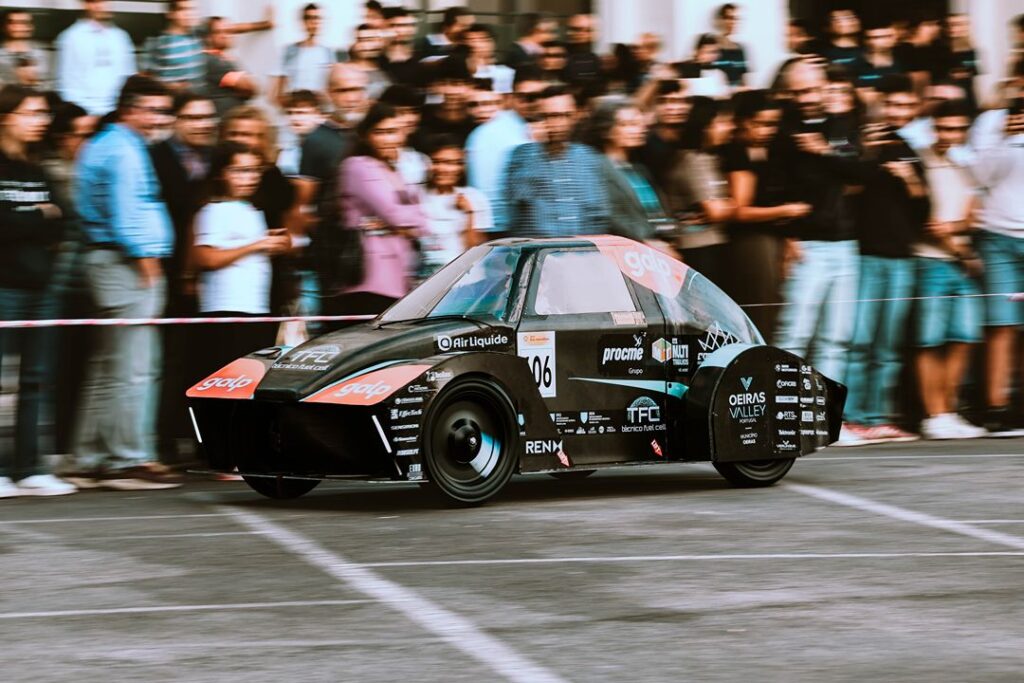
The TFC01 represented a significant leap forward in sustainable engineering, built around a BLDC electric motor and powered by a PEM (Proton Exchange Membrane) Fuel Cell. This system generates electricity not through combustion, but through silent electrochemical reactions. Housed within a tubular steel chassis and wrapped in a lightweight fibreglass body, the vehicle weighs just 130 kg, a testament to the team’s commitment to efficiency and performance. What truly sets the TFC01 apart, however, is what emerges from its exhaust – nothing but pure water vapour, transforming what could have been just another prototype into a powerful statement on the future of clean mobility.
The TFC02 marked the team’s second hydrogen-powered prototype and another significant step forward from the TFC01. For this vehicle, weight reduction and material selection were the primary focus. The team incorporated lightweight materials, such as carbon fibre and 3D-printed components, reducing overall weight while maintaining structural strength. The result speaks for itself: powered by the same PEM Fuel Cell technology featured in its predecessor, the TFC02 weighs just 102 kg, a full 28 kg lighter than the TFC01, marking a clear evolution in the team’s approach to lightweight, high-performance engineering.
Designed and built in under a year, it was unveiled on 23 September 2025, at the IST. The rollout brought together around 300 guests, including technology partners, faculty members, students and representatives from innovation and industry sectors.
Building on the foundation of the TFC01, the team developed the TFCamões – an evolution of the original prototype adapted to function as an autonomous electric vehicle. While the previous model demonstrated the potential of hydrogen power, this new iteration shifted focus toward intelligent mobility. The vehicle is equipped with a camera and an onboard data-processing system that enables it to “see” its surroundings. By analysing the images captured, the system identifies road lines, segments the environment, builds a map of the competition track, and determines the vehicle’s position on that map in real time.
The ultimate test: surviving the Shell Eco-Marathon
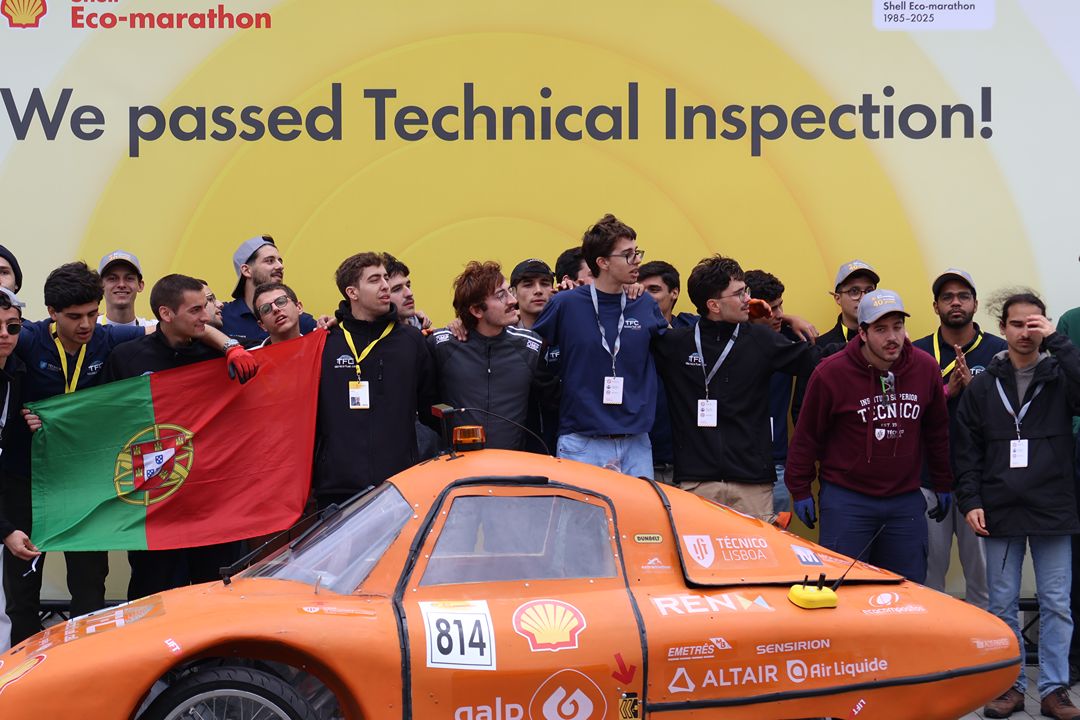
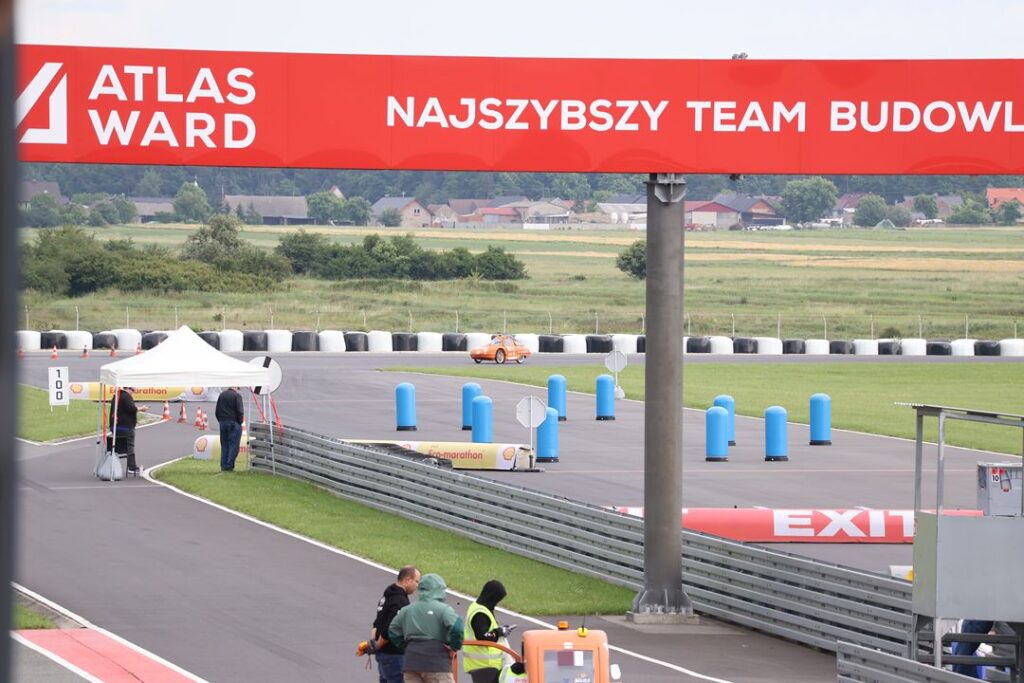
The Shell Eco-Marathon is one of the world’s most demanding student competitions in energy efficiency, challenging university teams to design vehicles that travel the furthest distance with the least energy. But taking part means much more than just getting on track. It requires passing a rigorous series of technical inspections, meeting strict safety standards, and demonstrating engineering capabilities on par with those of Europe’s best university teams. In 2024, the TFC01 not only passed technical inspection but secured sixth place in the competition – a significant achievement for a young project and a clear sign of the quality and rigour behind the team’s work.
The following year, ambition grew. The team entered three distinct categories: electric battery urban vehicles, hydrogen urban vehicles and autonomous urban vehicles. In the context of the Shell Eco-Marathon, an urban vehicle resembles a real everyday car, complete with the safety and functionality features expected of ordinary automobiles – seat belts, horns, indicators and mirrors. At the 2025 competition, the TFCamões completed ten laps in the electric battery urban vehicle category. Meanwhile, the TFC02 took to the track with a more focused objective: technical validation in the hydrogen urban vehicle class. It was an essential step – laying the groundwork for a return to competition in 2026, this time with a more mature vehicle and a sharper focus on on-track performance.
Keeping their eyes on the road ahead
Beyond the competitive track at the Shell Eco-Marathon, Técnico Fuel Cell has been steadily building its public presence. A standout moment came during their participation in the Web Summit, where the team took the stage to present to companies and tech-sector representatives. It was an opportunity to share their journey and the development of the TFC02 with a global audience. Recognition has also grown through media coverage. The team gave interviews to Expresso, one of Portugal’s leading newspapers, and was featured in a TVI report highlighting the project as one of the initiatives shaping “the future of mobility”. At the same time, TFC maintains an active presence on social media and digital platforms, sharing behind-the-scenes moments, technical progress and event participation. Posts on Instagram and LinkedIn bring the project closer to the public and help inspire new students to get involved.
As TFC sets its sights on returning to the Shell Eco-Marathon in 2026 with an even more mature, high-performance vehicle, its focus remains fixed firmly on the road ahead. From turning heads at the Web Summit to proving their engineering mettle on international tracks, these students are doing much more than just building prototypes. They are actively shaping the future of clean, intelligent mobility, proving that with teamwork, resilience and ambition, the next great leap in transportation might just leave behind nothing but water vapour.
instagram @tfc.vehicle