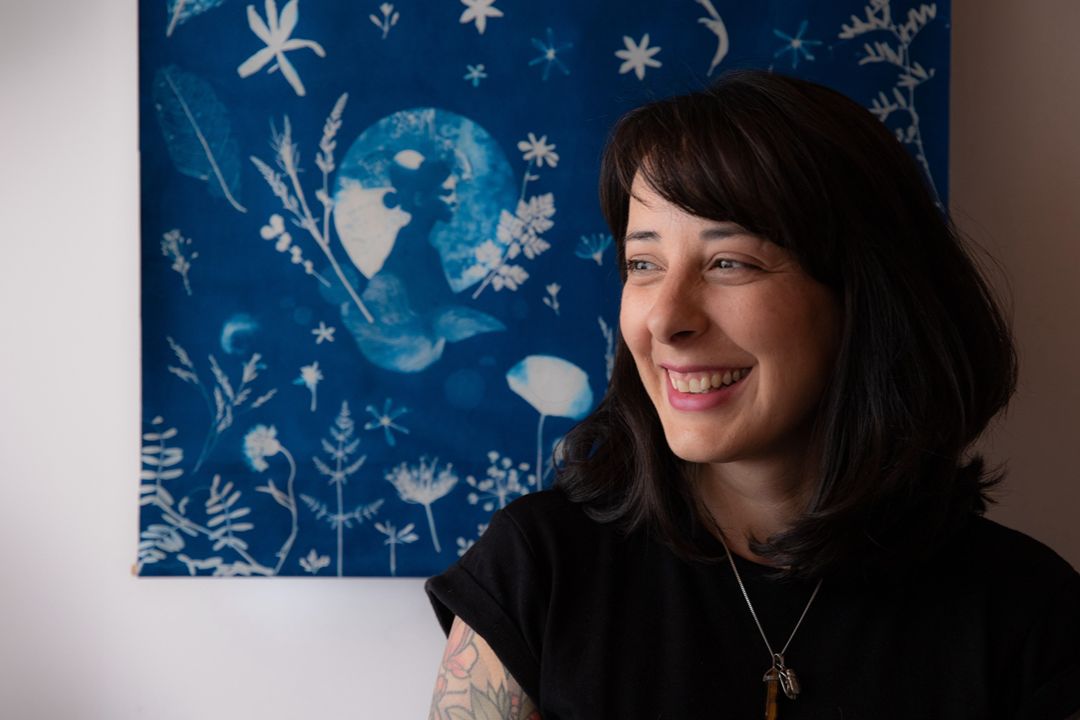
That seemed like the obvious question to ask someone whose art depends on sunbeams. Sandra Nascimento just smiled. She has UV lamps for cloudy days and has even hosted one of her cyanotype workshops at the Feira Popular in Loulé after dark.
Of course, it’s easier – and more fun – with the sun on board, especially when Sandra is leading workshops for bigger groups or creating her own large-scale artworks. She admits she does have to keep one eye on the weather. But let’s face it, with its seemingly endless blue skies, the Algarve is the perfect place to embrace this centuries-old photographic technique, which uses sunlight to create the rich, velvety pigment known as Prussian blue.
From Prussia with love
Born in Germany to Portuguese parents, Sandra returned to Portugal at the age of six, growing up in Fundão – “the land of cherries”, as she describes it.
Her father loved photography and always took a camera on family holidays. He would often hand it to Sandra, who remembers carefully writing her name on the back of the photos she had taken once they were developed. Even then, she knew photography was what she wanted to do.
Today, Sandra works as a photographer, creative director, visual artist and trainer.
Out of the blue
At university, Sandra was introduced to a variety of traditional photographic processes, but cyanotype stood out. Unlike many other techniques, it didn’t require a darkroom or specialist equipment.
Invented by British scientist Sir John Herschel in 1842, cyanotype is one of photography’s oldest processes. In 1843, botanist Anna Atkins transformed it into an art form when she published Photographs of British Algae: Cyanotype Impressions, widely regarded as the first book illustrated with photographs.
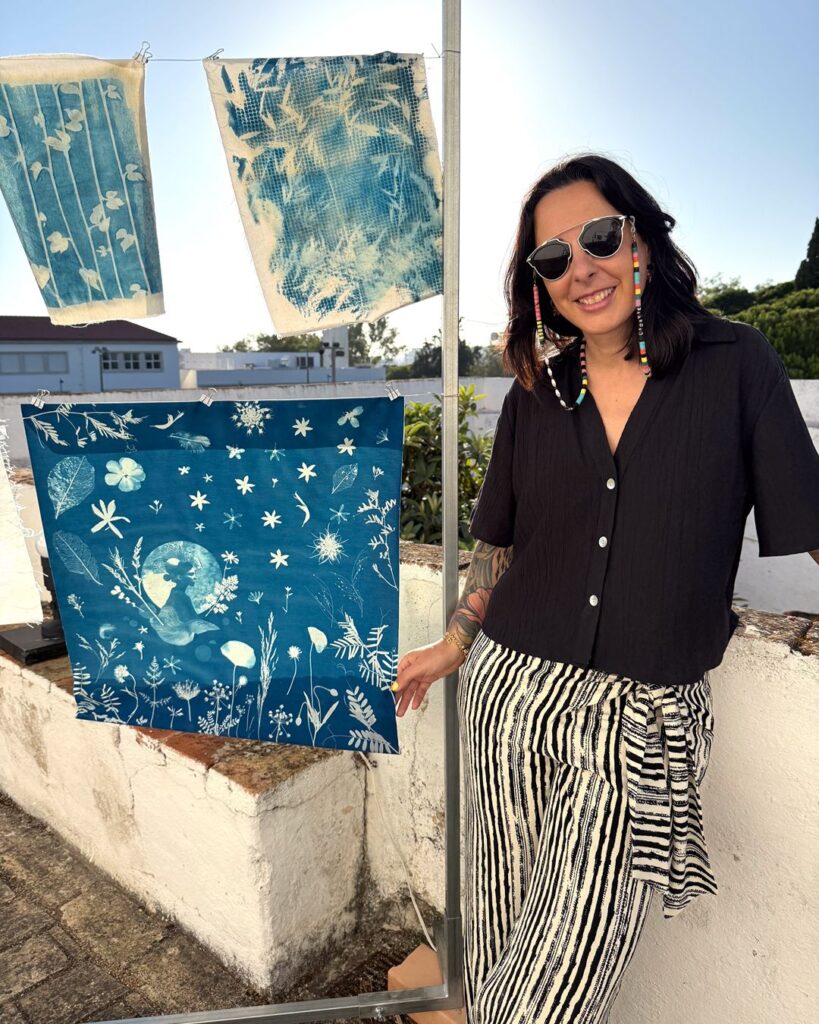
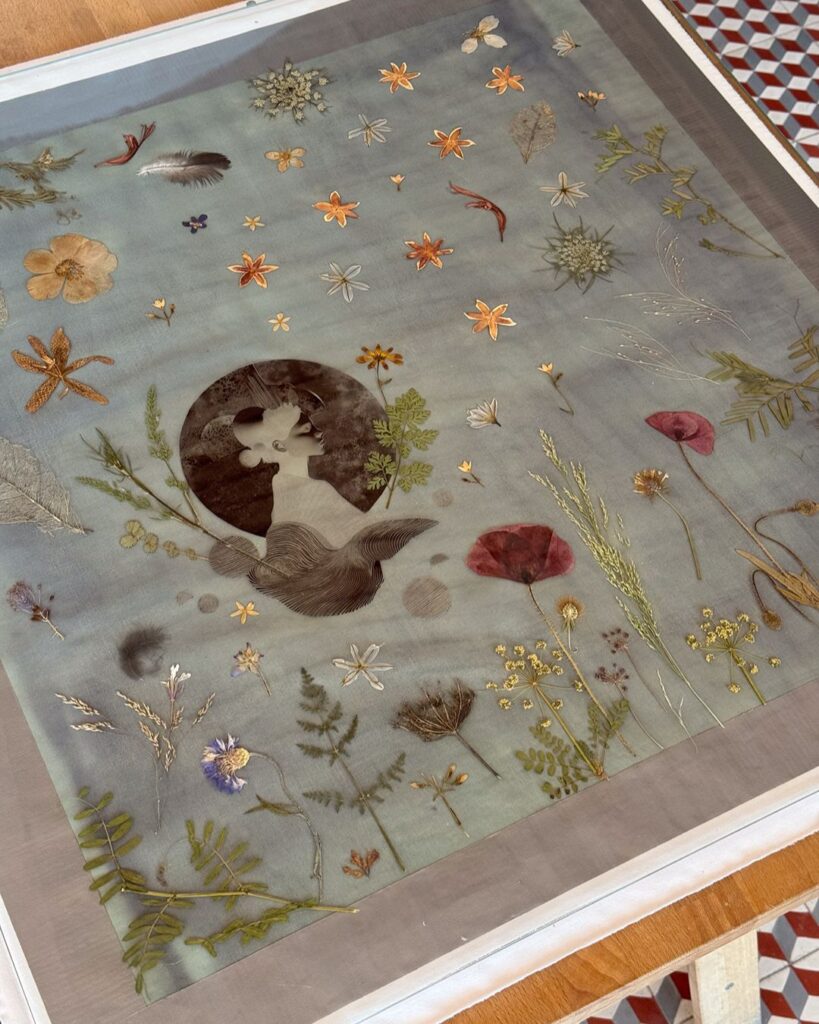
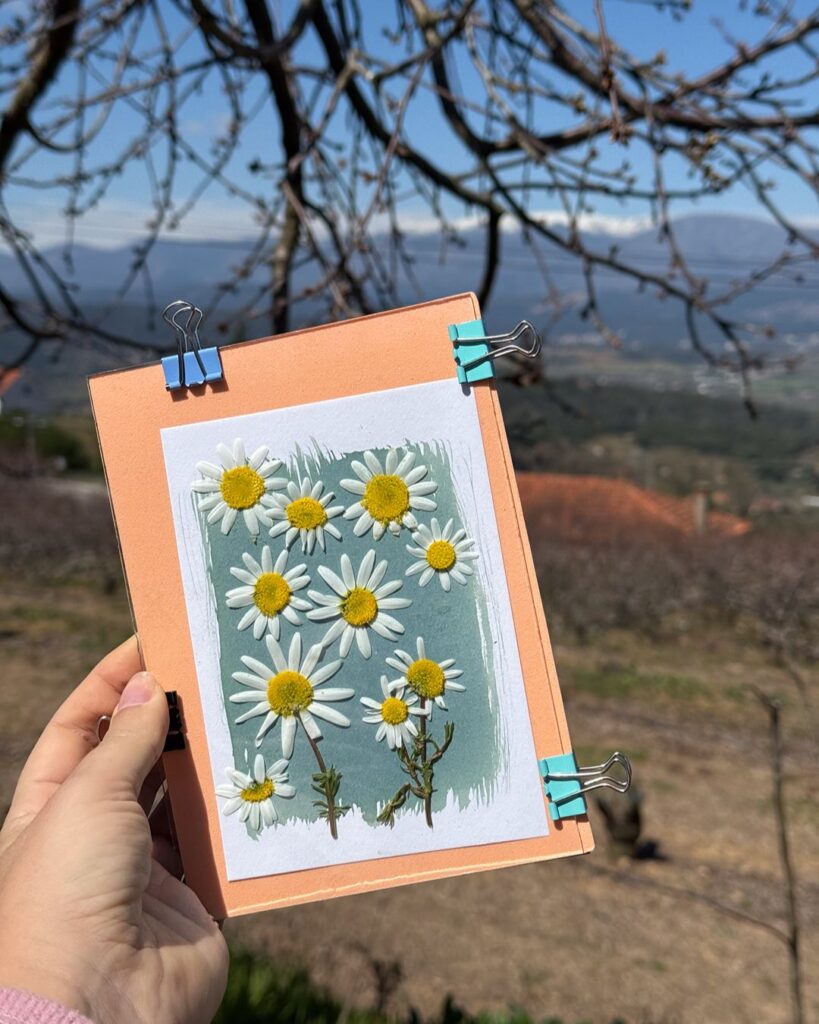
While Anna Atkins used cyanotype to document British algae, Sandra takes her inspiration from the flora and fauna of the Algarve, encouraging participants in her workshops to create compositions using local plants gathered from the surrounding countryside.
The process
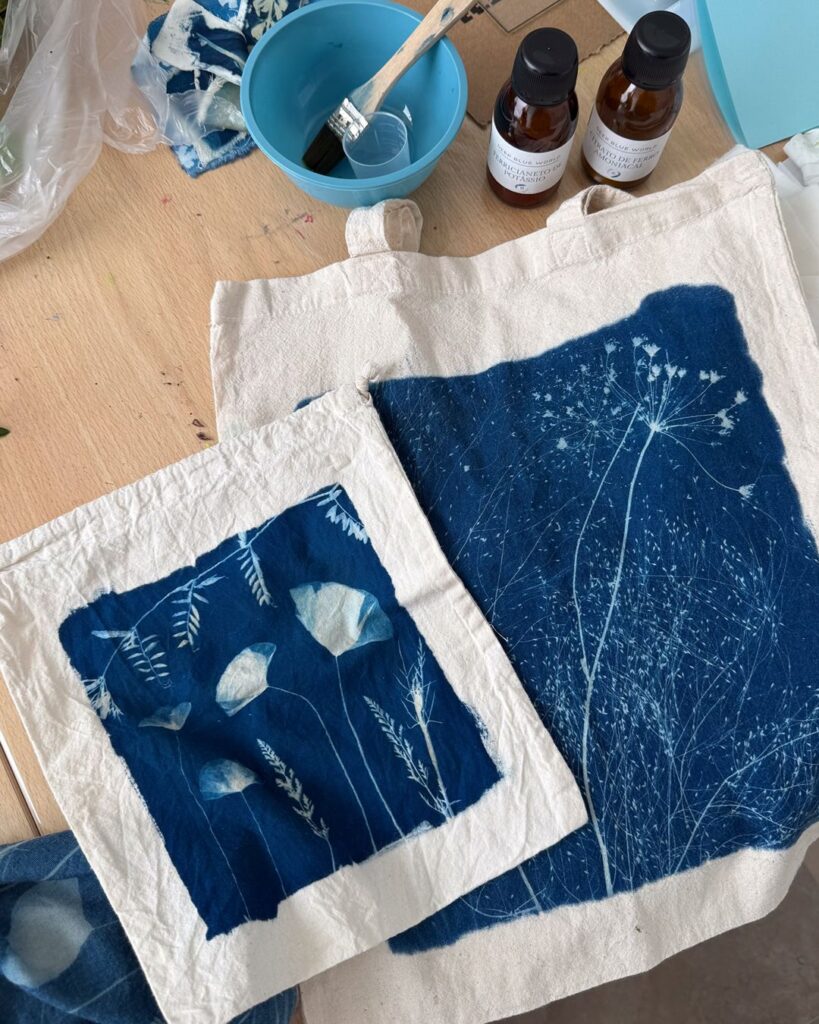
The first step is to coat a sheet of paper or fabric with a light-sensitive solution made by mixing ammonium iron citrate and potassium ferricyanide. Once the solution has dried, you arrange your chosen leaves, flowers, feathers – or anything else that catches your inspiration – directly on top of the coated paper or fabric. To hold everything securely in place, you protect the composition with a sheet of glass.
The artwork is then left to sunbathe for around seven minutes, depending on the strength of the day’s sunshine. Beyond that, it doesn’t get any bluer. Wherever the light reaches, the chemicals react, while the areas protected by the plants remain white.
At this stage, the paper looks a rather unremarkable brownish-green, but the magic happens when it is rinsed in water. As the unused chemicals wash away, a rich blue background emerges – revealing the delicate white silhouettes of the plants in striking contrast.
All that’s left is to hang it up on the line to dry. Et voilà! The artwork is complete.
Diving deeper
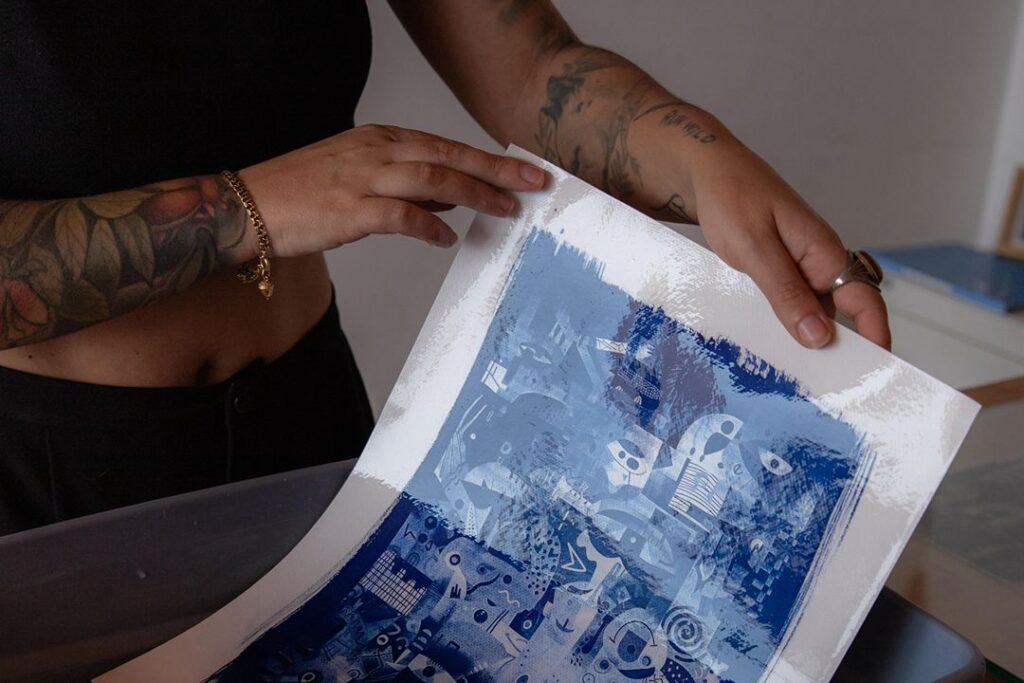
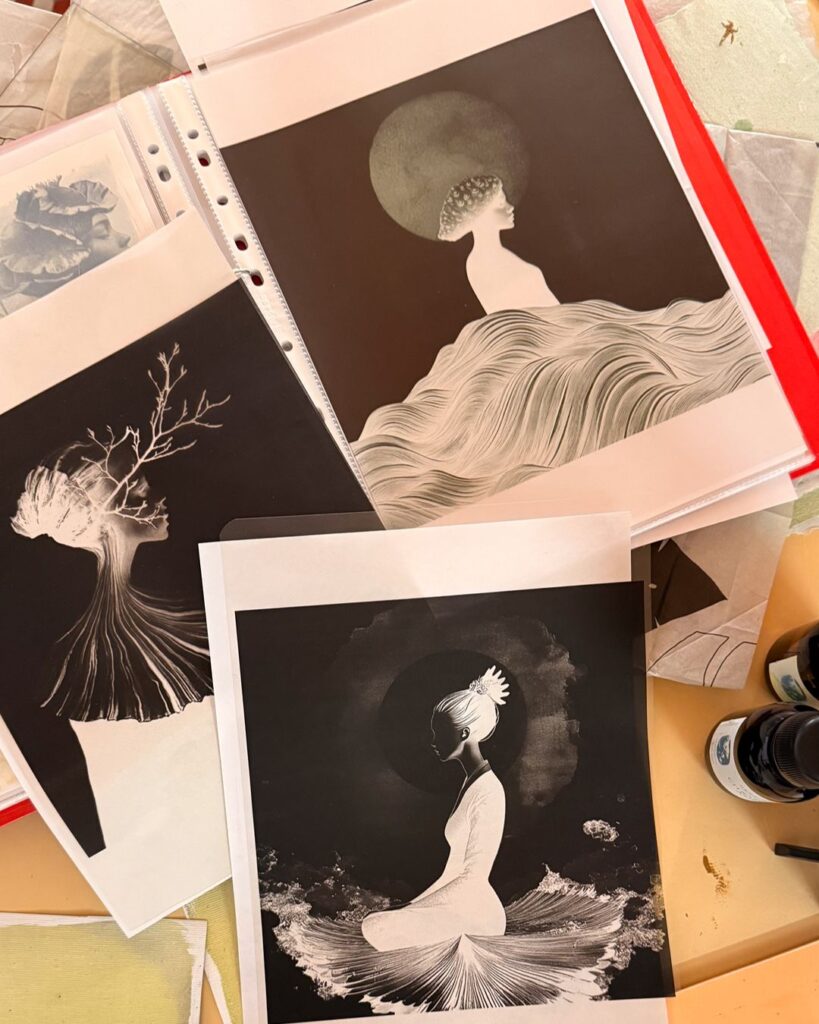
While many of Sandra’s cyanotypes are inspired by nature, she’s also exploring the creative possibilities of digital negatives. Instead of placing flowers or leaves onto the sensitised paper, she creates images on a computer, inverts them into negatives and prints them onto transparent acetate sheets. These are then laid over the coated paper or fabric and exposed to the sun, allowing detailed photographic images to emerge.
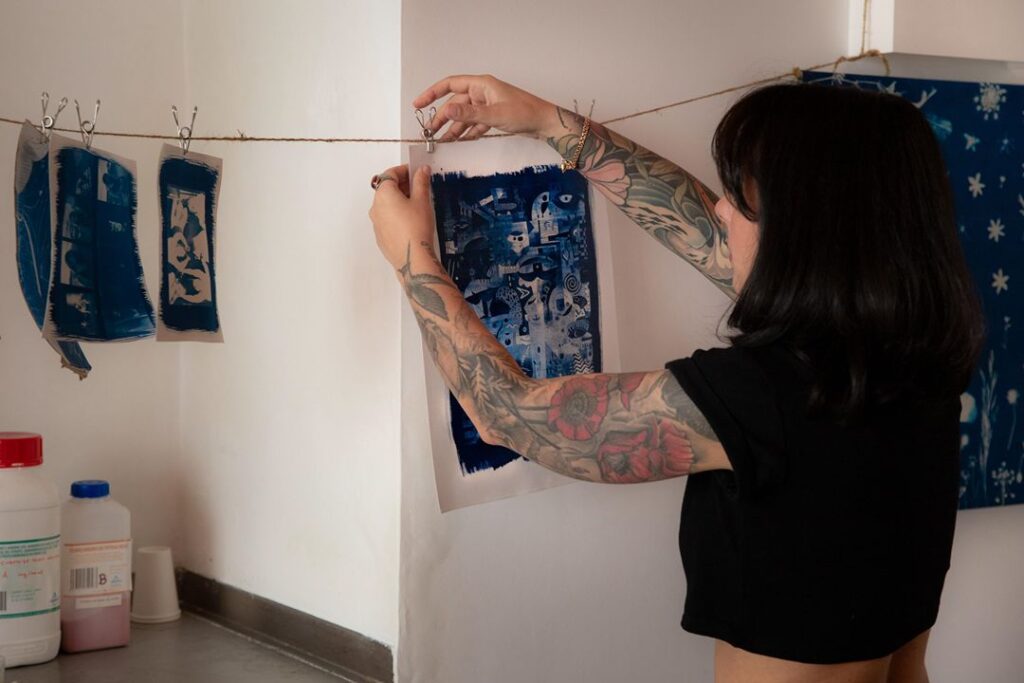
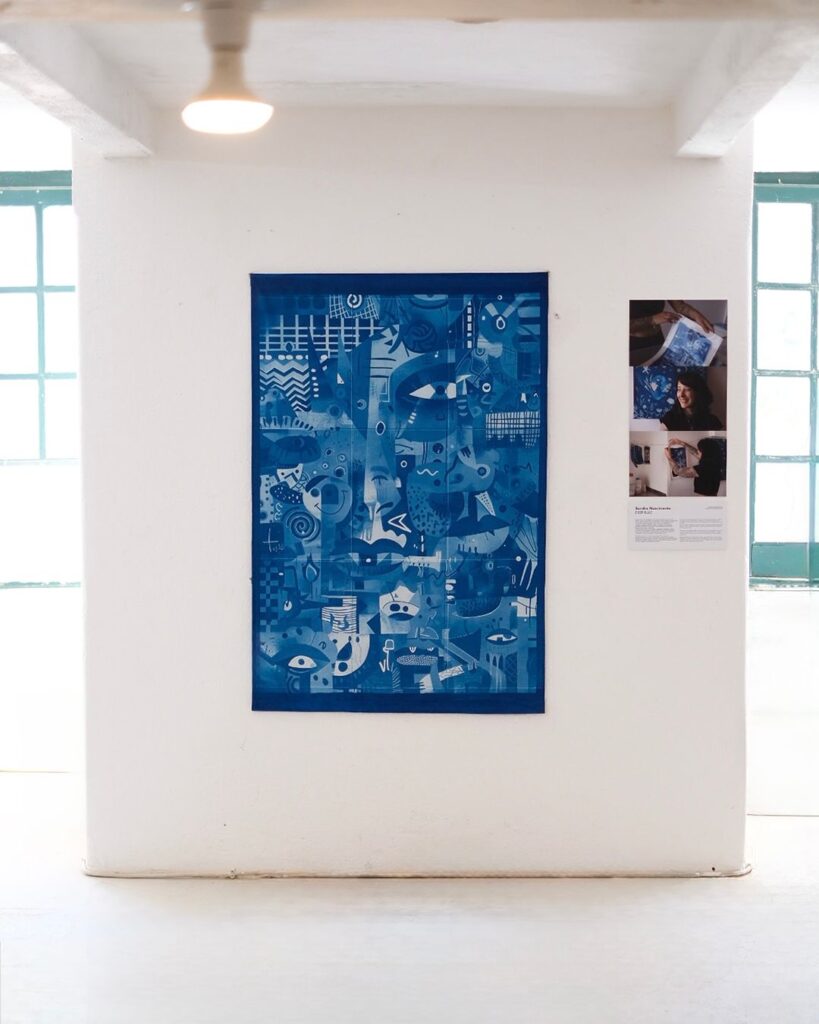
It just so happened that, at the time of my visit to the Palácio Gama Lobo – headquarters of Loulé Criativo’s Design Lab, where Sandra is one of its latest resident artists – an exhibition was on. There, I was able to see one of Sandra’s latest works on display: a delightfully trippy 90×120 cm textile piece exploring the visual language of puzzles.
It amused me to note that creating this piece was something of a puzzle in itself. First, Sandra needed to pick a day when the weather was on her side. She then had to carefully position each acetate negative in exactly the right place before exposing the entire composition to the sun for its seven-minute sunbath. With a piece of that size, there was little room for error. Once the exposure began, every element had to be perfectly aligned.
Letting creativity bloom
Sandra provides everything people need for her Deep Blue World workshops, shows them how it’s done – and then lets them play. She finds it fascinating how different people come up with completely different ideas and results using the same materials. Some spend ages carefully curating their compositions, while others work fast, exploring multiple ideas and learning from experience. She proudly showed me pictures of her students’ work, explaining how she often finds herself inspired by what they dream up.
Catching sunlight
I love meeting artists whose art makes them look at the world a little differently.
Sandra is always on the lookout for plants, and whatever else she finds in the physical or digital world, that might create an interesting contrast. Then all she needs is a splash of chemistry, a sprig of inspiration and a patch of blue sky to turn sunlight into art.
Instagram: deep_blue_world