
Whether at open-air sunrise gatherings along our southwestern coast, ecstatic dance circles in Aljezur, or electronic music filling local arenas, our region continually seeks modern spaces for collective joy and connection. As the summer festival season concludes, my experience at the RFM Somnii festival reminds us that the line between a dance floor and a sanctuary is often closer than we think.
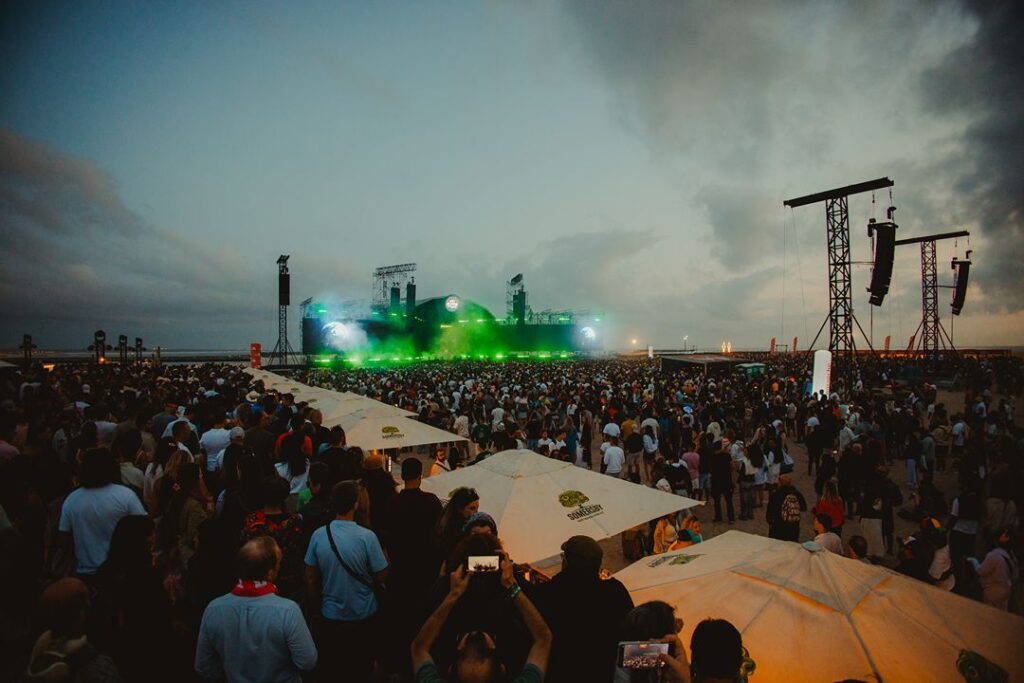
The evening of 11 July began like many others at the RFM Somnii festival in Figueira da Foz. The Atlantic breeze carried the scent of salt across the beach as thousands gathered beneath an open sky, waiting for another electronic music performance. Lights swept across the arena, conversations merged into anticipation, and the distant pulse of bass rolled in with the waves. Yet something about this performance felt different long before the first note.
Around me stood not only young festival-goers but entire families. Fathers carried sleepy children on their shoulders, tiny ears protected by brightly coloured defenders. Teenagers laughed beside grandparents, couples embraced, friends danced before the music had even begun. It was an unexpected congregation brought together by an equally unexpected figure: a Catholic priest.
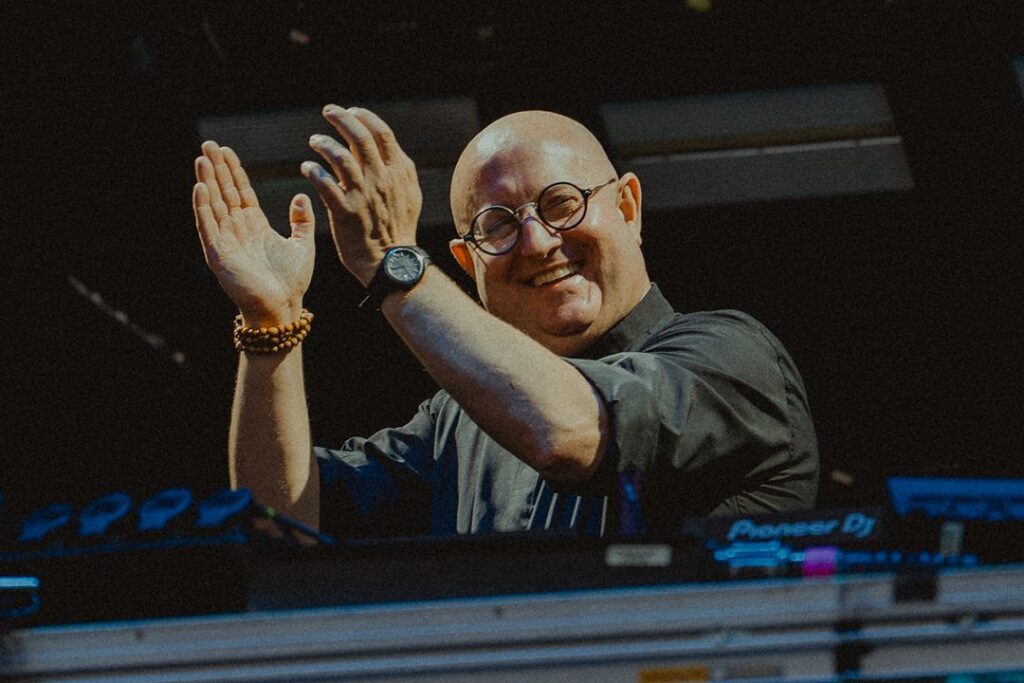
Father Guilherme Peixoto has become one of Portugal’s most fascinating cultural phenomena. To many, he is “the DJ Priest”. To others, he is a parish priest who performs electronic music. The labels are convenient, but neither fully captures what unfolds when he steps onto a festival stage. Before a single beat filled the arena, the giant screens came to life. There was no countdown, advertisement or introduction.
Instead, a simple invitation came on screen in his own voice. We were asked to respect one another, care for the space we shared and switch off our mobile phones. Then came a sentence that has remained with me ever since: “Dance is not fashion, dance is passion”. Almost instinctively, like a little girl responding to a trusted teacher, I slipped my phone into my bag. It never came out again. For the next hour, I wasn’t there to record the evening. I was there to live it.
In an age where so many experiences seem incomplete until they have been photographed, filmed and shared, this request felt almost radical. It invited thousands of strangers to exchange documentation for presence, to experience rather than perform, to become participants instead of spectators.
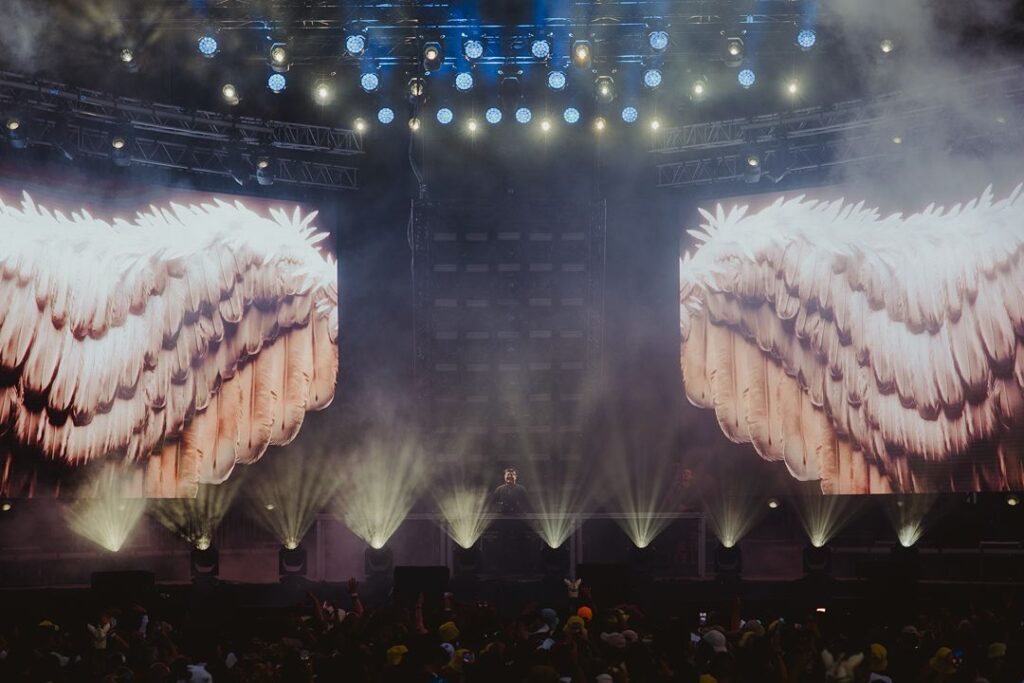
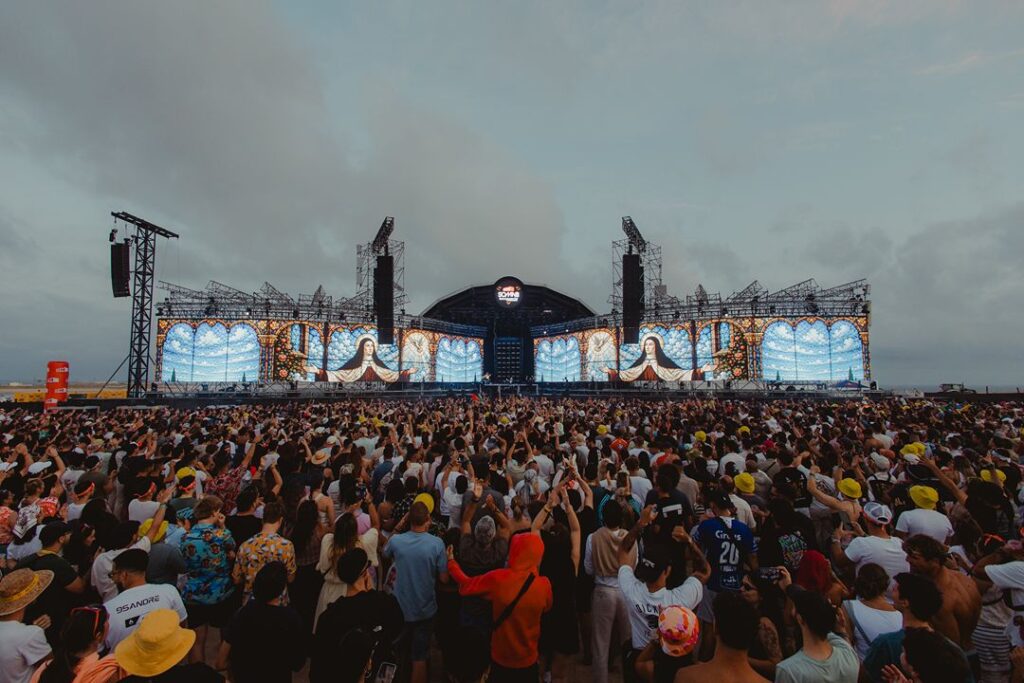
As the music began, enormous screens filled with stained-glass windows, cathedral ceilings bathed in colour, images of Pope Francis and symbols that have shaped Christian imagination for centuries. The visuals became part of the performance, creating a dialogue between ancient sacred imagery and contemporary electronic music. For some, this combination is inspiring; for others, deeply uncomfortable.
Then questions arose. Can sacred symbols belong on a festival stage? Can electronic music become a language of spirituality? These are not questions with easy answers, nor should they be. Standing among thousands of people, however, I found myself asking a different question.
Why are we so uncomfortable when joy enters sacred spaces? History reminds us that faith has rarely been motionless.
King David danced before the Ark of the Covenant with such abandon that he scandalised those who believed reverence required restraint. Across cultures and centuries, communities have celebrated through movement, singing, processions and shared ritual. The human body has always expressed what words alone cannot.
Perhaps somewhere along the way we began to imagine spirituality belonged only to silence. Yet what I witnessed that evening was not chaos but joy. Children danced without embarrassment. Parents laughed with their sons and daughters. Friends embraced strangers. For one hour, differences seemed less important than the simple act of moving together.
Psychologists and sociologists have long recognised the power of collective movement. More than a century ago, the French sociologist Émile Durkheim described collective effervescence: moments when people gathered in shared ritual and experienced a sense of belonging greater than themselves. Modern neuroscience has added another dimension, showing how singing, dancing and moving together can synchronise our bodies, increase trust and strengthen human connection.
Perhaps this explains why Father Guilherme’s performances feel different. This is not simply music to consume but an invitation to participate. Supporters see in him a priest willing to leave church walls behind and meet people where they already gather. They hear echoes of Pope Francis’ vision of a Church that goes out into the world rather than waiting for the world to come to it.
His critics ask equally important questions. Can evangelisation coexist with commercial festivals? Do sacred images risk becoming spectacle? Where is the line between worship and entertainment? These conversations matter because they force us to reflect on what sacredness actually means. As I watched thousands of people dancing beneath the night sky, another thought quietly emerged. Maybe pilgrimage has not disappeared; it has simply changed its landscape.
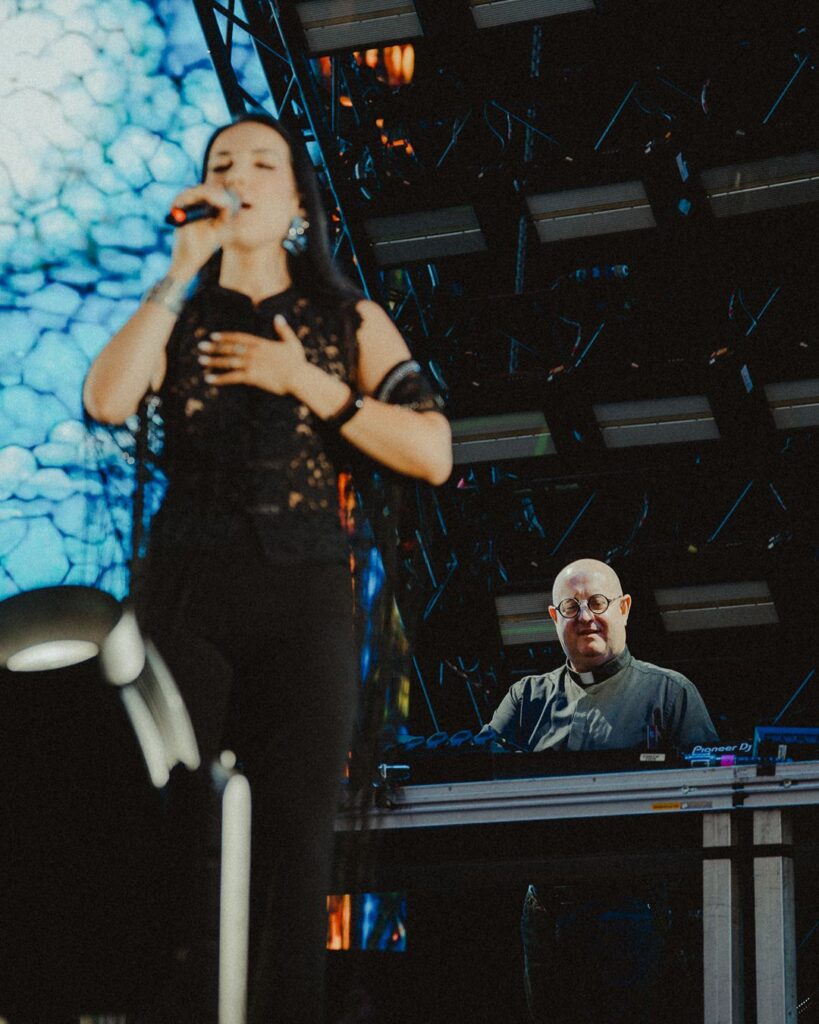
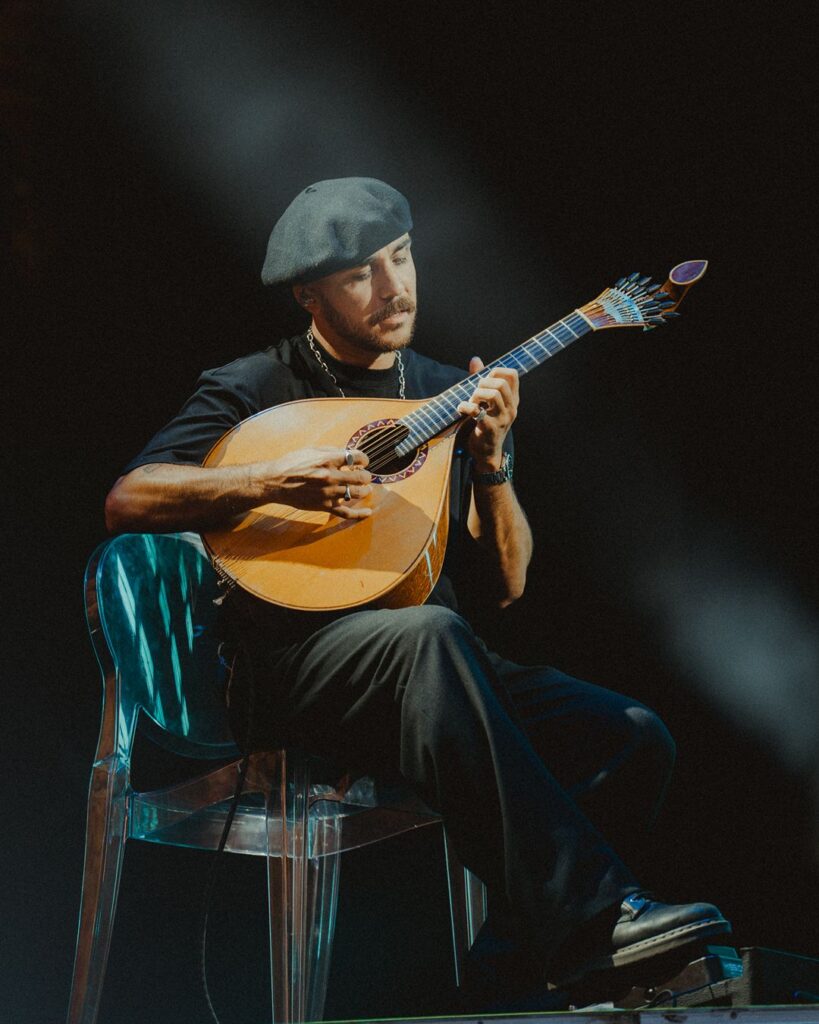
For centuries, pilgrims walked to Santiago de Compostela, Fátima, Lourdes and Jerusalem seeking meaning beyond themselves. Standing on that beach, I wondered whether thousands of people had made a different kind of pilgrimage. They had travelled from across Portugal and beyond. Some came for the music, others out of curiosity. Many came because they wanted to experience the phenomenon that is Padre Guilherme.
Whatever had brought them there, they left having shared something impossible to experience alone. Maybe we still long for the same things our ancestors longed for: to belong, to be seen, to feel connected, to discover moments that remind us we are part of something greater than ourselves.
As the final notes dissolved into the Atlantic night, I reached instinctively for my phone. It was still resting inside my bag, exactly where I had placed it at the beginning of the concert. There were no videos to replay, no photographs to post, no carefully framed evidence that I had been there. Perhaps that was the evening’s greatest gift.
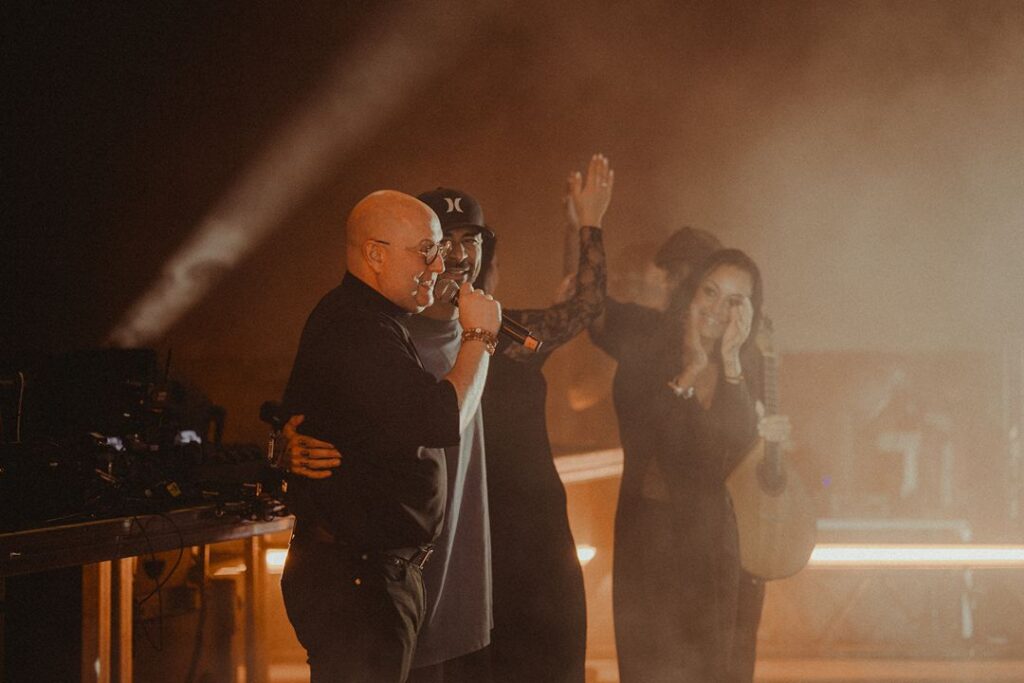
Some experiences lose something precious the moment we try to possess them. They ask instead to be lived. Whether Father Guilherme is changing the Church, transforming festival culture, or simply reminding us that joy has always been a spiritual language is for history to decide. As for me, I left Figueira da Foz carrying only one question: when was the last time I danced so completely that, for a moment, I forgot everything except the privilege of being alive?
Instagram: @padre.guilherme
Padre Guilherme: Fast Facts on Portugal’s DJ Priest
The Double Life: Known globally as “the DJ Priest,” Father Guilherme Guimarães Peixoto (born 31 July, 1974) is a fully ordained Roman Catholic priest who coexists as a professional melodic techno DJ. He serves as the active parish priest for Amorim and Laúndos in northern Portugal.
Early Calling and Music: Guilherme felt drawn to the priesthood in early childhood, entering the seminary by age 13. He was ordained on 11 July, 1999. During his seminary studies, his musical passion was already evident as he played in a local band.
A Military Background: Beyond his parishes, he is a lieutenant colonel and military chaplain in the Portuguese Armed Forces. He has completed deployments with Portuguese peacekeeping forces in both Kosovo and Afghanistan.
Accidental DJing: His DJ career began out of community necessity. Facing a heavily indebted parish, he started playing playlists and operating a DJ controller at parish fundraisers to help clear the debt. This grassroots initiative quickly evolved into the popular community “Ar de Rock” project.
Professional Training: After returning from a six-month deployment in Kabul, Afghanistan – where he organised entertainment for soldiers separated from their families – he decided to formalise his craft. He enrolled at the ProDJ School in Porto to train as a professional.
Blessed Beats: In 2019, Padre Guilherme travelled to the Vatican, where he met Pope Francis and asked the Pontiff to bless the headphones he uses during his electronic music performances.
The Global Stage: At the World Youth Day in Lisbon in 2023, he played an early-morning electronic music set to an audience of approximately 1.5 million young pilgrims just before Pope Francis arrived for the closing Mass.
From Ibiza to Rio: He has played iconic global stages, including a set at the legendary club Hï Ibiza on the exact 25th anniversary of his ordination (11 July, 2024), an electronic set at the Christ the Redeemer statue in Rio de Janeiro, and a spiritual tribute set in Plaza de Mayo, Buenos Aires, in April 2026.
His Philosophy: For Padre Guilherme, melodic techno is not a distraction from his priesthood but an extension of it – a vibrant, modern language to communicate Christian messages and build connections across differences.