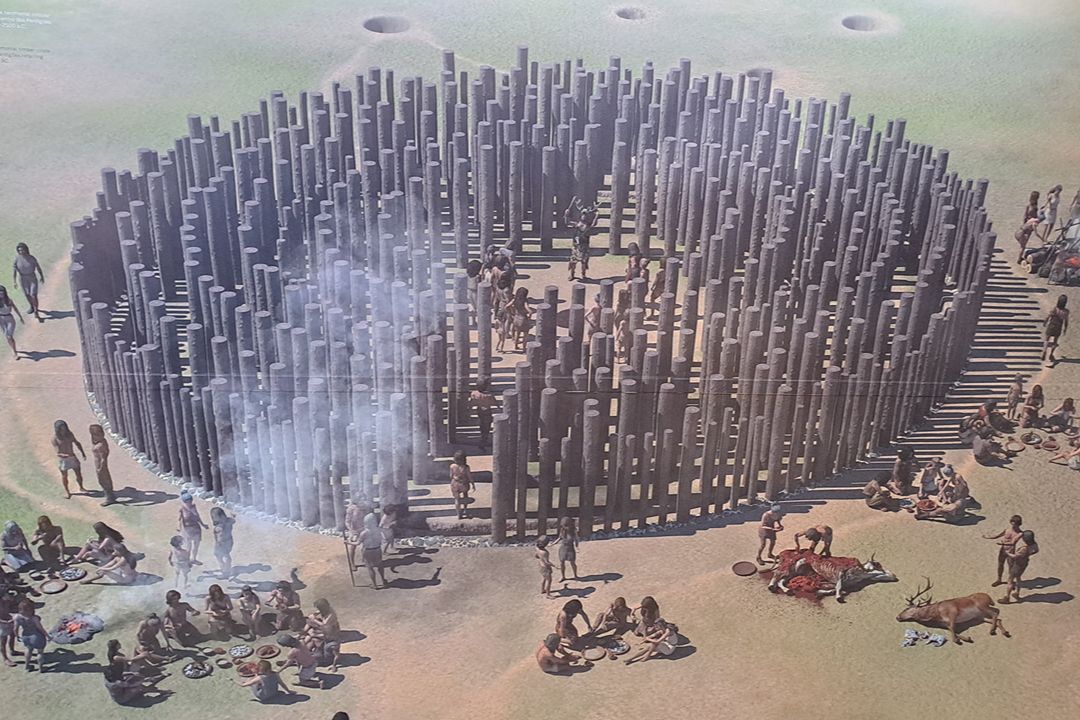
Archaeology rarely hits the headlines. Unless some lucky farmer happens upon a hoard of Anglo-Saxon gold coins and there is a media splash about it for 48 hours, no one considers what might lie buried beneath our feet. So it’s not really surprising that close to the Algarve there is an ancient sacred monument that was unknown for four thousand years and is only now, in this century, receiving the attention it deserves. It is listed as a National Monument, Portugal’s highest category.
The site is unique: it’s of major significance for our understanding of prehistory in Iberia. It’s comparable only to Stonehenge in England, and it’s of similar antiquity; the complex was in use from about 3500 to about 2000BC, spanning the Neolithic period and the Chalcolithic, moving into the Copper Age – about 1500 years or sixty human generations. Then it was suddenly abandoned.
The story began in 1996 when an Alentejo wine producer, José Roquette,was extending his Esporão vineyards and during a helicopter flight over his estate he noticed a series of roughly circular impressions in the ploughed-up ground.
It’s fortunate that Sr Roquette appreciates historical and cultural endeavours and it is largely through his generous patronage that the site began to be excavated and analysed – a process that continues today.There are no known sites akin to the Complexo Arqueológico dos Perdigões, so the knowledge now being painstakingly extracted from the ground could have been lost forever. Over a 29-year period, a series of concentric ditches has been accurately plotted and their ancient contents saved. At the centre lies a multiplicity of post-holes of various sizes, again in concentric circles.
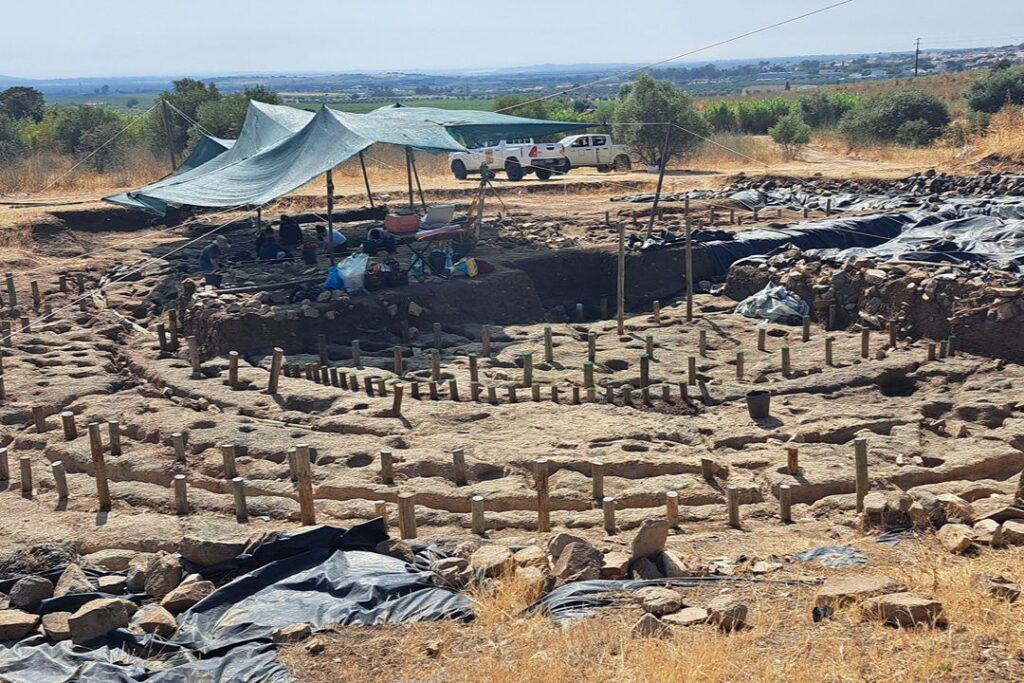
A visit to the site
Early one morning, a group of us boarded a bus heading north from Alcantarilha. Three hours later we reached the quiet, undulating landscape around the town of Reguengos de Monsaraz. It was late July. It was Alentejo. It was hot!
The archaeologist in charge of these remarkable excavations, António Valera, kindly showed us around. He’s been in charge of the dig from the beginning. Nobody knows more about it than António.
Perdigões lies in a wine and olive-producing area north of the town. The Esporão vineyards surround the site, which slopes gently down eastwards towards a symmetrical ridge several kilometres away. Beyond lies the Guadiana river. At the equinoxes, the sun rises over the exact centre of this ridge, an indication that the site was chosen deliberately. Furthermore, the two entrances formed in the outer ditch align precisely with sunrise at the summer and winter solstices. The Neolithic builders of this complex carefully aligned it with the sun’s movements over the year – cosmology must have been a major consideration for them, much more so than for the average 21st-century human speeding along the A22.
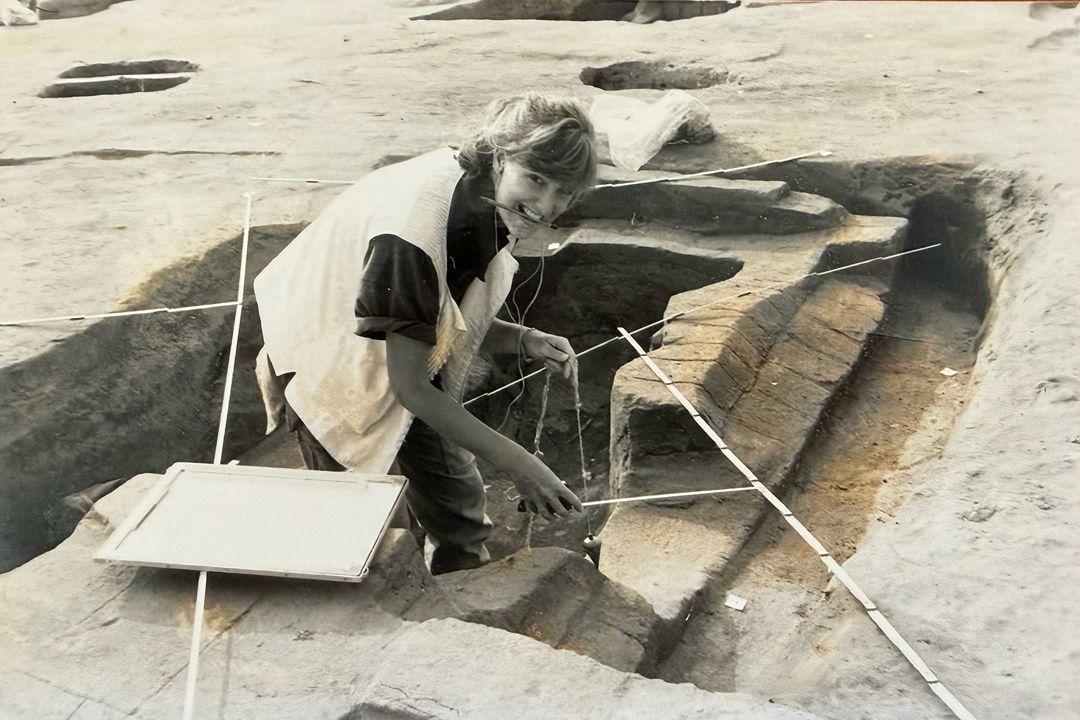
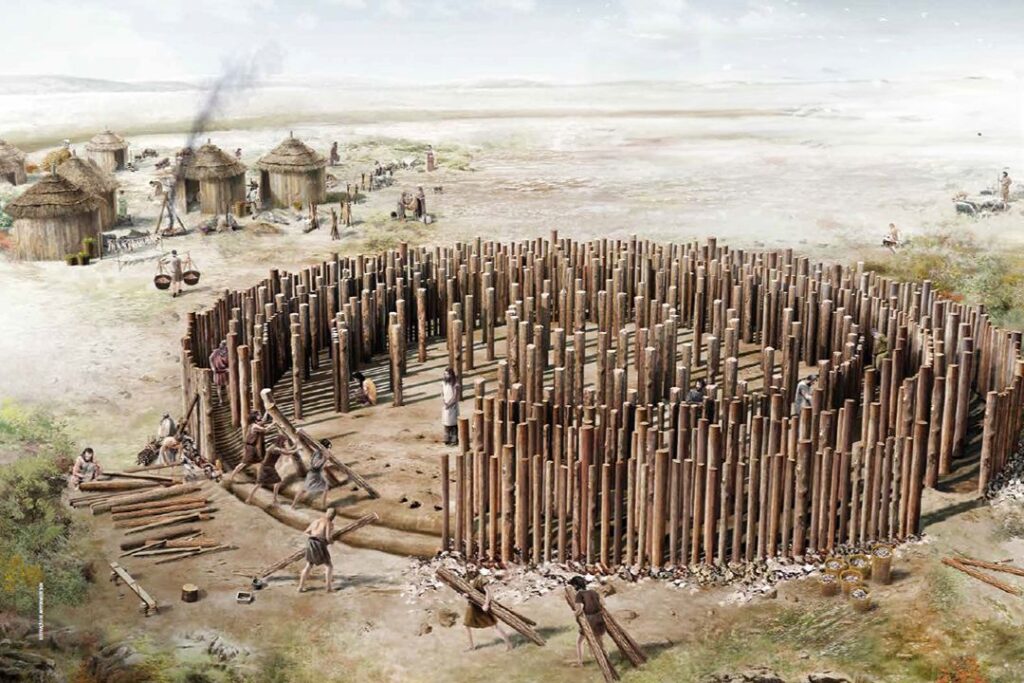
We found António and his young team crouched under an awning, labouring away using trowels, chisels and buckets. Every ounce of soil was being examined for potential finds. The area was peppered with hundreds of post-holes varying in size, each originally housing a pine tree trunk.
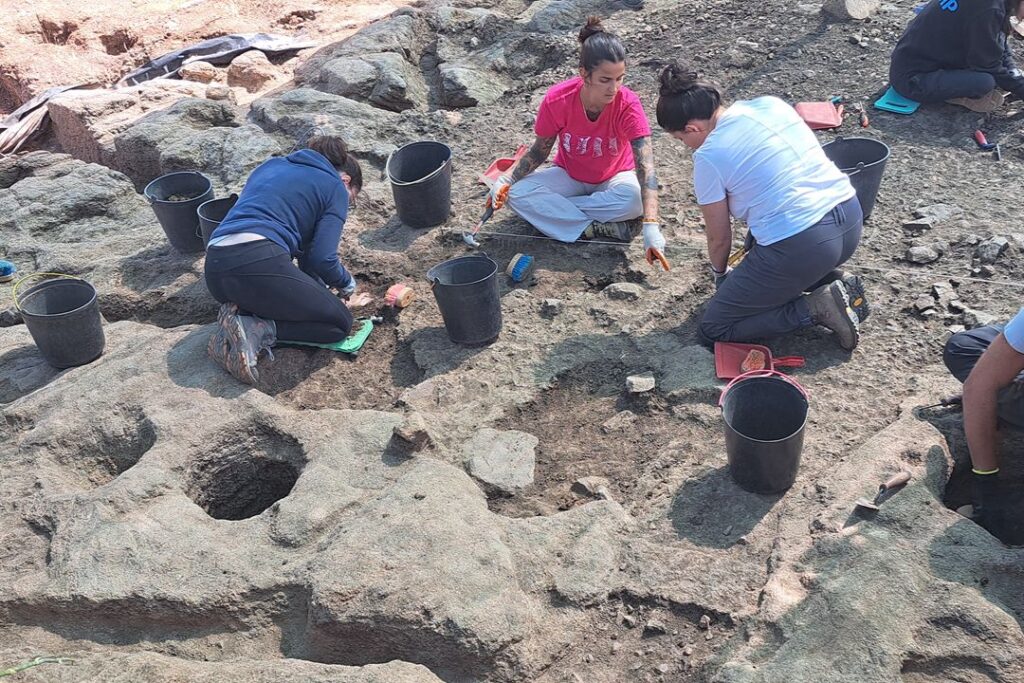
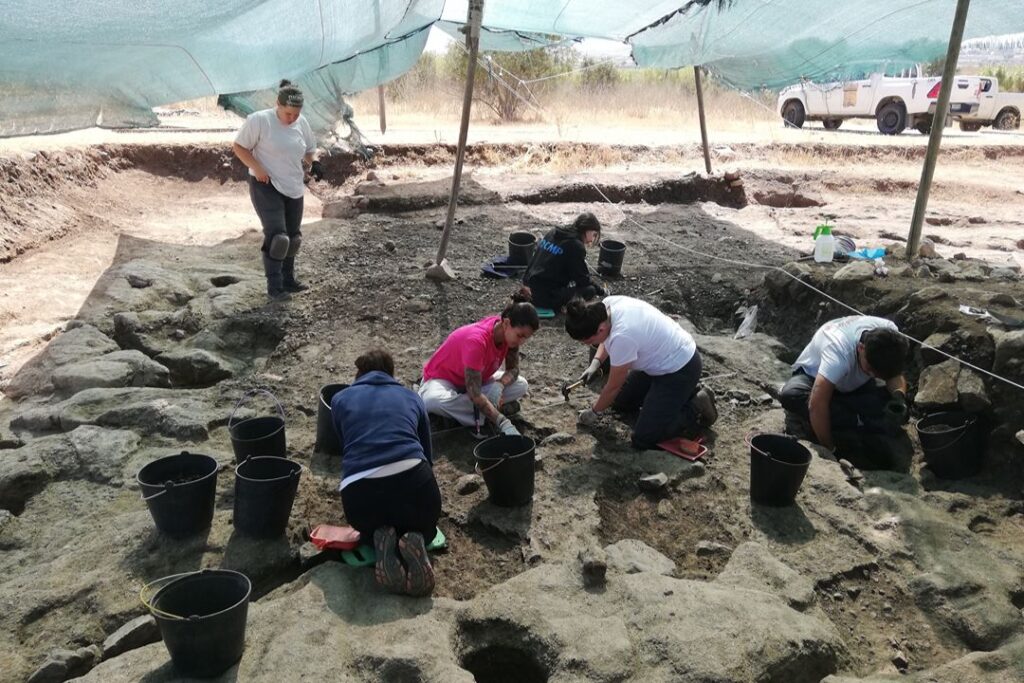
The arrangement was generally in concentric rings, but with some overlapping, so some circles superseded earlier ones. The ditch enclosures were also dug at different times: the whole 16ha site is a palimpsest.
The early ditches are quite modest in size, but the final perimeter ditch from the Chalcolithic Age, about four-and-a-half thousand years ago, is colossal – more than 3m deep and with a 1.4km perimeter. António’s team has estimated that about 78,000 tonnes of rock had to be dug out.
Perhaps the final result of this community project was less important than the process of achieving it, a prehistoric equivalent of a team-building exercise!
One has to imagine what kind of ceremonies took place in this sacred location, but it seems that they followed the seasons and rhythms of the natural world: sunrise, day, sunset, night. Perhaps at the summer and winter solstices, there were gatherings at the respective entrances to the site as the sun rose. No writing has survived from this age, so we have to guess. Sunsets cannot have been celebrated similarly throughout the year as the sun sets behind the slope of the site.
Remains of huts have been found here and António has observed a process of build, occupy, destroy and rebuild. It appears that permanence was not the aim. Similar considerations apply to the people’s funerary practices; the deceased were not “respected” in the manner which later became the European norm. Bones were sometimes buried and later dug up to be reburied.
As hunter-gatherers gradually adopted sedentism and became farmers, metal technology advanced and copper smelting developed. In parallel, cremation became common. It appears that the people sought to obliterate the individual – the antithesis of what was happening around the same time in ancient Egypt, where mummification was employed to preserve and render the deceased eternal.
Finally, around 4,000 years ago occupation mysteriously ceased and the whole area was covered over in stone tiles; was this an attempt at obliteration? A representation of death? In any event, the hard carapace, whilst protecting the remains over the millennia, has presented today’s diggers with a tough shell to remove.
A museum piece
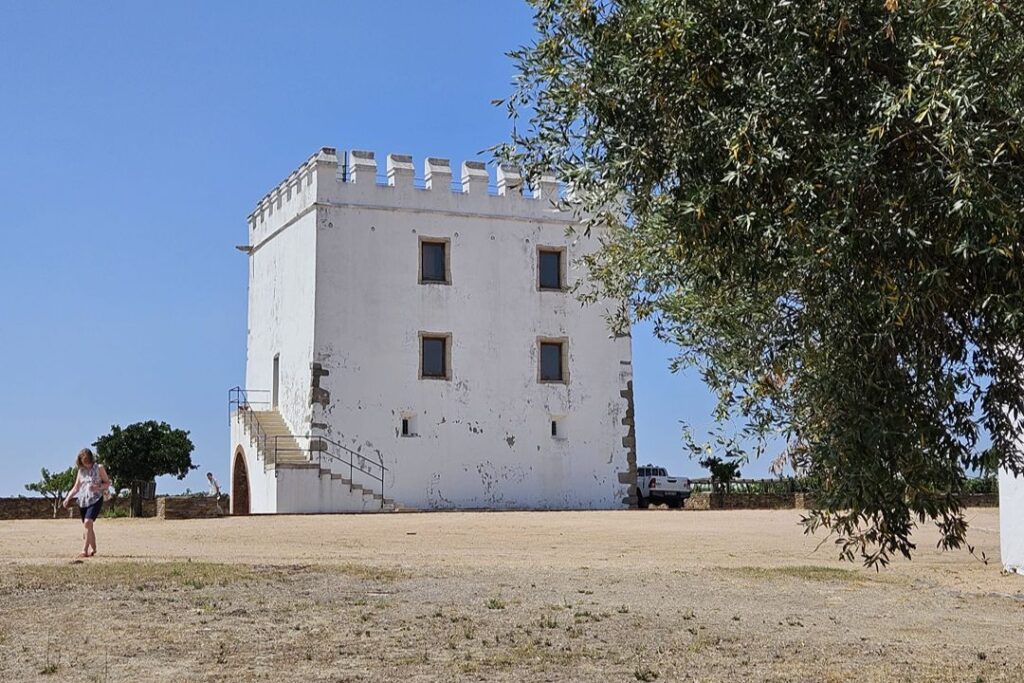
There have been literally thousands of finds, and there will be thousands more as work continues. Some of the best objects are on display in the Torre do Esporão fort museum, which is owned by Sr Roquette.
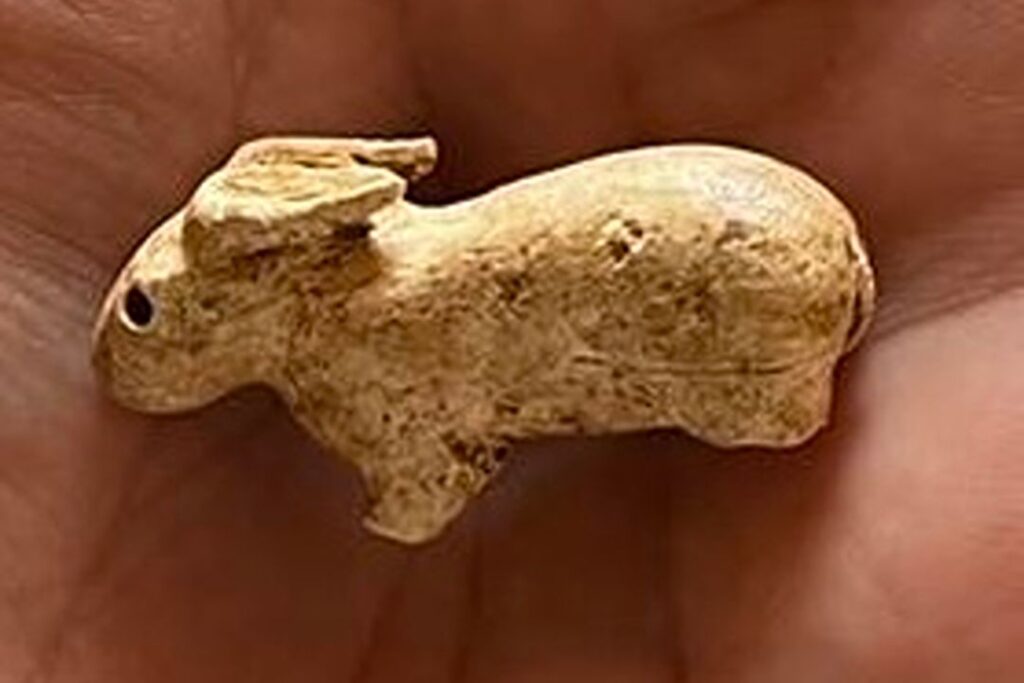
There are anthropomorphic figures, some delicately carved, and bronze arrowheads and tools from a later period. The bilingual information boards are clear and highly informative. Possibly the museum’s most precious object is a tiny, beautifully accurate hare or rabbit, carved out of ivory. An image of the hare has been adopted as the project logo of ERA Arqueologia SA, the company carrying out the excavations. Some finds are of materials from remote places – ivory, marble, seashells, amber. This was no isolated community – there were trading links near and far. And bone analysis of the human remains has shown that many of those buried had not been born locally – they had walked to Perdigões at some point and had died there.
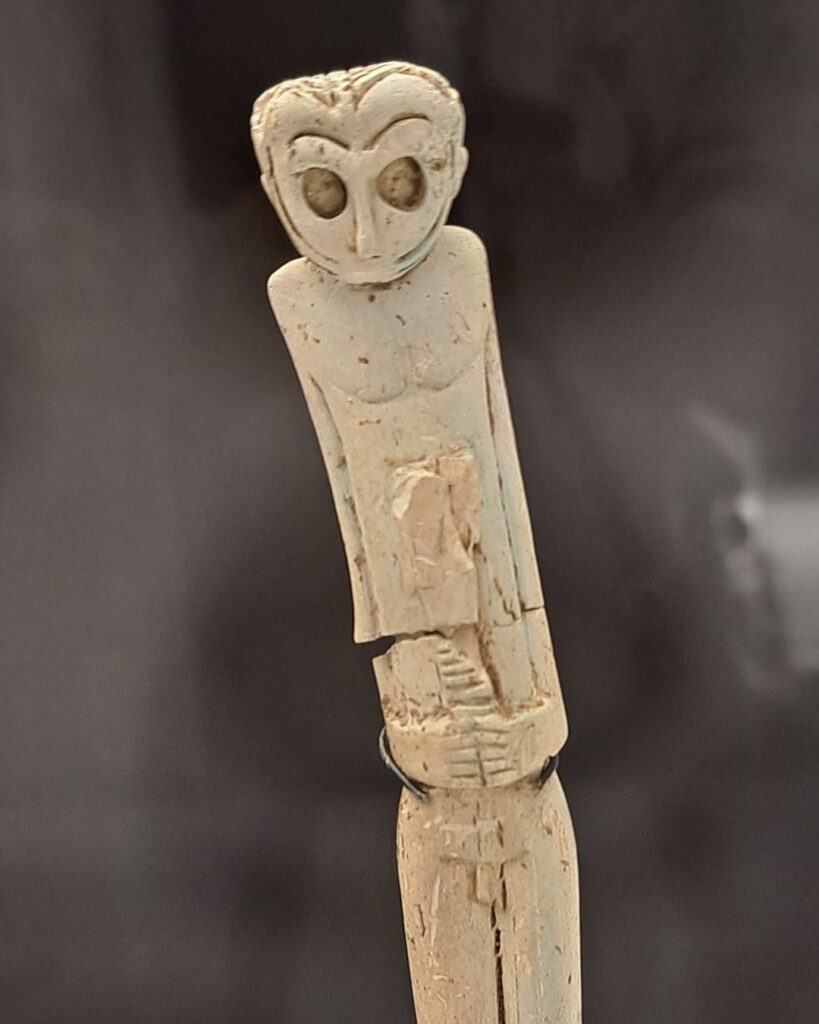
Human Figure, from possibly a whale tooth
The fort itself, south of Reguengos de Monsaraz,is a solid late 15th-century fort three storeys tall, the museum occupying the stone-vaulted ground floor. There is a nearby chapel and gatehouse, and an ancient olive tree, possibly contemporaneous with the fort.
We made our way back to the town, passing another remarkable building – a neo-Gothic church from the late 19th century, unlike any I have seen elsewhere in Portugal.
It had been a long day. Our final stop was essential – the Esporão wine shop. It felt only fair to support the dig’s sponsor!
The Perdigões visit was organised by the Algarve Archaeological Association, which arranges monthly talks, visits and also grants to students.
Photos courtesy of João Gonçalves
Main photo: The Completed Work – Rendering