From eucalyptus to wine grapes… one step at a time
In our accidental six-year transition from travelling journalist and diplomat couple to small hoteliers, we’ve achieved a lot in our little off-the-grid valley on the south-west coast of Alentejo. We always joke that our success so far has been built on utter naivety and that doesn’t seem to be changing.
Turning salty boreholes into drinking water was a biggie; installing solar systems and navigating the rules and regulations to finish building and opening an eco-luxe lodge wasn’t the easiest; landscaping many hectares remains a work in progress… and then there’s the vineyard.
After a few years pondering planting a small vineyard on the site of our old eucalyptus forest and applying for permission, we took the plunge earlier this year, made it up as we went along and shoved a thousand vines into the ground.
There are books gathering dust on the shelves which could have prepared the ground a little more, but in the chaotic day-to-day of running a new small business, we were hit by the double-whammy of not having the knowledge… nor the time to acquire the knowledge… in time. And so began the rollercoaster ride of reacting to problems rather than getting ahead of them.
The first most urgent question was how to plant the vines – how to prepare a pretty ropey piece of land with less than half a metre of soil sitting on a slab of clay.
Eucalyptus plantations not only suck up huge amounts of water, they also poison the ground to deter the competition, and so the topsoil is exhausted and acidic – not necessarily a bad thing for wine grapes.
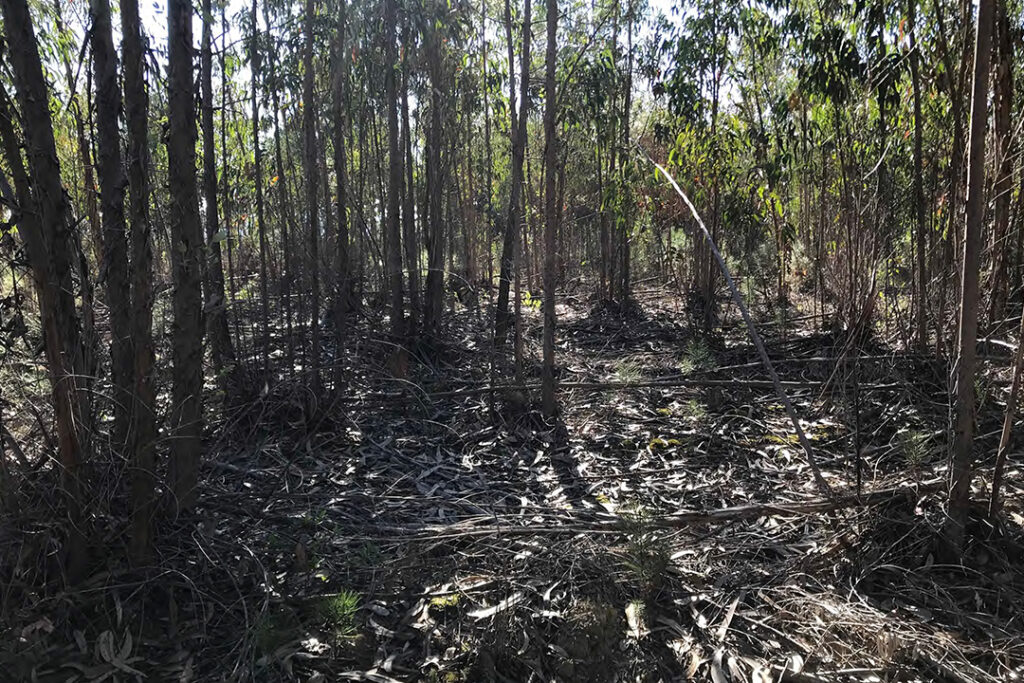
When the winter storms blew over a few pine trees, we realised their roots hadn’t managed to get a firm footing in the clay – they had grown sideways rather than down and it wasn’t enough of an anchor in high wind.
I wasn’t sure my journalism skills would be terribly transferable in this line of work, but I do know how to find experts and ask them questions. Obviously opinions differ, and in my old job as a BBC foreign correspondent it was easy enough – I just broadcast both sides and let the viewer or listener make up their own mind. But when you’re seeking information for yourself, it’s a bit trickier, because you have to get off the fence, pick a side and then stick to it.
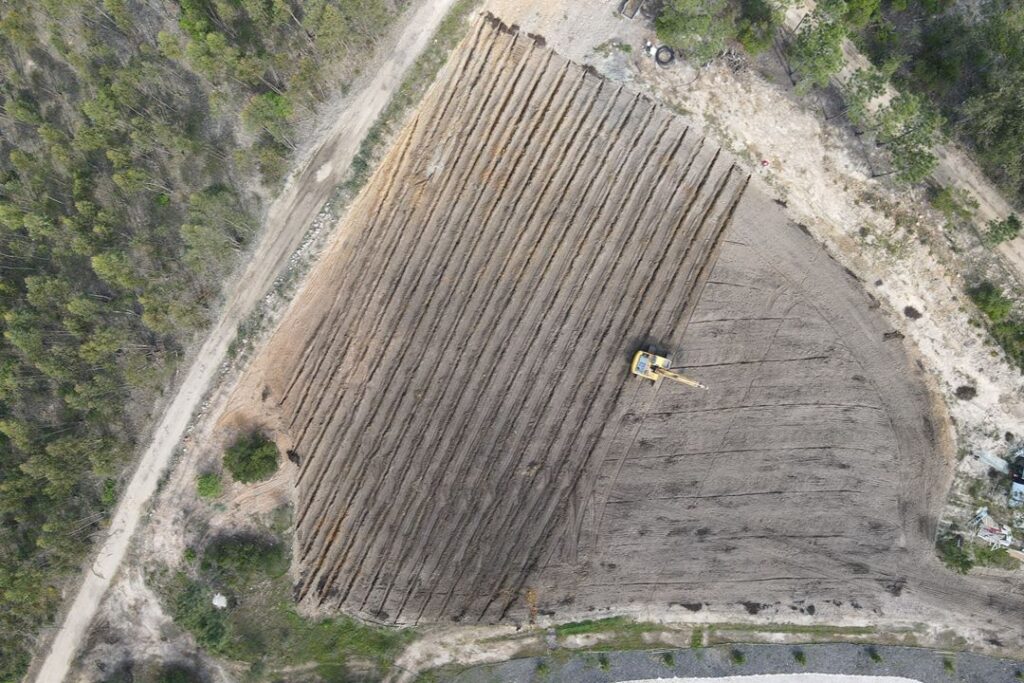
The advice started off well, with broad agreement that we needed to plough in some organic material, rip deep trenches where the grapes would be planted to break the clay crust and give their roots a chance to quickly go deep.
In a place where “calma, calma” often rings in my ears, it was tough to get everything done in order: the ploughing, the delivery, then the mixing of 25 tonnes of organic material, the bulldozer with a big “ripper” spike and then the grape delivery.
The choice of varieties took a while, but we were lucky enough to have the help of Mouchão winemaker Hamilton Reis, who knows our area well and advised “bush vines” – allowing each plant to grow on its own rather than training it to follow a wire.
He suggested Castelão for the red, and Arinto and Alvarinho for the white grapes.
I turned to ChatGPT for the grapes of math: some complicated trigonometry to determine how many plants would fit in the available area. It inaccurately estimated 800 and so after physically running string and posts, we had to order 200 more.
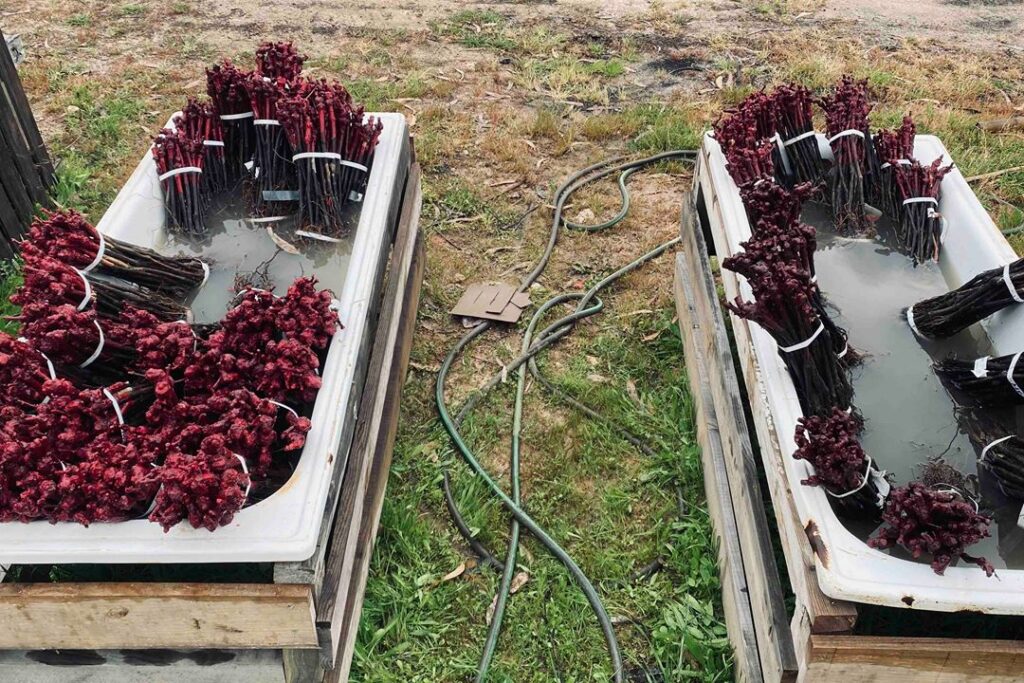
In the context of making wine, a thousand grapes doesn’t sound like much… and they all fit into five small boxes… but when you’re planting them yourself, it’s a lot and not something you can do in a day.
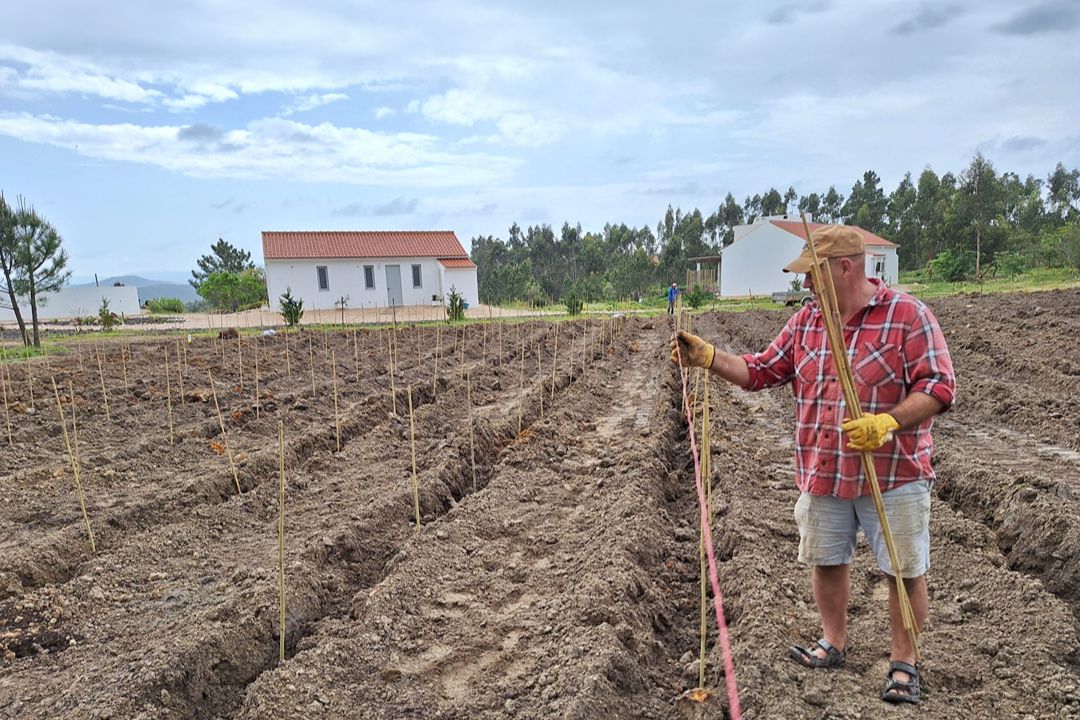
We enlisted some help from friends and planted them all 1.5m apart – and then pretty much filled the trenches with water to give them a good start in life.
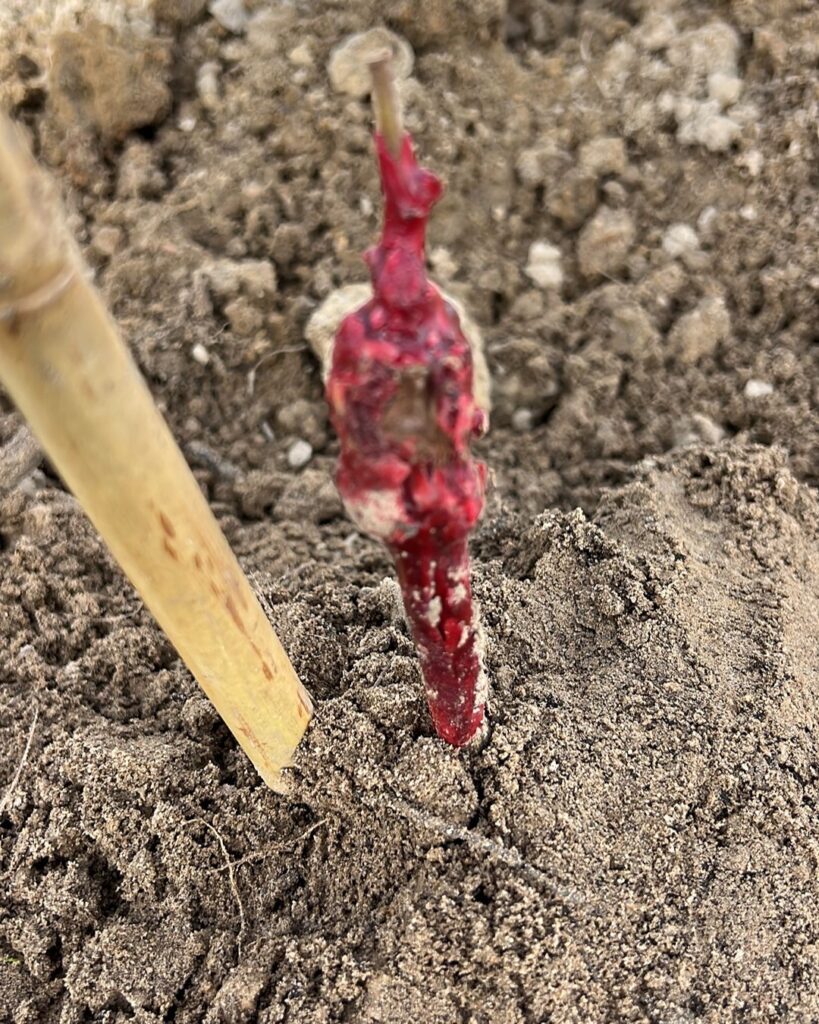
Ready to go: planted up to the wax which covers the grafted grapes and roots
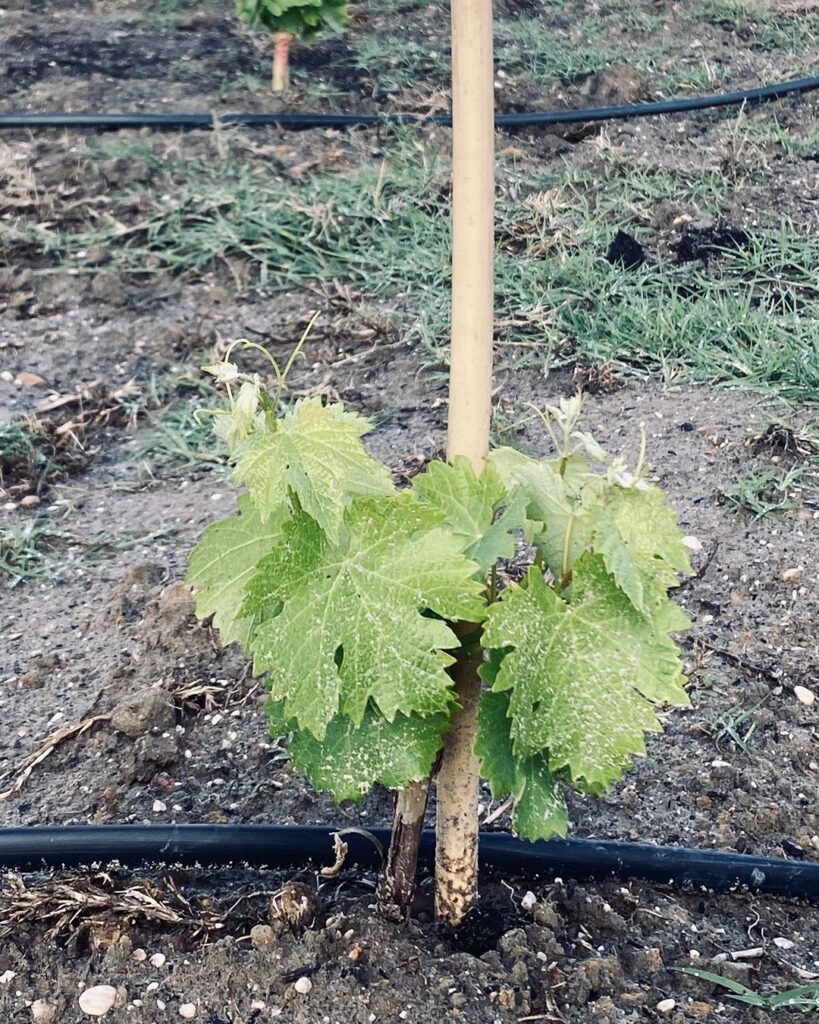
They’re alive: there was much delight when I realised I hadn’t killed them all
Two weeks later, they were sprouting, two weeks more and they were climbing up their bamboo sticks and all over each other… with a few notable exceptions.
That’s when opinions began to differ. “Irrigate every other day”, said some people, “hold your nerve… only give them water when they really need it… make them go looking,” said other experts.
Paralysed by uncertainty, I did nothing… then it rained… and the decision-making went away for a while. But as the temperatures soared, some vines started to wither… their leaves turned brown and fell… watering didn’t help.
After a flurry of messages, a friend told me they were sick – mildew. Niels advised a treatment. I bought a battery-powered sprayer and set to treating the patients. I dusted off one of the books and searched for “mildew”.
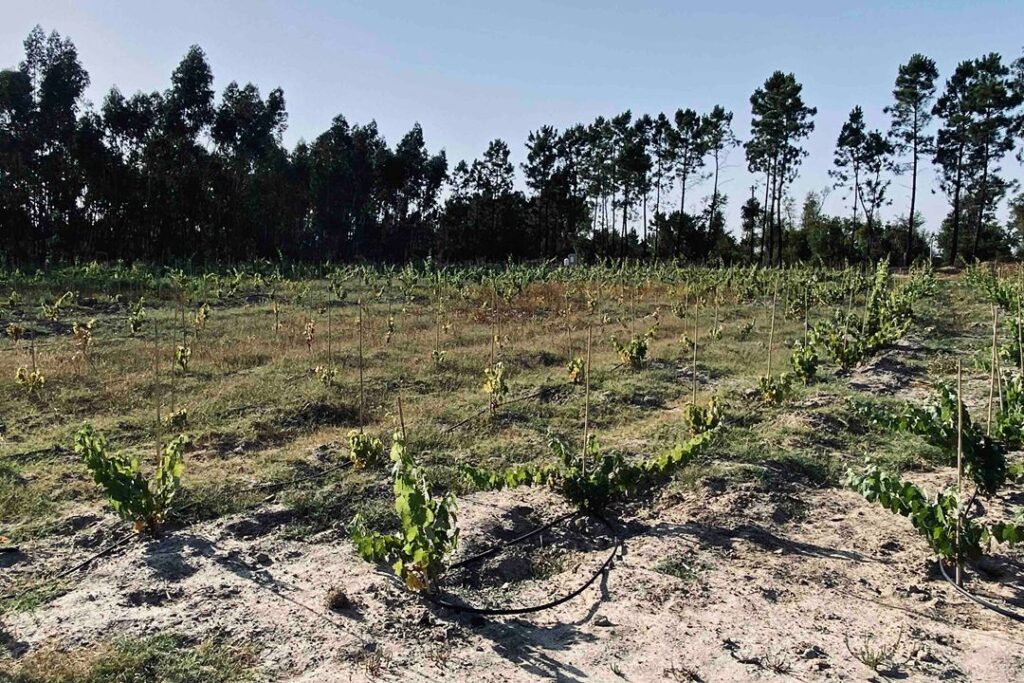
Patchy ground: but not all of them took off… and it turned out mildew was to blame
A few weeks earlier might have helped, but I’m pleased to say most of the plants are hanging on. Even horticulturists sometimes suffer a 30% failure rate, and we’re nowhere near that quite yet.
If it wasn’t such a busy summer, maybe I’d be getting ahead of the next problem before it arrives… but for now, we’ll have to wait and see.
It’ll be three years before we’ll get a proper harvest, so until then it’s the usual case of learning by doing… and maybe by doing a bit more reading and research.
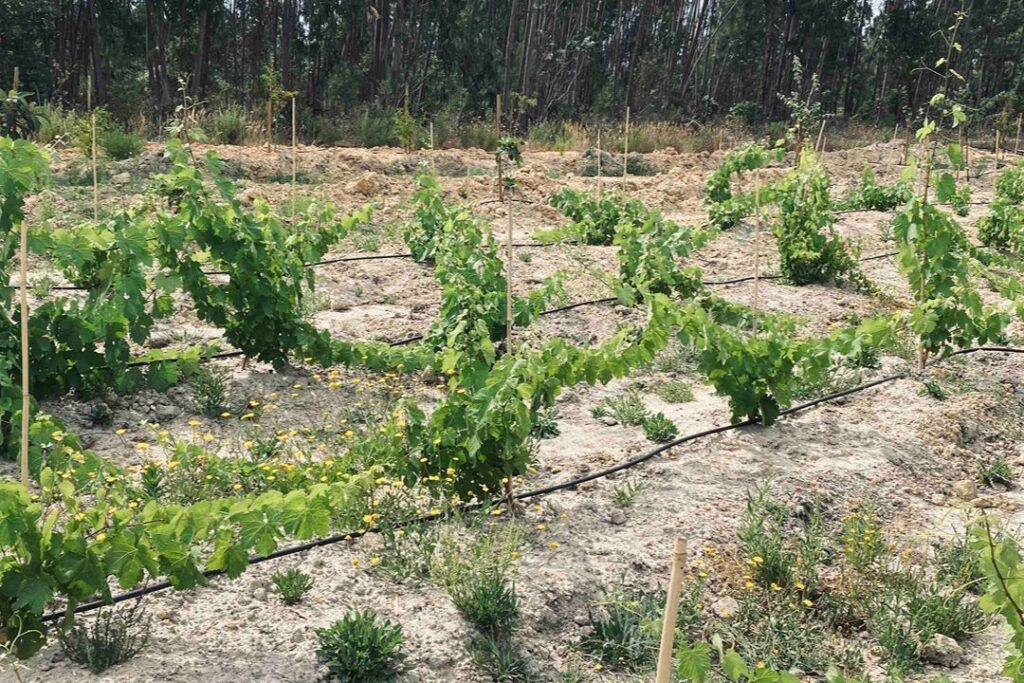
Alastair Leithead is a former BBC foreign correspondent now living in Odemira, where he and his wife run @vale_das_estrelas, or the Valley of the Stars eco-luxe lodge. He blogs at Off-Grid and Entertaining in Portugal and podcasts Ana & Al’s Big Portuguese Wine Adventure in all the usual podcast places. They are hosting a wine retreat in October and in April 2027.
Main photo: Ready to plant: the author getting the bamboo sticks and a trench ready