The Algarve’s winter racer: How Jessica Feder chases speed and sunshine
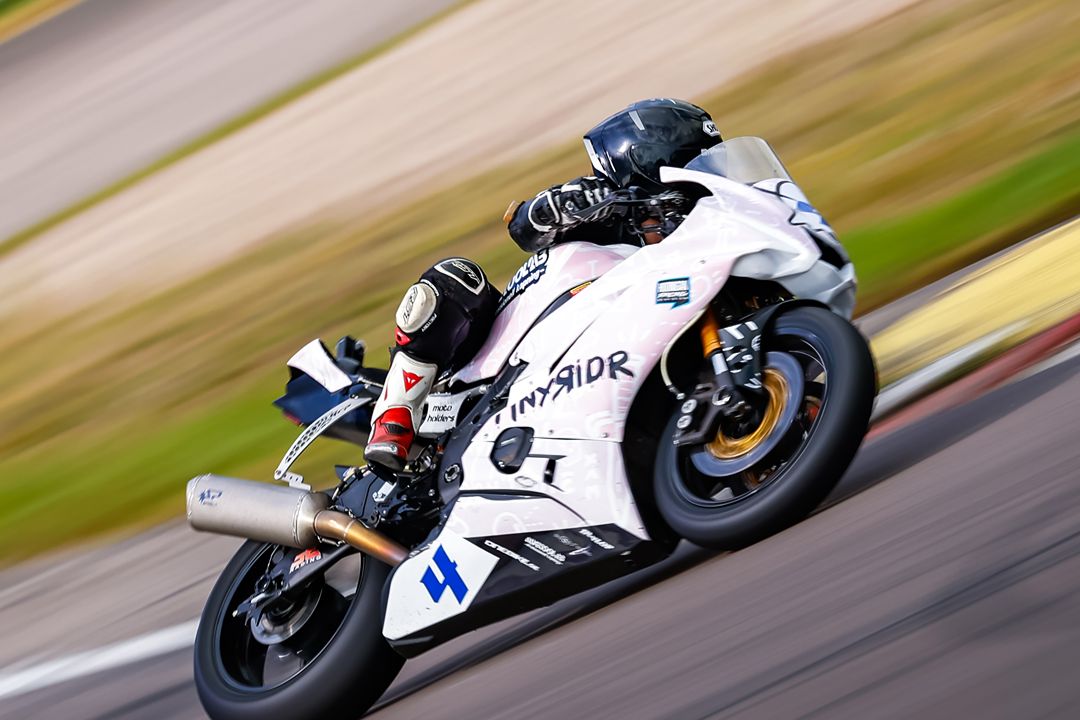
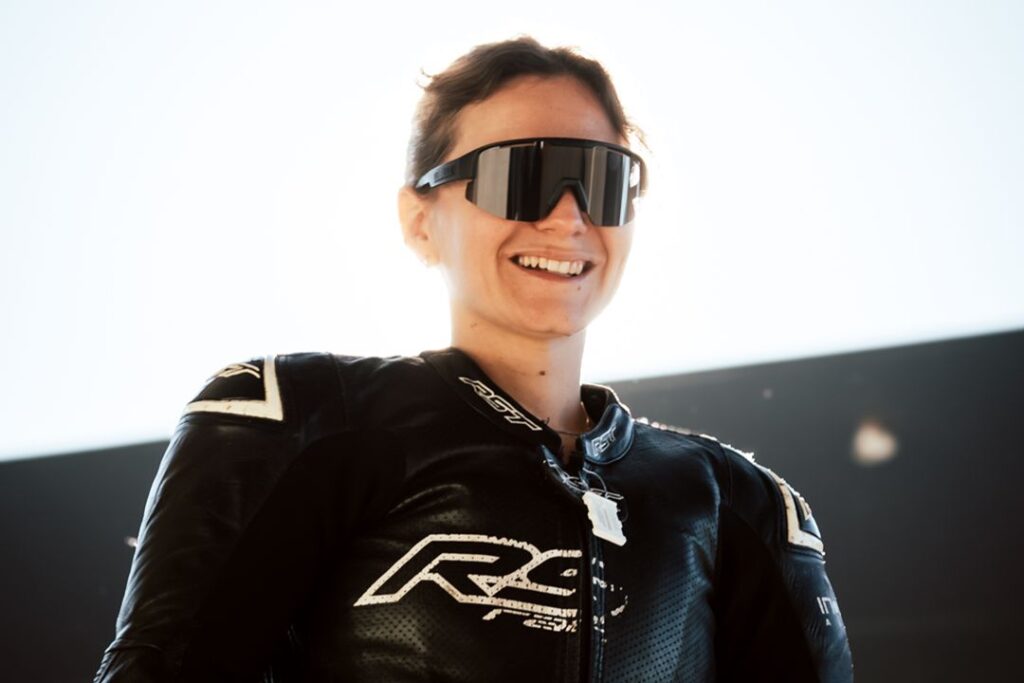
When I meet Jessica Feder, I am reminded of the proverb, ‘Good things come in small packages’. Despite her diminutive physique, her steely determination to reach the top of her game is obvious. What is less obvious is the ‘game’ she is pursuing. Jessica is competing in the heart-stopping sport of track motorcycling, where she reaches terrifying speeds of up to 270 km per hour.
Jessica’s story begins in the Algarve. Born in Faro to a Portuguese father and a Swedish/ Portuguese mother, she was raised in Albufeira. Jessica then moved to Sweden with her mother, where she has lived for the past 17 years. However, for the last nine years, she has spent winters at her mother’s home in Lagos. But Jessica isn’t just here to enjoy the Algarve sunshine; she spends her winters training at the world-famous Autódromo Internacional do Algarve while her competitors in Sweden are snowed in.
A late bloomer on the track
Jessica’s first passion was cars, not motorbikes. Her Portuguese father loved Formula 1. “We would always watch F1 races on Sunday. I played with cars as a kid,” she recalls.
A passion for horses then scratched her itch for adrenaline. Jessica started horse jumping at the age of ten and competed at a high level both here in Portugal and in Brazil. She didn’t get her motorcycle licence until she was 18, shortly before moving to London to work for an events company, then to Sweden, where she worked at an Apple Store. She bought her first motorcycle (a Ducati) when she was 25. A friend encouraged her to try track riding. Despite totalling her bike in a crash on her second time out, she was ‘hooked’ and switched entirely from road bikes to track bikes.
The daring 36-year-old now competes in the SSP600 class (600cc) in the Swedish Championship (Nordics), having moved up from the Rookie class after a top-3 finish in 2023. But if you think it is an aggressive sport on the track, it certainly isn’t off it. “The life we live at the track in the summers in Sweden – it’s unbeatable. I can’t compare it to anything else. I’ve competed at a high level with horses. And I’ve never had that kind of camaraderie among all the different competitors. We really root for each other. It’s a really great lifestyle. I love the whole atmosphere.”
The digital nomad life
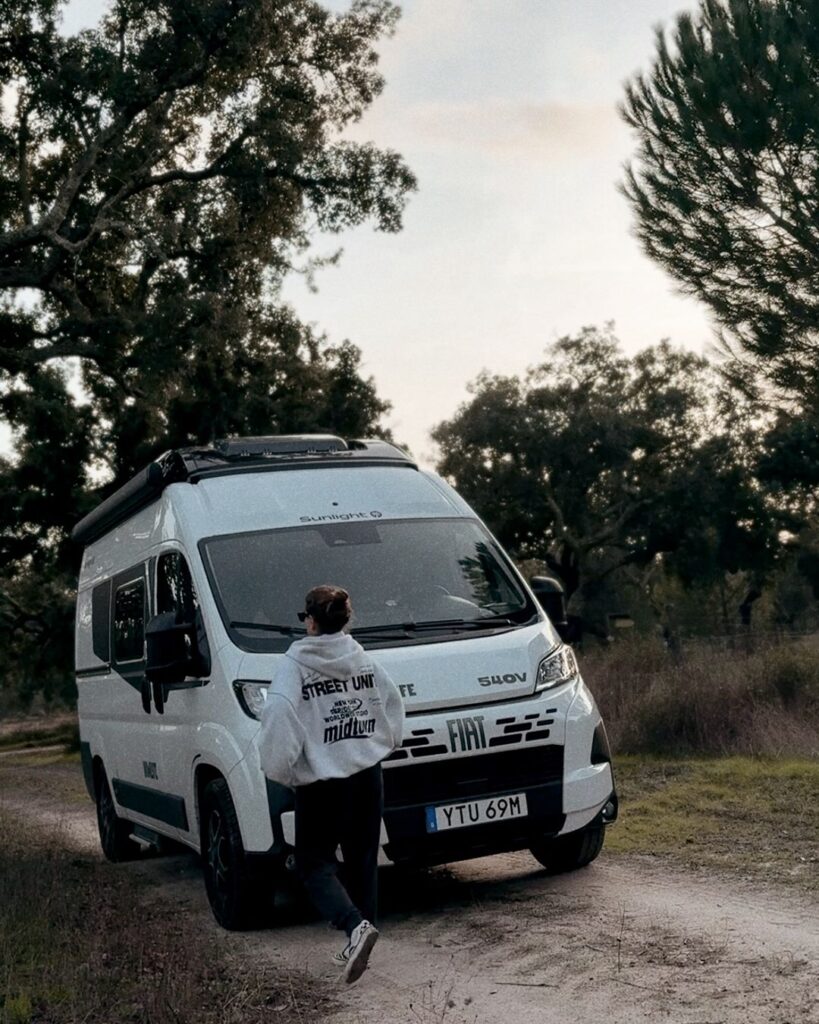
To escape the dark Nordic winter and support her nomadic lifestyle, Jessica just sold everything in Sweden to buy a camper van with a trailer that can carry two bikes. This allows her to live at the tracks in the summer, cook for herself, and travel between Spain and Portugal for training in the winter – “You know you are into something when you swap your dream apartment in Sweden for a campervan to spend the winter on the racetracks of Europe.” She works remotely for a Swedish startup (doing project management, design and copywriting), which allows her to live a nomadic lifestyle, working from the van while following the sun and the race circuits.
“I’m very late at this sport. I mean, I should have started way back. It also makes the competition a lot harder because we have young people who have ridden motocross since they were small, training all the time.” The Algarve offers world-class facilities for Jessica to prepare for the Nordic season. In fact, she credits her fast progress in the sport to the Autódromo Internacional do Algarve. “It’s like a roller coaster – many drivers consider it the best track in the world due to its elevation changes. In comparison, tracks in Sweden are like small kart tracks.” She also trains in Jerez and Almería in Spain.
Unfortunately, Jessica is currently injured and is having to regain movement in her shoulders through physio and a personalised gym workout. Ironically, her most serious injury to date came not from a motorbike but a push bike! Last July, she broke her scapula after falling from a mountain bike.
The mechanics of racing
Jessica explained that you need a specific licence to ride a track bike because it is different from a road bike. “The track bike is stripped back for racing, so there are no lights, no mirrors, specialised fairings, and different safety wiring.”
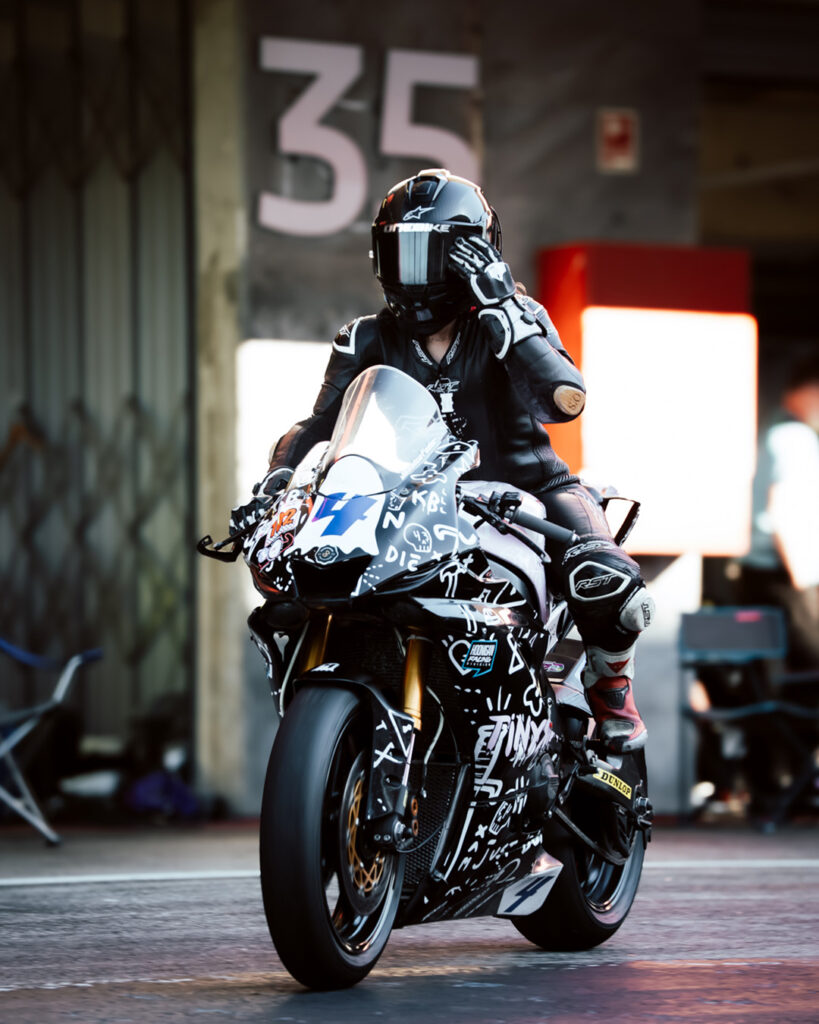
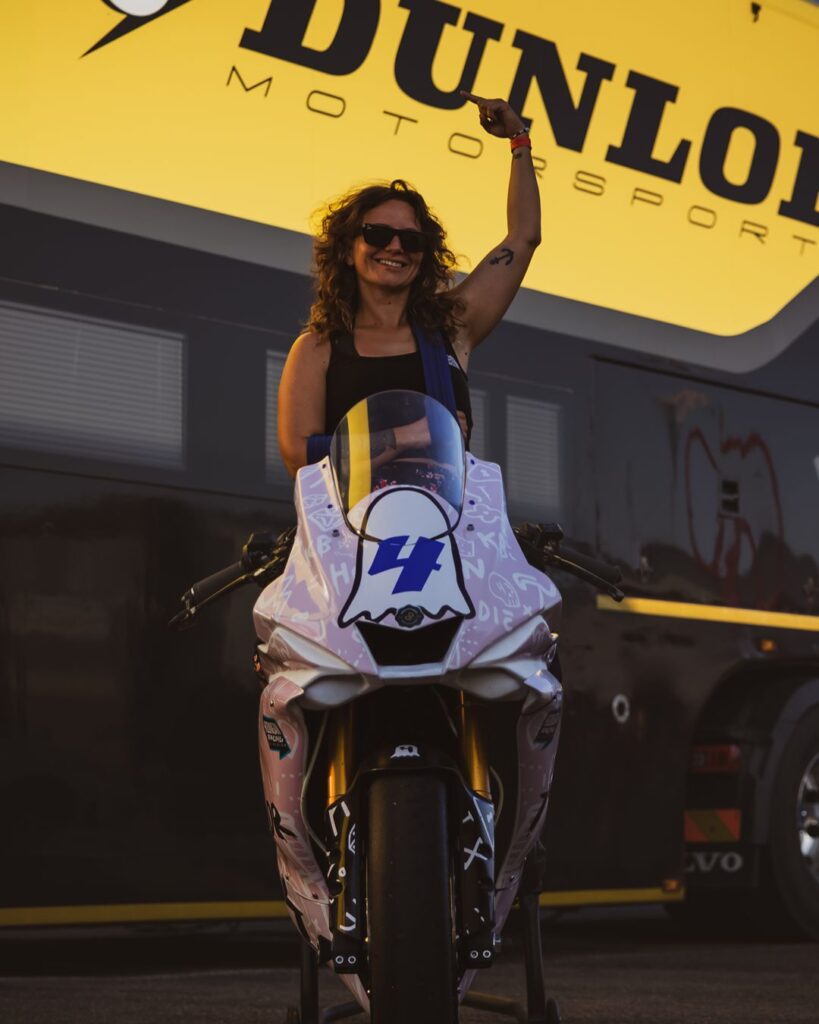
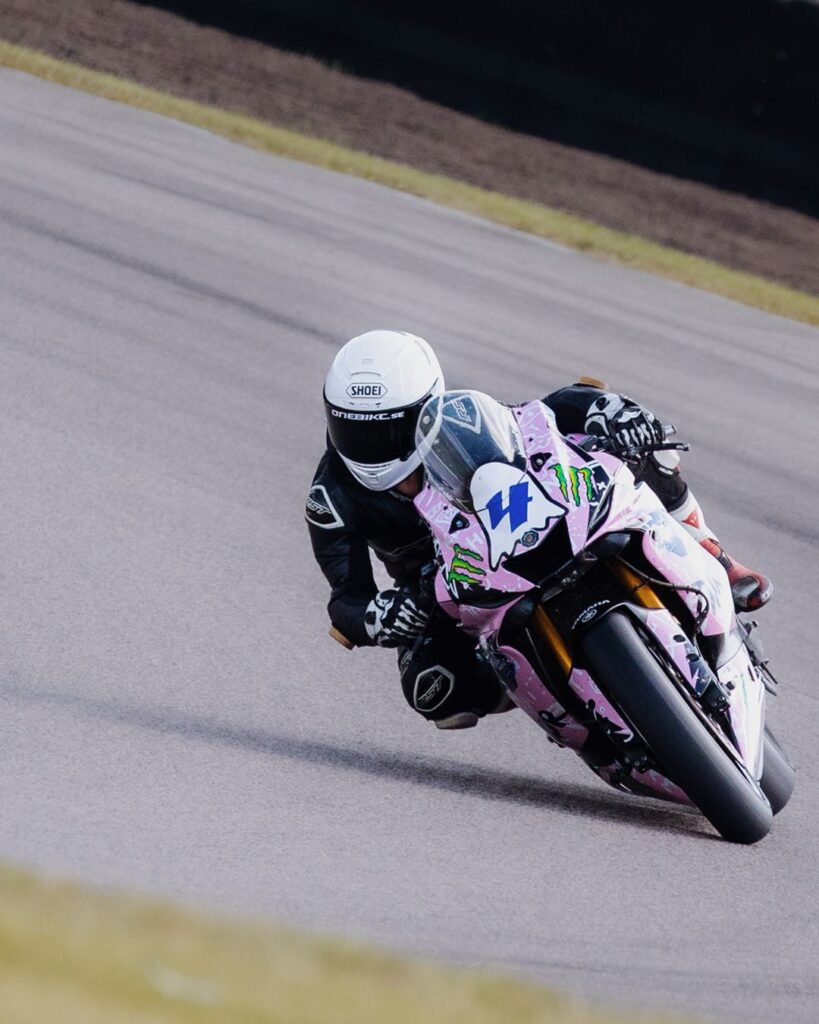
Her track bike is nicknamed ‘the pig’ because of its bright pink colour. Due to her short stature, Jessica requires custom bike modifications to reach the controls. She is also significantly lighter (12 kg) than the minimum regulation. The combined weight of rider and bike should be 242 kg. This discrepancy makes it difficult for her to compete fairly against taller, heavier riders, so she is required to add weight to her bike.
One of the few impressions most people have of this challenging sport is the image of the bikes leaning so far on the bend that the driver’s knees touch the floor. I ask Jessica how you achieve this. “You have to find the balance; otherwise, the front tyre will just disappear, and you will crash. To be able to lean that much, you’ll need a good position on the bike and build it a certain way. In my case, it’s very hard because I’m short and the bikes are usually built for taller people. So I have to custom-make my bike, which also means I won’t be as low to the ground. So I very rarely touch my knee all the way through the corner, as if I did that, I would be unbalanced and crash.”
So, is being vertically challenged a benefit or a disadvantage? “It is a disadvantage, but on the other hand, I’m more agile on the bike and lighter, which is a positive.”
In November, she fell from her motorbike and dislocated a shoulder and broke a finger. I ask Jessica if this has given her more fear. “I’ve had periods where I’m quite afraid, but you can’t ride if you’re scared. It doesn’t give you anything. But of course, when you crash as I did, you are frightened of it happening again. But I don’t crash often and I’ve learned to turn it into a positive. I have to analyse why I crashed. I analysed the film of the crash. I analysed my thoughts. I analysed the mechanics. And in the end, together with friends, we realised it was the front tyre. It was cold, as the tyre warmer was not working properly. And that analysis exactly matched my feeling of no grip on the out lap. And now when I ride, I don’t have the fear because I know what happened. As long as I don’t make that mistake again – it’s not going to happen again.”
Jessica is looking forward to training with a coach whom she met in Spain, who will be joining her at the Autódromo. “He will be coaching me with and analysing data, so I’m really looking forward to that.”
Ambition and advocacy
Jessica would like to be in the top five in her class at the Nordics, but her ultimate dream is to be known as the best in Sweden. “I want people to look back and ask, ‘Who is the fastest woman in Sweden?’ And they will come up with my name.” She is currently collaborating with Dunlop, Onebike and TengTools but is seeking additional sponsors to achieve her dream.
Jessica also wants to lead by example and get more women into the sport. She acknowledges it is a male-dominated field and wants to make it less intimidating for women. “I want to make other girls feel that they can do this and that it is a friendly sport.”
Jessica’s tip for Algarve residents who drive motorcycles and want to try track riding is to visit the Autódromo for track days (gear and bikes can be rented). Start with a road bike on the track, but take it easy. She would love to eventually move into coaching, but for now, she encourages anyone who rides a motorbike and would like to try it competitively to go to one of the Autódromo’s trial days and give it a go. “You might get hooked, like I did!”
Whether Jessica is working from her camper van or cornering at 270 km/h, she is living life in the fast lane. We wish her every success.
You can follow her race for the podium on Instagram @tinyridr
Find out where Jessica will be riding in the Nordic championships at jessicafeder.com
Main photo: © Daniel Persson @dannep.photo