I’m turning Portuguese – or at least I think I am.

The 10th of February was a big day for me.
A very big day.
It was the day I applied for Portuguese citizenship.
At times, it felt as though I was running at full tilt just to stay ahead of proposed changes to the citizenship criteria. The most significant of these was an intention to extend the minimum residency requirement from five years to ten. Having lived in Portugal for “only” eight years, such a change would have delayed my application.
As things stand, no new legislation has been passed, but there was a genuine risk that it might have been – and still could be. As recently as November, the government set out revised terms, only for them to be halted by the Constitutional Court.
The application cost €250, though there were additional associated expenses. Processing times are difficult to pin down, partly because responsibility for administering applications has changed. I am expecting it to take somewhere between 18 and 24 months.
Why apply for citizenship?
I’ve been asked that more than once. In part, it began as a personal project – a way of understanding how the system works. But it was always more than that. Citizenship will allow me to vote in elections I cannot participate in at present, and even to stand for election myself. It will mean I can apply for a Citizen’s Card, making day-to-day life easier by opening access to additional online services.
Citizenship will give me the right to live and work elsewhere in the EU. While it’s unlikely I’ll ever want to do that, it would mean I could travel freely and without restriction throughout the rest of Europe, which my Portuguese residency status does not confer. It will mean I have dual nationality – I will retain my British citizenship – which may, or may not, make EU border crossings and those pesky airport queues a little easier.
There is also an emotional element: a personal affiliation with Portugal formalised in the most meaningful way.
The process itself was less daunting than I had expected. The main challenge was bringing my Portuguese language skills up to the required level, assessed through the CIPLE exam. Thankfully, I passed. I wrote about that in the November edition.
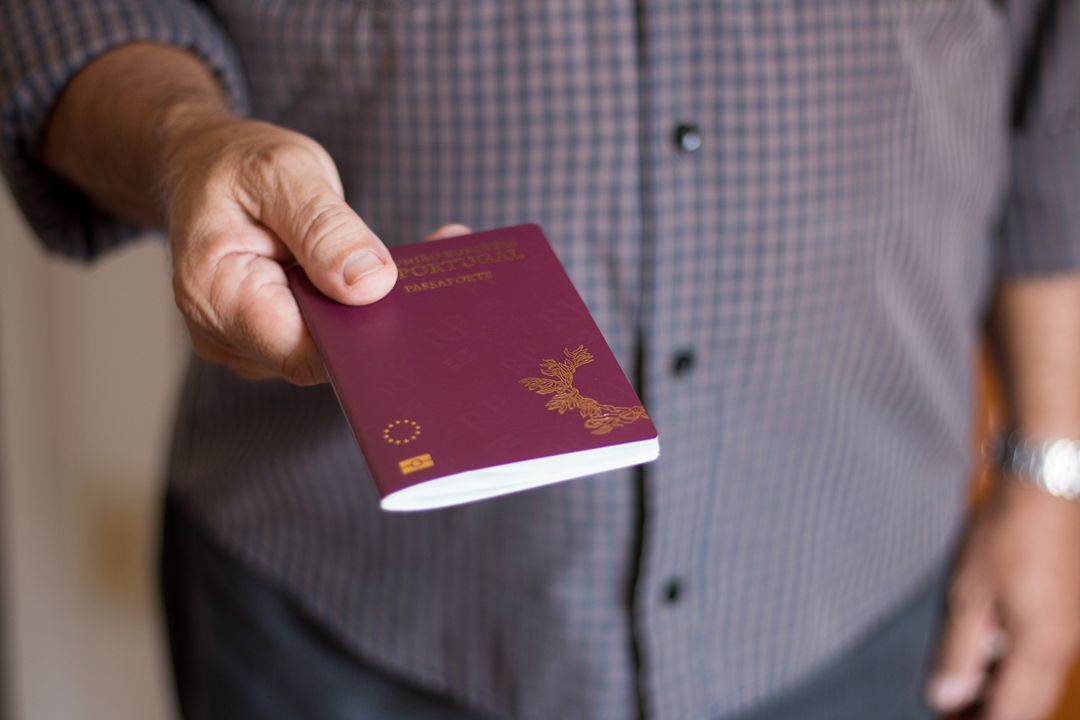
There was, however, a substantial amount of paperwork to collate. I submitted a copy of my original paper residency document – complete with EU symbols. Remember those? I provided a copy of my current residency card. I obtained a Portuguese criminal record check from the court tribunal offices in Olhão. I also needed a similar check from the UK, issued by ACRO (see below). I supplied my birth certificate and my CIPLE exam result. Finally, I was required to write a short letter in Portuguese outlining basic personal details, including my address, profession and legal representation.
Aside from the language exam, the process felt reasonably painless, though it helped that I paid a lawyer – at additional cost – to submit the application online. This is not something individuals can do themselves – documents must be delivered in person to an immigration office. I was keen to avoid that and, perhaps wrongly, assumed that submitting via a lawyer might lend the application a little additional credibility.
There were moments of tension, not least the ticking clock created by potential rule changes. Applications, submitted before the proposed changes could be implemented, were to be processed under the rules in force at the time of submission. My UK documents – the police check and birth certificate – had to be apostilled (i.e. certified) in the UK and then translated. More cost, more logistics, and the added anxiety of sending documents back and forth.
Was it worth it? If I am granted citizenship, then yes, it will have been.
Another question I have been asked is whether this will make me Portuguese. I had never really thought about it in those terms. Technically, I suppose the answer is yes. Personally, I will always feel British, albeit British with Portuguese citizenship. Beyond the time and expense involved, I struggle to see any real downsides. There’s an emotive side to it, too. I’d be proud to hold Portuguese citizenship.
All I can do now is wait, and, mindful of those police checks, keep out of trouble!
If you would like more details about anything set out here, you are very welcome to email me at the address below.
ACRO Criminal Records Office is a UK national police unit that works to build safer communities acro.police.uk