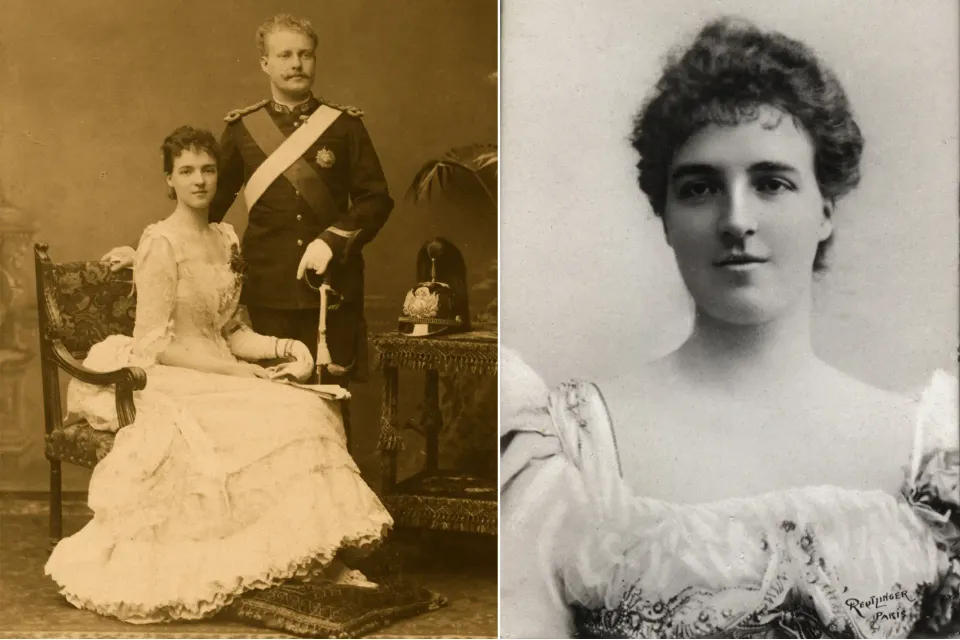
—Amélie of Orléans: The Unbroken Crown of the Last Queen Consort—
(Words & quote translation: Dan Costinas)
(Photo Credits: © Leemage via AFP)
«Ils sont bons et généreux; ils ont gardé nombre de leurs anciennes vertus. Ce qui est vraiment exécrable, ce sont les politiciens qui s’imposent à eux, tous ceux qui les flattent après s’être inclinés devant nous, pour nous frapper plus sûrement! // They are kind and generous and they still keep many of their ancient virtues. What is really execrable is the politicians who impose upon them, all those who flatter them now after bowing down to us, so just to strike us all the more for sure!» — Queen Amélie, on the Portuguese people vs. politicians, as quoted in Lucien Corpechot’s 1914 book Souvenirs sur la reine Amélie de Portugal
Royal origins
Born on 28 September 1865, Dona Marie Amélie Louise Hélène came from a lineage of European royalty. She was the eldest daughter of Prince Louis Philippe Albert, Count of Paris, and Princess Marie-Isabelle d’Orléans. Her paternal grandparents were Prince Ferdinand Philippe, Duke of Orléans, and Duchess Helene of Mecklenburg-Schwerin. The maternal grandparents were Prince Antoine Marie Philippe Louis d’Orléans, Duke of Montpensier, and Louise-Fernande de Bourbon, Infanta of Spain.
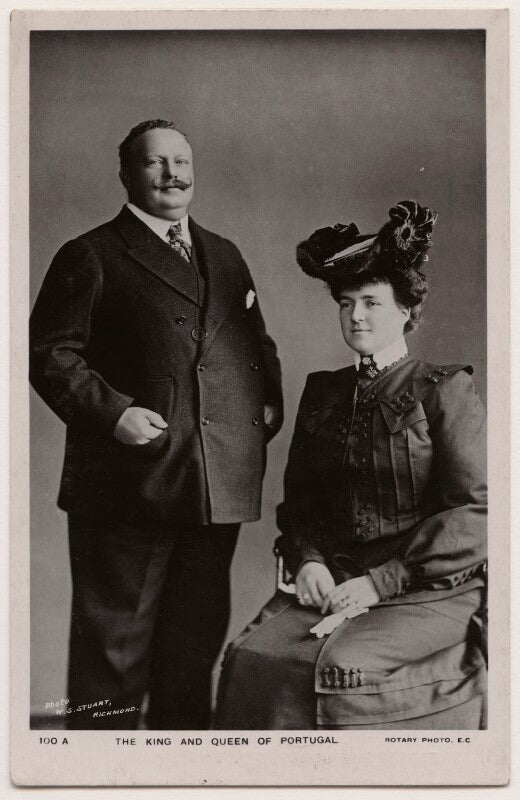
In her early years, Amélie lived a relatively sheltered life within Europe’s aristocratic circles. As the wife of King Carlos I of Portugal, Amélie d’Orléans became Queen Consort and mother to three children: Luís Filipe, Duke of Braganza, who met his tragic and untimely demise in the Lisbon Regicide on 1 February 1908; Infanta Maria Anna of Portugal, born deceased in December 1887; and Manuel II of Portugal, born on 15 November 1889, who would eventually ascend to the throne after his father’s death. As the queen consort, then queen dowager, Amélie was far more than a ceremonial figurehead; she was a woman of formidable intellect and tragic resilience. She navigated the turbulent final decades of the Portuguese monarchy, leaving behind a legacy that focused deeply on medicine, social reform and national heritage.
The angel of charity
At a time when tuberculosis was like a ‘white plague’ devouring the Portuguese population, Amélie didn’t just offer sympathy – Amélie built infrastructure:
• The National Assistance for Tuberculosis: founded in 1899, this institution modernised and systematised Portugal’s approach to tuberculosis prevention and treatment.
• Dispensaries, sanatoriums and chemist’s shops: Amélie established the Outão Sanatorium, several dispensaries that provided free care to the impoverished families across the country.
• Nursing education: the queen advocated for the professionalisation of nursing, recognising that modern medicine required trained staff, not just well-meaning volunteers.
• Amélie also founded the Association for the Protection of Early Childhood. Under this association, the first lactário (milk station) was established in 1903, providing sterilised, high-quality milk to infants from poor families to combat high infant mortality rates caused by malnutrition and contaminated food.
Guardian of national heritage
Beyond establishing a functional healthcare system, Amélie was a passionate and highly educated artist and patron of the arts and history. Fluent in five languages and a prolific diarist, she fostered an environment where literature and historical study were prioritised, often corresponding with leading intellectuals of her time.
Her most visible legacy today is the National Coach Museum in Lisbon. Recognising that Portugal possessed one of Europe’s most remarkable collections of royal carriages, she ordered the conversion of the Royal Riding School of Belém into a museum in 1905. Significantly modernised with the opening of a brand-new building in 2015, it remains one of the most visited museums in the country, preserving a unique facet of European transport history that might otherwise have been lost to the transition to the Republic.
Amélie’s own oil paintings and drawings often captured the Portuguese landscapes and domestic life she loved so much. Her work is often associated with late naturalism, reflecting a keen eye for detail and her substantial education in history and archaeology. In the early 1920s, while in exile, she published two volumes titled Mes Dessins (My Drawings). These weren’t just vanity projects; she used the proceeds to fund various charitable works, effectively turning her art and writing into a tool for social philanthropy.
The tragedy of 1908
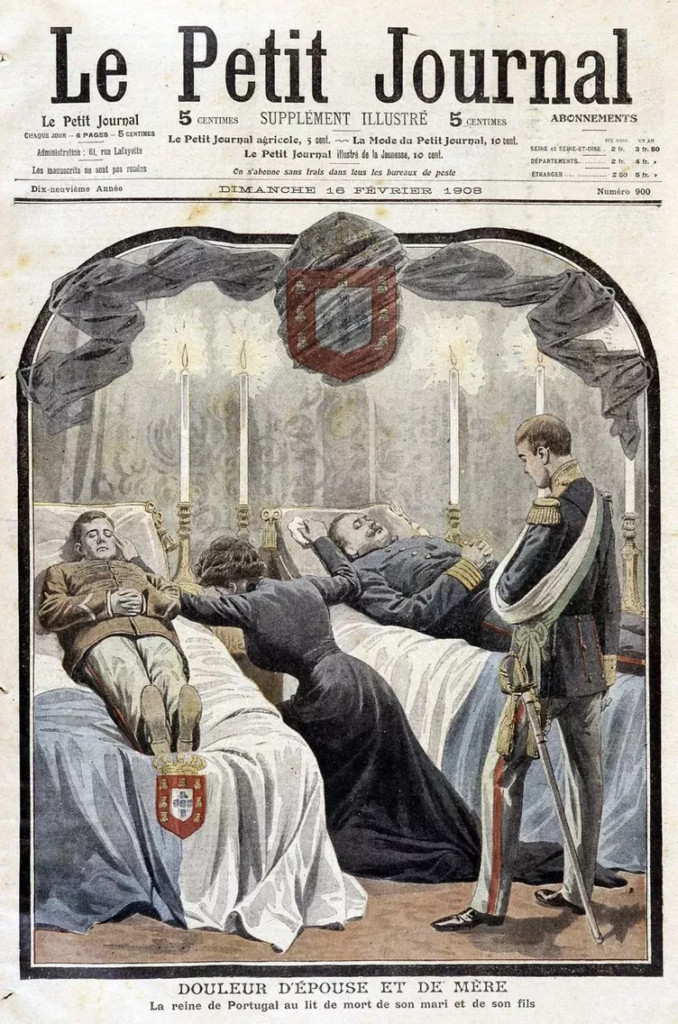
Amélie’s life was defined by the Lisbon Regicide. On 1 February 1908, while travelling in an open carriage through the Terreiro do Paço, two assassins (Manuel Buíça and Alfredo Costa) opened fire on the royal family. In a moment of legendary courage, Amélie stood up and defended her son, Prince Manuel, by swinging a bouquet of flowers at the gunmen while shouting for help. Though she saved her youngest son, she witnessed the immediate deaths of her husband, King Carlos, and her eldest son, Luís Filipe. This moment solidified her image in the Portuguese consciousness as a figure of immense personal strength and maternal devotion.
An enduring legacy
Following the 1910 Revolution, Amélie went into exile in France. Upon leaving the country, she said: “I want everyone to know that I have no hatred for anyone, and that I carry with me a love for Portugal that will never end.” However, her connection to Portugal remained unbroken. The queen spent much of World War I in France and England, where she was highly active in humanitarian efforts, serving as a volunteer nurse for the British Red Cross and the Order of St. John. During World War II, she opened her home to Portuguese refugees, and, in 1945, she was invited back to Portugal by the government – the first member of the deposed Braganza family to return.
Ultimately, Queen Amélie’s life stands as a testament to the idea that a crown is defined not by its gold, but by the service rendered by the one who wears it. Despite the violent end of the monarchy and her long years in exile, she remained a woman of formidable intellect and tragic resilience, who never abandoned her devotion to the Portuguese people. Her contributions created a bridge between Portugal’s royal past and its modern social infrastructure. Today, she is remembered not merely as the last queen consort, but as a tireless mother whose love for her children and country remained – just as she promised upon her departure – truly unbroken.