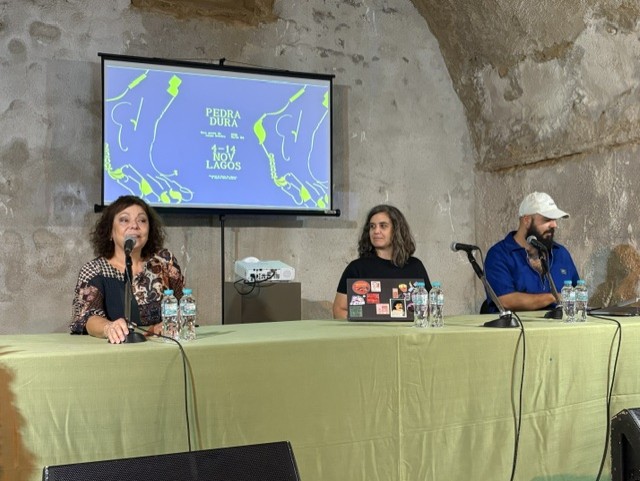
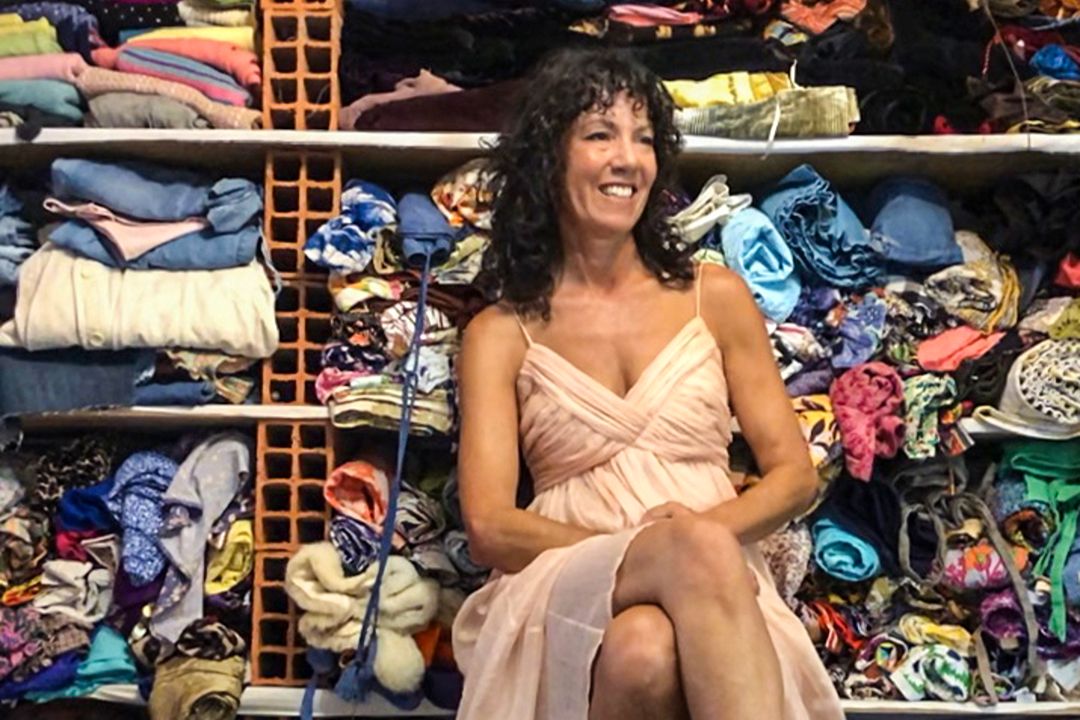
Although Portugal is recognised for its eco-friendly textile manufacturing businesses, it is behind the rest of Europe in waste management and recycling. The country has one of the highest landfill rates, and discarded fashion items are a big part of the problem.
“One hundred billion garments are produced each year in the world: 190,000 a minute,” explains Kate Moore, a Monchique resident and fashion designer who runs a sustainable clothing company called Sussurro Studio. With eight billion people in the world, this figure represents, on average, 13 new items per person every year. One full rubbish truck every second of these ends up in a landfill. “In the past, people kept their clothes for many years. They would repair them and pass them on. Now, clothes are often worn fewer than ten times before being thrown away.”
It is well known that fast-fashion companies push microtrends and low-quality clothing through a strategy called ‘planned obsolescence’. The items are intentionally designed to have a short lifespan: they quickly unravel, lose their shape and become unfashionable. As a result, and with more people becoming aware of the global problem, clothing repairs, along with buying clothes from vintage and charity shops, are also becoming more popular.
“I grew up in rural Herefordshire in a home where wasting things was discouraged. My mother was thrifty and believed in repairing instead of replacing. My grandmother made clothes for the family and taught me to sew. My siblings and I learnt to use resources carefully,” remembers Kate. She loved fashion from a young age, decorating her bedroom walls with pictures from Vogue magazine and always keeping up with the latest styles. She remembers the New Romantic era – Duran Duran, Spandau Ballet and Madonna – and how they shaped fashion. It wasn’t just clothes that interested her. She was also fascinated by craftsmanship and creativity. “My father worked in a craft shop and would sometimes bring home slightly damaged stock. I couldn’t bear seeing these items being thrown away. My first business ever was selling these pieces at school!”
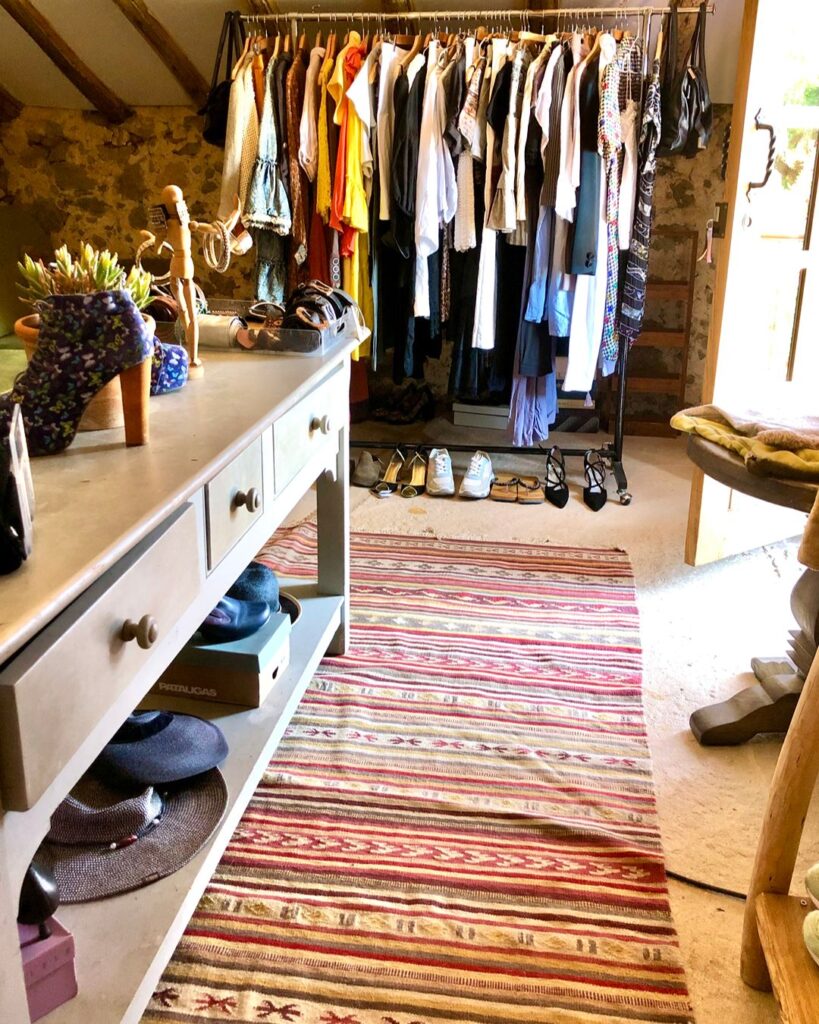
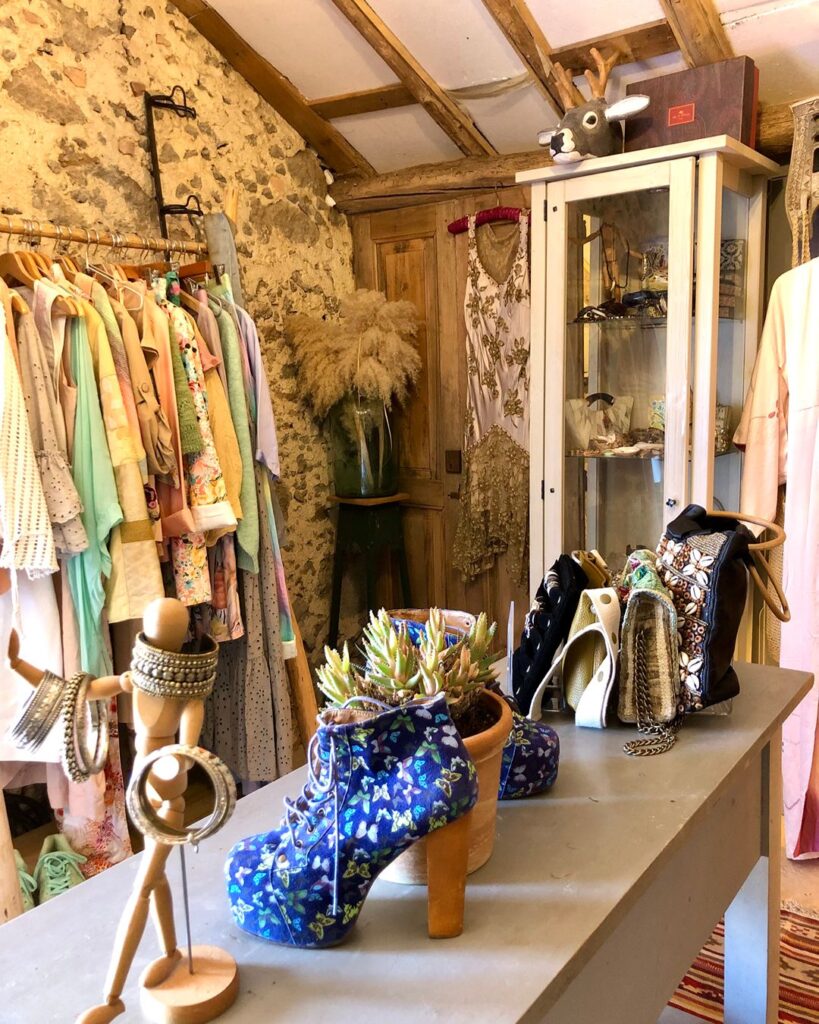
When Kate was 18, she spent a year in Australia and then moved to London, working first for Laura Ashley and then for Nicole Fahri. “Without any training, I then found myself restoring antique textiles for an art dealer.
“I was good at it, and I loved it, but, after a while, I wanted to work abroad again.” In 2005, she left the UK to live in Hawaii for eight years, and then moved to Spain, where she ran a successful guesthouse. “I always kept my interest in fashion. Wherever I was, I spent the weekends at flea markets, yard and car boot sales. Many years ago, I started collecting textiles, and, every time I moved, I took them with me. I couldn’t let them go. I just kept adding more, not knowing they would one day become my livelihood.”
In 2016, Kate fell in love with a house in Monchique and bought it, even though it needed lots of work. “I wanted to turn the house into a guesthouse. So, using the income from my Spanish guesthouse, I slowly began the huge restoration project.” In 2020, the pandemic hit. Kate lost her business in Spain and barely managed to keep her home in Monchique. “I had to rely on the lessons from my resourceful childhood to get through the lockdown,” she remembers. Unable to hire anyone, she had to improve the house herself, learning building skills along the way and using recycled materials whenever she could.
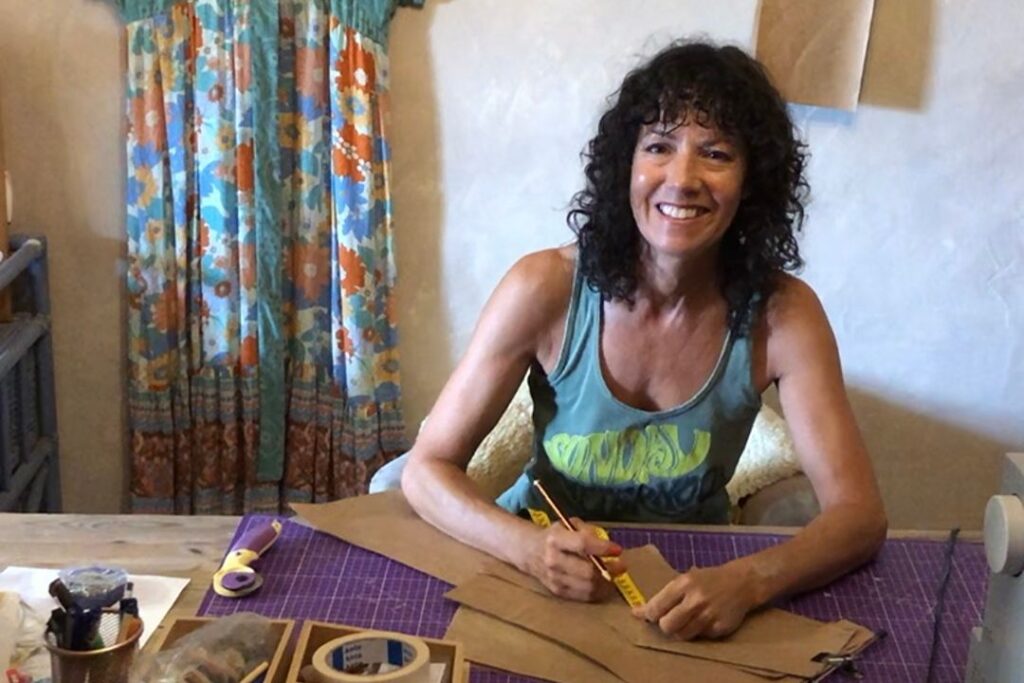
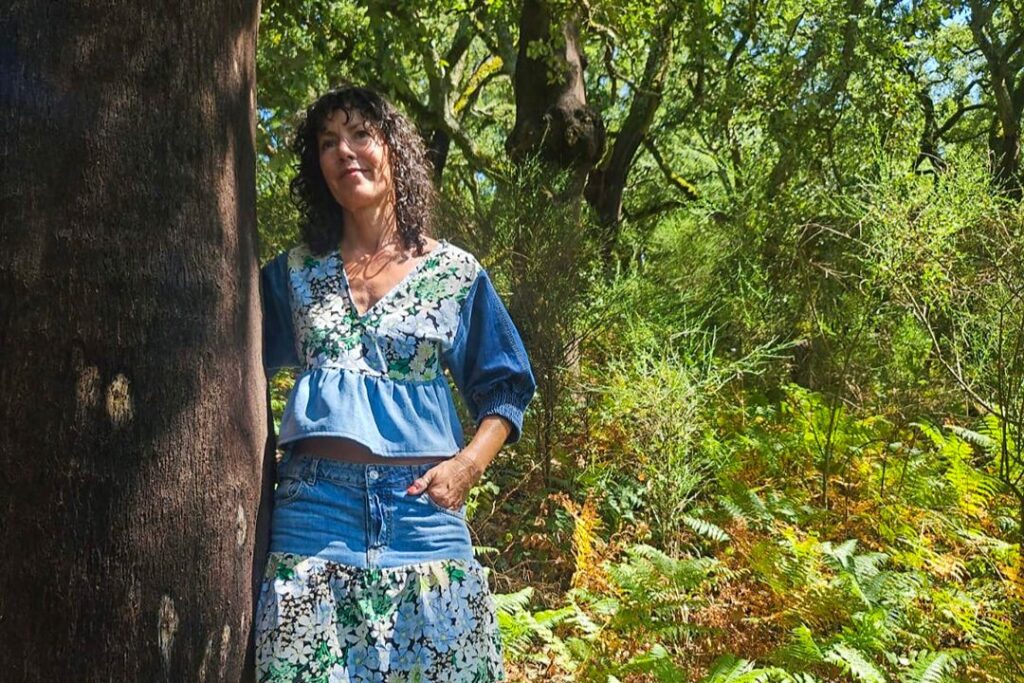
“Times were tough for many of us,” remembers Kate, “So one day I took a few of my clothes, shoes and some scaffolding, and set up a stall at the market in Lagos. It worked! Pleased with myself, I came home with some cash.” From then on, Kate trawled second-hand places for interesting, well-made clothes to sell, and she started trading at more markets. Meanwhile, the ongoing renovations on her house in Monchique progressed, and Kate began to appreciate her life again. “I am now a familiar face at markets, and I love it,” she adds. “I enjoy being outside and meeting so many wonderful people.”
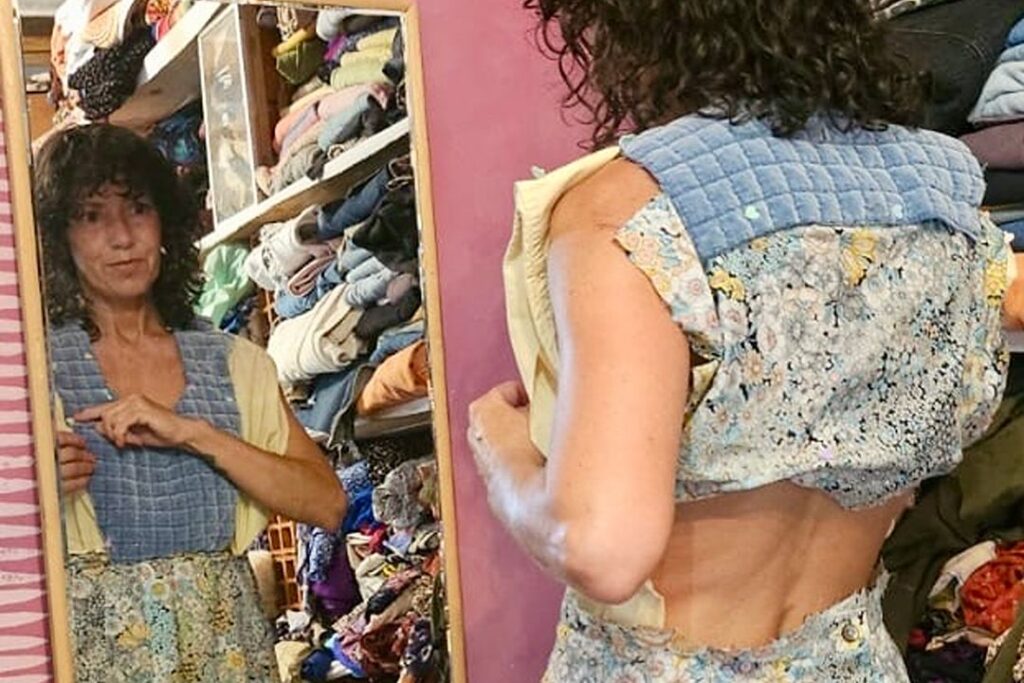
Over time, Kate noticed her customers’ attitudes changing. “They started encouraging me to be more creative with what I was selling. People aren’t just looking for vintage clothing anymore. They want clothes that are different, that are fun and have character and connection,” she states. “I began designing garments using the clothes I had been selling and the fabrics I had stored. I match them up and imagine what they can become, sometimes using my library of special garments as references. I love the shapes, textures, colours and movement of textiles. Finally, my fabric collection had a purpose, and so did I. This was when I shifted from selling vintage to creating handmade pieces.”
As Kate sold more items, she soon needed help with sewing. “I didn’t realise it would be so hard to find people with the skills I needed. Former factory workers often have limited abilities because, for example, they don’t know how to sew with different fabrics. It’s a dying art, since children are no longer taught how to repair clothes.” She adds, “There are many sewing classes on offer and free online tutorials now, though, so it is possible to learn. In general, I hope more people will see the value in mastering artisan skills.”
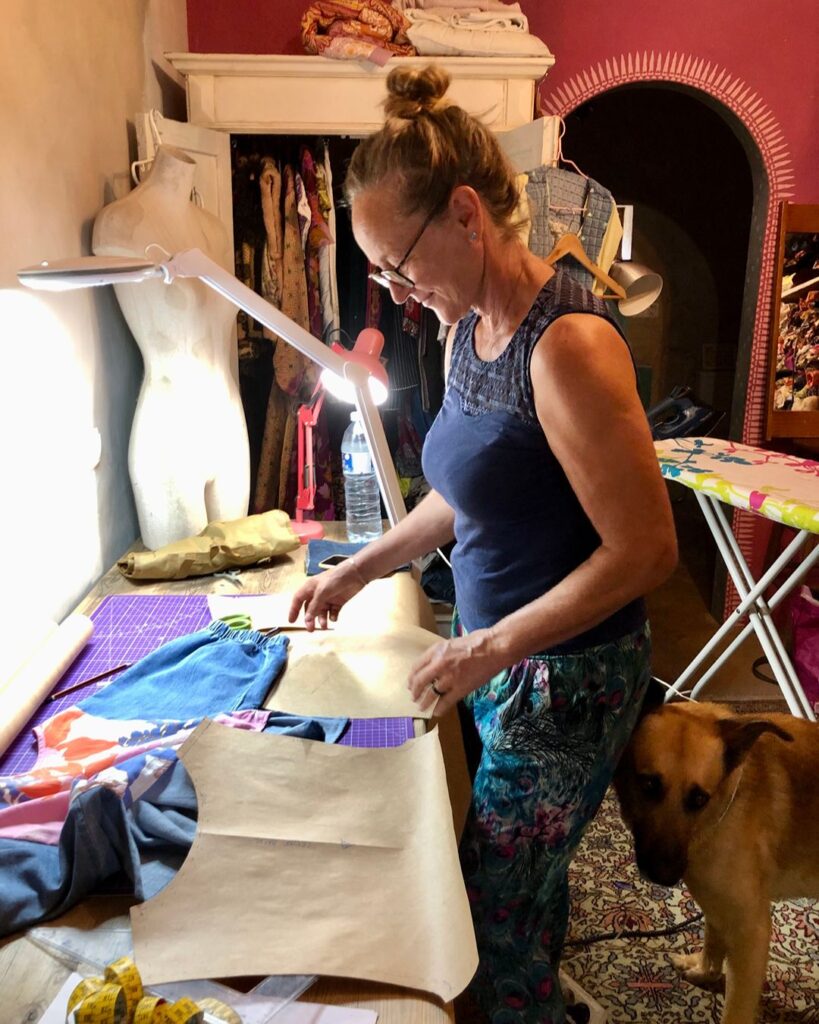
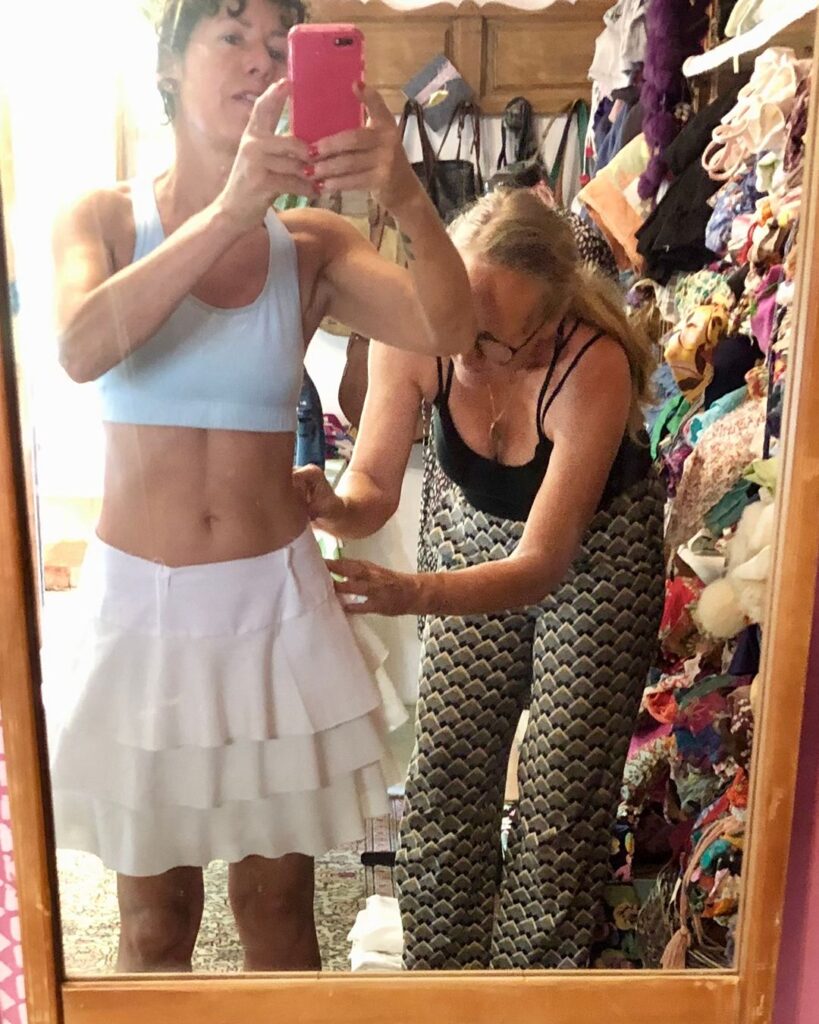
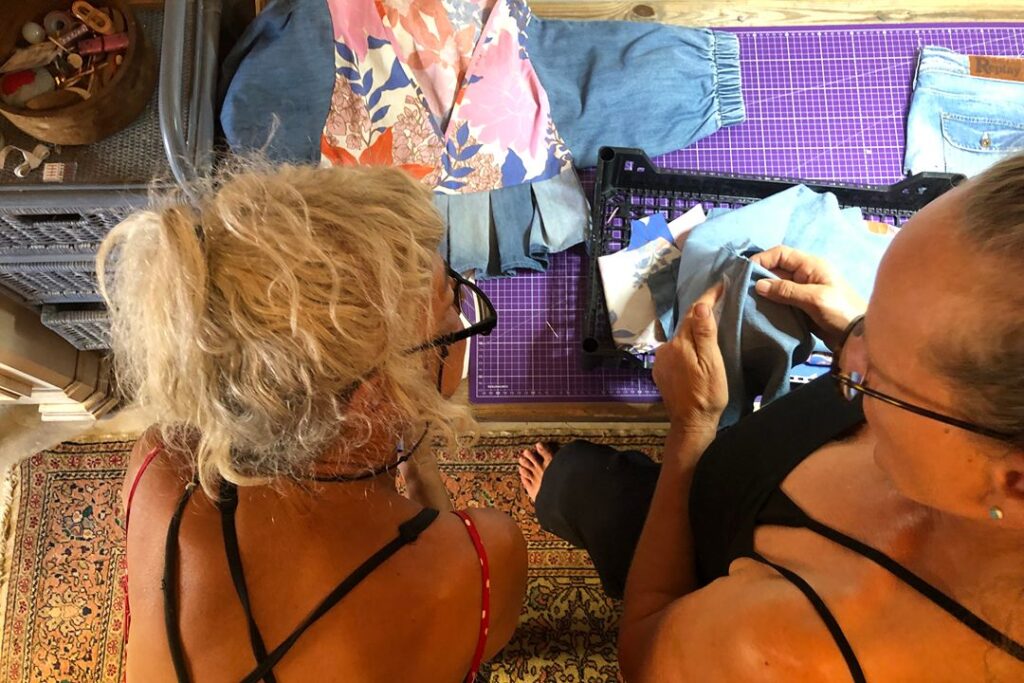
Eventually, Kate found a team of talented local seamstresses. “They bring my designs to life. Each garment is made in small numbers using rescued fabrics that would have ended up in landfill. I keep all my business in Portugal,” she explains. “Hand-made and upcycled clothes are far more interesting. Most importantly, they are better for the environment. Mass production of clothing consumes huge amounts of electricity, water and chemicals, and factories generate high levels of carbon emissions. Plus, the garments are shipped long distances.”
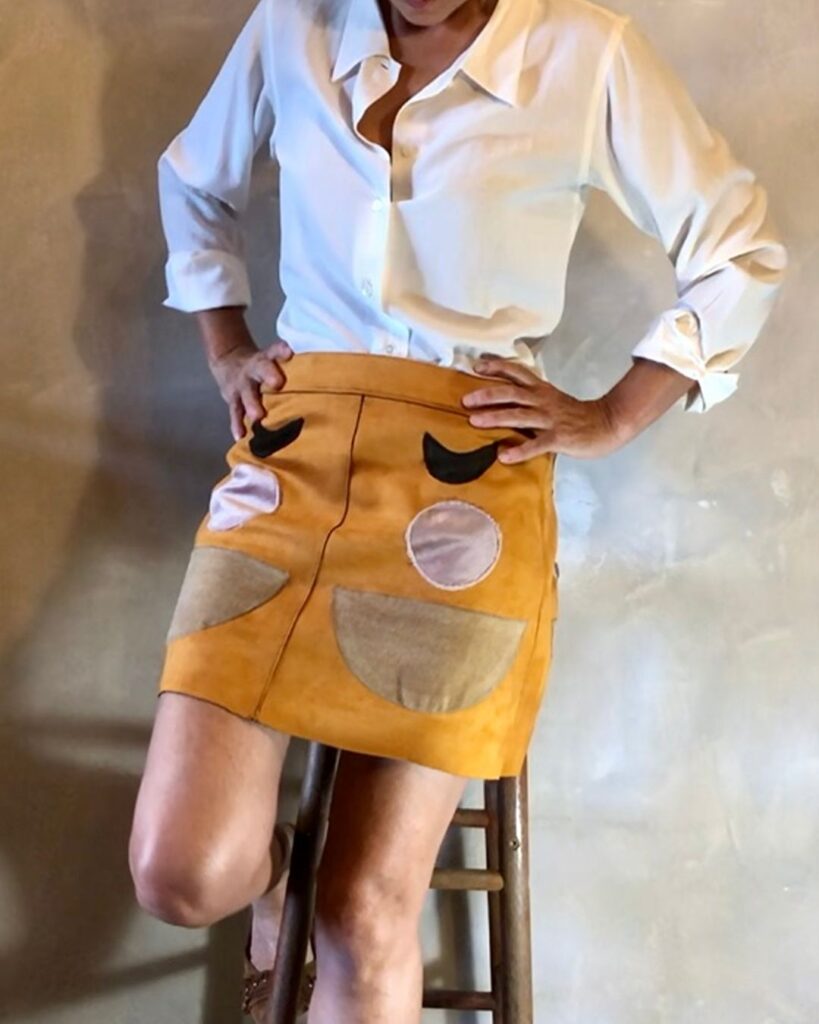
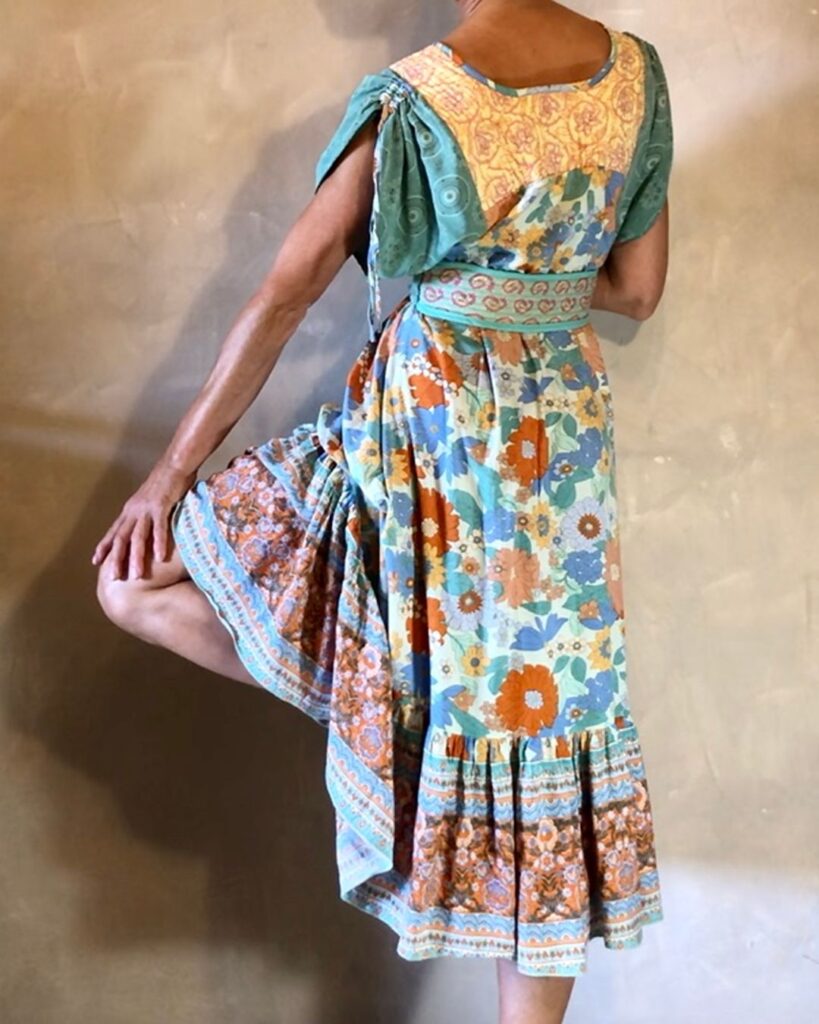
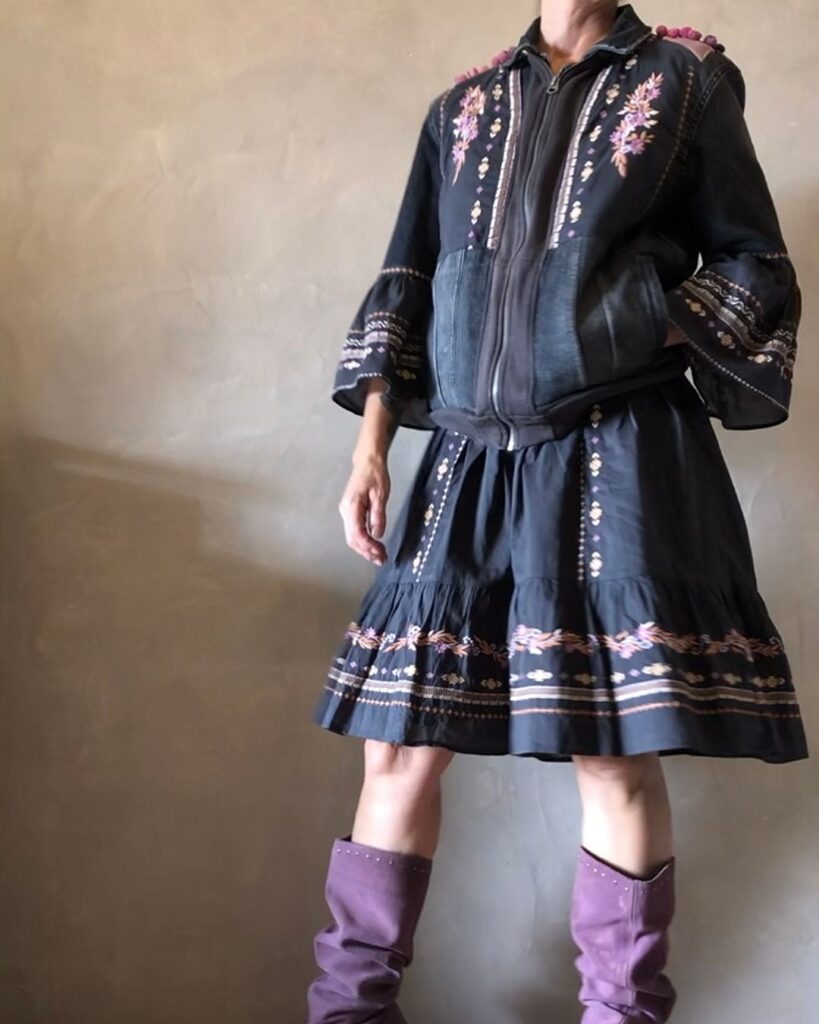
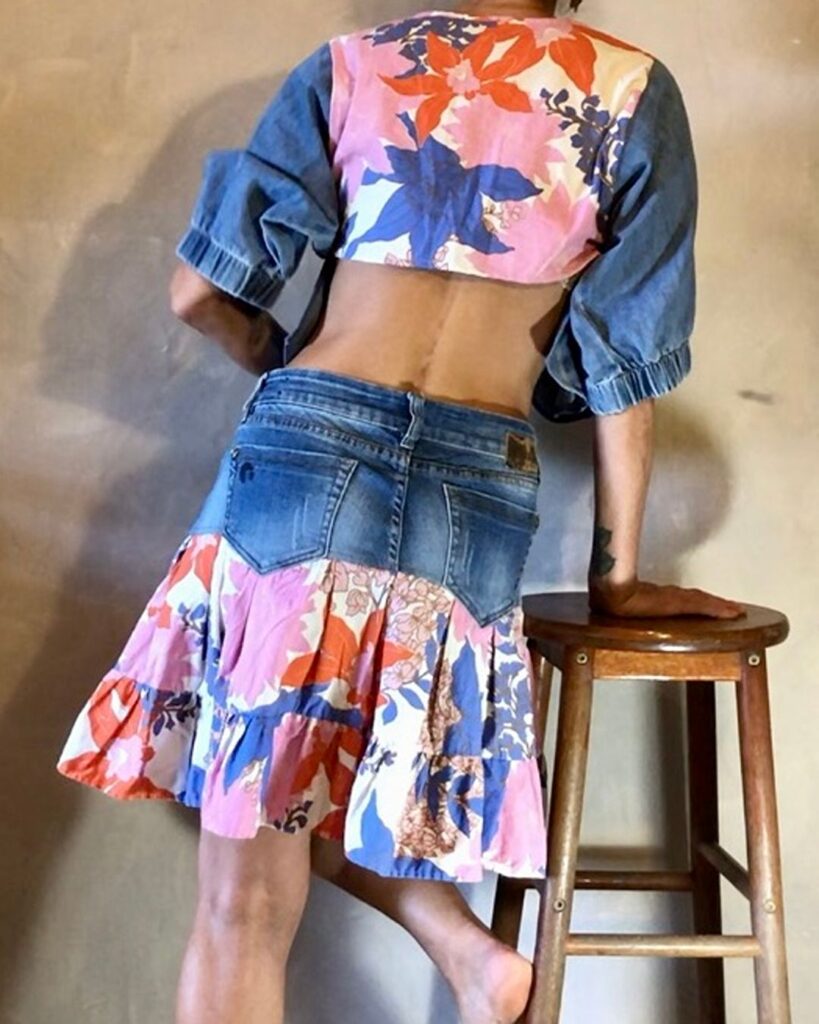
Synthetic materials release tiny fibres into the ocean and rivers every time they are washed. Scientists have found microplastics not only in marine life but also in human blood, lungs, placentas and brain tissue. As more shoppers become aware, the trend toward second-hand clothing is growing. Vintage clothing shops are also found throughout the region. Kate has her shop and studio in Monchique, which is open by appointment. She is passionate and knowledgeable about sustainable living and is happy to answer questions or offer advice to anyone interested.
So next time you find yourself browsing online for fast fashion, slow down and look for more sustainable options!
Instagram: @sussurro.studio
Did you know?
In Europe this year, the Ecodesign for Sustainable Products Regulation was brought in, banning large companies from destroying unsold clothing, footwear and accessories. Now, these companies must donate, resell or remanufacture textiles, which will hopefully help prevent overproduction.
How to Shop More Sustainably
- Buy fewer clothes and choose well. Invest in timeless pieces that you will wear for years, not just one season.
- Repair your clothes or alter them. Learn how to make them. Keep them going for as long as possible.
- Buy second-hand in charity or vintage shops in the Algarve.
- Support flea markets and car boot sales.
- Support local designers and makers. Buying locally keeps traditional skills alive and reduces transportation costs.
- Choose natural or recycled fabrics. Linen, cotton, hemp and recycled textiles generally have a lower environmental impact than synthetics.
- Swap, borrow or rent, especially for an occasion where you will most likely only wear the item once.
- Donate. Pass your clothes along to friends or donate them to charities or textile recycling units.
- Wash less often and use a cooler temperature. It saves energy, helps clothes last longer, and reduces the release of microfibres.