As told by her 32nd-great-grandson
Family genealogy has always held a certain fascination. Long before digital archives existed, tales of our ancestors were passed down through generations, preserving fragments of who we came from.
Since the early 2000s, however, the rise of online records and genealogy platforms has allowed us to delve deeper than ever into our historical roots. My own family was fortunate enough to trace our lineage as far back as the 4th century using traditional, pre-digital methods, later confirmed by modern technology. Along the way, many of us uncover the occasional black sheep of the family. But one story has echoed through my family for centuries: the tale of my 32nd-great-grandmother, a woman who became one of Europe’s most feared demonic legends and whose descendants would form one of the continent’s most powerful ruling dynasties.
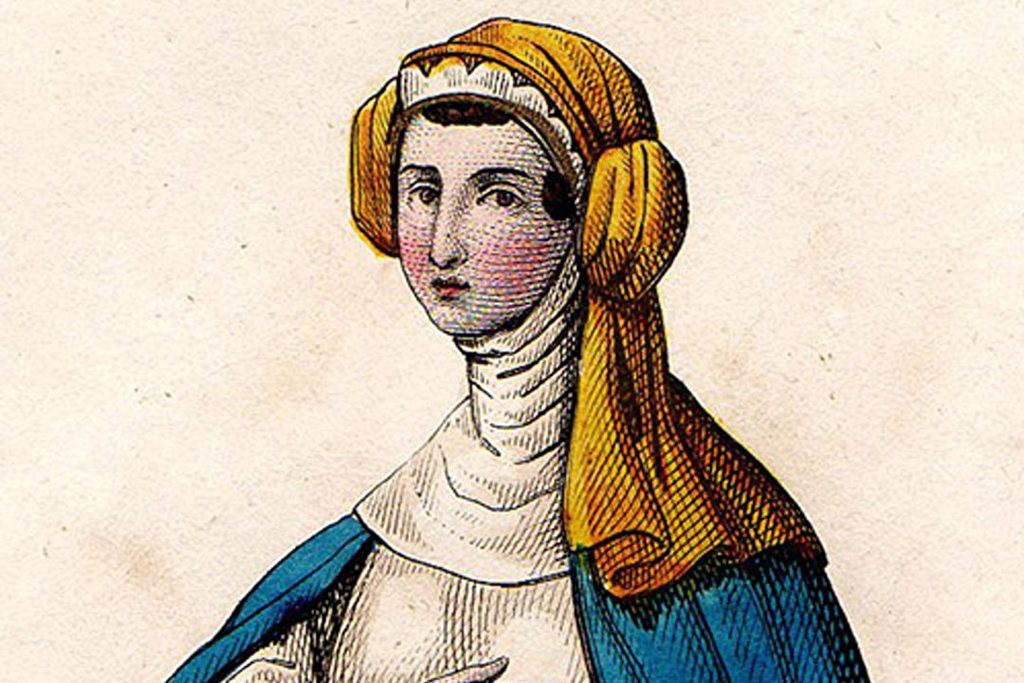
An ancient legend
In the 10th century, in the historic region of Anjou in western France, today part of the Loire Valley near Brittany, the Count of Anjou, Geoffrey Greymantle (c. 940–987), an eligible bachelor, met the woman he believed to be his one true love. Their whirlwind marriage would soon become the source of one of medieval Europe’s most bizarre and enduring legends.
Upon their marriage, Geoffrey’s new wife, now styled the Countess of Anjou, converted to Catholicism. Yet she rarely attended Mass and, when she did, she always slipped out before Communion. Her behaviour raised questions among both the count and the parishioners. Irritated by her apparent disregard for the faith, Geoffrey ordered his guards to lock the church doors during Mass, forcing her to remain until the end of the service.
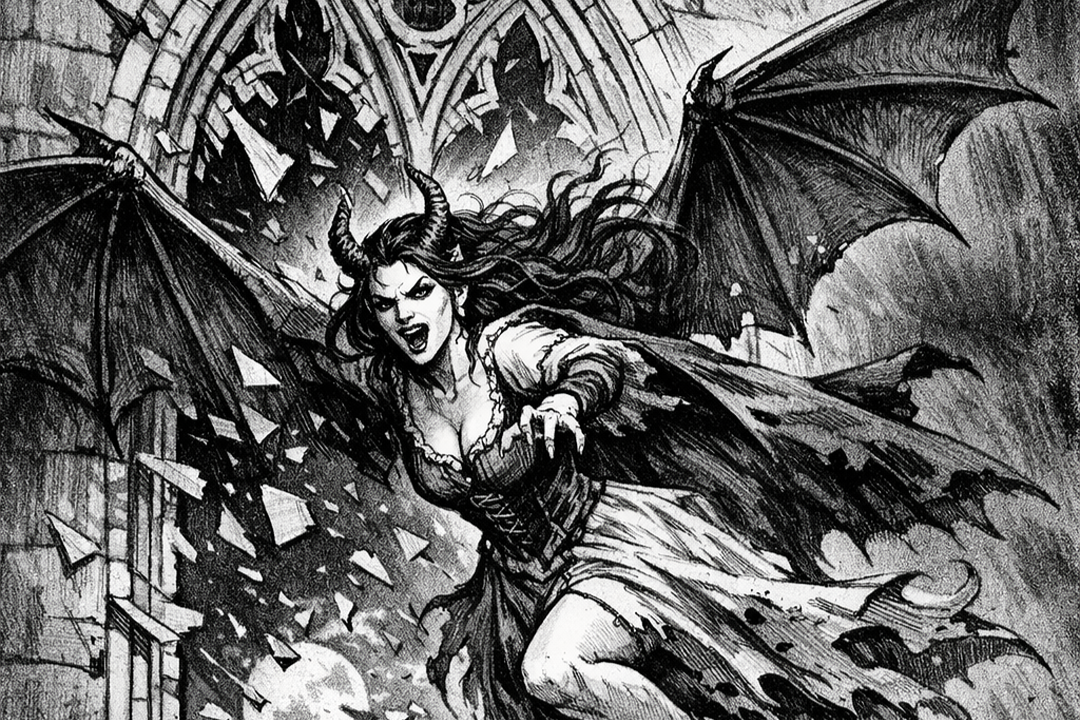
All seemed normal until the moment of the consecration of the Host. As the bread and wine were blessed, the countess let out a piercing scream! Before the horrified eyes of her husband and the congregation, she morphed into a monstrous, demon-like creature, sprouting bat-like wings and razor-sharp claws. Raking her talons across the pews, she leapt upward, smashed through a church window, and vanished into the sky, leaving behind her husband and children, never to be seen again.
This tale spread across medieval Europe, earning her the infamous title ‘the Demon Countess of Anjou’. Her descendants would become the House of Plantagenet, the dynasty that ruled England and parts of France for three centuries.
A modern conspiracy
A thousand years later, the terrifying legend resurfaced. This time entwined with modern conspiracy theories and the idea of a ruling elite. In 2009, a 12-year-old Californian student, BridgeAnne d’Avignon, created a genealogy project with the help of her grandparents. She discovered that all US presidents at the time, from the Bushes to Bill Clinton, Jimmy Carter, and even Barack Obama, were distant cousins and all descended from King John I of England. King John, in turn, was the seventh-great-grandson and 25th-great-grandfather of the Demon Countess of Anjou and my own 25th-great-grandfather.
As BridgeAnne’s discovery went viral, speculation exploded. Some claimed this proved that presidents were not truly elected but secretly chosen by a shadowy elite, perhaps the Illuminati, due to their infamous royal lineage. Whilst others dismissed it as social-media exaggeration, one can’t help but think that, in an age of unprecedented revelations and global uncertainty, what once seemed unimaginable suddenly doesn’t feel so far-fetched after all.
A rational explanation?
Like all good legends, there are also rational explanations. The so-called Demon Countess was, in reality, Adela of Meaux, a French noblewoman born to Robert of Vermandois, Count of Meaux and Troyes, and Adelaide of Burgundy, on 7 Decemberc. 933 in Caen, France. First styled the Countess of Chalon from her first marriage, she became Countess of Anjou through her second marriage to Geoffrey Greymantle.
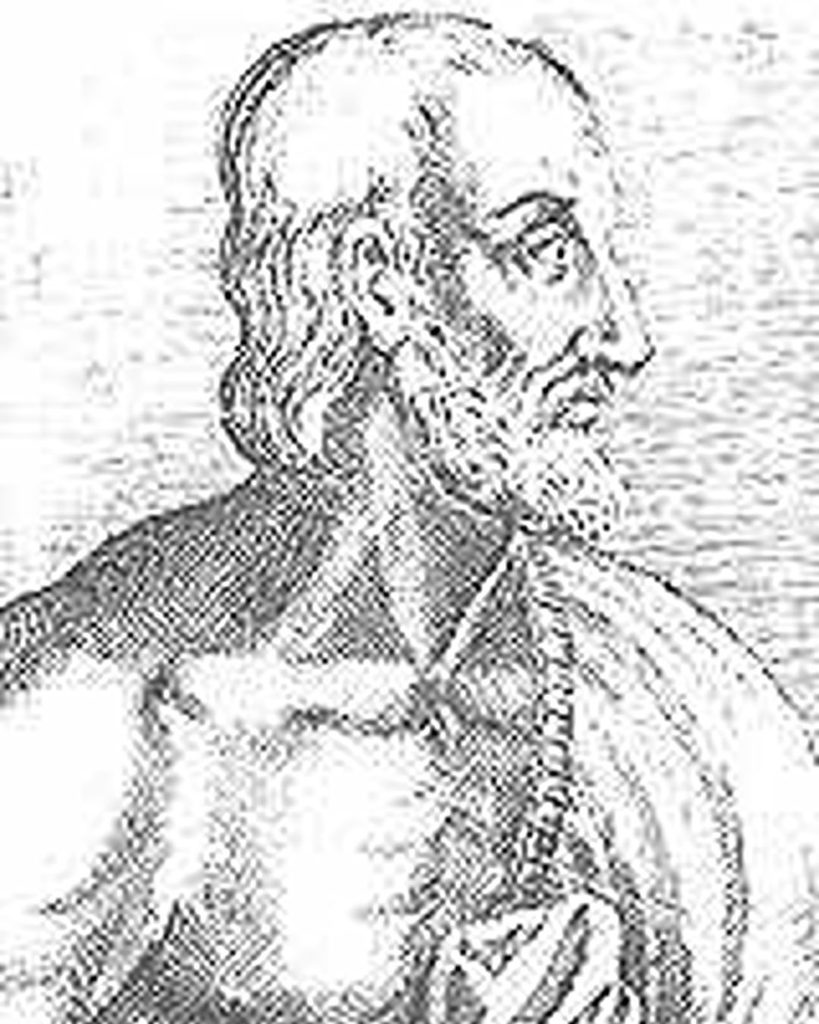
After their marriage, Adela and Geoffrey had three children: Geoffrey Jr. of Anjou, who died at the age of six, Fulk III of Anjou, who succeeded his father and became infamous for his violent temper, and Ermengarde of Anjou, Countess of Rennes, who was my 35th-great-grandmother.
It was Fulk III’s notorious outbursts that likely sparked rumours that he was the spawn of a demon, following his mother’s death on 12 March 984 in Angers. In an age marked by intense fear of demonic influence, the Church’s fixation on rooting out heresy, and widespread belief in witchcraft across Europe, such stories found fertile ground. Within that atmosphere, it is easy to see how later storytellers might imagine that Adela of Meaux herself had entered into some kind of pact with the devil, transforming a formidable noblewoman into the centre of a dark legend – one that later Plantagenet kings even repeated with a certain pride.
From the devil we came
Richard the Lionheart famously declared, “From the devil we came, to the devil we will go,” a boast that echoed through the family’s lore. The reputation followed other descendants as well, including Sir Thomas Arundell of Wardour, my 12th-great-grandfather. After defeating the Ottoman Turks in Hungary, he was made count by the Emperor Rudolf II, much to the disgust of Queen Elizabeth I. The title was bestowed upon all of Sir Thomas’s descendants in perpetuity, further entwining the family with its dramatic, almost mythic heritage.
Could it be that an old family curse lingered behind Sir Thomas, after he was briefly suspected of complicity in the Gunpowder Plot, alongside the infamous Guido Fawkes in 1605? Or was it simply the enduring fear of a centuries-old tale that claimed the family had come from the devil? One thing is for certain: Adela of Meaux will be known in history as the demon countess, and to me, my ancestor, for, if it wasn’t for her, I might not be writing this story at all.