Our Neighbours’ Answer to Fátima
Every year, more than a million pilgrims from across the Iberian Peninsula travel by horse, tractor and ornately decorated wagons to the shrine of El Rocío, a devotion that predates Fátima by six centuries and is the largest pilgrimage in Europe. Roads filled with wagons covered in flower garlands, riders on horseback, and pilgrims on foot in traditional dress are a sight to behold as the faithful make their way from towns across Spain, Portugal and afar to this small Andalusian village to partake in a centuries-old tradition woven deeply into Iberian culture.
The pilgrimage traces its origins to the 13th century, when a shepherd discovered a statue of the Virgin Mary hidden in a hollow tree in the marshes of Doñana, Spain. After attempting to carry it to Almonte for safekeeping, he awoke from a rest to find the statue had vanished, only to discover it had returned to the tree where the shepherd found it. Interpreting this as a divine sign, locals built a hermitage on the spot known as El Rocío, and devotion to the Virgin quickly spread.
By the 17th century, pilgrims from across the peninsula were travelling to venerate the statue, and, in 1653, the Virgin was declared patroness of Almonte. In 1758, the pilgrimage became tied to Pentecost, celebrated 50 days after Easter and regarded as the “birthday of the Church”, when missionaries spread the Christian faith across Europe.
This year, from 22–26 May, religious brotherhoods, known as hermandades, will again journey on foot, horseback, and in horse-drawn or tractor-pulled wagons, many travelling for days or weeks to reach the shrine, carrying their own copy of the Virgin statue. Roads in and around El Rocío become a moving festival of food, music and dance, and the sight of thousands of wagons and horses crossing the countryside and motorways is truly unique and unforgettable.
Pilgrimage of the hermandades
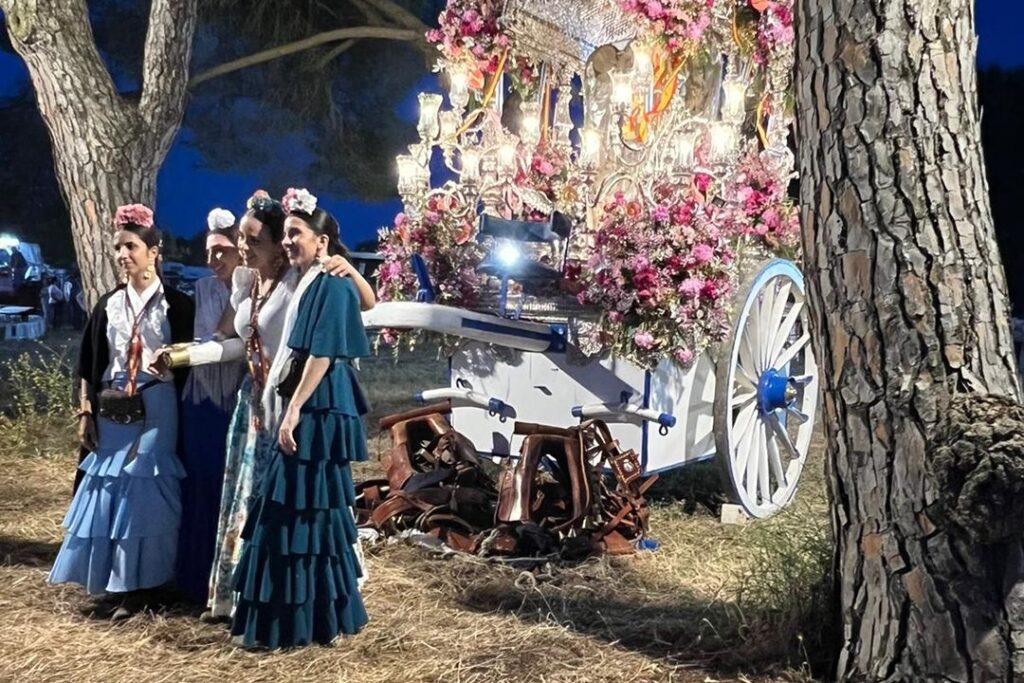
Last year, I found myself acting as an impromptu taxi driver from Portugal for a small group of hermandades who were travelling from the southwestern Spanish city of Huelva. The two-day route included the traditional overnight stop at Lucena del Puerto, where hundreds of horses and gypsy-style wagons gather on the open plain to rest before continuing onwards towards El Rocío.
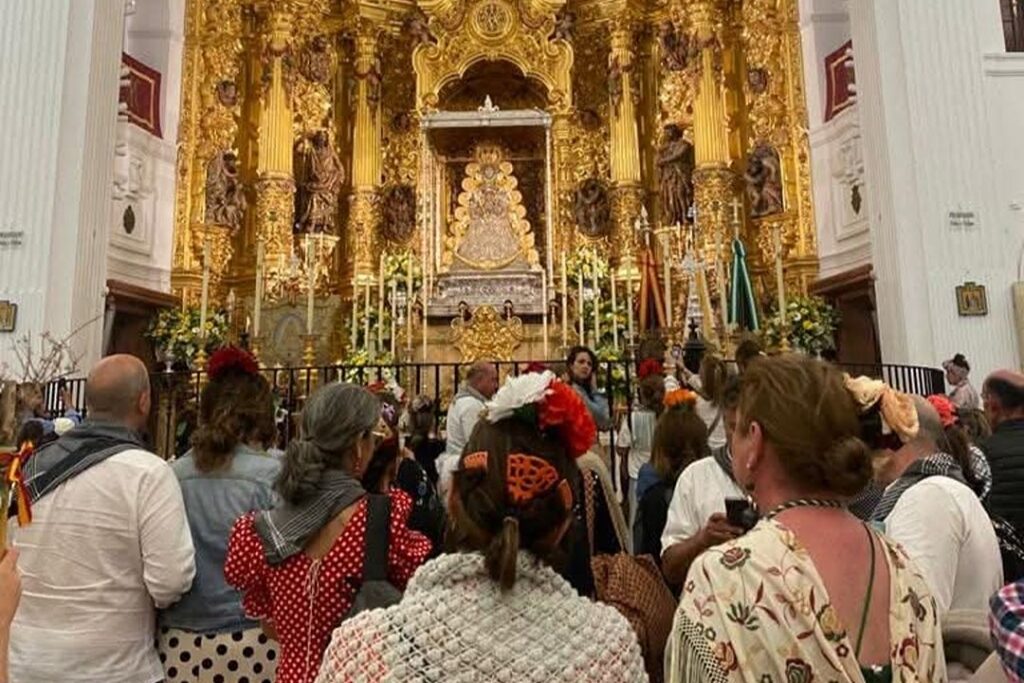
The beautiful costumes and loud festive nature bring an exciting carnival-like atmosphere to a sombre day to praise the mother of God, with many clambering to touch the statue of the Virgin, some even pushing their children onto the altar to venerate the Virgin, despite resistance from the authorities.
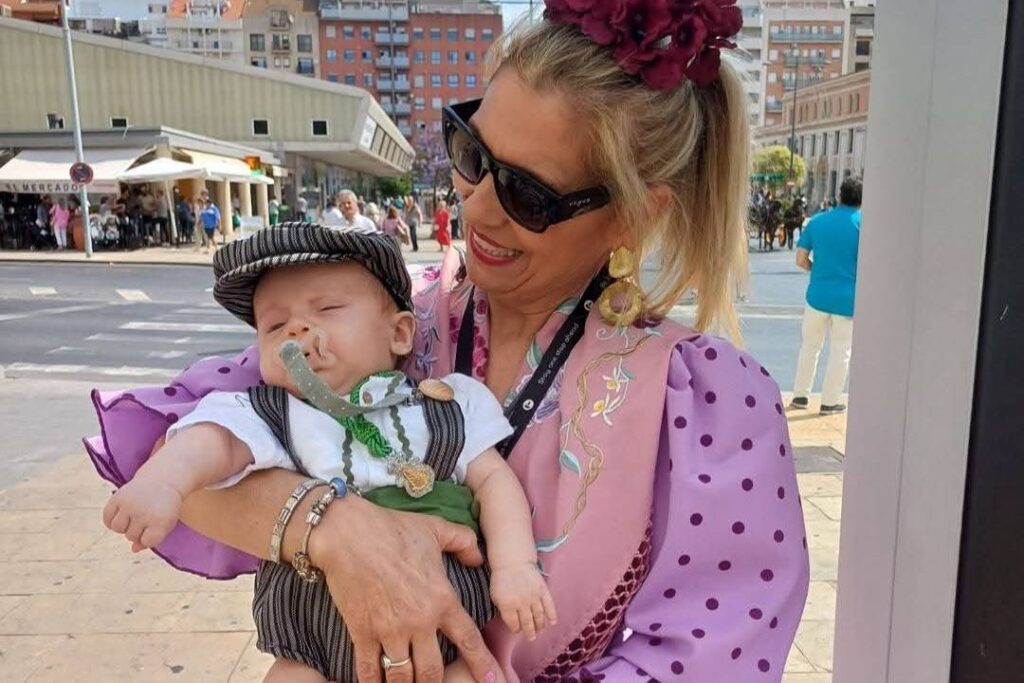
Speaking with El Rocío veteran Manoli Garcia, who has made the pilgrimage every year for the past seven years, she explained that while the pilgrimage, or romería is deeply rooted in Iberian Christian tradition, it has also become a joyful festival where friends gather to drink, share music, dance, and tell stories which have been passed down through generations. All of which have become a cultural aspect of the pilgrimage.
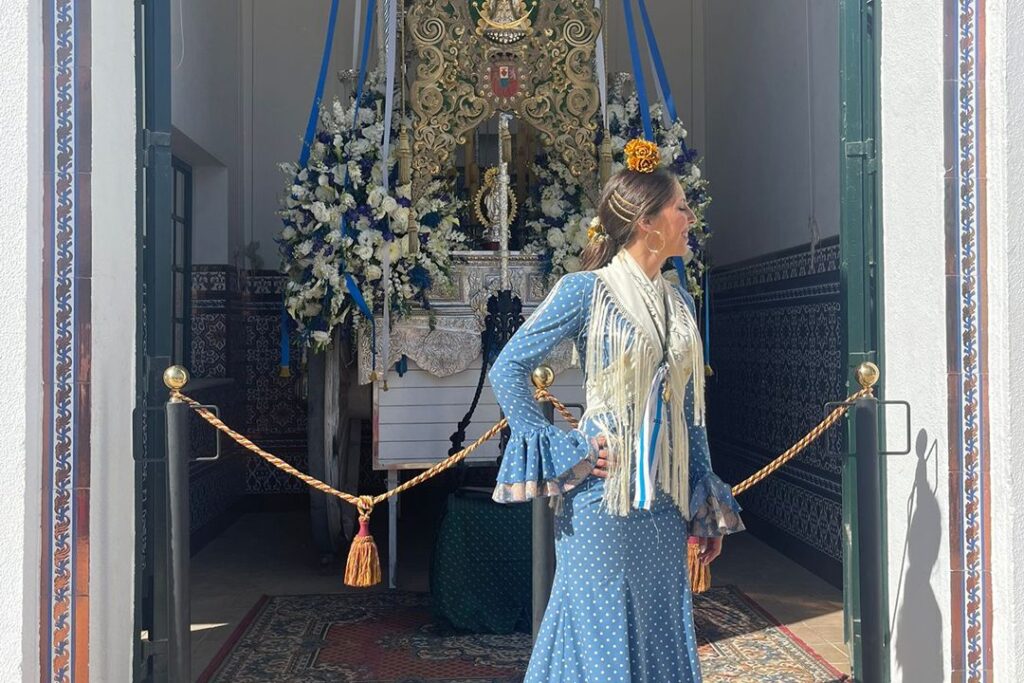
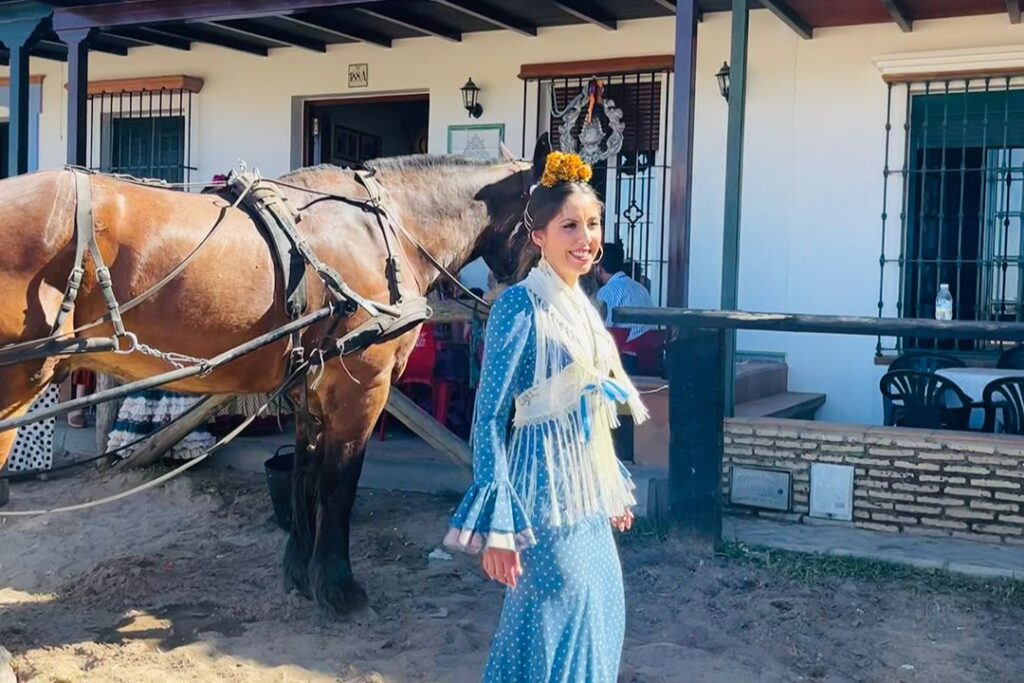
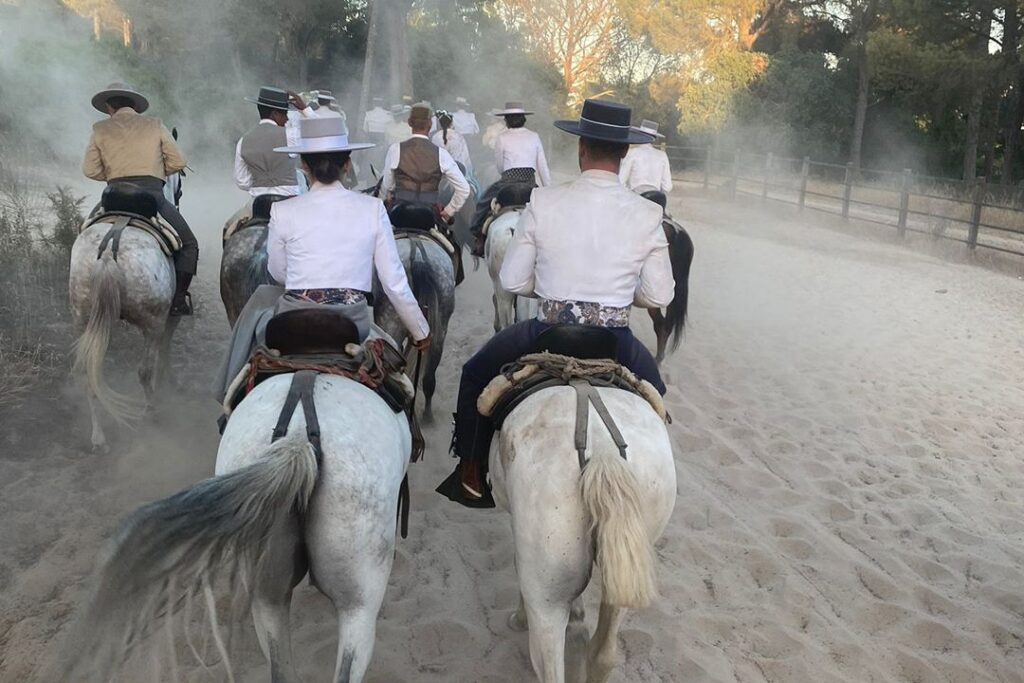
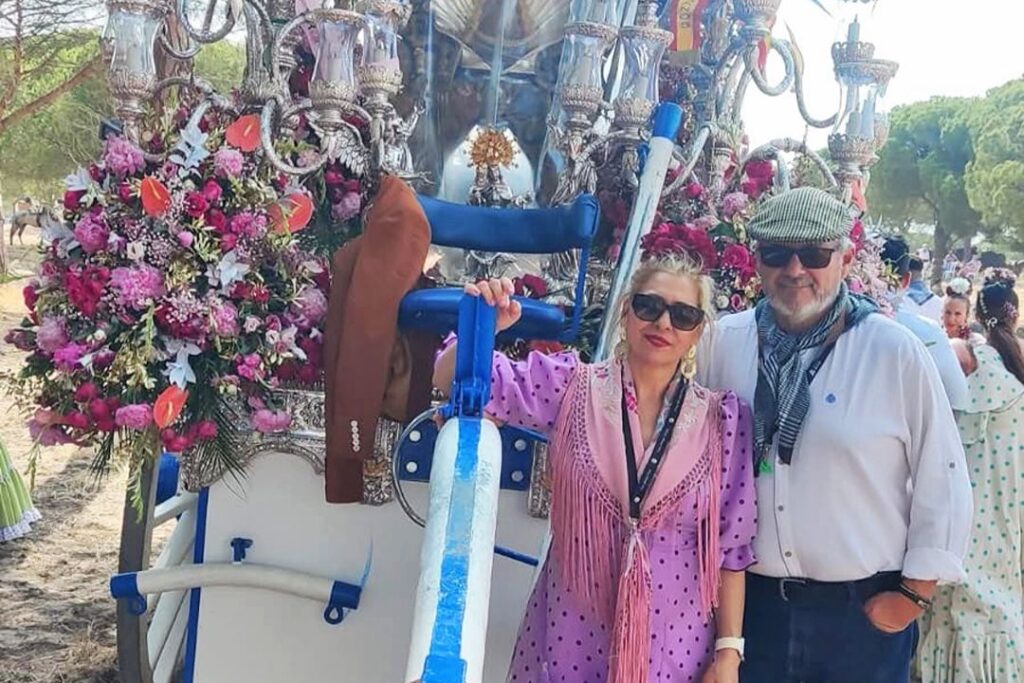
Manoli and her fiancée, José Luis, first attended the pilgrimage when they were invited to join their local hermandad, the fraternity of Peña Gran Reserva. Each year, they travel with a wagon of twenty people over the two days, a short journey compared with those who come from across Portugal or even as far north as Belgium just to take part in one of the greatest pilgrimages of the year.
When asked how the group funds the two-day pilgrimage, Manoli explained that members pay a monthly fee “to make sure there is no shortage of food, drinks and decorations for the wagon”. Preparations begin more than a week in advance when the wagon is inspected for safety and decorated. Non-perishables are stocked, and any refrigerated food is ordered and collected the day before the cortege sets off.
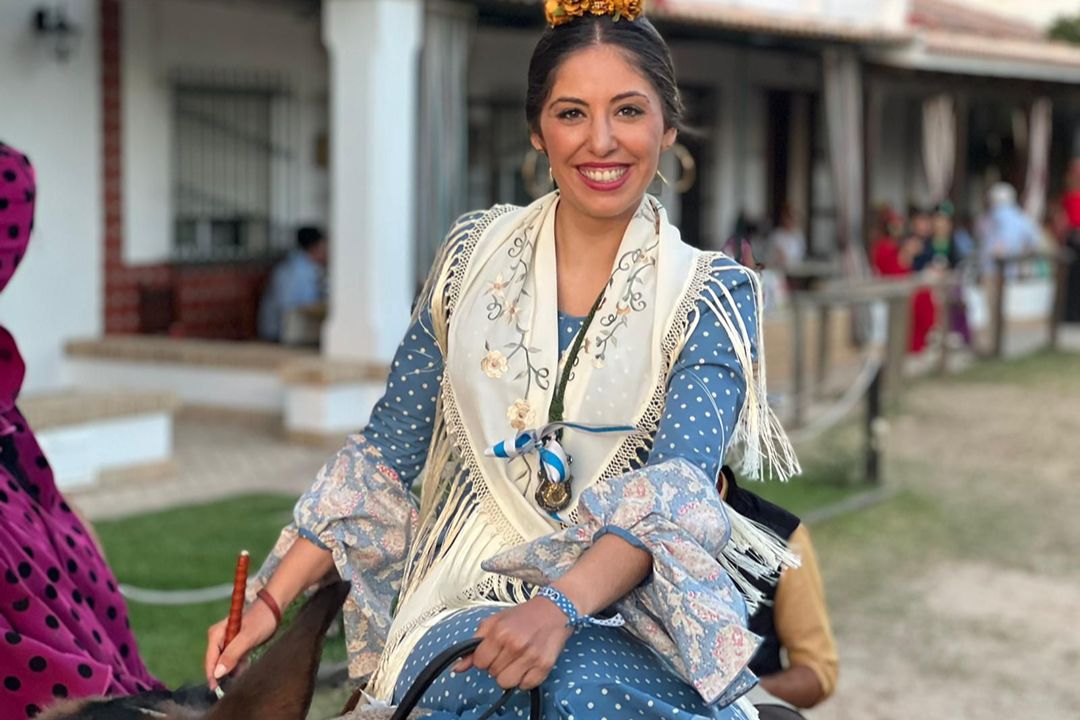
Manoli takes great pride in making her own traditional costume, known as a traje de flamenca, often changing the style each year. “Spending my afternoons sewing, I can make a flamenco dress in about a month,” she told me, whilst showing me photos of her flamenco dresses from previous years.
While many pilgrims spend the night on the rugged plains of Lucena del Puerto, singing and dancing beneath the stars and tending to their horses, others who live nearby choose to return home to sleep in the comfort of their own bed before rejoining the group for the second leg of the journey. This is where I come in, ferrying this merry band of hermandades back home for a well-earned rest and then returning to them to continue their pilgrimage at dawn.
The Virgin of El Rocío is the pride of Andalucía, and like Our Lady of Fátima, she draws together the nations of the Iberian Peninsula and afar in devotion to her in a celebration that could quite easily be mistaken as a gipsy caravan. The Romería of El Rocío is more than just a pilgrimage; it’s a centuries-old tradition that is cherished by many across this peninsula, who later this month will shout out “Viva la Virgen del Rocío!”
“Viva la Virgen del Rocío!” (Long Live the Virgin of El Rocío)
“Viva la Blanca Paloma!” (Long Live the White Dove)
“Viva la Madre de Dios!” (Long Live the Mother of God)