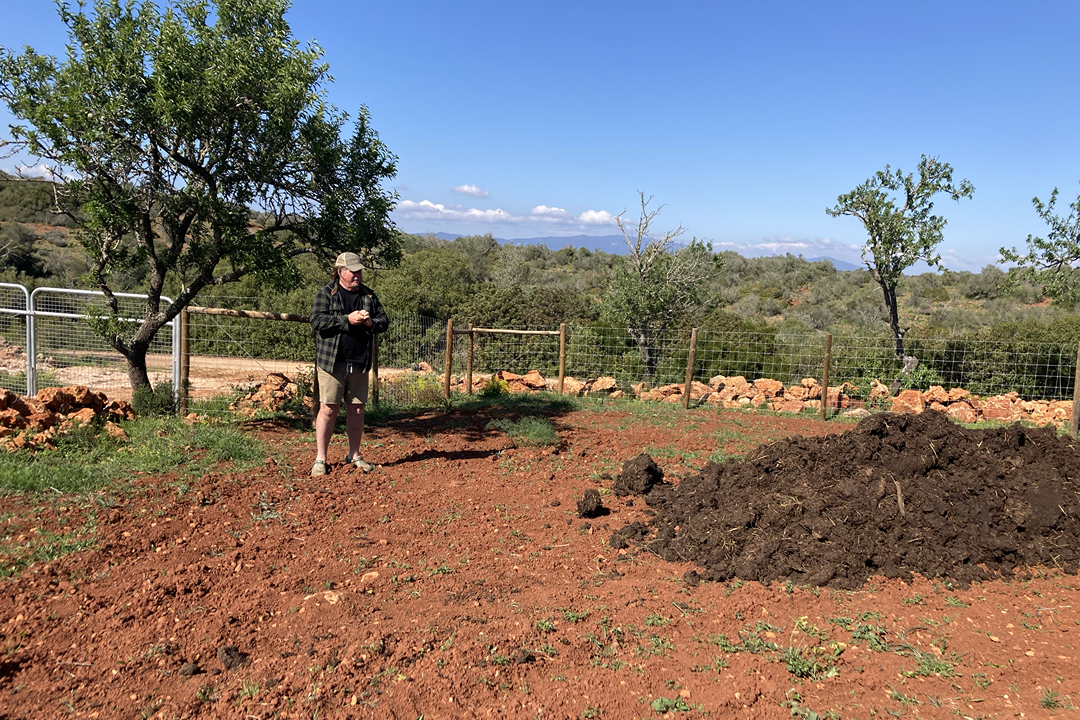
Part of our dream of living in Europe was to plant or inherit a vineyard with whichever property we found, wherever we ended up. So when we found our dream place here in the Algarve, with five hectares of land just outside Lagos in Bensafrim in 2018, we made a plan to plant. Our 100-year-old quinta has fig, olive, almond and carob trees, loads and loads of rocks, and a lot of potential!
Part of our dream of living in Europe was to plant or inherit a vineyard with whichever property we found, wherever we ended up. So when we found our dream place here in the Algarve, with five hectares of land just outside Lagos in Bensafrim in 2018, we made a plan to plant. Our 100-year-old quinta has fig, olive, almond and carob trees, loads and loads of rocks, and a lot of potential!
First, we drank a lot of Portuguese wine. I mean, we did A LOT of research on which grapes we wanted to plant and which would do well in our part of the Algarve. In the end we chose Negra Mole, Bastardo and Moscatel Gallego, based on our favourites and what we found locally. Then we picked an area of our farm that seemed ideal for a vineyard.
Next, we had to find someone to help us plough and turn over the land. We ended up hiring someone from a billboard advertisement I snapped a photo of while driving, to come and clear the area where we wanted to plant our vines.
The summer of 2020 a young man, Dante, came to see the property and said, “Oh yeah, no problem. In three days it will look like a beach.” We laughed but took him at his word out of sheer hope that this would be the case.
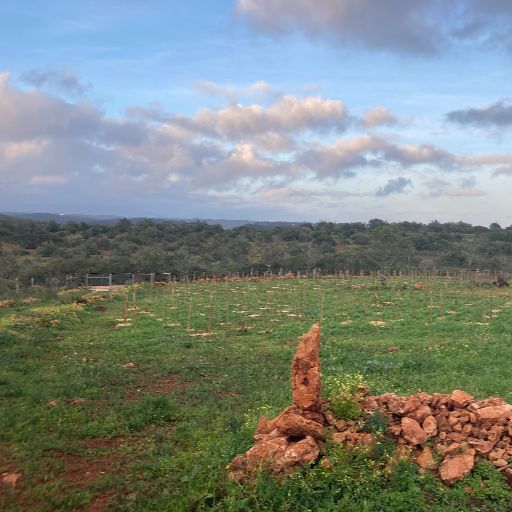
Three-and-a-half months later, after several tractor breakdowns and three inches of red dust all over EVERYTHING, we still had a field of rocks. We also now had a small rock wall enclosing the space, like a Portuguese clos (a French word meaning “enclosure” and referring to a vineyard enclosed by a stone wall), but we had lost the determination to fully clear it. Dante, defeated, said that this was the best he could get from the land, and we all moved forward for better or worse.
The science bit!
In 2021, we met Guillaume Leroux, the owner and winemaker of Monte da Casteleja, and Guillaume graciously offered to help us deliver our soil samples to a lab in Lisbon. Soil analysis is imperative and the first step in ensuring the health and longevity of a new vineyard. How we implemented the lab’s recommendations could mean success or total failure. So I took samples from six different places, 15 cm below the surface and again at 30 cm below, throughout our 0.13 hectares of land, and brought them to him.
Within six weeks, we had our results. They came came with two options: one was to take two full years to recover the soil and get the nutrients it needed with specific plants and natural minerals and fertilisers; the other plan was for one year, but it required ten tons of strum (a mix of straw and cured manure).
Lucky for us, our neighbour has a large herd of cows, and within a week, we had eight large trucks full of strum delivered.
My determined and ruggedly handsome partner Geoff struggled with our rototiller to mix the strum in and spread it around. He and the rototiller had several setbacks with the infinite supply of unrelenting rocks here on Montinho da Rocha. They were, and still are, an obstacle that’s nearly impossible to overcome, but I like to think of our vineyard like the vineyards in Côte du Rhône, specifically Château Neuf du Pape, covered in large white river rocks called galets roulés: beautiful and perfect for the drainage, health and heat absorption for the vines. Why can’t my crazy rocks be as beneficial?
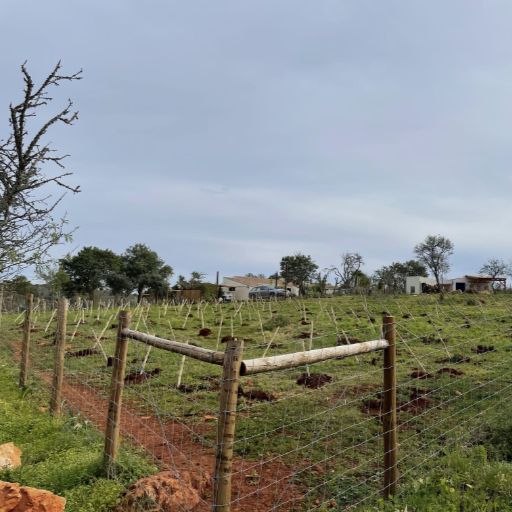
Sowing the seeds of love
The next step, despite the rocks, was to spread kilos of cover crop seeds, mustard, radish and wild flowers. The mustard and radish to break up the soil, and the flowers for beauty, of course.
I think the birds had a heyday on the Sizzler’s seed buffet, because the next spring our sprouting seeds were spotty at best, with single patches of mustard and few flowers.After we began the soil recovery, I started looking for a vine nursery that cultivated the grapes we wanted.
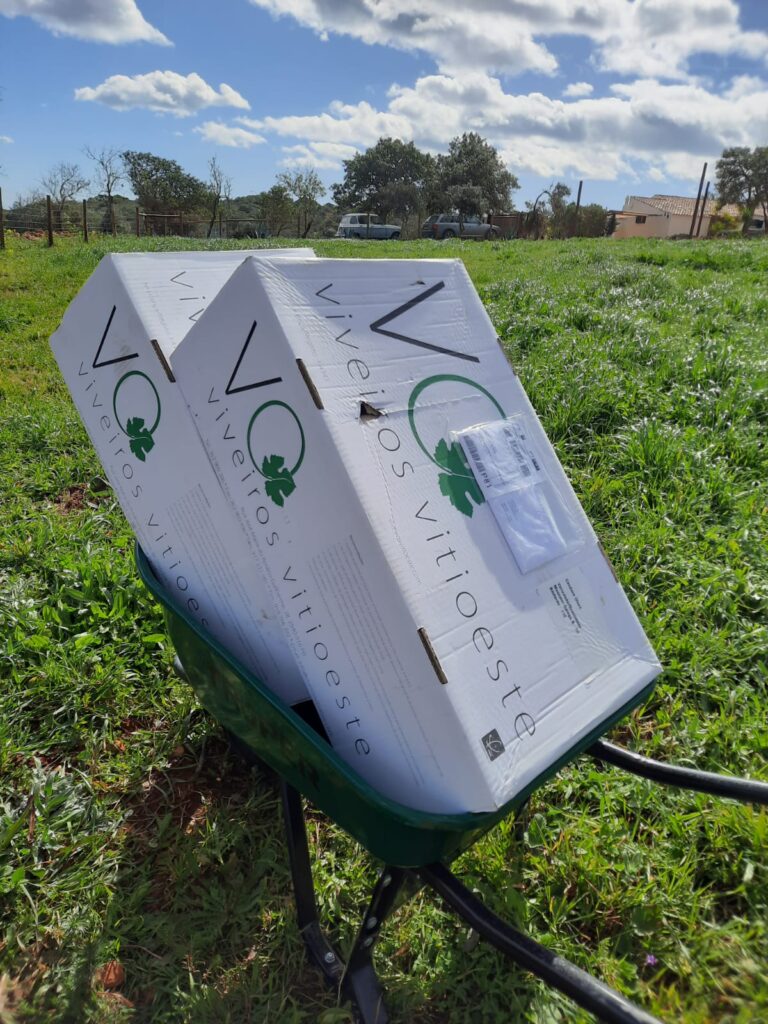
The nursery we went to was Viti Oeste, north of Lisbon. They had exactly what we wanted. When I told Célia Cardoso (my knowledgeable contact at the nursery) about the planting method we were aiming for and attached the soil analysis, she came back with specific rootstock options for us to choose from. We went with drought-resistant plants for dry farming and stock that could thrive in clay. Our soil is predominantly red clay, a squelching, sticky, heavy red clay in winter and impenetrable red cement in summer.
The rootstock that Celia proposed was 1103P for Galego Branco, root stocks 196-17 and SO4 for the Bastardo and 1103P for the Negra Mole. Perfect!
At this point, we had about six months left until our vines arrived and the soil quality improved, fingers crossed. I scheduled the arrival for early March. Late enough to be slightly warmer, but still early enough for the vines to be planted before the growing season.
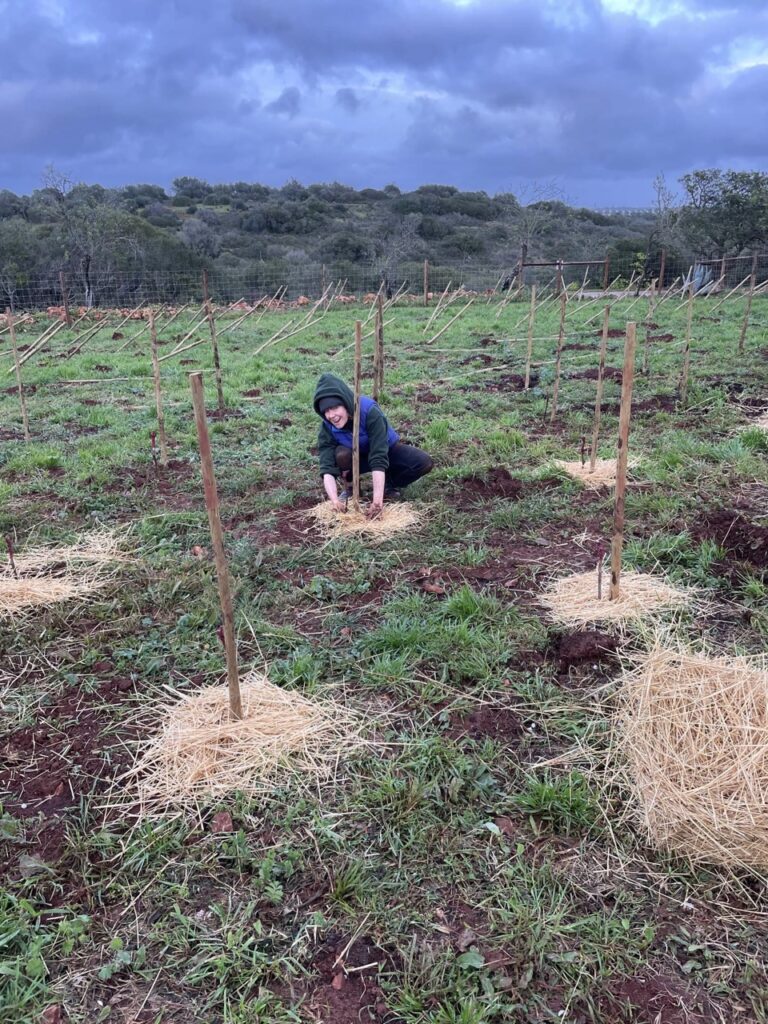
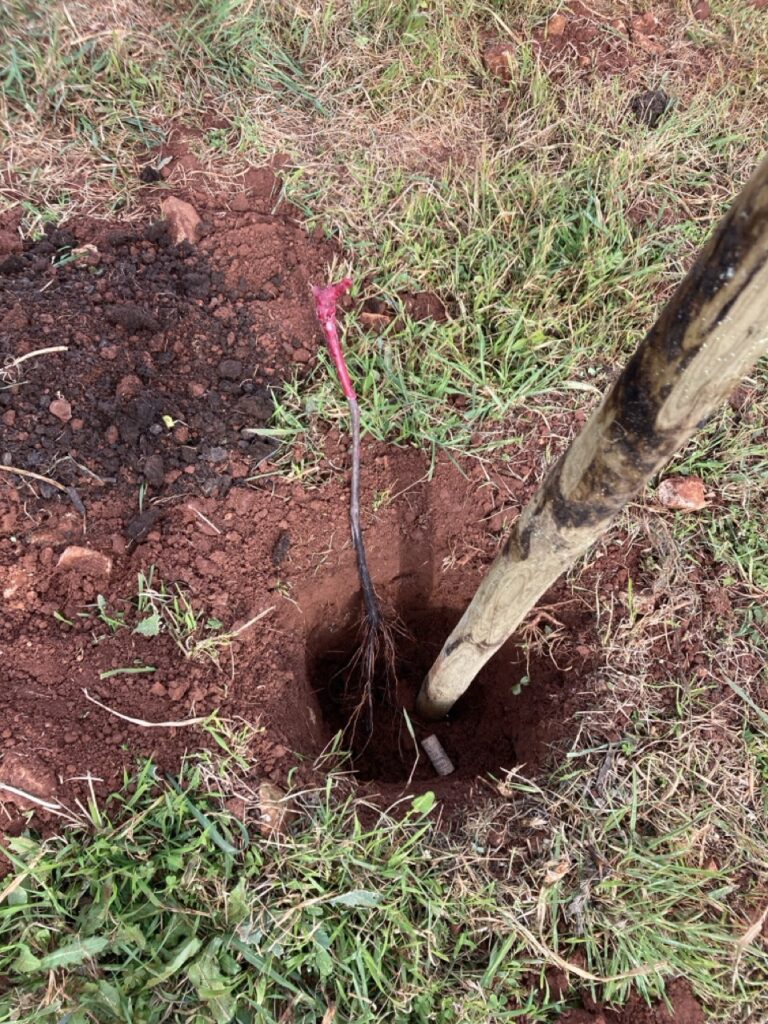
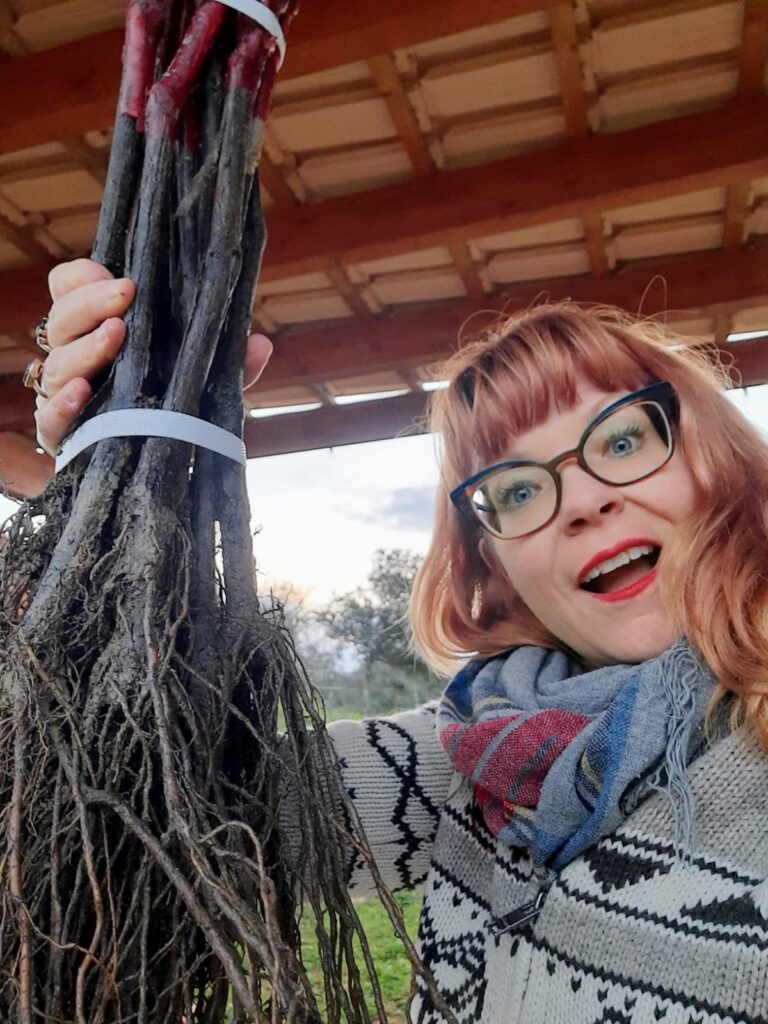
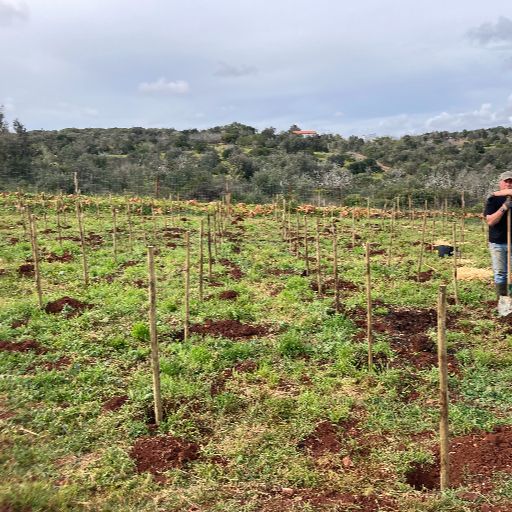
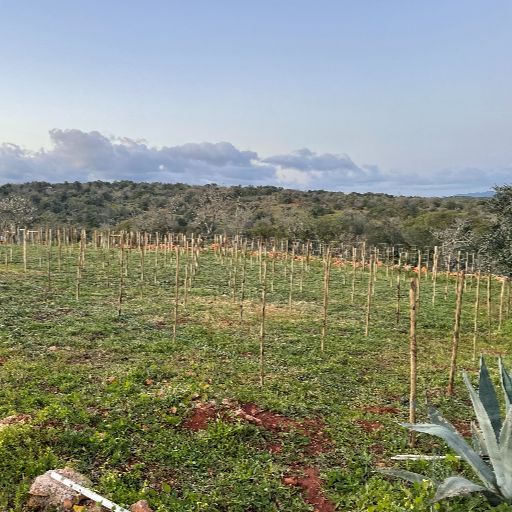
Of course, I insisted we plant our 410 vines on the best days according to the biodynamic calendar (fruit days), and on all four days we planted, it rained non-stop.
Geoff and I planted all 400+ vines together, digging and re-digging holes because of the rain, adding compost and an old wine cork (purely a romantic addition) to each hole to help the root bulbs thrive. We pounded in the stakes, gently planted the vines, spread more compost over them, and then put straw on top to insulate our new babies. We were cold, drenched, completely muddy, covered in a hodgepodge of non-rain-repellent clothing, then again in trash bags, and in various other winter items we had brought from New York. It was amazing!
It was also crazy, and I’m certain that if you know me, you can probably imagine the whole thing.
We did it! We are very proud of our crazy-dry farm field-blend vineyard.
A dog’s dinner!
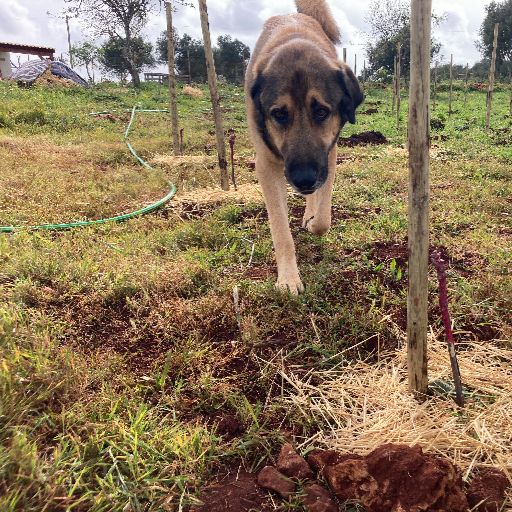
Last year, the vineyard turned three, but due to the fact that our new furry members of our family, three Podengo, Shepard female pups, literally chewed up, spat out, pulled out, and dug out our entire irrigation system, we had a new problem to consider. Due to this new calamity, we postponed the plan to pick grapes, cut all premature clusters off, and opted instead to encourage the vines’ root systems for health and longevity. Based on their lusciously green, long growing season, I think it worked. So once again, we had to hand water the vineyard.
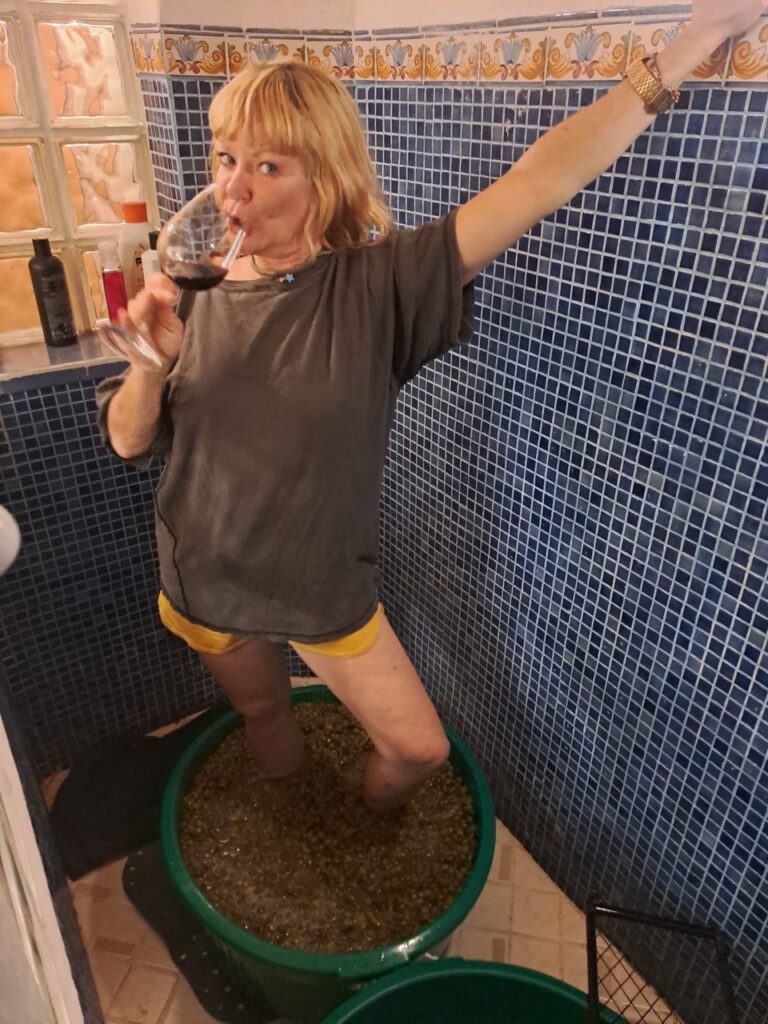
This year, 2026, we will keep the clusters and make wine without irrigation and, hopefully, without any hand watering. If we have a harvest to pick, we will make wine, which won’t be as scary as perhaps it would’ve been if we hadn’t decided to buy grapes from our friend who owns a vineyard nearby and make wine in our bathroom this last August.
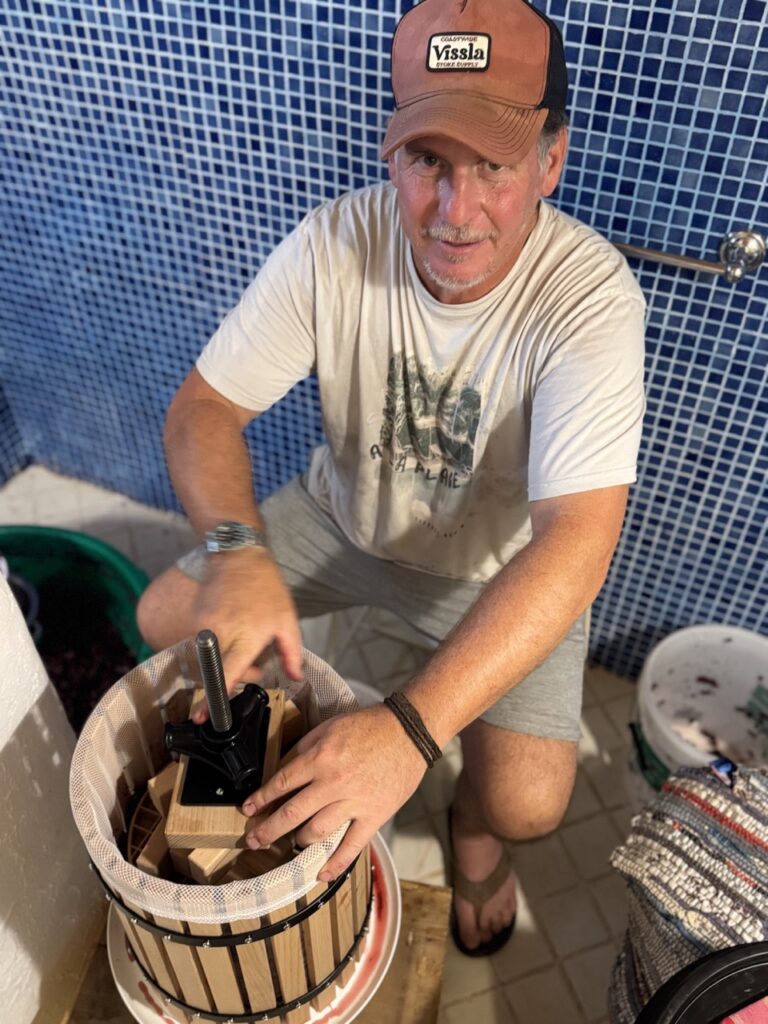
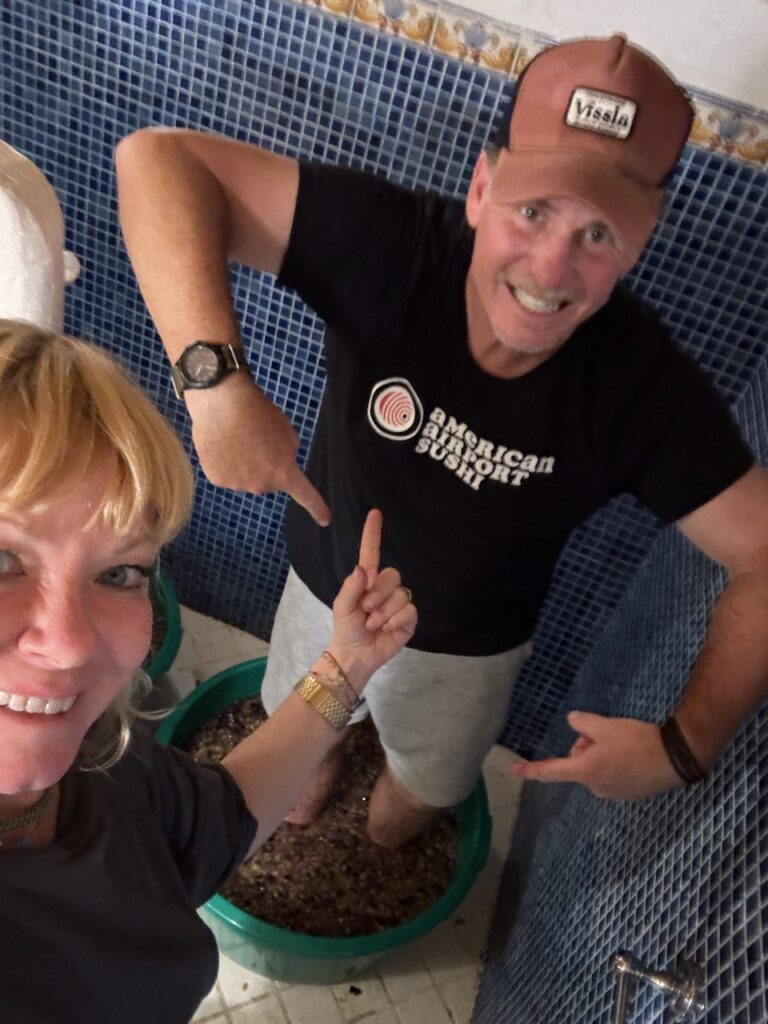
Yes, we chose to make the wine in our guest bathroom. I promise it was clean! It’s the coolest room in the house and the easiest place, by far, to clean, re-clean, and thoroughly disinfect.
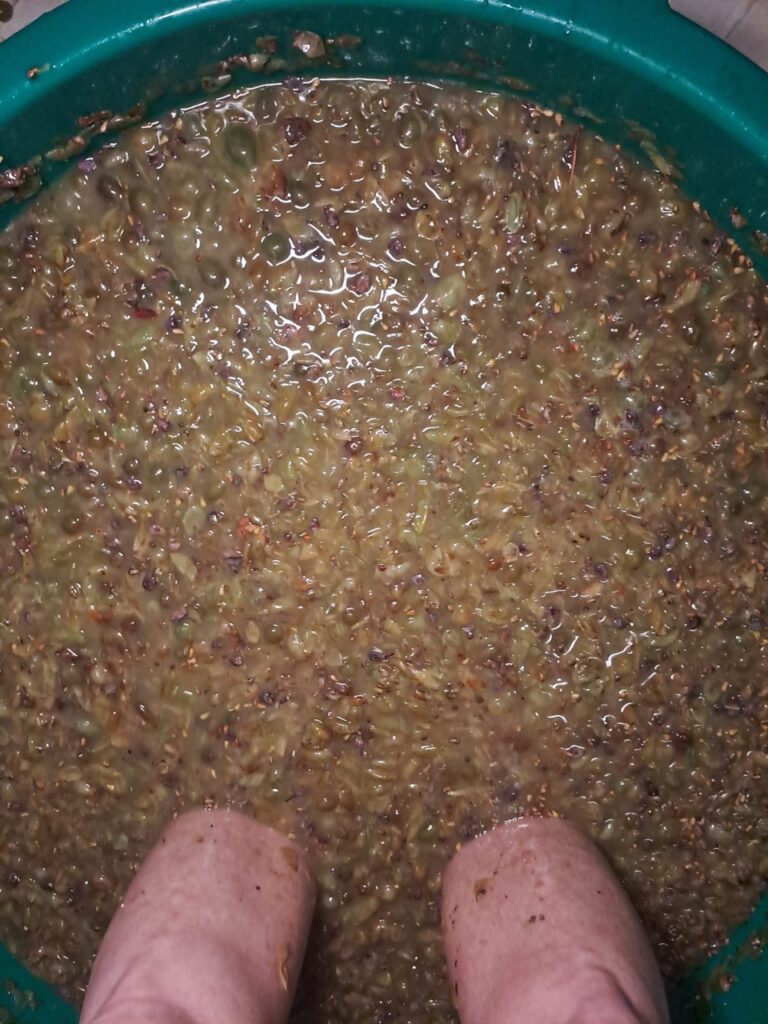
A stomping good time
In August 2025, we experimented by buying 150 kilos of Castelão and Crato Branco grapes from 50-year-old vines: two prolific Portuguese grapes that, in my opinion, do really well here in the Algarve. They both have superb acidity, bright, juicy fruit, and, specifically in the Castelão, ripe tannins.