The Algarve is famous for its warm climate and reliably dry weather. Pleasant as that may sound, prolonged drought has taken a toll in recent years, placing increasing pressure on both people and wildlife. Smaller water systems – brooks, streams and seasonal pools – have often run dry, leaving little or no room for aquatic and semi-aquatic life to survive.
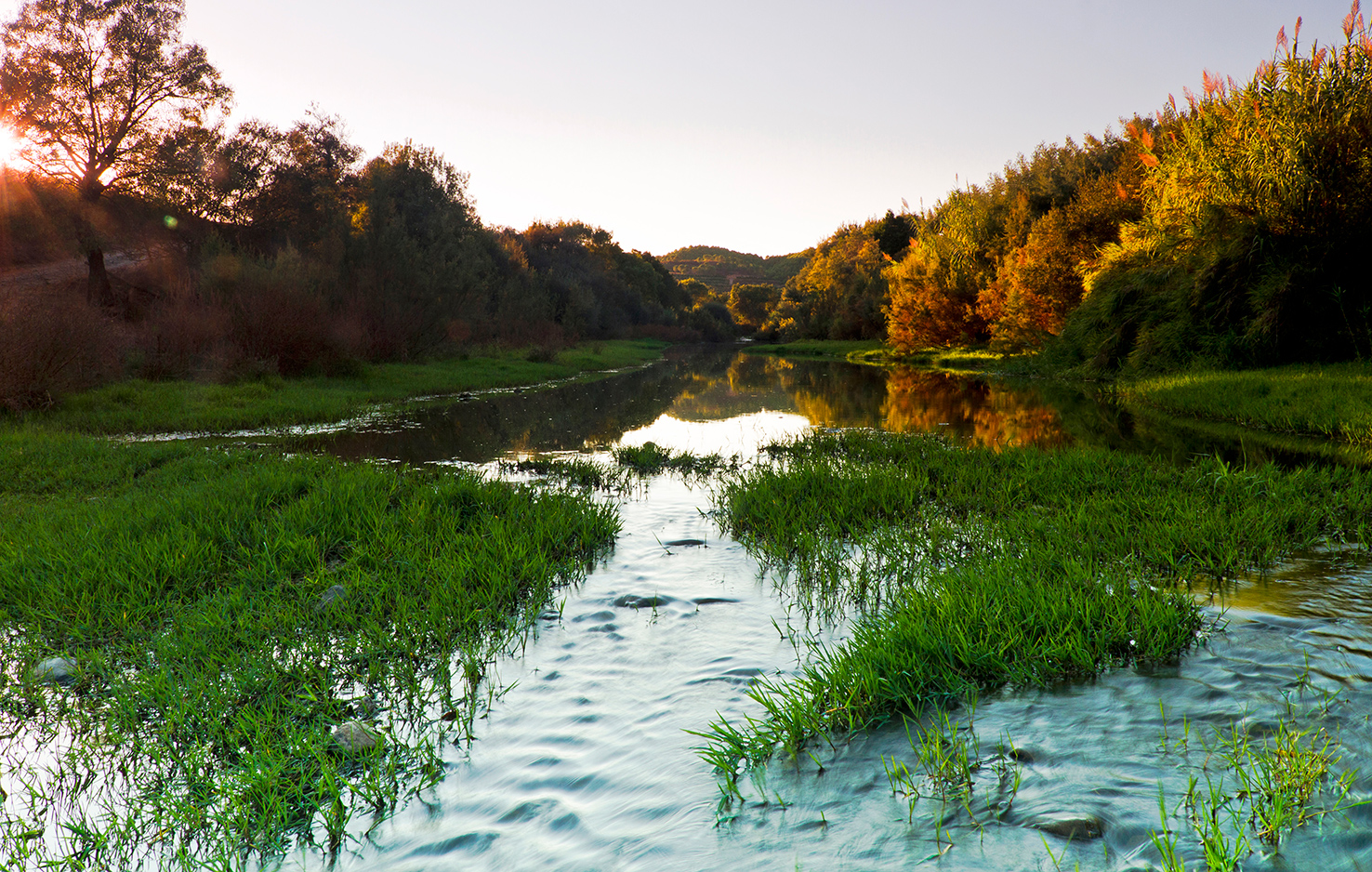
But last winter’s rainfall has been a real game-changer. Across the region, freshwater habitats have been revived, and with them, a remarkable resurgence of life. Once-silent waterways are now brimming with activity, offering a rare opportunity to witness the Algarve at its most vibrant.
May is perhaps the perfect month to explore these habitats. Long, sunny days and gentle temperatures in the mid-20s°C create ideal conditions for walking before the intensity of summer sets in. Along these waterways, nature is thriving once again. Herons and egrets stalk the shallows, kingfishers flash electric blue along the banks, and, if you’re lucky, you might even glimpse the elusive otter.
Yet some of the most fascinating residents are smaller – and defined by transformation. These are species whose life cycles depend on water, and which, like the Algarve itself this year, undergo extraordinary change.
This season, the Algarve’s waterways are more than just scenic – they are living proof of nature’s resilience and ability to reclaim lost grounds. For those willing to slow down and look closely, they offer a glimpse into nature’s reclaiming power.
Butterflies
Few things evoke a perfect spring day quite like butterflies flying over a meadow covered in flowers or beside a flowing stream. Synonymous with transformation and metamorphosis, butterflies undergo one of nature’s most extraordinary journeys to adulthood: from egg to larva, to caterpillar, to chrysalis, and finally emerging as winged adults.
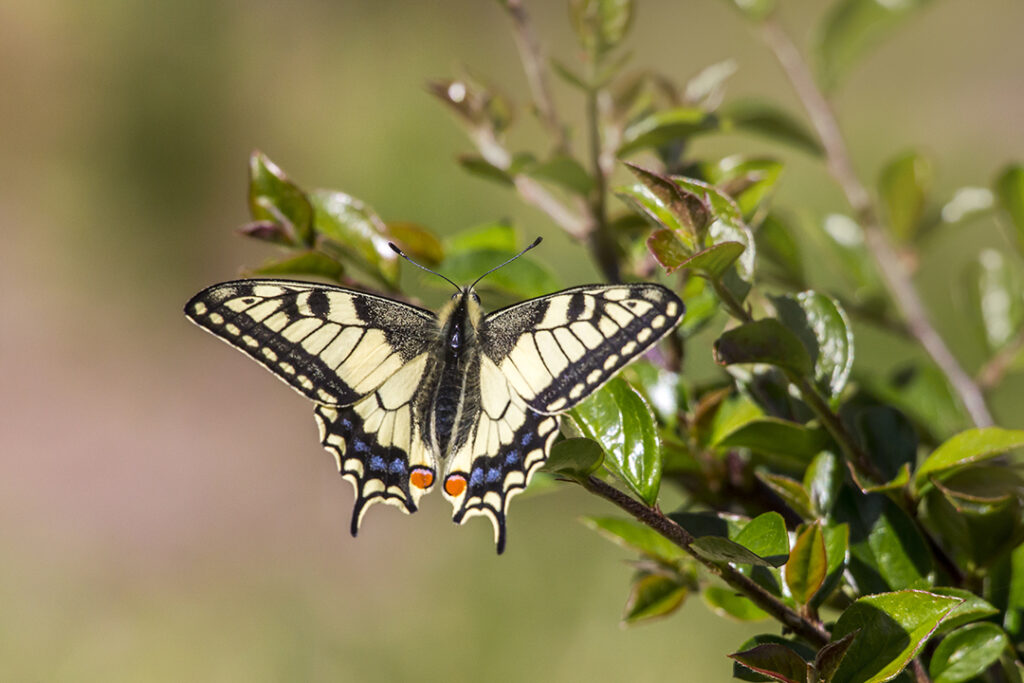
The Algarve is home to a rich variety of species, but in May, keep an eye out for the striking swallowtail (Papilio machaon). Large and unmistakable, it boasts bold yellow and black markings, elegant tail-like extensions, and a graceful, gliding flight.
Where to see: widespread across the Algarve, particularly in meadows, orchards and near freshwater habitats. Butterflies in general prefer warm and calm days, and seem to hide on windy days. Wind can easily blow butterflies away and even injure their delicate bodies.
Salamanders
Amphibians are among the clearest indicators of healthy freshwater ecosystems, and salamanders are no exception. With their permeable skin, they rely on moisture to survive – absorbing both water and oxygen directly through their bodies. This feature makes them especially sensitive to environmental change. Salamanders hatch from an egg and develop into a tadpole before growing into the adult form.
In the shaded woodlands and cool streams of Caldas de Monchique, conditions are just right. Sheltered from the harsh summer sun, these habitats provide a refuge where salamanders can thrive.
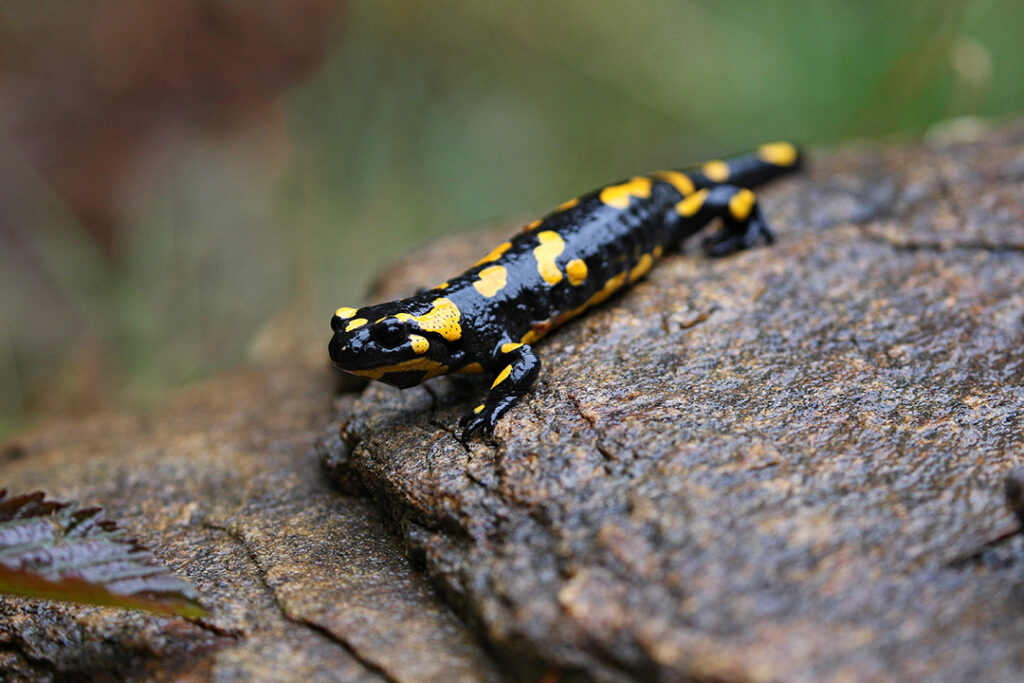
Look out for the fire salamander (Salamandra salamandra), a striking black-and-yellow species whose vivid markings serve as a warning to predators: it is toxic and best left alone.
Where to see: Caldas de Monchique and other damp, shaded woodland areas.
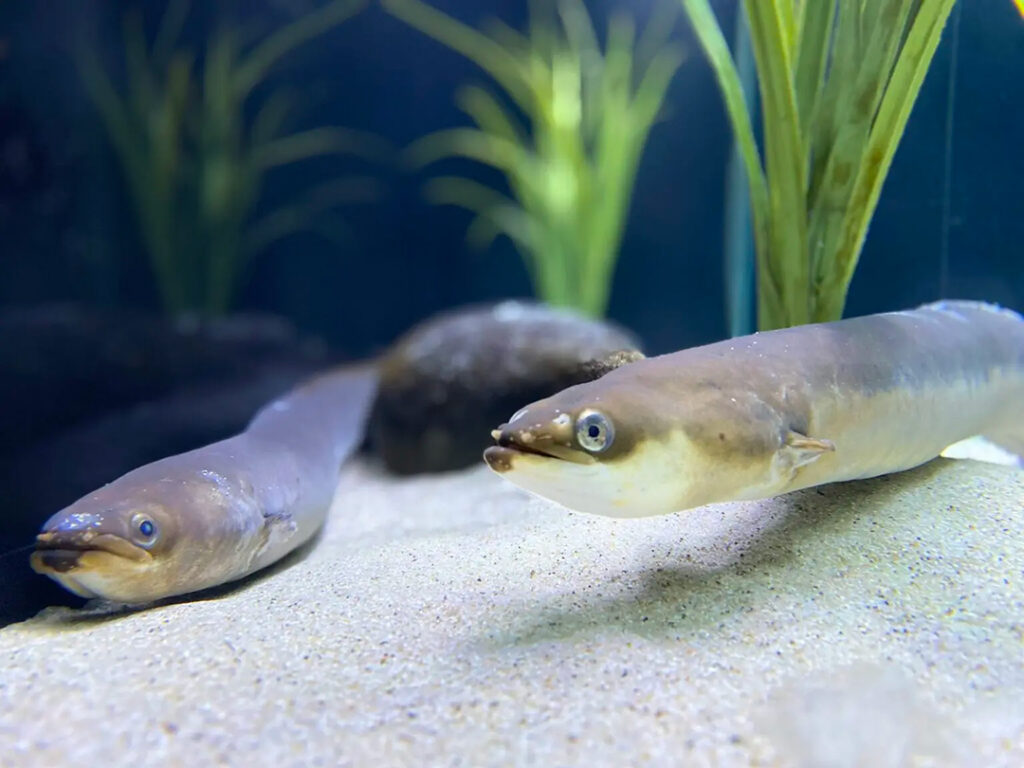
Eels
Less visible and threatened by capture and habitat loss is the European eel (Anguilla anguilla). These remarkable fish are true travellers, undertaking one of the most fascinating journeys in the animal kingdom.
Born in the depths of the Atlantic Ocean, leaf-like eel larvae drift on ocean currents towards Europe, transforming along the way into transparent glass eels. They then migrate into rivers and streams, where they grow and mature – sometimes in waterways that, until recently, had been dry for years.
This year, thanks to renewed water flow, eels have been spotted returning to parts of the Algarve where they’ve long been absent – a powerful sign of ecological recovery.
Where to see: potentially in any freshwater streams and rivers throughout the region. Recent reports indicate eel presence in the Ribeira de Budens, near Lagos.
Photo courtesy of www.fluviariomora.pt