Berndt Stange’s life reads like a Cold War thriller. Yet, rather than being confined by borders, he has broken down barriers to forge his own remarkable journey. At seventy-seven, the man who once patrolled the touchlines of war-torn Baghdad and the stadiums of the German Democratic Republic now finds himself in the considerably more serene setting of the western Algarve, where he represents Odiáxere in the local walking football league.
“Football is the same everywhere.” These are the words of a fearless traveller. A man whose sports career has taken him to some of the most unlikely and dangerous countries on the planet. Yet Berndt Stange’s mantra of not mixing work with politics has ensured that, not only has he lived to tell the tale, but he has experienced more in one lifetime than most others could ever dream about.
The Cold War coach
Born in the East German town of Gnaschwitz in 1948, Stange’s early life was in the shadow of the Iron Curtain. He enjoyed a modest playing career as a defender before transitioning into an intelligent and clinical coach. By 1983, following a successful stint with club side Carl Zeiss Jena, he had become the manager of the East German national football team. The oppressive political climate at the time ultimately meant his side did not qualify for any major tournament, although there was a notable 3-1 success over Portugal in Braga.
After three further coaching positions within club sides in Germany, he took his first coaching job abroad as the manager of FC Dnipro Dnipropetrovsk in Ukraine. The players were in for a culture shock as Stange attempted to instil a sense of order and control over the team. It was noted that his attention to detail was something that had never been experienced prior to his arrival. The highlight of his 18-month tenure was reaching the Ukrainian cup final, but his team lost to Shakhtar Donetsk in a dramatic penalty shoot-out.
Stange then swapped the cold of Ukraine for the sunny climes of Australia, where he transformed lowly Perth Glory into a force to be reckoned with. His side finished top of the league but lost on penalties to Wollongong Wolves in the Grand Final, despite leading 3-0 at halftime. Stange’s popularity was evident with the supporters who formed a demonstration to prevent him from being sacked, but enemies within the club led to his imminent departure.
Coaching in the crossfire
In 2001, Stange was appointed manager of Oman as he attempted to lead them to the 2002 World Cup in Korea and Japan, but he was sacked less than three months into the job. Despite the threats of war and the despotic figure of Saddam Hussein, Stange subsequently took the role of the national coach of Iraq. It was here that his reputation for being fearless was truly cemented. His four-year contract included two clauses that he could leave in the event of war and he could refuse any political comment. He fled as the bombs began to fall, though his efforts earned him the FIFA Presidential Award in 2003. “I never saw Saddam. I came for football and left for politics,” he later said.
The minnow miracle worker
Two years later, Stange joined Apollon Limassol in Cyprus and helped them avoid relegation. The next season, he oversaw the club win the Cypriot Championship as well as the Super Cup. Cyprus was obviously too tranquil for such a journeyman and, in 2007, he began a successful period as manager of the Belarus national side. The footballing minnows pulled off some of the most significant results in their history, which included victories over the Netherlands and France, as well as draws with Argentina and Germany. In his 49 matches, Belarus climbed from 90th in the world to their highest ever ranking of 36.
In May 2013, Stange became the head coach of the Singapore national side, but it was not a smooth venture. He openly criticised the fitness of some of the players and they were eliminated from the 2014 AFF Championships despite being the host nation. The highlight of this spell was a creditable 0-0 draw with Japan.
After a brief period of retirement, his final coaching position took him to Syria, where he took over the reins of the national side. “I was bored at home. It’s never boring in Damascus,” he said. Alas, it was not a particularly successful experience as the media led constant criticism of his elevated salary. Ultimately, football is a results game. A 0-0 draw with Palestine and a 2-0 loss to neighbours Jordan led to his departure in 2019.
Walking into a new legacy
Cut to the present day and Berndt Stange has traded conflict for the comparative calm life of Lagos. Not that he has left his football days behind him – far from it. He is a regular player for CD Odiáxere Walking Football Club, where he continues to express his knowledge and authority to all those around him. But here he is known simply as Berndt. He is a teammate and a friend. It is a world away from the unimaginable extremes of the GDR and the troubles of the Middle East. Perhaps, he has finally found his peace amongst the golden beaches of Portugal?
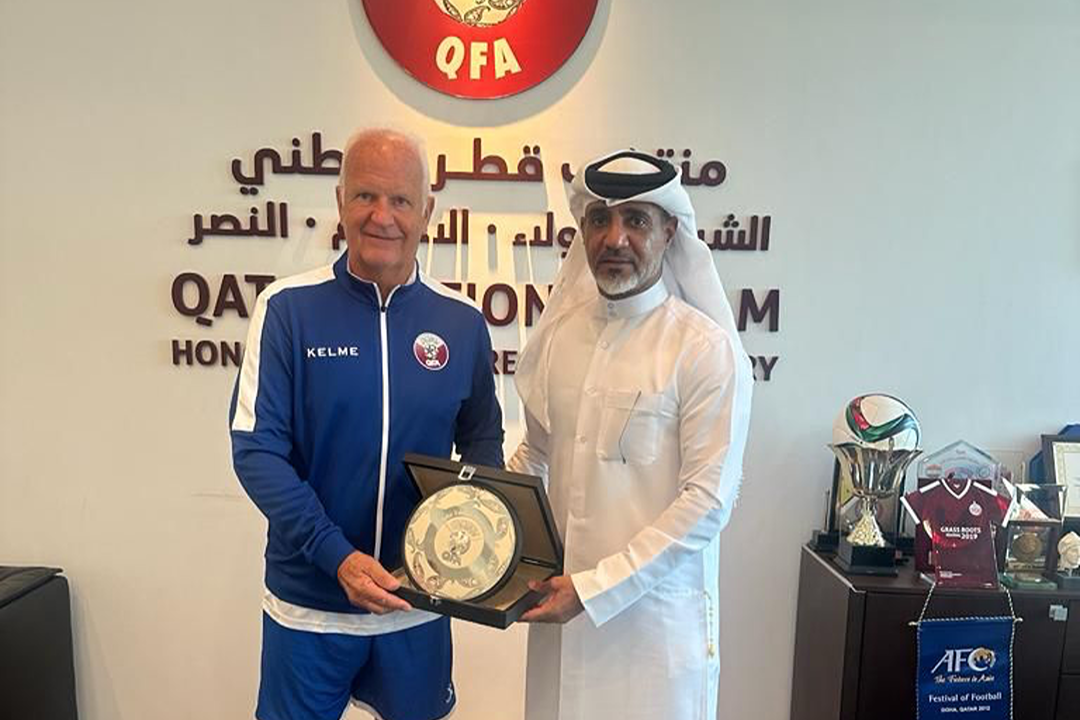
Or maybe not. Stange has just returned from Qatar, where he has been leading workshops for junior coaches. It seems his passion has in no way dwindled. Indeed, his love of walking football is evident. If you are new to the sport, walking football is largely oriented towards over-50s, where physical contact or running is deemed foul play. The sport is growing exponentially and focuses as much on mental health as on fitness.
In Berndt Stange’s own words, “I am certain that this wonderful sport will conquer the world. Its simple rules protect the health of older athletes. The childlike joy of the game is preserved well into old age. The football-mad nation of Portugal recognised this quickly, and the sport continues to spread.” Stange’s legacy seems set to continue for many years to come.
If you are interested in playing walking football, contact geral@cdodiaxerewf.pt