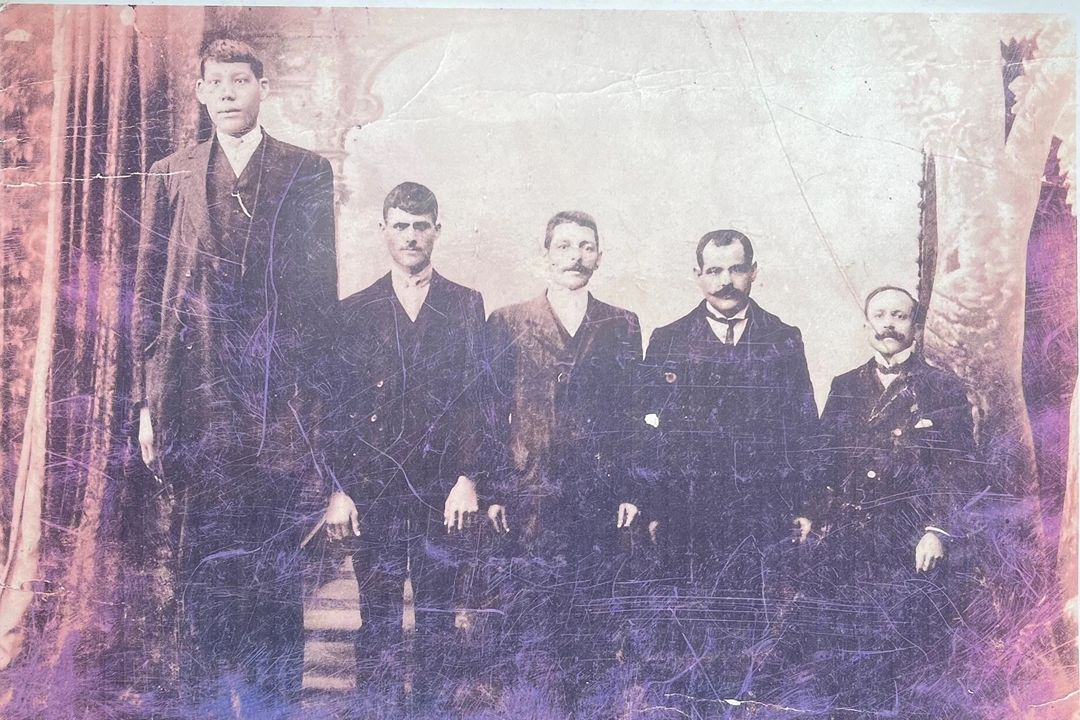
In the quiet rural landscapes of the Algarve, a poignant piece of local history remains etched in the region’s memory: the tragic story of José Lopes. The unfortunate soul, who became known as the ‘Giant of Farelos’, is reminiscent of the human curiosities in P.T. Barnum’s circus depicted in The Greatest Showman. Sadly, in late 19th-century rural Portugal, ‘inclusivity’ was an unknown concept, and for José, there would be no uplifting musical score or happy outcome.
José Lopes was born in mid-February 1889 in Monte dos Farelos, a small village in the Alcoutim municipality. The son of a poor farming couple, António Lopes and Rita Bento, José’s extraordinarily fast growth made him a pariah in his village. In an era steeped in folklore, his condition was cruelly whispered to be a ‘divine punishment’. Before he was born, whilst working in the fields, his mother had supposedly remarked that she wished for a giant son, an offhand comment that haunted her forever.
A Life Out of Proportion
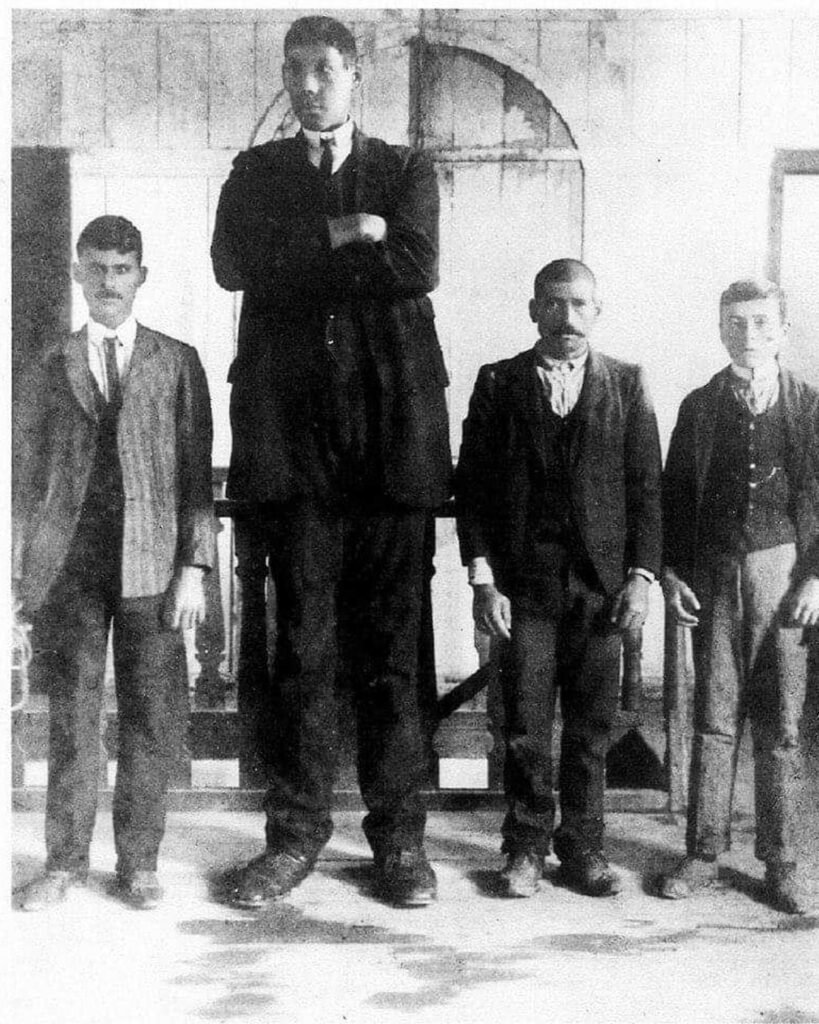
José had an immense frame, with a height of 2 metres and 45 centimetres, arms measuring 93 centimetres, hands measuring 35 centimetres, and feet measuring 45 centimetres – making an ordinary life impossible. He was unable to partake in the typical agricultural labour of his peers; he could neither hold a plough to till the earth nor gather weeds for the animals. His sheer size frightened the local children, who wept and fled at his approach, and even the village dogs were said to bark aggressively as he passed.
Left with few options to support himself, the young José was thrust into the spotlight. He spent his youth travelling across Portugal’s major markets and fairs, including those in Castro Verde and Vila Real de Santo António, and he was even exhibited in Spain for ten months. Curious spectators would pay 50 réis per adult, and 30 réis for children and unranked military personnel, just to marvel at the young man. Beyond the exhibitions, José endured a brief, gruelling stint at the São Domingos mine. Tragically, lacking the strength to work standing up, he was forced to push heavy transport carts, known as zorrinhos, whilst on his knees.
A Melancholic End
Those who saw him noted that a profound despair and a mournful expression never left his face. It was said that he never smiled, bearing the crushing weight of an existence he knew would be fleeting. According to local lore, José lived with the terrifying certainty that his death would come as soon as he stopped growing. Sadly, this premonition was not far off. After days of agonising suffering on an enormous custom-made iron bed with a rye straw mattress, José Lopes passed away on 17 December 1914, at the tender age of 25.
Today, the Giant of Farelos is remembered not merely as an exhibition spectacle, but as a poignant symbol of humanity and endurance, trapped in a body far too large for the world he was born into.
Main photo courtesy of postal.pt