“Pé firme.”
The instruction lasts less than a second.
Two runners continue along a path in Faro. One sees the uneven ground ahead. The other trusts the warning and keeps moving.
Between them is a shared rhythm, a shared goal and a remarkable level of trust. For one of the runners, that voice is the difference between uncertainty and freedom.
That simple act of trust is helping to transform opportunities for people who are blind or have low vision across Portugal and, since February, here in the Algarve.
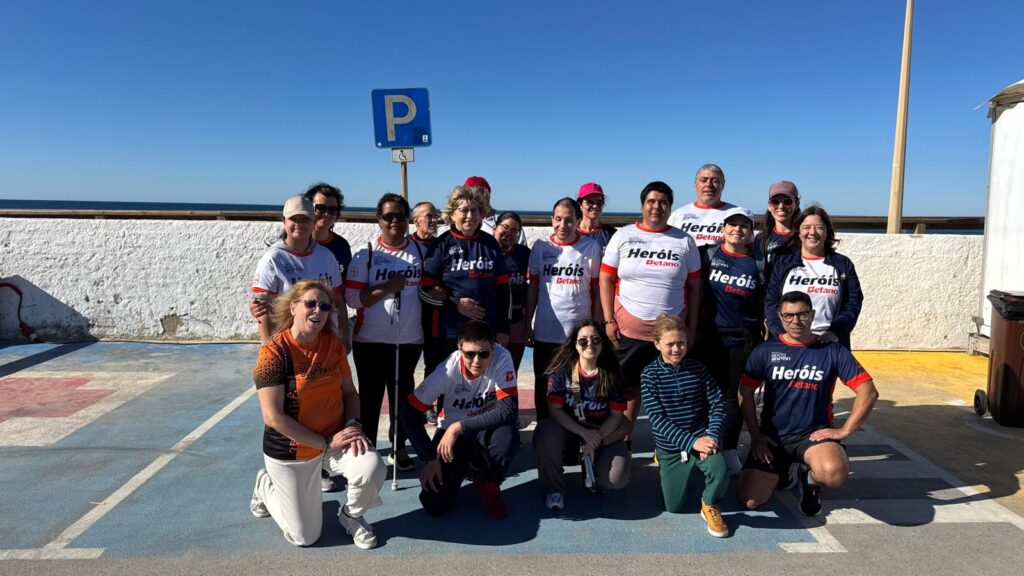
At the heart of this growing movement is Sexto Sentido, a project that pairs visually impaired athletes with trained volunteer guides, enabling them to run, walk and participate in sporting events safely and confidently. What began as a small initiative in Porto has grown into a nationwide community and is now building momentum in the south.
Founded in 2019 by athlete and advocate Bárbara Pereira, Sexto Sentido emerged from her own experience of losing vision in 2017. Faced with the possibility of giving up an activity she loved, Pereira searched for a way to regain the freedom that running had always provided.
Rather than accepting limitations, she chose to create new possibilities.
Today, the project has grown from an initial group of just ten participants to a national community of around 300 members. Each local nucleus is supported by an ambassador, a person with visual impairment, and a volunteer coordinator who helps organise training sessions, races and community activities.
Yet numbers alone do not explain the project’s success.
Unlike many founders, Pereira experiences Sexto Sentido from both sides. She helps organise it, but she also runs within it. The challenges and rewards she describes are not theoretical. They are lived.
During our conversation, Pereira spoke less about disability and more about possibility. Again and again, she returned to the idea that inclusion benefits everyone involved, not only those receiving support.
That philosophy is reflected in the relationship between athlete and guide.
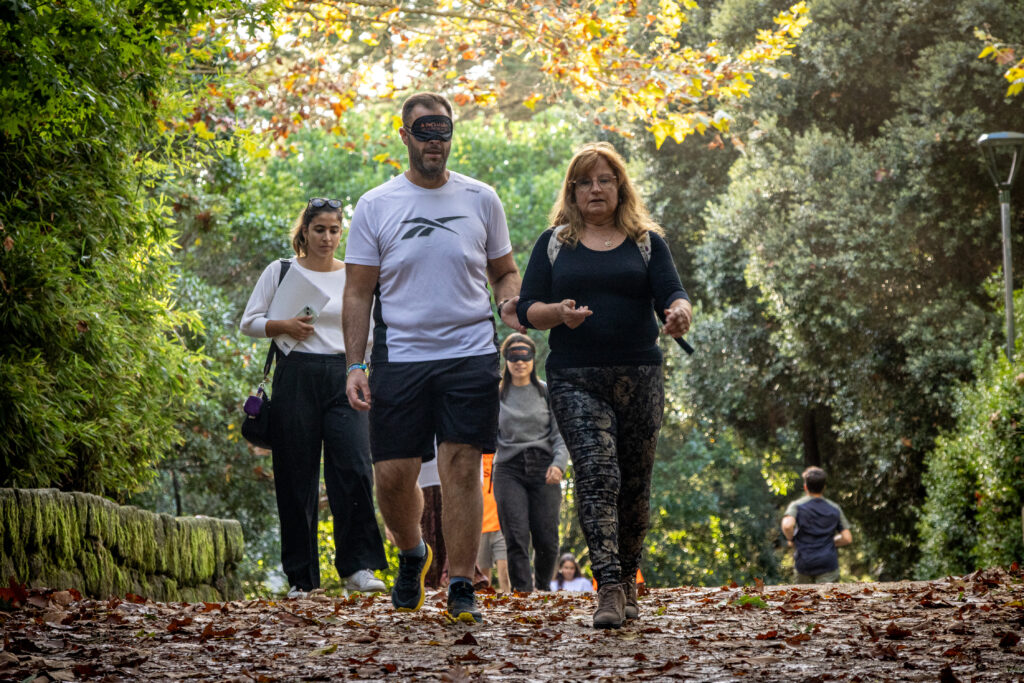
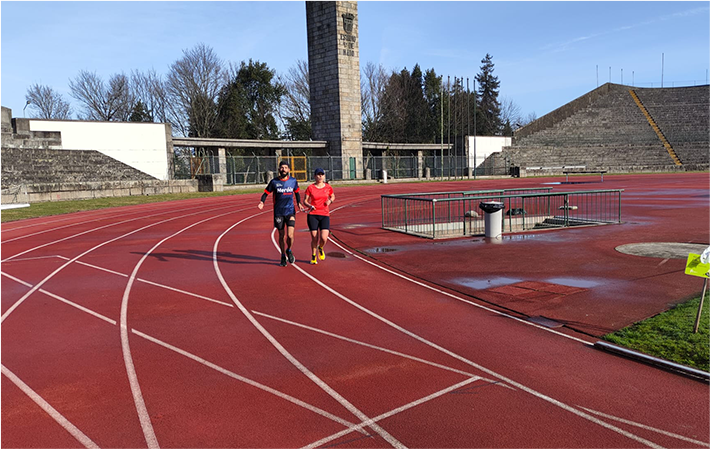
Guided running depends on communication. Throughout a run, guides provide verbal information about the surrounding environment, changes in terrain and potential obstacles. Brief instructions such as “pé alto” or “pé firme” help athletes move confidently while maintaining their rhythm and enjoyment.
“The communication is essential,” Pereira explains. “It creates a constant connection that allows us to feel secure and truly enjoy the experience.”
For many visually impaired athletes, trusting another person while running can initially feel intimidating. It means relying on another person’s observations and judgment while moving at speed.
Over time, the guide’s voice becomes familiar and what develops is not dependence but partnership.
One of the most surprising aspects of Sexto Sentido is that the impact flows in both directions. While guides quite literally lend their eyes, many volunteers discover that they gain just as much from the experience as the athletes themselves. Pereira notes that some guides began practising sport only after becoming involved in the project, having previously led largely sedentary lives.
Participants gain fitness and new skills, but they also gain something harder to measure: the reassurance that they belong in spaces where they have often been absent. Friendships form. Social circles widen. Barriers that once felt permanent begin to shrink. Projects such as Sexto Sentido encourage communities to think beyond infrastructure and consider how inclusion can become part of everyday life.
That conversation gained momentum in the Algarve on 8 February this year, when Sexto Sentido officially launched its regional activities at an event in Faro’s Mata do Liceu.
The response was overwhelmingly positive.
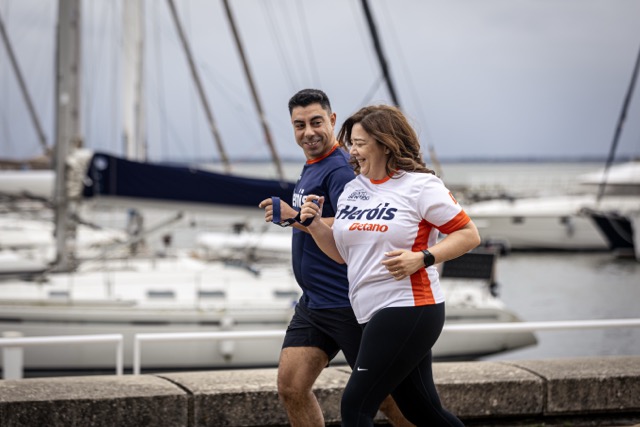
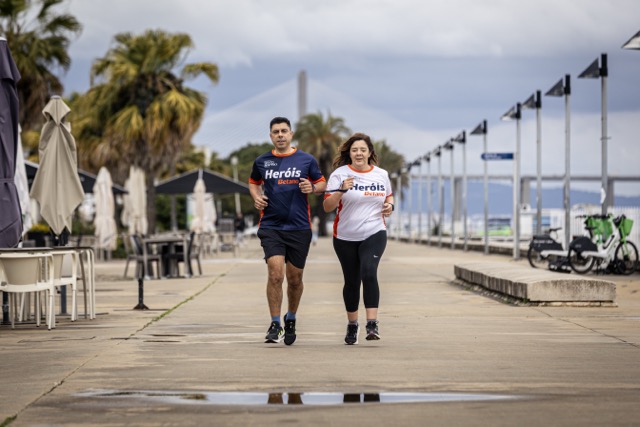
Supported by local authorities, community organisations and social partners, the event attracted volunteers, athletes and members of the public eager to learn more. The first training session was incorporated into a public race, creating immediate visibility and encouraging participation.
For some attendees, the experience was deeply emotional. “Some people ran for the first time in many years,” Pereira recalls.
Those few words speak of opportunities reclaimed and barriers removed.
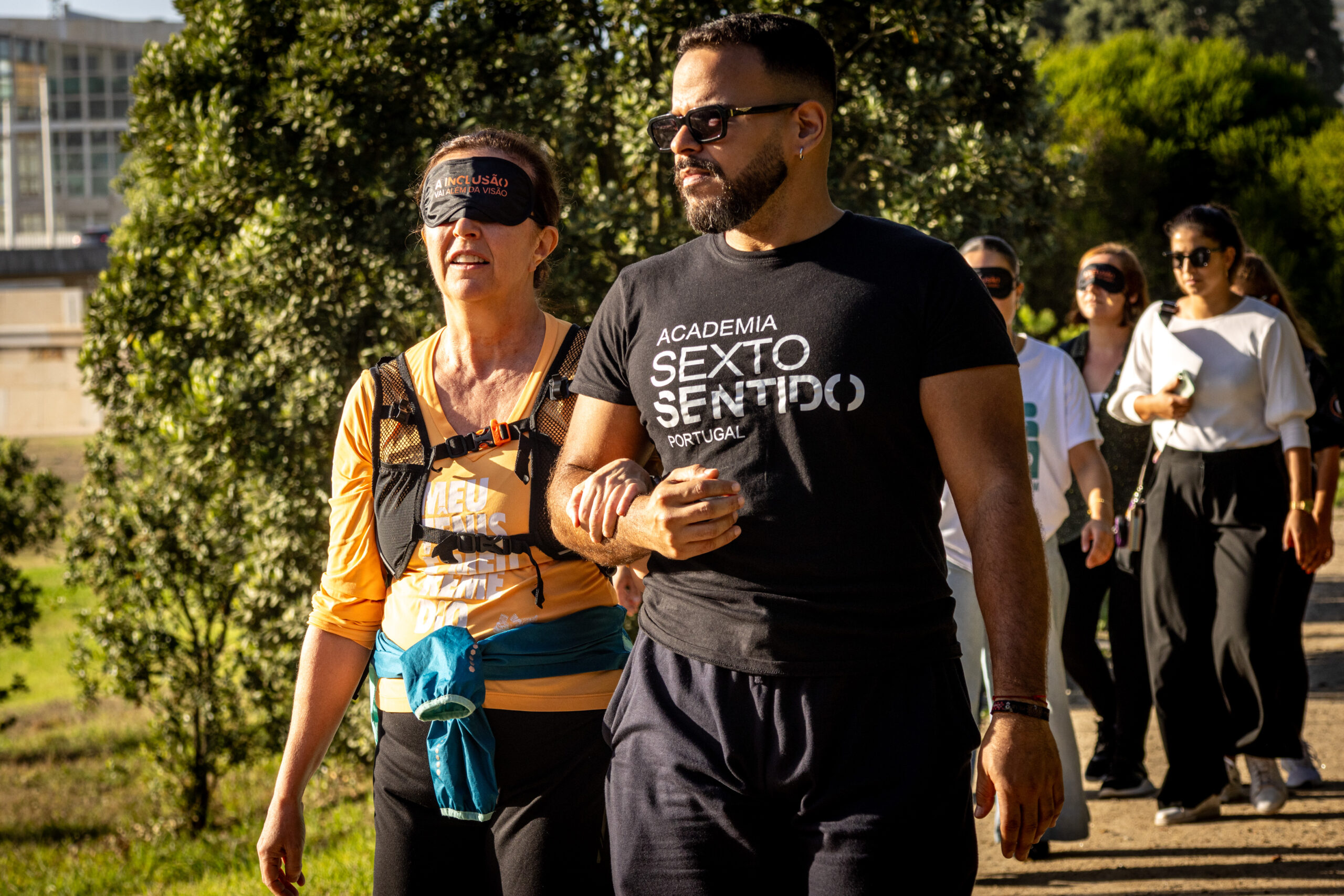
As part of the Algarve launch, volunteers also took part in an awareness activity that involved moving around blindfolded and relying entirely on guidance from others. While Pereira is careful to stress that this does not replicate the experience of blindness, it provides valuable insight into the importance of communication and trust. Participants quickly discover how much visual information they rely on each day and gain a greater appreciation of the role played by guides and athletes alike.
For the Algarve’s international community, there is further good news. Language is not considered a significant barrier to participation. According to Pereira, communication methods can be easily adapted, and the project already includes people from different linguistic backgrounds.
Whether joining as an athlete or a guide, the process is straightforward. Interested individuals complete an online registration form before being connected with their local group. Alongside monthly training sessions, many participants arrange additional runs independently. A dedicated application is also being developed to simplify connections between guides and athletes.
Since becoming a social solidarity cooperative earlier this year, the organisation has expanded into employability, accessibility and inclusion through the creation of the Academia Sexto Sentido. The academy works with both individuals and organisations, providing training on topics ranging from workplace accessibility to inclusive customer service.
Pereira believes one of the greatest barriers facing people with visual impairments is not unwillingness but uncertainty. Many employers want to be inclusive but do not know where to begin. Through education and awareness, Sexto Sentido hopes to bridge that gap and create meaningful opportunities for participation and employment. “Já não somos a exceção, mas sim parte integrante,” says Pereira. (We are no longer the exception, but an integral part.)
In a region known for its beaches, trails and outdoor lifestyle, Sexto Sentido is helping ensure those opportunities are shared more widely. One guide. One athlete. One step at a time.
Somewhere on a path in Faro, a runner hears the words “pé firme” and keeps moving forward.
Not because someone is carrying them.
Because someone is running beside them.