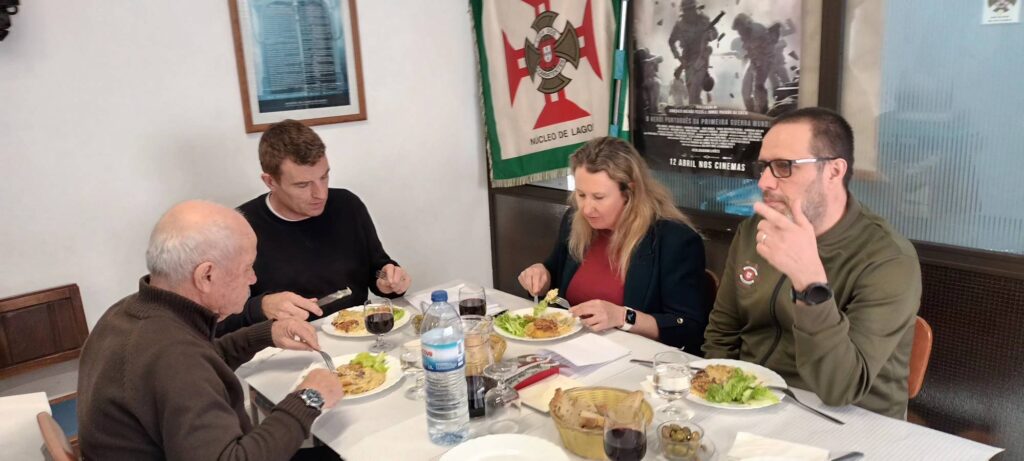
It was a great honour to be invited to have lunch with the Núcleo de Lagos, an institution which supports military veterans. Over a delicious three-course meal, I chatted with members to learn about the history of military service in Portugal and how the group provides vital support and camaraderie.
Situated in the quiet cobbled road, Rua Castelo dos Governadores, which adjoins the entrance to Lagos’ gated military base, an unimposing building hides a community hub bubbling with activity, laughter, friendship and, most importantly, good food!
I entered the community area through a small museum displaying Portuguese military memorabilia, including bulletproof vests that seem inordinately heavy, almost like suits of armour and old hand grenades, offering fascinating historical insights.
Moving into the dining area, we are warmly welcomed by Mario Ildefonso, who has invited us to join him for lunch, which is provided once a week to bring ex-service people together to share memories and keep enduring friendships alive.
The Núcleo de Lagos is one of 120 similar centres in Portugal and abroad, including Canada and Brazil. It is operated under the umbrella of the Liga dos Combatentes, a century-old Portuguese institution dedicated to supporting military veterans and their families through social and health initiatives. Established in the wake of World War I, the organisation has evolved from a grassroots brotherhood into a public utility entity under the oversight of the Ministry of National Defence. It operates several programmes that focus on medical care, the preservation of historical memory, and the maintenance of military cemeteries. Ultimately, the league seeks to foster patriotism and solidarity while ensuring that the sacrifices of past and present service members are honoured by younger generations.
As my plate was heaped with bacalhau à brás, salad, bread and olives, and a jug of wine was placed in front of me, I couldn´t help thinking it would be worth joining the military just for this privilege, which members receive for the small weekly sum of €10. While I tucked in, I chatted with Mário, who told me his family moved to Lagos from Tavira in 1955 when his father, an army corporal, was stationed on the military base, opposite the Lagos bombeiros. Mário remembers that it was his father´s job to wake the troops with a blast from his bugle. He was called Francisco Pardal but was known as ‘Cabo’ due to his gymnastic prowess! “He moved with such agility and grace that it seemed as though he was flying,” Mário told me. His mother used to work in the laundry washing the troops’ clothes. Mário also recalls playing football as a boy on the military base, which now serves as offices and military accommodation, as well as a campsite for military personnel to enjoy a holiday.
Aged 17, Mário joined the navy and served for five years while based in Lisbon. “My ship was part of a NATO fleet, and we were trained to torpedo submarines. Fortunately, we didn´t have to do it for real and I enjoyed life while I was young, as it allowed me to travel and see the world.”
If Mário had stayed on longer than his military service it would have been harder for him to leave the armed forces, so he opted to return home, where he became a painter and decorator. He has managed several bars and now owns Bar Silva in Albardeira which he runs with his wife. It is a popular meeting place for locals to enjoy good home-cooked food and drinks.
To my left is José Mendes, who served in the Air Force for 33 years. He hands me a delicious chocolate mousse while he shares memories of his 18 months serving in Mozambique. He offers me a medronho. I am tempted but decline!
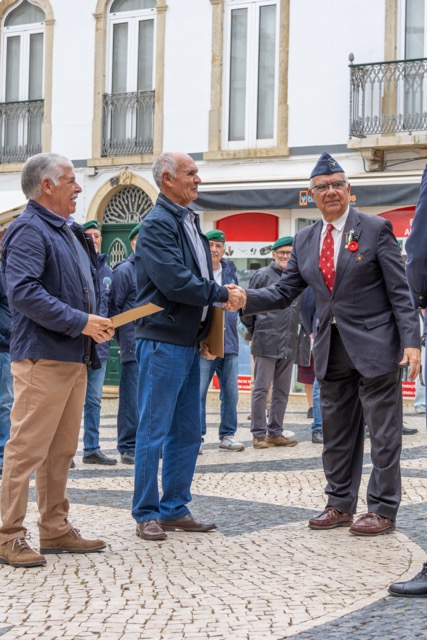
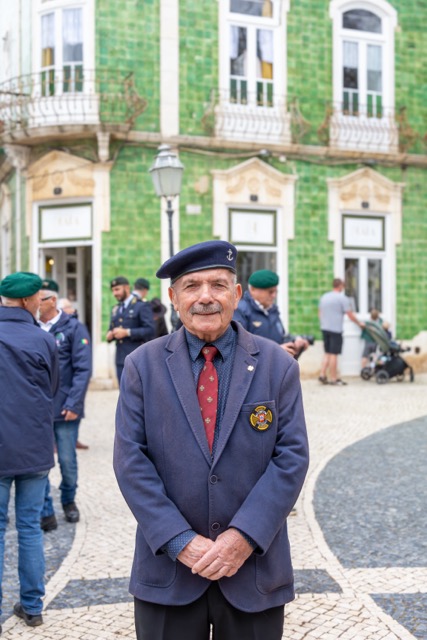
Also at our table is José Santos, who, at 55, is one of the youngest members. José joined in 2018, serving as treasurer until 2024, and has just taken office as vice president for the 2025/2027 triennium. He told me about one of his initiatives to establish free transport to the Núcleo in Loulé, which provides specialised camps and treatment for disorders like PTSD. Another goal is to establish a second war memorial in Lagos in an area that would offer quiet contemplation. He explains that one of the honours of being a veteran is having a special area in the local cemetery reserved for you and shows me a photo of the beautifully maintained area of the Lagos cemetery.
As our plates are cleared and we are drinking coffee, I note that this is definitely not a male-only domain. A number of women are in attendance and chatting animatedly over their lunch. José tells me they also run clubs for crochet and painting. In the corner, an ex-nurse is taking people’s blood pressure for free. I learned she possibly saved Mario’s life by alerting him to his alarmingly high blood pressure, which in turn led to him seeking hospital treatment. It’s just one example of how this community centre is all about helping each other in whatever way you can.
Dia do Combatante
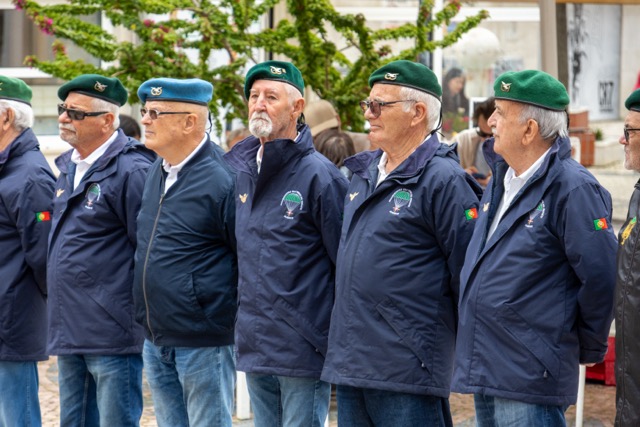
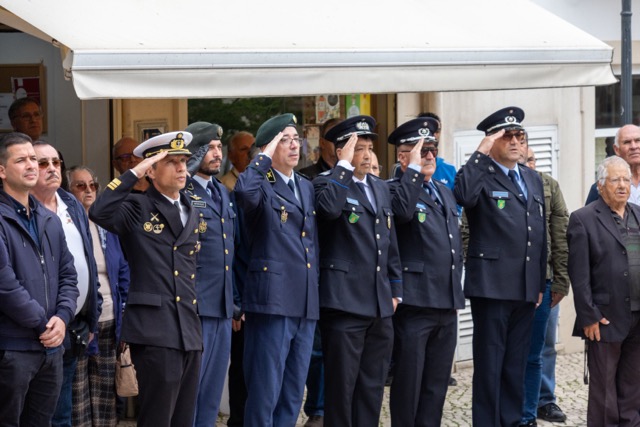
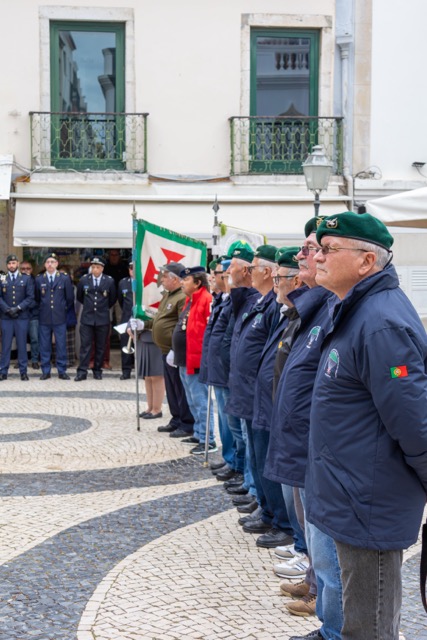
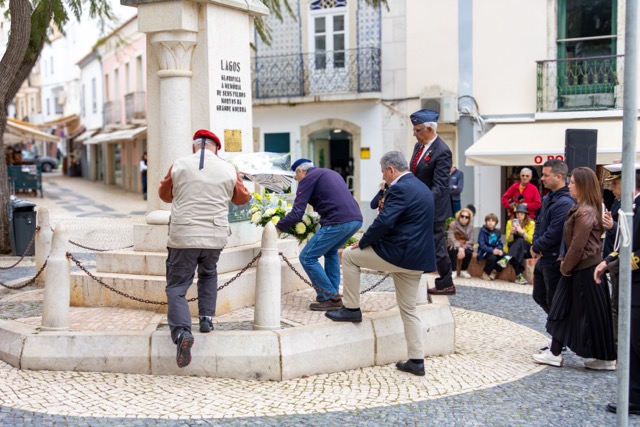
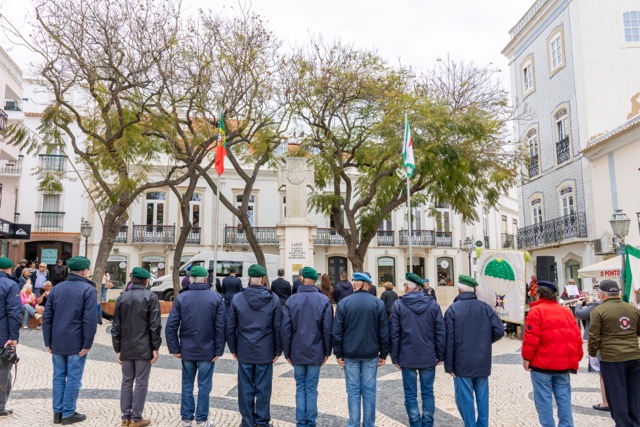
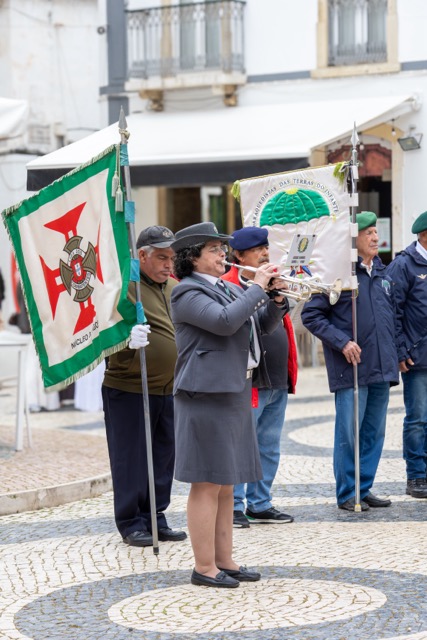
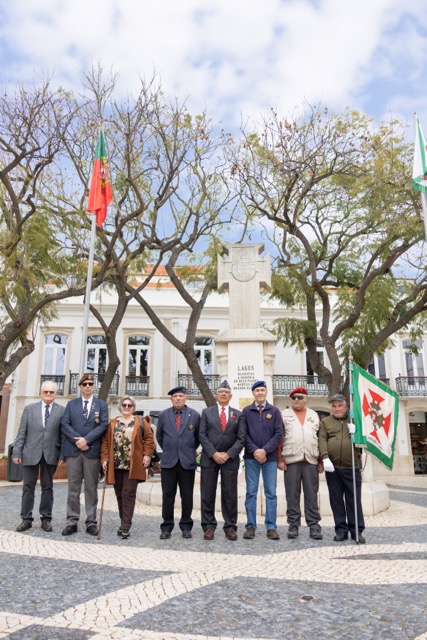
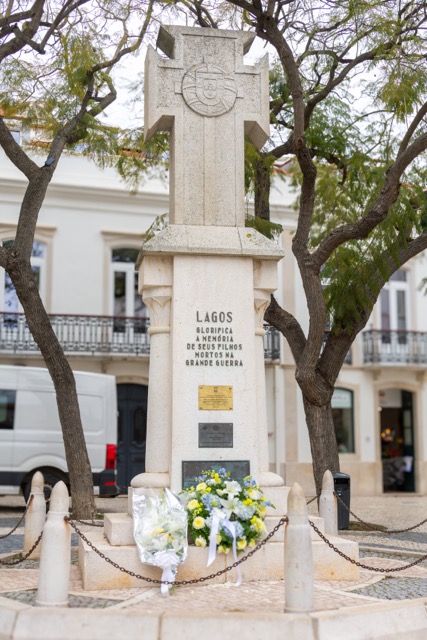
Dia do Combatente (Day of the Veteran) is celebrated throughout Portugal on 9 April to remember and honour the efforts of all those who fought in the country´s service. The Núcleo de Lagos organises the solemn occasion held in front of the war memorial in Praça Luís de Camões.
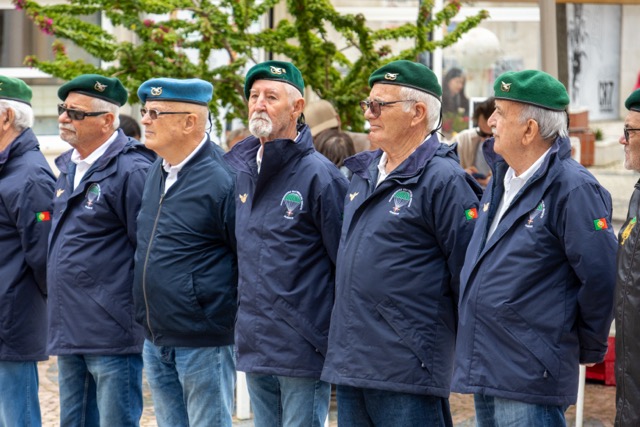
I was thankful that when 9 April came round, the rain held off and my new friends stood proudly in their military uniforms to honour their comrades.
The assembled crowd listened to the keynote speakers, including the president of the Núcleo, Chief Sergeant José Mendes, and city councillor, Luís Bandarra. The honorees included, posthumously, Joaquim Rocha, former president of the Núcleo, and my lunch host Mário Ildefonso, both of whom received commendations for their distinguished service and dedication to the Núcleo.
Furthermore, as a testimony of appreciation for their 25 years of membership, the following members, who are all war veterans, were recognised: Mário Pinto, José Duarte, Júlio Ferreira and José Gonçalves.
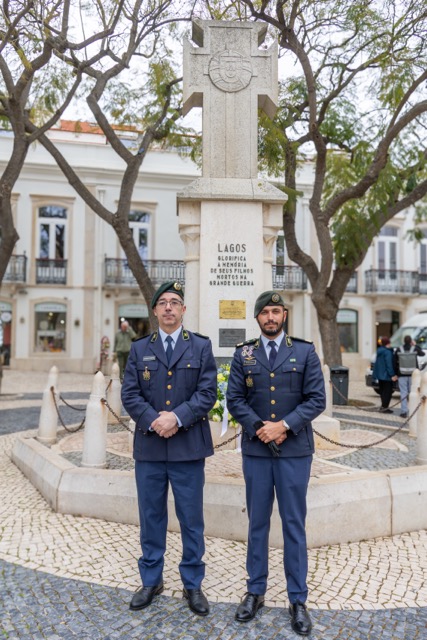
Representing the Guarda Nacional Republicana (GNR) was Captain Tiago Silva, who kindly agreed to chat with me about why the GNR are considered part of the military. “I say that first we are painted in green, then we are painted in blue. We train for five years at a military academy to obtain a master’s degree before attending the primary training centre, which is located in Portalegre.”
José Santos concluded the ceremony with a note in English to the gathered tourists: “Thank you for standing with us today, keeping the memory alive of those who have fallen.”
As the veterans drifted away for another fine lunch, I felt really proud to have been part of this day, to have made new acquaintances and most importantly, learnt more about the proud history of Portuguese military service.
Meet the veterans
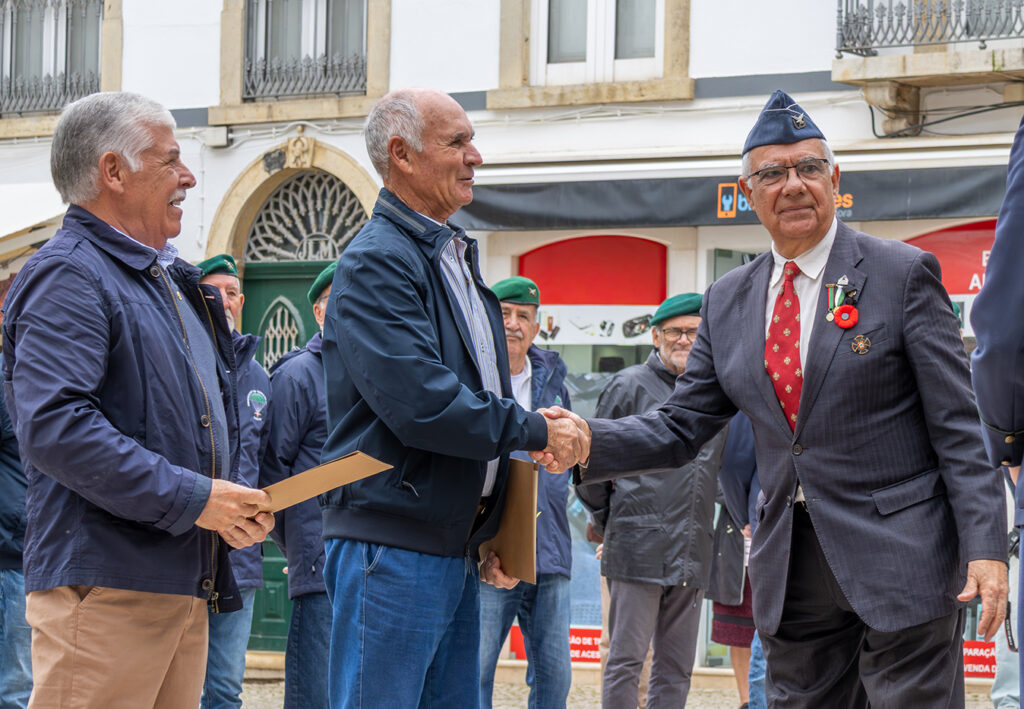
José Mendes
José served in the Air Force as a Sergeant Chief from 1971 to 2004, including 18 months in Mozambique.
“My life in Mozambique began with my arrival in the city of Beira on 8 December, around noon. It was an infernal heat with high humidity. During the days I spent there waiting to be posted to a unit, the mosquitoes almost ate us alive. I was later stationed at a unit in the northern interior of Mozambique (AB-6, Nova Freixo). It had a better climate and was a quiet town.”
José served in communications, working almost exclusively with crypto equipment, enciphering and deciphering messages. He had to travel several times to Nampula, a large city where a significant military force was concentrated, to perform maintenance on the crypto gear. “Travelling from my unit to Nampula was a true adventure, as it was done by train if there was no transport available on our planes. The journey would take between eight to 12 hours.”
During José’s first New Year’s Eve in Mozambique, a plane crashed during an evacuation, but otherwise José had a peaceful tour of duty, unlike colleagues stationed in Mueda or Tete. “I finished my tour with some well-deserved holidays in Lourenço Marques (now Maputo), a beautiful and stunning city that I still remember with great nostalgia.”
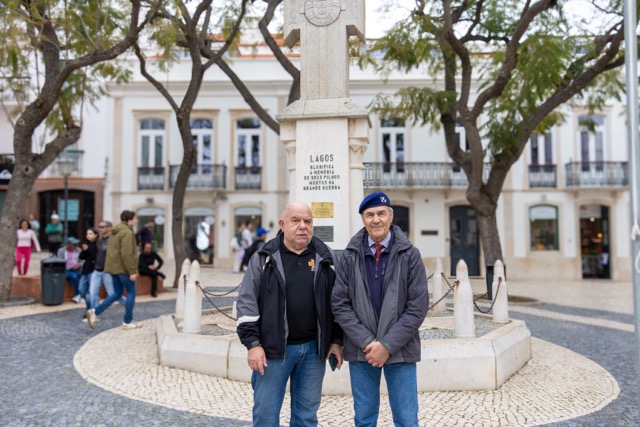
Rui Ribeiro
Rui served as a sergeant in the army after being called up for compulsory military service at 20. After his training in Caldas da Rainha and Tavira, he was sent to Angola and thus was overseas when the Portuguese revolution took place on 25 April, 1974. He served in M´Pozo, which was the name of the closest river. It was situated 12 km from Nóqui, in NW Angola, near the border with Congo. It was very remote with no other living soul for a 9 km radius.
Military installations in this specific region were often referred to as Os Morros de Nóqui (The Hills of Nóqui). Portuguese forces stationed here were primarily responsible for protecting the border, controlling the crossing points from the Congo, and ensuring security on the road connecting Nóqui to M’Banza Congo.
During the early 1970s, the border region of Nóqui/M’Pozo hosted several Portuguese companies. The M’Pozo area was considered a high-risk zone because it was located near the FNLA (Frente Nacional de Libertação de Angola) and the MPLA used the nearby Congo border for infiltration and logistics. The Portuguese Army established several fortified positions in the area to combat guerrilla infiltration. Rui took part in operations in the North and East, where he lost eight comrades in an ambush while he was in Angola.
Following the 1974 coup, Portuguese troops began withdrawing, and by the end of 1974, the transition to independence in Angola was underway. During the minute of silence, Rui was no doubt remembering the friends he lost.
When we chat afterwards, Rui points to the Quicksilver shop and tells me his grandfather used to own that building and ran a shoe shop called Madeira, which was the family name. “My parents were born in Lagos but moved to Lisbon, where I grew up.” After his military service, Rui took a degree in economics, then joined the postal service, where he worked for 38 years, with the last 20 as a postal inspector. He moved back to his roots in Lagos five years ago and enjoys the social element of being part of the Núcleo.
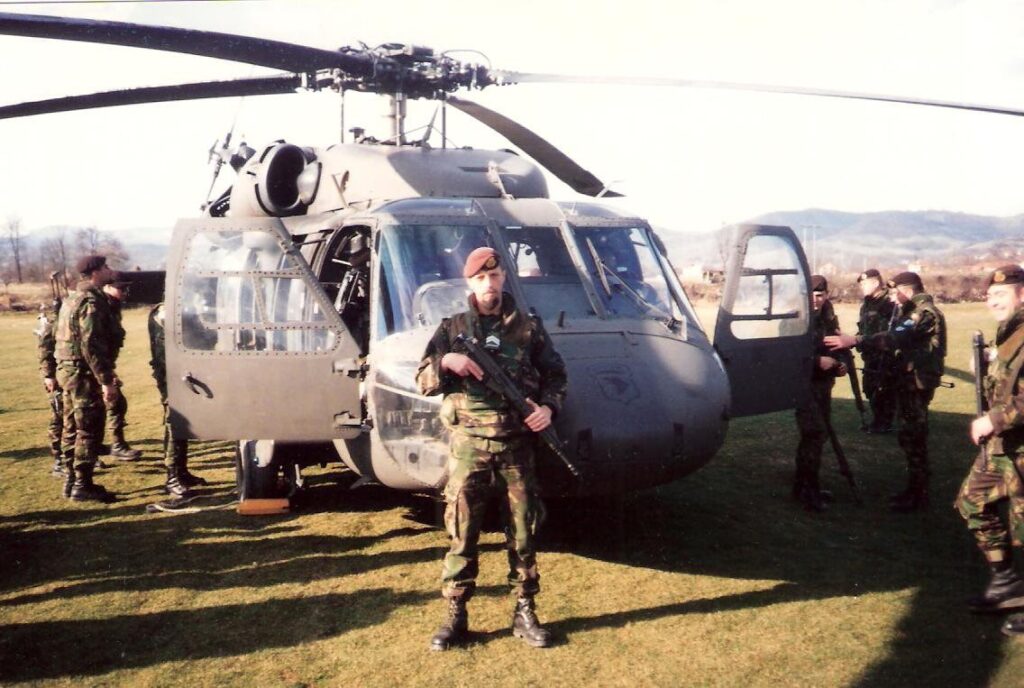
José Santos
As a young man, José Santos served in the Portuguese Army from 1991 to 1992 as part of compulsory military service, and subsequently as a volunteer from 1994 to 2002, working his way up to the rank of ‘Cabo Adjunto’ (Master Corporal).
“During my service, I was deployed to Kosovo in 1999/2000 and to Bosnia in 2001. Both deployments were six-month NATO Peacekeeping missions, though I consider our service, above all, to be at the service of humanity. Despite military doctrine projecting a loss of three personnel for such operations, we successfully completed both missions with zero casualties.”
As well as still serving in a semi-military capacity as the Night Guard (Guarda Nocturna) for Praia da Luz. José is an active member of the Núcleo and recognises the importance of handing it down to the next generation. He just enrolled his one-month-old grandson!