A glimpse of open water creatures
People often ask whether there are sharks in Portuguese waters, particularly on the ever-popular and beautiful Algarve beaches.
The answer is unequivocally YES. For reference, there are over 500 species of sharks in the world – an incredible variety of species that range from the impressive 18-metre, 30-ton whale shark to the tiny 20-centimetre dwarf lantern shark that can fit in the palm of your hand.
Sharks belong to a class of cartilaginous fish (with skeletons made of cartilage, not bone) that inhabit every niche of the aquatic world, from coastal shores to the big open oceans, from the surface to the incredible abyss depths, kelp forests, mangrove tidal waters, and even the cold Arctic and Antarctic waters. So, it should come as no surprise that some of these species can be found on our shores. In fact, around 40 different shark species can be found along the Portuguese coast.
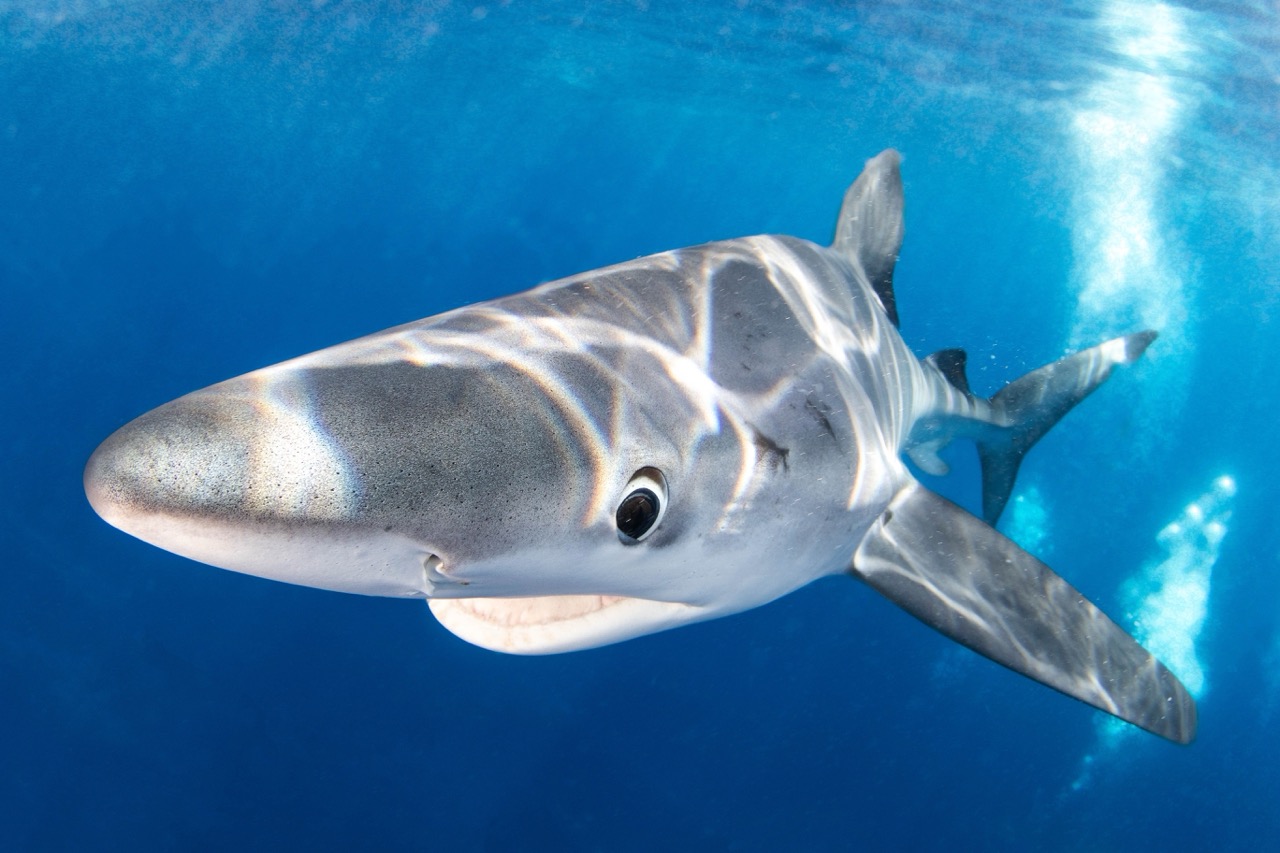
The most common species found in Portugal is the blue shark (Prionace glauca). Blue sharks are the most widespread of sharks globally and can be found in all temperate and tropical seas. These are elegant-looking creatures with slender bodies, long pectoral fins and big black lidless eyes. Their bodies are perfectly adapted for life in the open ocean. The dorsal fin is low and triangular, on the back of its head, with five gill slits on each side.
Every year, there are reports of sightings on beaches and marinas along the Algarve. Typically, spring and summer are when sightings are more frequently reported, but that’s greatly due to the fact that a lot more people visit beaches and marinas at this time of the year, rather than a reflection of seasonal behaviour.
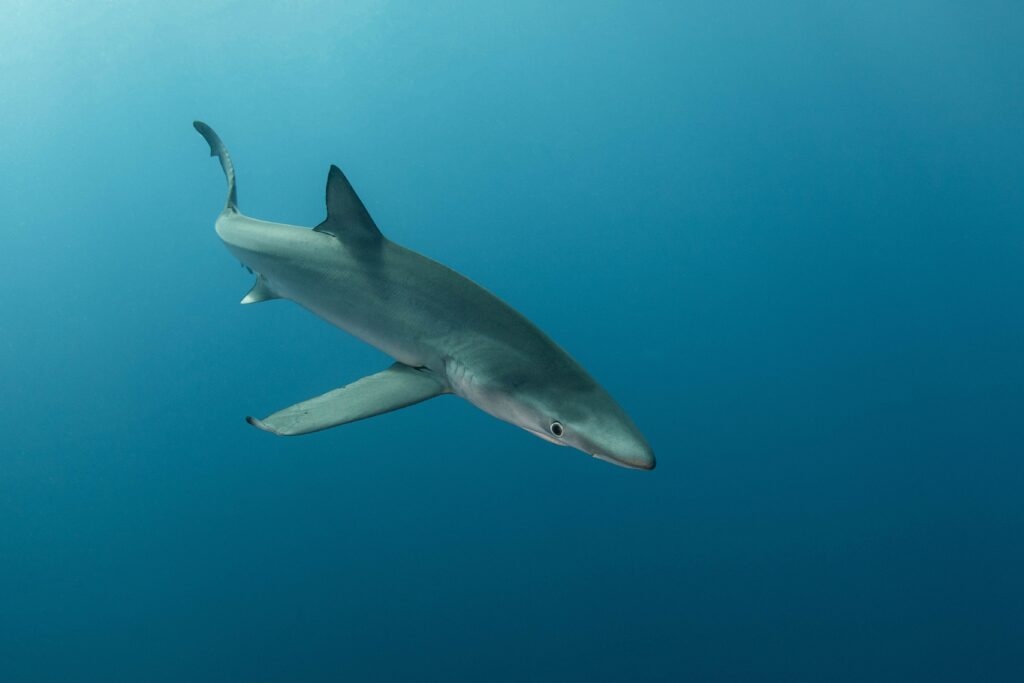
This year, we have already had a reported sighting from Armona beach (one of Faro’s barrier islands) on a Sunday in May. The shark was spotted cruising along the beach, causing some panic among beachgoers and swimmers. The red flag was hoisted and the shark continued his route undisturbed. Despite the commotion caused, these sharks have zero interest in people and feed on small fish and squid. Portugal has no record of attacks from blue sharks or any other shark species, for that matter. On the other hand, blue sharks are sadly overfished and their population is in an accelerated decline worldwide.
Although sightings like this are rare, their presence along our shores is far from uncommon, as the Portuguese coast offers ideal nursery grounds for blue sharks to give birth. That’s right, unlike most fish that lay eggs, blue sharks give birth to fully developed miniature blue sharks that measure thirty-five to sixty centimetres in length. Young blue sharks will remain close to the nursery areas until they grow into adults and are ready to swim away into the open ocean and travel deeper into the big blue sea. Adult females grow considerably larger than males and can reach 3.5 metres in length.
Sightings in coastal areas are nearly always of young specimens – fishermen and boat tour operators often see blue sharks on their trips – a glimpse of their dorsal fin cruising along, piercing through the ocean surface.
The presence of blue sharks in Portuguese waters is a strong indicator of a healthy nursery habitat and a productive coastal-oceanic ecosystem. These sharks are not something to fear, but rather a species to cherish and protect.
Species ID
Name: Blue Shark (Prionace glauca)
Colour: Dark blue dorsal, white underside
Size: Up to 3.5 metrers
Diet: Sardines, herring, squid, cuttlefish
Reproduction: Gives birth to large litters, sometimes 80+ pups
Longevity: 20+ years
Habitat: Open-ocean waters (pelagic)
Distribution: All temperate and tropical ocean waters
Trivia:
Do Blue Sharks Sleep?
Blue sharks and other open water sharks need to keep swimming at all times to force oxygen-rich water through their gills. They do not sleep like us; instead, they drop their metabolism and shut down parts of their brains, leaving the body on autopilot mode similar to sleepwalking. They have no eyelids either, so they literally sleep with their eyes open.