Celebrating Freedom: Lagos Marks the 52nd Anniversary of the Carnation Revolution
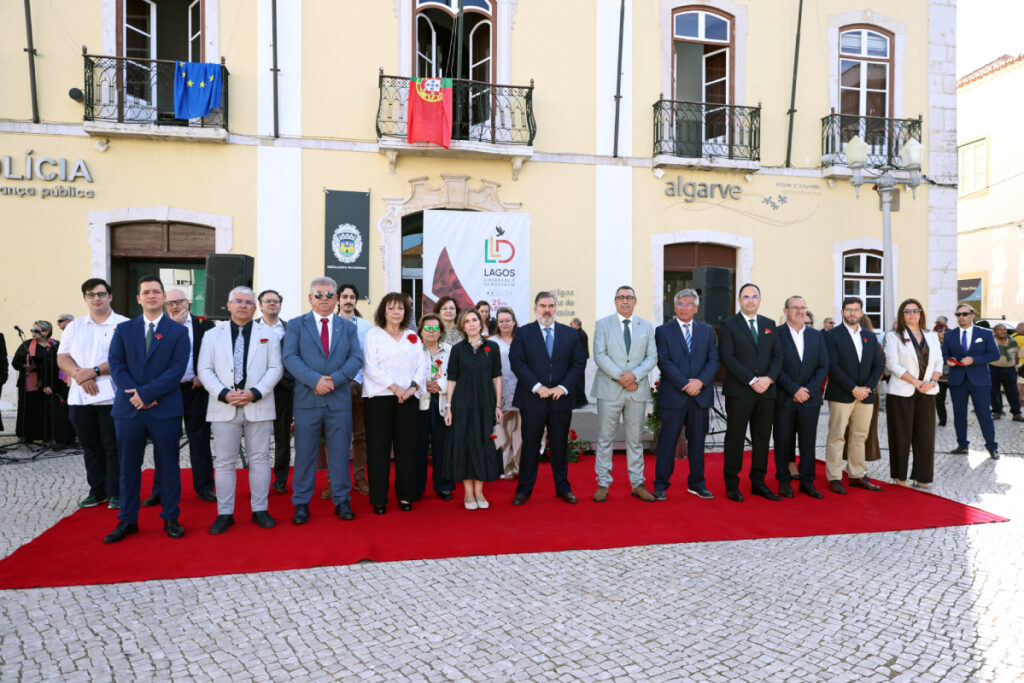
On April 25, 2026, the streets of Lagos came alive once again to celebrate the 52nd anniversary of the 25 de Abril revolution. With the theme of “Remembering, living, and continuing to build April,” the city honoured the enduring legacy of this pivotal day in Portuguese history through music, community gatherings, and powerful reflections on the future of democracy.
Looking Back: The Dawn of Freedom
For those who may be new to the Algarve or unfamiliar with Portuguese history, the 25th of April, 1974—known as the Carnation Revolution—marks the day a bloodless military coup overthrew the Estado Novo regime. This dictatorial and fascist government had ruled for over 40 years, suppressing civil rights through censorship and the notorious secret police, PIDE. The military uprising, led by the Movimento das Forças Armadas (MFA), was sparked by deep discontent over a lack of freedoms, poor economic development, and gruelling colonial wars in Africa.
The revolution famously earned its name when joyful crowds handed out red carnations to the soldiers, who placed them in the muzzles of their rifles. The peaceful transition paved the way for the civil liberties, workers’ rights, and democratic society that Portugal enjoys today.
If you would like to explore personal stories from those who lived through these transformative times, we highly recommend revisiting our June 2021 article, “The Carnation Revolution of 25th of April“ by Lena Strang. It features incredible first-hand accounts from locals and serving officers who experienced the fall of the dictatorship and the euphoric aftermath.
Lagos Celebrates in 2026
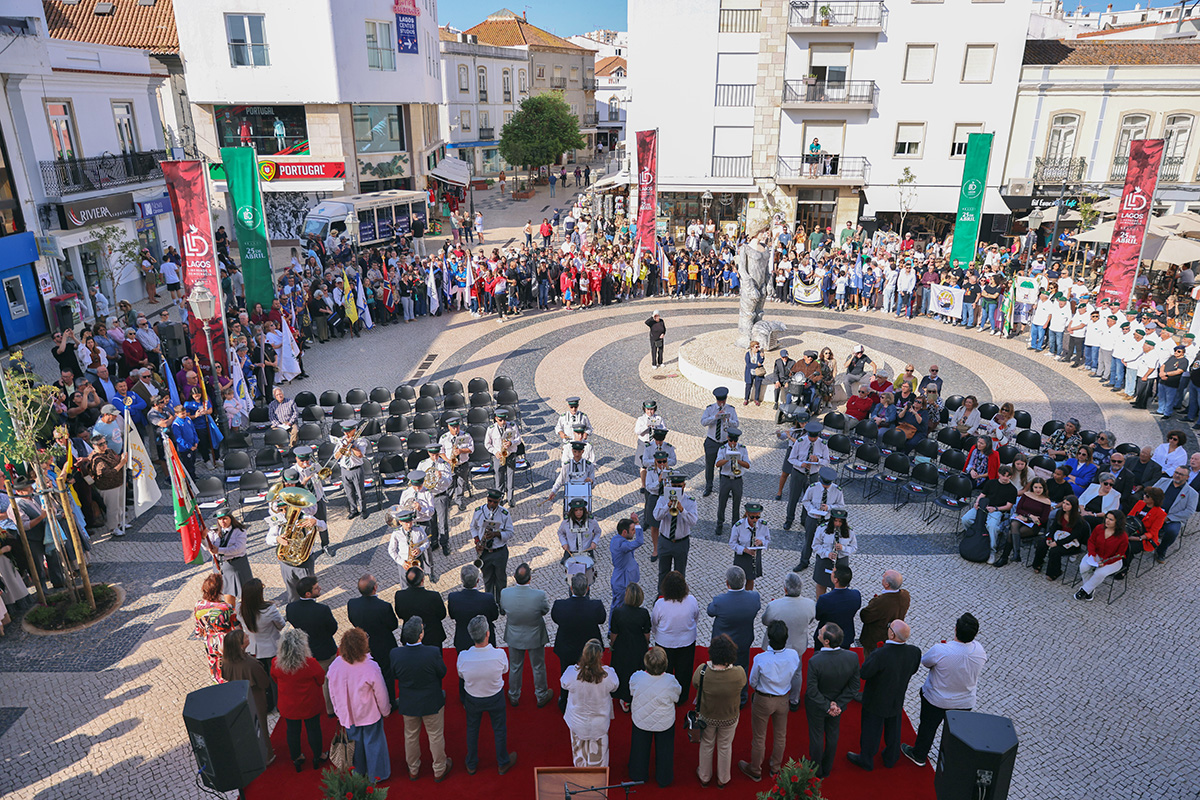
This year’s official celebrations in Lagos began early in the city’s central square. The morning air was filled with the sounds of the national anthem, beautifully performed by the Banda Filarmónica da Sociedade Lacobrigense 1.º de Maio and the Grupo Coral de Lagos. In a moving symbolic gesture for peace, the Clube Columbófilo de Odiáxere released a flock of doves, which was followed by a heartfelt rendition of Zeca Afonso’s “Grândola, Vila Morena”—the iconic song used as the secret radio signal to launch the 1974 revolution.
The highlight of the day was the Sessão Solene (Solemn Session), which featured passionate speeches from local political groups and the Youth Assembly. Mayor Hugo Pereira closed the ceremony with a powerful reminder that “Democracy is not a given; it is a permanent, demanding, alive, and unfinished construction”. He urged the community to remain vigilant against modern threats, such as technological manipulation and divisive rhetoric, while also addressing urgent local challenges, including housing, tourist pressure, and environmental sustainability.
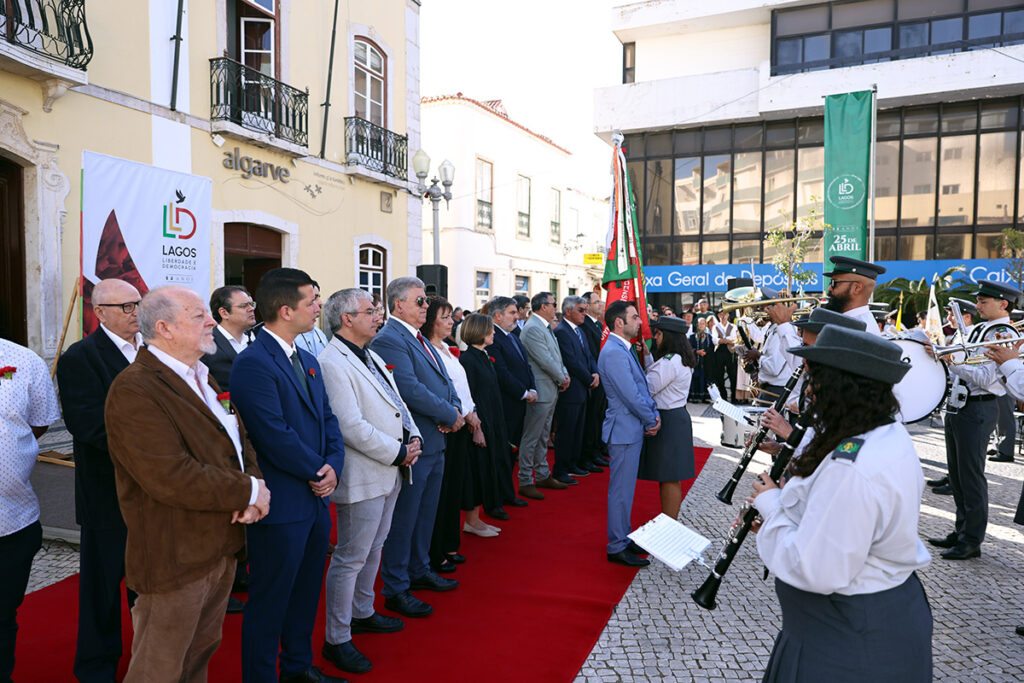
Young people took centre stage as well, proving that the spirit of the revolution lives on in the next generation. Students from the Agrupamento de Escolas Gil recited an original poem titled “O Despertar do Cravo” (The Awakening of the Carnation) to the tune of a guitar, while pupils from Agrupamento de Escolas Júlio Dantas recited works by Manuel Alegre and Luís de Camões.
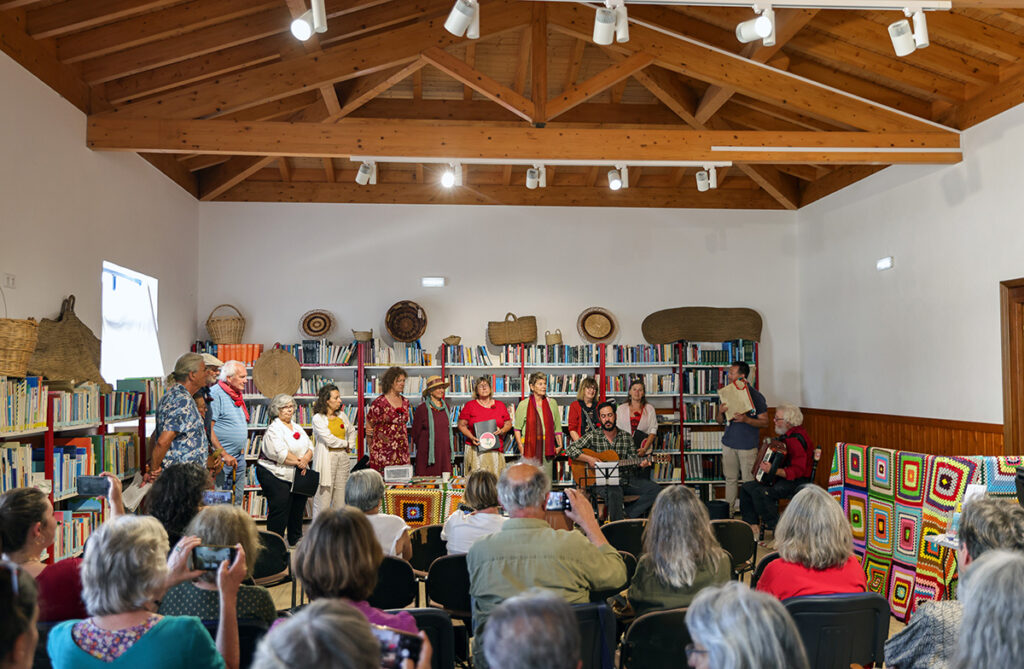
The day’s festivities expanded throughout the municipality. In Barão de São João, the community gathered for an emotional afternoon filled with music from the Coro da Primavera and deeply personal storytelling. Local artist Deodato Santos and his wife, Inga, shared memories of the international work camps that drew young people from all over the world to their rural village just after the revolution, helping to build a new society. To commemorate the event, attendees were gifted beautiful fabric carnations.
The Algarve’s Unique Revolutionary Experience
Did you know that the Algarve didn’t actually experience the revolution on April 25th? Because information travelled much more slowly then, the local political shift in our region “happened three days later,” as the news of the uprising took time to reach the south.
To read more fascinating local history about how Algarve councils like Lagos, Loulé, and Faro navigated the sudden regime change, check out our April 2024 deep-dive by Marta Nogueira: “The Algarve and 25 April 1974“. The article explores the initial tension and eventual joyous embrace of the Junta de Salvação Nacional across our local municipalities.
As the celebrations of this 52nd anniversary continue throughout the year—also marking 50 years of the Portuguese Constitution and local democratic elections—it is a wonderful time for all of us in the Algarve to appreciate the freedoms we share today. May the spirit of April continue to inspire our community!