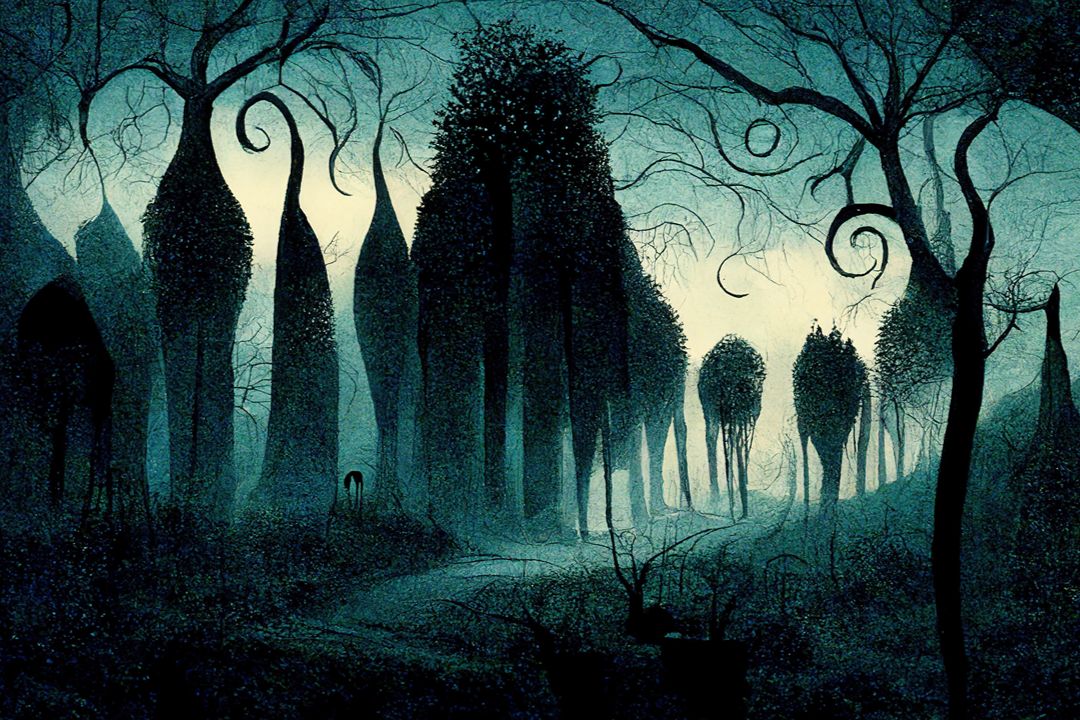
It’s hard to believe the spooky season has crept up on us once again. Every year, I make it my personal tradition to roam Portugal, at least in spirit, to hunt down the strange, the chilling, and the wonderfully bizarre ghost stories hidden throughout the country. Consider this your invitation to join me for another Halloween journey into some of the nation’s supernatural legends.
Please note: These stories are based on local legends and should be treated as such.
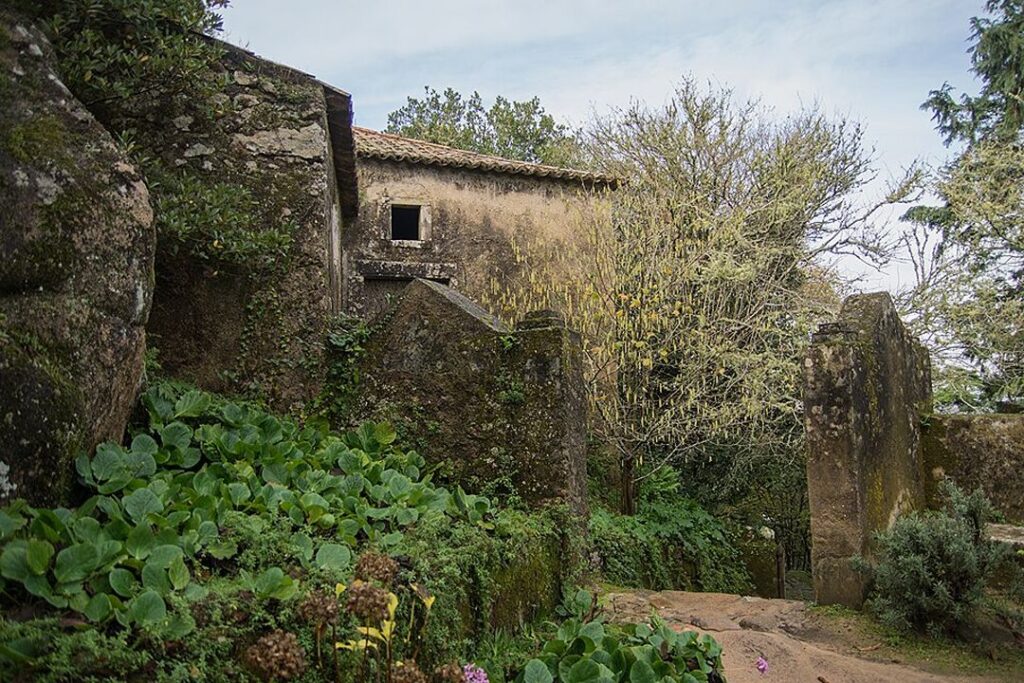
The Ghostly Nun of Convento dos Capuchos
Hidden deep within the mountainous forests of the Sintra-Cascais Natural Park lies the 16th-century Convento dos Capuchos. Built in 1560 by Dom Álvaro de Castro, who was, ironically, the councillor of state to King Sebastian, the tiny, secluded convent was the fulfilment of a vow made to his father, who had dreamed of creating a humble temple. Decorated throughout with cork and carved in rock, it was originally known as the Convent of Santa Cruz da Serra de Sintra and became home to eight Franciscan Capuchin friars who lived in near-total isolation from the outside world.
According to legend, a nun from a nearby convent once fled into the forest, seeking refuge from punishment after breaking strict vows. Drawn to the tranquillity of the forest, she eventually found the Convento dos Capuchos. The friars, bound by their own strict rule, could only offer her water, bread, and a place to rest outside the chapel. Yet she remained. Days slipped into weeks, weeks into months, and months into years; the nun lingered in the sanctuary of the hidden convent until one evening she vanished into the forest, never to be seen again.
Centuries later, caretakers and visitors claim the nun never truly left. Some report seeing a woman in a pale habit drifting silently between the moss-covered stones. Others have heard soft footsteps echoing through the narrow corridors. A few swear they’ve heard a faint female voice chanting or seen a shadowy figure appear at the doors of the monks’ cells, as if waiting to be welcomed inside.
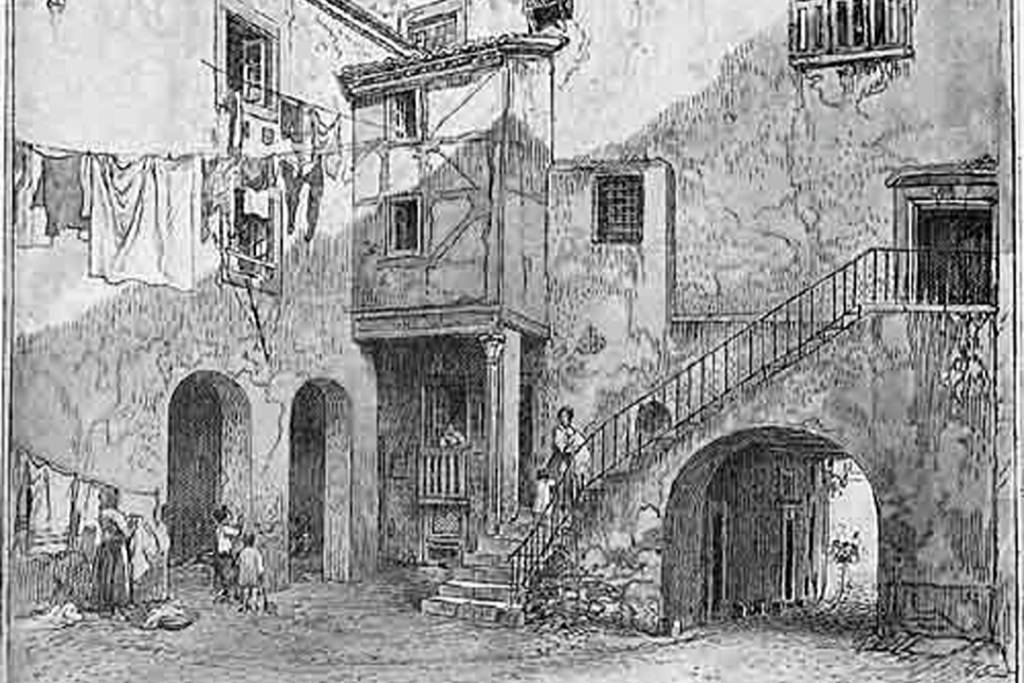
Portugal’s Last Executioner
Hidden within the medieval alleyways of Lisbon’s Alfama district lies an unassuming cobbled courtyard known as Pátio do Carrasco, the Executioner’s Courtyard. It was here that Luís Alves dos Santos, Portugal’s last executioner, lived and quietly worked as a shoemaker, despite the dark reputation that followed him.
Born in 1806 to a respected family in the northern village of Capeludos de Aguiar, Santos showed a restless, adventurous spirit from a young age. At just ten years old, he fled to Lisbon, selling oranges on the streets to survive. After returning home, disillusioned by the harshness of city life, he made his way back to the capital at sixteen and enlisted in the army. Deemed unsuitable for service, Santos drifted into a life of crime.
Everything changed during a robbery in Campo Grande, where a murder occurred, placing Santos as the prime suspect. Captured in his hometown in 1845, he was charged with eighteen crimes. Though he insisted on his innocence and admitted only to one killing in self-defence, he was sentenced to death for murder.
Facing the gallows at Limoeiro Prison, just steps from today’s Pátio do Carrasco, Santos was offered a grim ultimatum: kill or be killed. In exchange for his life, he could become Portugal’s official executioner, a role shunned for its lifelong stigma and social isolation. Santos accepted, becoming one of the most detested figures in Lisbon and the final executioner before capital punishment ended in Portugal in 1876.
Known as O Negro (The Black One) for his dark-hooded executioner’s cape, Santos eventually returned to his hometown, living out his final years in poverty and poor health. He died on 18 August 1873.
Despite his notorious title, it is widely believed that Santos never actually carried out an execution. The only confirmed record is that he supervised one in Tavira in 1845. Some say he paid another man to perform the deed under the cover of a hooded black robe, but the truth has long been lost to history.
Even so, the courtyard named after Portugal’s last executioner carries a lingering heaviness. Some claim the area is haunted by the screams of Santos’ supposed victims. Older residents insist the cries come from Santos himself, echoing through the narrow passageways as a weight settles over Pátio do Carrasco and all who pass through it.
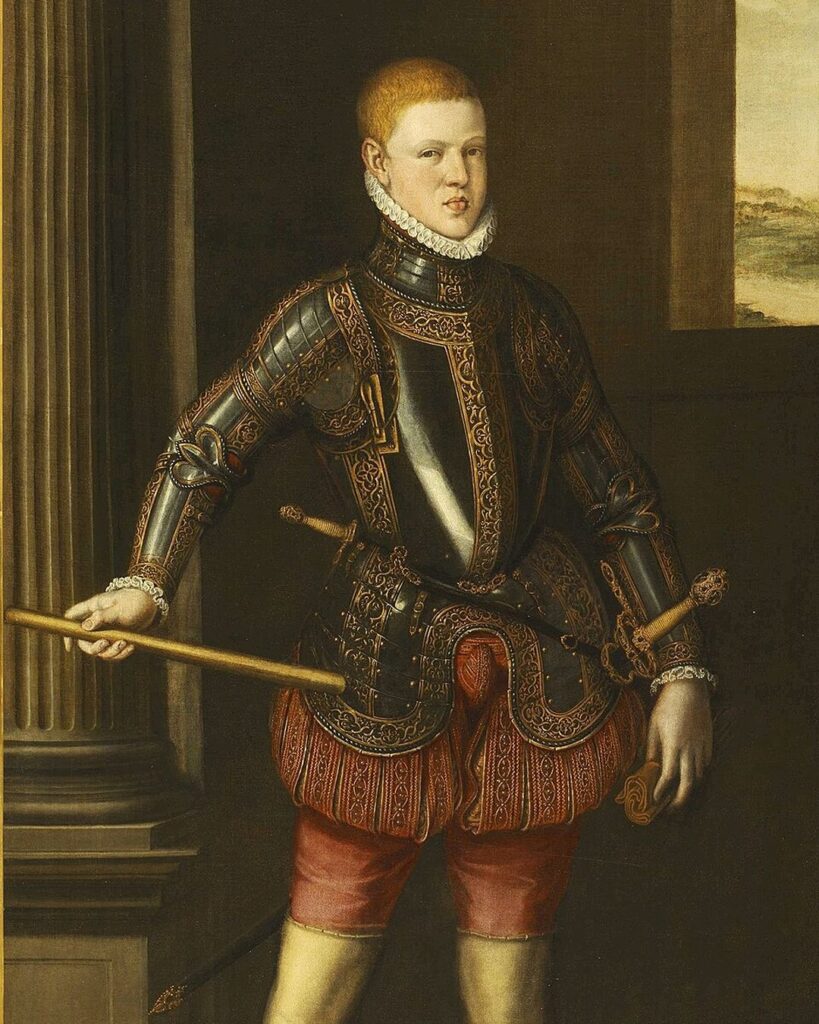
The Lost Soul of D. Sebastião
Our first tale begins in what is arguably Portugal’s most fairytale-like town, Sintra. Known for its mystical atmosphere and picturesque palaces rising from mist-covered hills, the town’s beauty hides a deeper layer of intrigue. Behind the grand architecture lie stories steeped in mystery.
One of the most popular legends in Portuguese folklore is about King Sebastian, who ruled Portugal for 21 years before his fateful disappearance in 1578. Though he is widely believed to have died at the Battle of Alcácer Quibir against the Saadi Sultanate of Morocco, the absence of his body has sparked centuries of speculation. Sebastian was known for his ambitious reforms, including elevating Monchique from a settlement to a town in 1573, and for his almost mythic sense of identity.
But in Sintra, the legend takes a more supernatural turn. Locals say that the king’s spirit never truly left. Some claim his ghost still wanders the forests at dawn, watching over the moonlit hills he once roamed, and is often seen charging at oncoming traffic that weaves its way up the town’s steep leafy hills. Sintra has always felt like it has a sense of mystique, but could the ghost of King Sebastian still haunt Sintra’s forests?
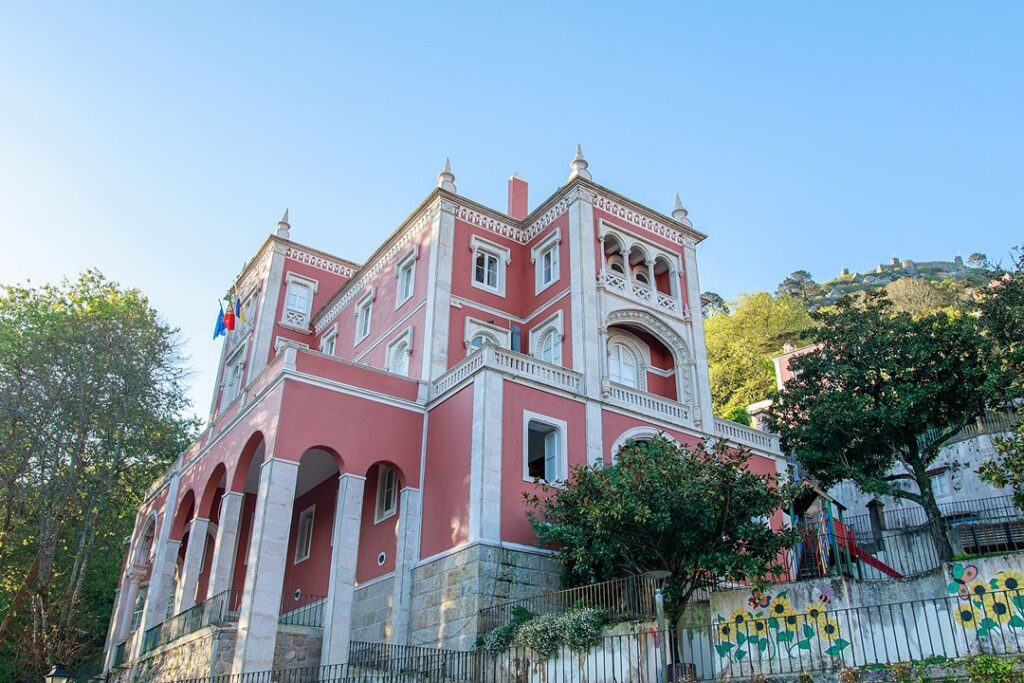
The Lost Bride of Palácio Valenças
Palácio Valenças is an impressive 19th-century palace tucked between Sintra National Palace and the Parque da Liberdade. Its lush natural surroundings and elegant Venetian-style façade once made it the ideal holiday retreat for the elite. But don’t let its grandeur deceive you, within these walls lingers one of Sintra’s most well-known ghostly tales.
Designed in 1877 by Giuseppe Cinatti, the famed set designer from Lisbon’s Teatro de São Carlos, the palace was commissioned by Alfredo Ferreira dos Anjos. Neither man lived to see its completion. Instead, the project was carried out by Ferreira’s daughter, Guilhermina Rosa Matos Anjos, and her husband, Luís Leite Pereira Jardim, the 1st Count of Valenças. The couple cherished Sintra’s peaceful landscape, a welcome change from the bustle of the capital.
During their residence, the Valenças family employed a young maid named Palmira. It is said that the maid fell deeply in love with a nobleman connected to the family. But the romance was doomed from the start. He was wealthy, already engaged, and bound by rigid social expectations. She was simply a servant of the lower class. When Palmira learned he would never choose her, heartbreak overwhelmed her. Unable to bear the pain, she took her own life inside the palace.
Since the building was later nationalised, staff and visitors have reported strange occurrences. Soft sighs have been heard echoing through empty rooms, sudden cold spots near the old staircase, books tumbling inexplicably from the library shelves, and the silhouette of a woman has been seen drifting through the corridors. Some claim the apparition of Palmira appears near the servants’ quarters, as if retracing her final steps. Others say they’ve seen her lingering in doorways, appearing as a pale figure, waiting for a love she could never have.
Is it merely imagination, or is Palmira still wandering the halls of Palácio Valenças, forever caught in the sorrow of her unfinished story?
Diogo Alves: the Aqueduct Murderer
Between 1836 and 1840, Lisbon became the hunting ground for arguably Portugal’s first major serial killer, often compared to London’s infamous Jack the Ripper. Diogo Alves, born in 1810 in Galicia, Spain, was sent to Lisbon as a young man to seek his fortune. Unfortunately, he made a name for himself in all the worst possible ways. He began by robbing travellers and soon escalated to violent crime. By the time he was caught, tried and hanged in 1841, he was believed to have murdered as many as 70 people in the urban area of Lisbon.
Rumour has long suggested that Alves disposed of his victims by throwing them from the towering arches of Lisbon’s Águas Livres Aqueduct, hoping the falls would disguise his crimes as tragic accidents. Eventually, at just 31 years old, he met his fate and was executed at Cais do Tojo on 19 February 1841.
After his death, Alves’ head was removed and preserved by Francisco Ferraz de Macedo at the University of Lisbon’s Faculty of Medicine. At the time, phrenology, the study of skull shape as a supposed indicator of criminal behaviour, was considered cutting-edge science. To this day, Alves’ alleged head remains sealed inside a glass jar of formaldehyde within the Faculty of Medicine, a macabre relic of Lisbon’s darkest past.
According to campus rumours, students at the faculty claim the jar sometimes fogs over mysteriously, as if the head were breathing. Others report seeing a shadowy figure near the shelf where it rests, accompanied by an unsettling sensation of being watched. Whether these are simply student tales, invented to spook newcomers, or whether something truly paranormal clings to the decapitated head of Diogo Alves, perhaps we will never know.
Many locals believe the ghosts of Alves’ victims haunt the Águas Livres Aqueduct. For nearly two centuries, people have spoken of footsteps echoing along the aqueduct at night when nobody is near, and of faint sounds of crying drifting beneath its arches, giving even the seasoned paranormal investigator the fright of their lives.