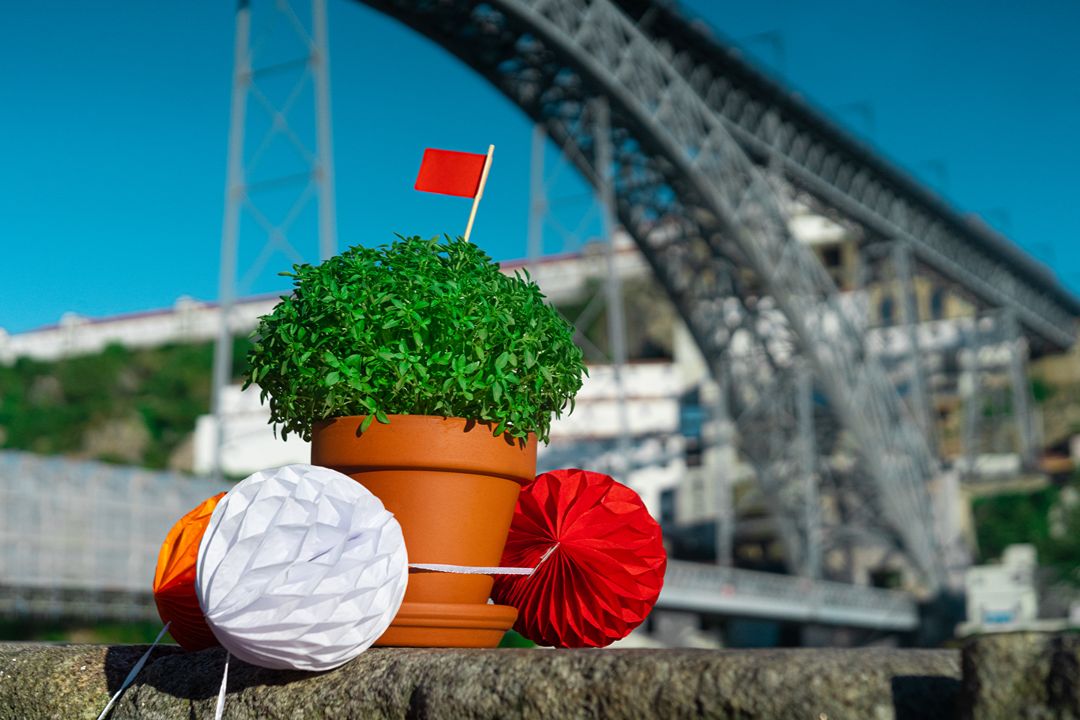
June is known as Portugal’s festival month, or Festas dos Santos Populares (festival of popular saints), a time when the feasts of Saints António, João and Pedro collide in a nationwide celebration. Across the country, streets fill with late-night music and grilled sardines, washed down with a glass or two of vinho tinto. But in Porto, the Festival of São João comes with one of the country’s most bizarre and beloved traditions: tapping fellow revellers over the head with a plastic hammer. It’s a ritual so iconic that even the GNR joins in for one night only, tapping revellers over the head as a blessing.
Like many religious customs, the June festivals and this quirky practice have roots in ancient pagan solstice celebrations, which later blended into Christian tradition after the arrival of Christianity in the 4th century.
The Festival of São João, held on 23June, is packed with music, fairs and food. Interestingly, the hammer-tapping tradition is far older than the toy itself. Historically, people tapped each other on the head with bouquets of garlic flowers during the summer solstice, a pagan gesture of blessing and good fortune for a bountiful harvest.
The modern plastic hammer, however, was born in the early 1960s thanks to Manuel António Boaventura, a toy-maker from the Estrela do Paraí plastics factory in Porto. Inspired by the bell-shaped body of a salt-and-pepper shaker he saw abroad, Boaventura redesigned it, added a handle and a whistle, and created a novelty toy that quickly caught the attention of students at the University of Porto. Preparing for an event, the students asked for the “noisy toy” and it became an instant hit.
Before long, the squeaky hammer replaced garlic bouquets at São João due to its playful design and unmistakable “squeak”. Demand grew so rapidly that Boaventura began mass-producing the toy, which soon spread beyond the festival to fairs and toy shops around the world.
By the late 1960s, Porto’s council even attempted to ban the hammer, claiming it “wasn’t traditional”; however, the public had already embraced it wholeheartedly. Whether Boaventura truly invented the toy hammer, that’s up for debate, but today the plastic hammer remains one of the defining symbols of Porto’s Festival of São João.
Did you know?
São João, better known as St. John the Baptist, has been celebrated in Porto for over six centuries, with people gathering on the eve of his feast day and joining processions around the city, asking for good health, fertility and protection. These celebrations slowly evolved into the annual event we know today.
Dates:
- Festa de Santo António – Lisbon (12–13 June)
- Festa de São João – Porto (23–24 June)
- Festa de São Pedro – Sintra/Setúbal (2 –29 June)
* Check local media for event details across Portugal during Festas dos Santos Populares