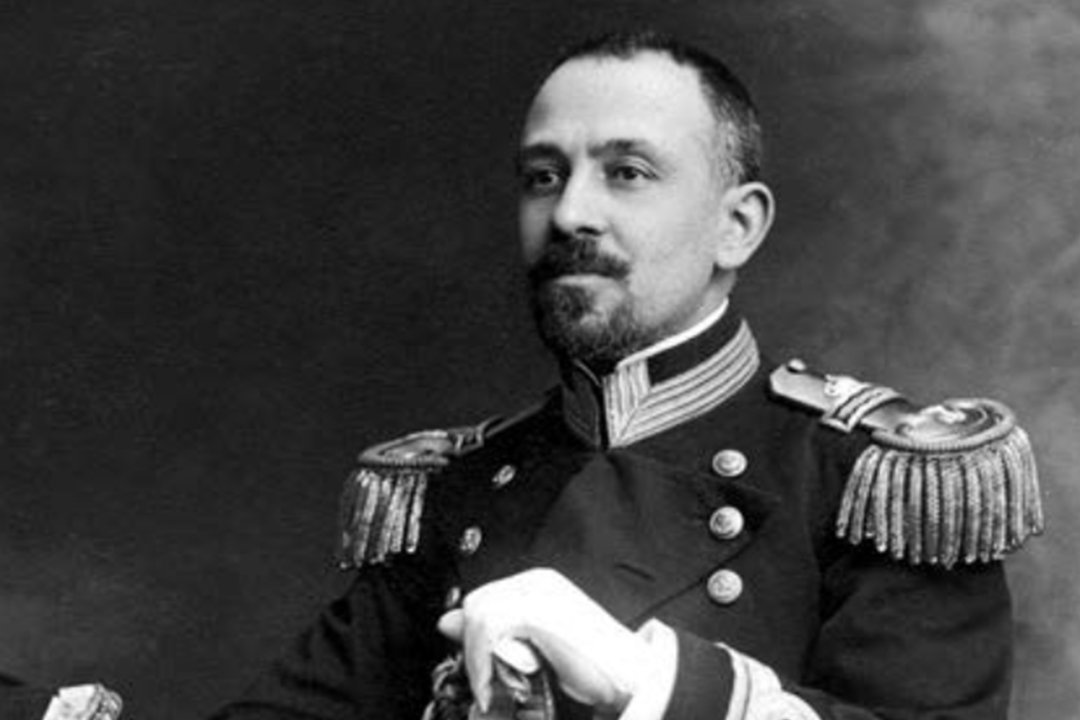
If you live in the Algarve, you have likely spent plenty of time queuing at Faro Airport. But have you ever paused to wonder about the extraordinary man it was recently named after? In this brand-new series, James Plaskitt uncovers the daring titans of Portuguese history who have the honour of an airport named after them. We begin with Faro’s own namesake, Gago Coutinho, whose aviation journey involved sinking planes, perilous ocean rescues, and history-making flights.
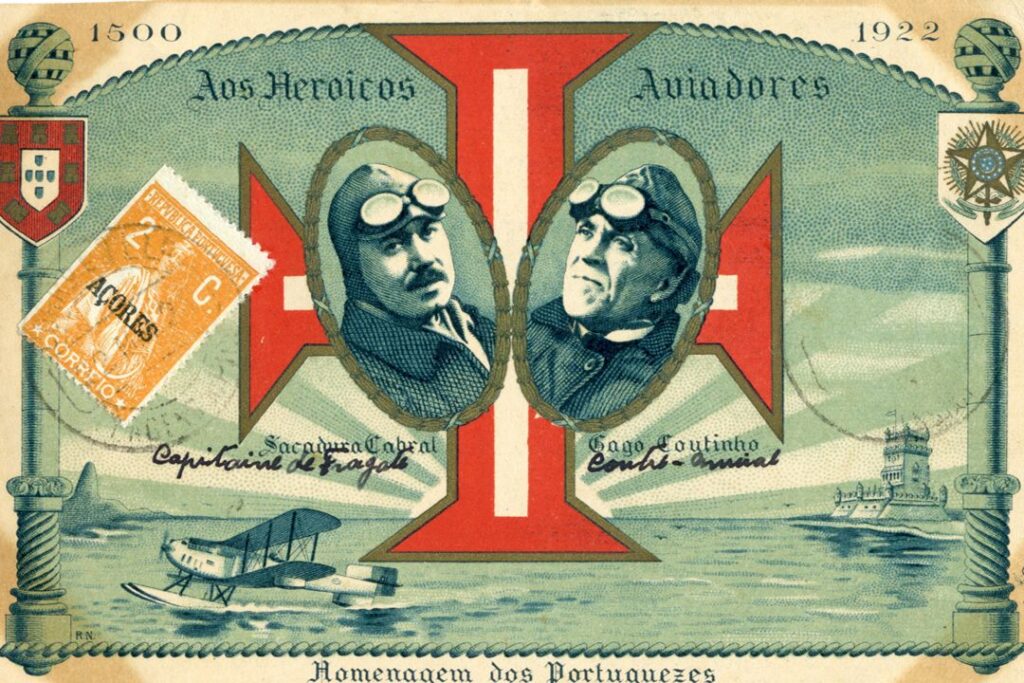
On 17 April 1922, a vicious storm hit the southern Atlantic, while two pioneer aviators were in the middle of the first attempt at an aerial crossing of the ocean. They were forced to ditch their plane, the Lusitania, which sank in the heavy seas. Gago Coutinho and his flight companion, Sacaduro Cabral, bobbed about uncomfortably until rescued by a Portuguese naval vessel. The flight which put the two aviators into history was a truly perilous mission.
Gago Coutinho was born in Lisbon in 1869 in very humble circumstances. In keeping with a strong tradition amongst similar young men in the city, he enlisted in the navy when just 17. He served on several missions, all connected with the protection of Portugal’s then far-reaching collection of colonies, especially in Africa.
Coutinho developed a special interest in cartography, joining the naval commission established to map the empire in 1883. Discovering a strong aptitude for the profession, Coutinho was a leading cartographer for lands then known as Niassa, Congo, Zambezia, Barotza, and São Tomé and Príncipe, all of which he mapped with amazing precision between 1900 and 1916. His skill was also notably deployed in determining the boundary between Angola and Zaire.
It was during this time that Coutinho became acquainted with Cabral. The two explored vast areas of Africa on foot, but both were primarily aviators, and together they made the first flight from Lisbon to Funchal in 1919. Coutinho was also an inventor, creating a new form of sextant that enabled far more accurate navigation than previous equipment, and a pioneering course-correction device that helped compensate for the effects of side winds.
Determined to deploy their new equipment and to feed their thirst for pioneering flight, the two companions planned the first South Atlantic aerial crossing, which eventually got under way in 1922. There was no aircraft capable of making the entire journey without a break, so the planned route included numerous refuelling stops between Lisbon and the final destination in Brazil.
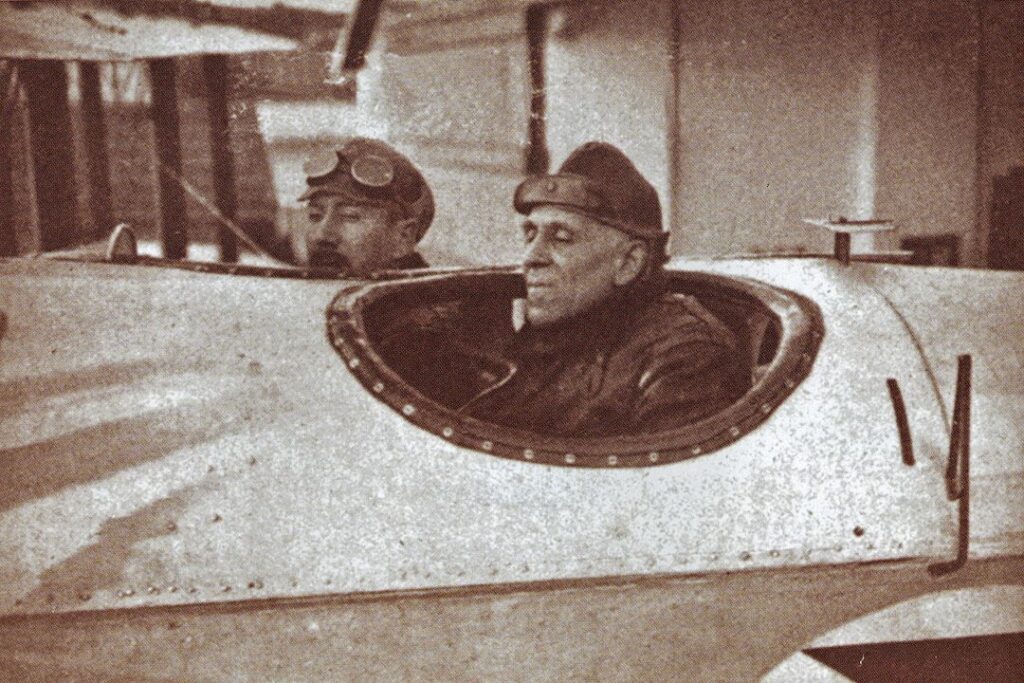
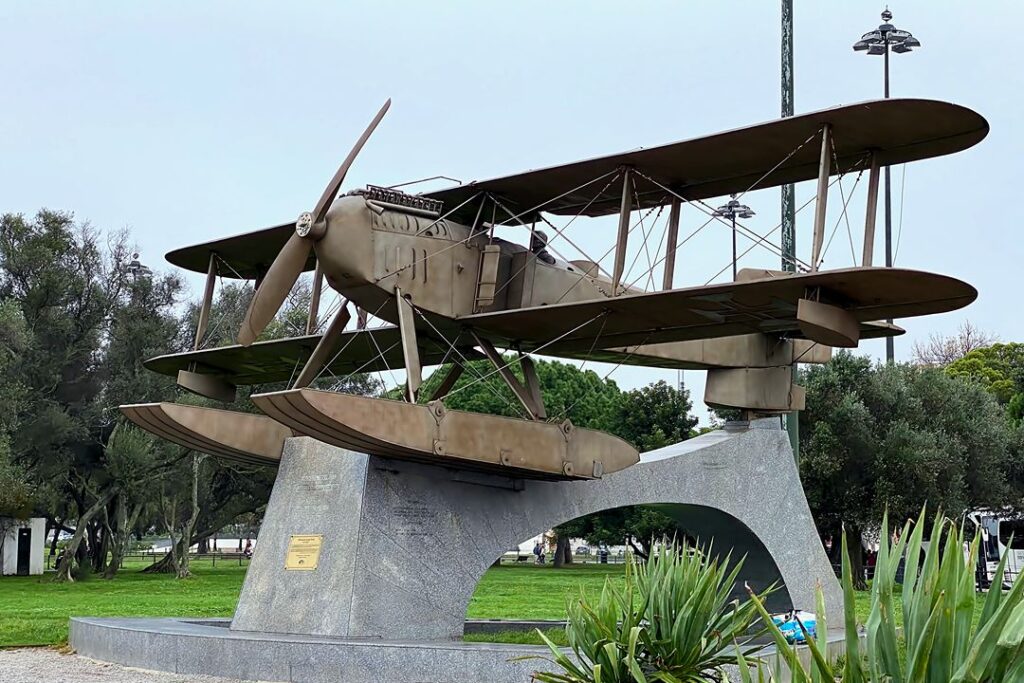
After stops in the Canary Islands and Cape Verde, the two headed out over the Atlantic in April. However, the Lusitania was forced to ditch and was lost. It was replaced with the Patria. That too was forced to ditch, with the two airmen again rescued at sea, this time by a passing British vessel. Anxious to see the mission succeed, the Portuguese government sent out a third plane, the Santa Cruz, which finally managed to complete the historic mission.
The crossing had involved 62 hours of flying time, spread over 79 days, with much of that time spent waiting for replacement aircraft! Nevertheless, it was deemed a spectacular success and the intrepid airmen were feted on their eventual return to Portugal.
Perhaps not surprisingly, after these experiences, Coutinho’s interests shifted from flying to history, particularly the history of Portuguese exploration. He wrote vivid accounts of Vaso da Gama’s voyages, and his works were eventually published as ‘Nautical Discoveries’ in two volumes released in 1951 and 1952.
In recognition of his achievements, Coutinho was made a full Admiral in 1958. He died in Lisbon, aged 90.
In 2022, the authorities at Faro decided to name their airport after him.
James Plaskitt is a retired politician who was a member of the British Parliament from 1997 until 2010. He now lives in the Algarve.
Main photo: Carlos Viegas Gago Coutinho Public domain, via Wikimedia Commons