There’s a short word in Portuguese that carries a surprising amount of feeling. A word tied to the moment you shrug heavy layers off your shoulders, let your feet breathe in open sandals, uncork a chilled bottle of white wine at the end of the afternoon and realise – almost accidentally – that the days are stretching longer than the clock seems willing to admit.
In Portugal, that feeling is called verão. And God knows we’ve been waiting for it!
But there’s a particularly affordable, local and surprisingly beautiful way to experience all of this – one that many travellers and even locals still overlook: by train.
In this guide to travelling the rails, I’ll show you everything you need to know to explore the Algarve from east to west – spending less, travelling slower and uncovering a few secret spots along the way.
From East to West
Along the route, the train stops at 34 stations and small halts scattered across Portugal’s southern coastline. Some work mainly as passing points; others easily deserve a full day or two on your itinerary.
Among the main stops are Lagos, Meia Praia, Portimão, Silves, Tunes, Albufeira, Loulé, Faro, Olhão, Fuseta, Tavira, Conceição de Tavira, Cacela Velha, Castro Marim and Vila Real de Santo António.
In smaller destinations, it helps to adjust expectations slightly: many stations have limited facilities, fewer staff members and operate at a rhythm very different from that of larger cities. During quieter hours – especially in summer – it’s not unusual to find cafés closed or fewer people around to help.
It’s also worth remembering that some stations sit a little outside the historic centre or the busiest areas. Depending on your stop, calling an Uber, hopping into a taxi – or even accepting a friendly lift – may well become part of the experience.
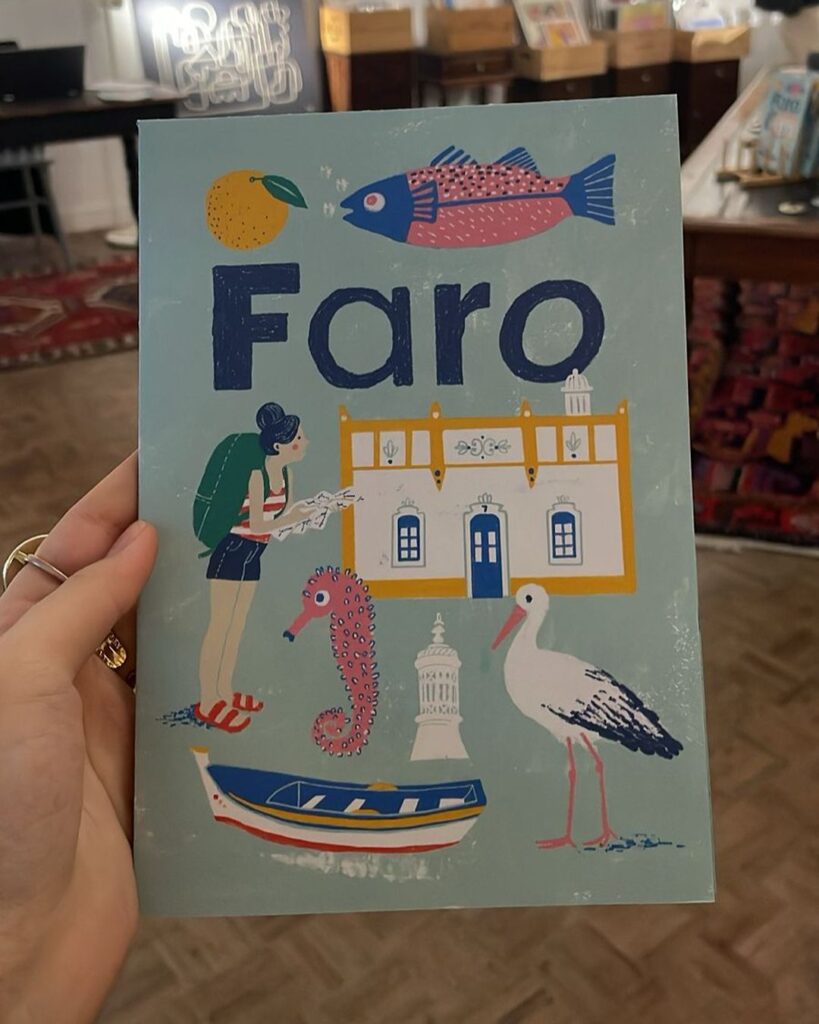
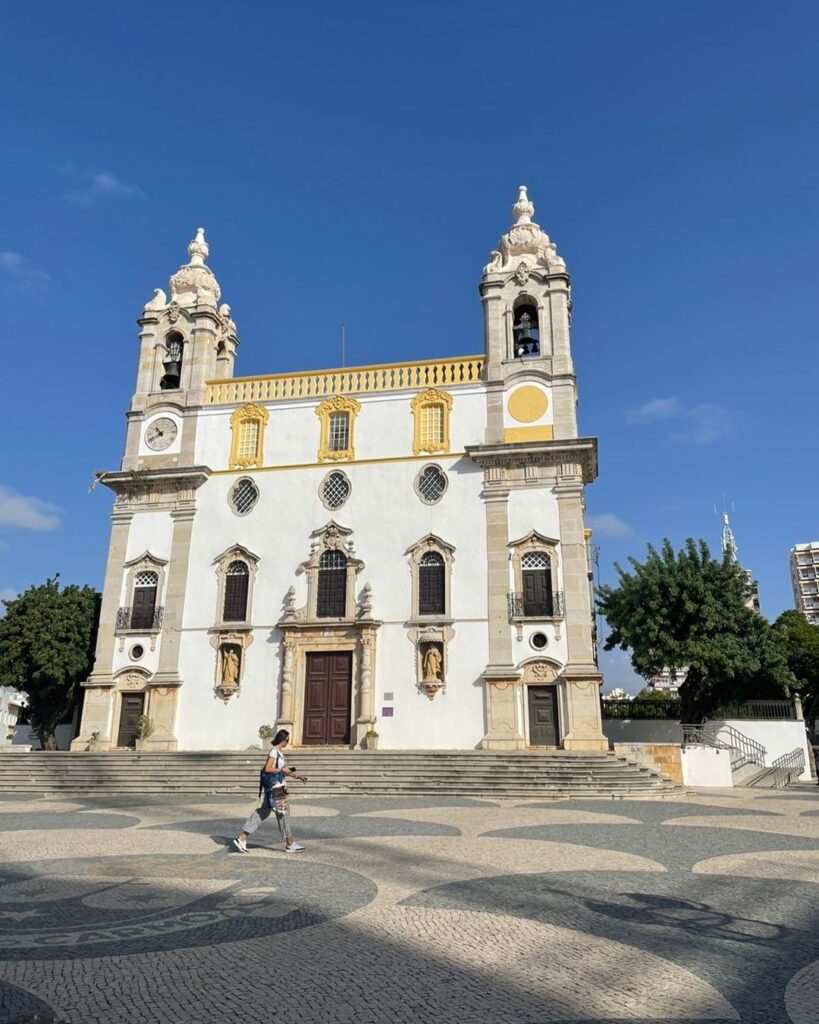
All tracks lead to Faro
Algarvians say – although nobody seems entirely sure who said it first – that Faro is the gateway to the Algarve.
Not only because Faro Airport handles a good share of the flights arriving in southern Portugal, but also because the city sits almost perfectly in the middle of everything. And in the Algarve, that means being dangerously close to excellent beaches in practically every direction.
The railway tracks stretch east towards Vila Real de Santo António, already halfway to saying “hola” to Spain, where the sea turns noticeably warmer and Mercadona supermarkets begin appearing along the roadside.
In the opposite direction, the train rolls towards Lagos, passing lavish resorts, endless golf courses and towns that look as though they were designed specifically for particularly happy retirements.
Long story short: the Linha do Algarve began construction in the late 19th century to connect fishing villages and small trading hubs along Portugal’s southern coast. More than a century later, it’s still doing exactly what it was meant to do – carrying people from one end to the other without encountering traffic jams, obsessive parking hunts, or the minor financial trauma otherwise known as “renting a car in July”.
In other words, if there’s a right place to begin this journey, it’s probably Faro. Although, in the Algarve, almost every road has a habit of becoming part of the destination anyway.
My three favourite stops on the Linha do Algarve
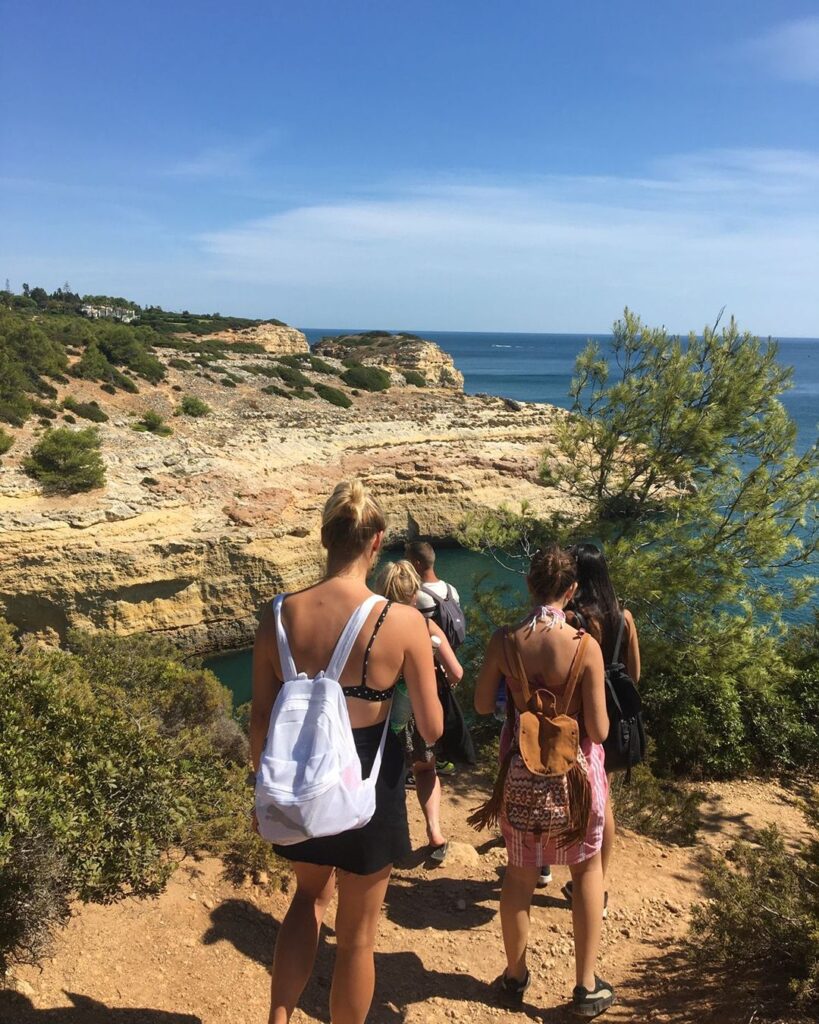
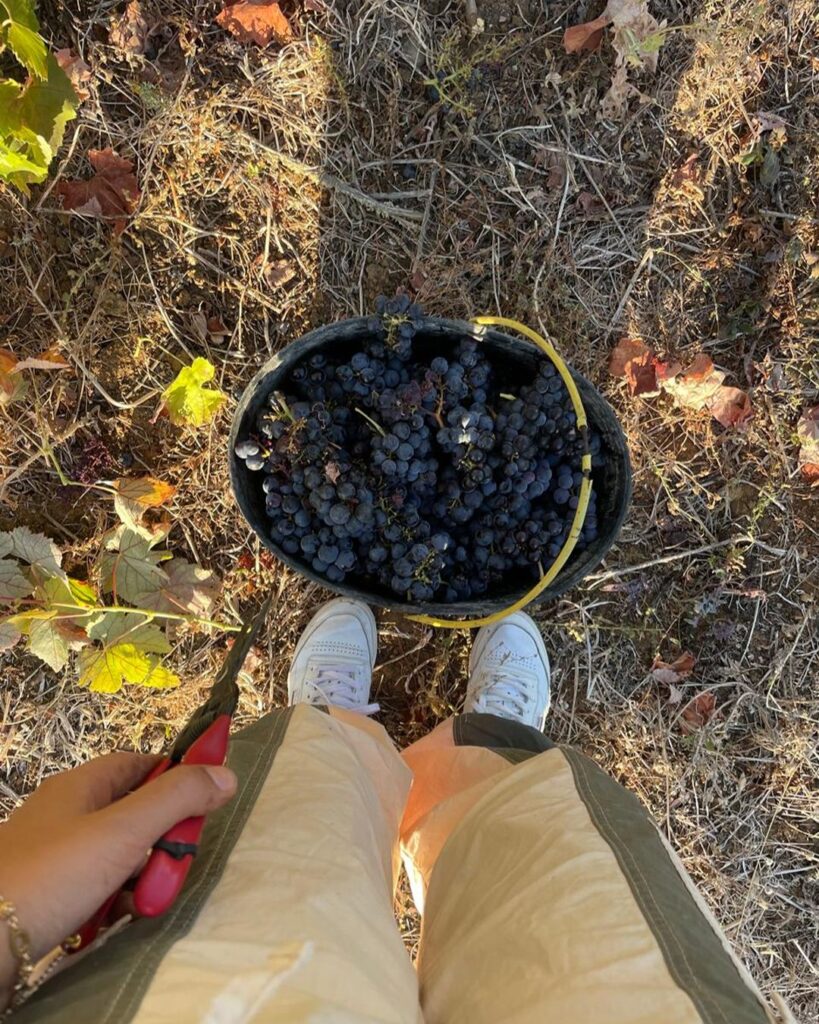
Estômbar-Lagoa: sunset sessions and secret spots
This is easily one of the Algarve Line’s most underrated stops. For me, though, it brings together everything that makes southern Portugal worth the journey: good wine, long lunches, a solid soundtrack, beautiful beaches and, naturally, a few places that still haven’t fully landed on the tourist radar.
The area is home to some of the Algarve’s most interesting wineries, where you can enjoy open-air lunches, wine tastings and sunset sessions among olive trees and century-old vineyards. A few kilometres away, Algar da Boneca is a quick stop, but one absolutely worth the detour: a small opening between the cliffs reveals the Atlantic in an almost cinematic way. Meanwhile, Praia de Carvoeiro strikes a nice balance between lively restaurants, shops, boat tours and local events without completely losing its relaxed seaside-village atmosphere.
Lagos: the perfect base for a little adventure
Lagos may seem like the obvious choice – after all, it’s one of the Algarve’s most sought-after towns – but the real secret lies in everything surrounding it.
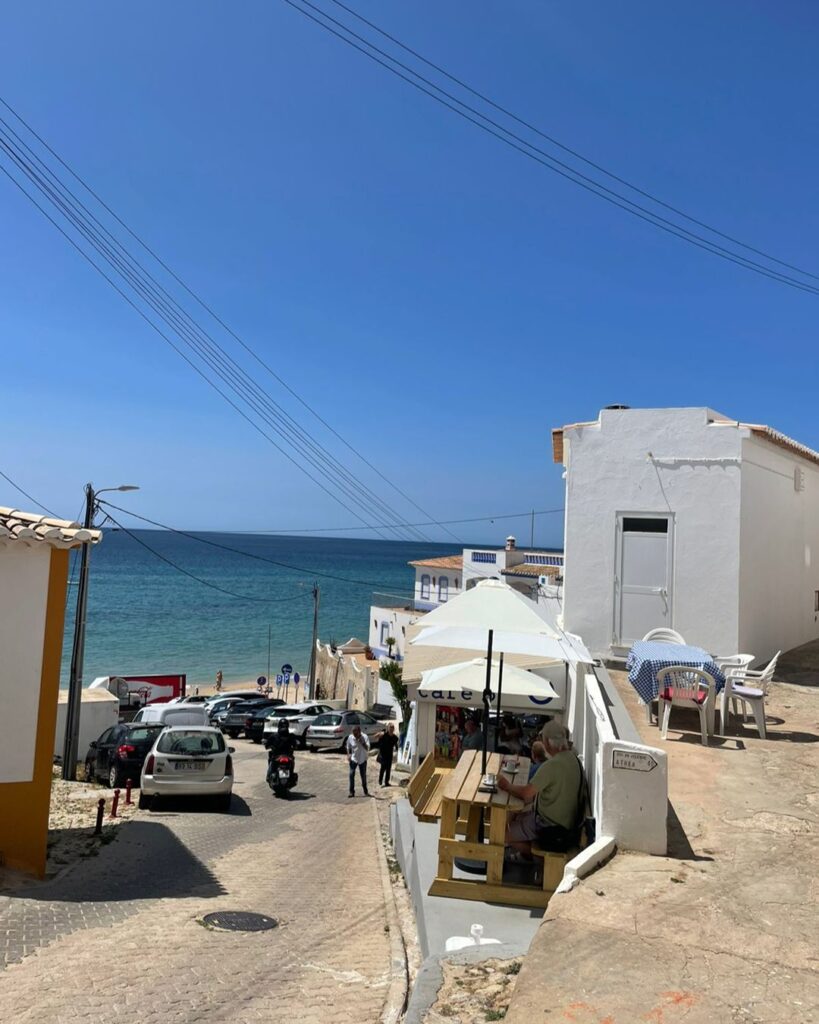
Burgau remains one of my favourite coordinates in the region: a slower rhythm, a more local atmosphere and days that revolve entirely around the sea. And for anyone into wind sports – especially kitesurfing – this is one to save immediately.
From there, the west coast becomes wonderfully easy to explore at your own pace: stopping by Salema, be sure to find the dinosaur footprints preserved in the rocks. Then why not experience the rural beauty of the Algarve with a visit to the zoo in Barão de São João, where you can cool down in their pool and swim alongside the penguins. Finish your day of exploration in Praia da Luz at the Ice Cream factory. Housed in the enchanting private gardens of the old fort, it offers 27 flavours of ice cream, made by the owners every day behind the shop. Bom apetit!
Tavira: a softer side of the Algarve
And finally – but certainly not least – Tavira is the kind of place that slows me down without even trying. Whenever I’m there, I end up spending hours wandering around the town centre with no particular urgency – drifting into little shops.
In summer, the Cineclube de Tavira makes the evenings feel lively, cultural and cosy with its open-air cinema, and the local producers’ market is always a mandatory stop. Almost every time, I leave with some ceramic piece, art print or tiny object that somehow finds its way back home in my suitcase.
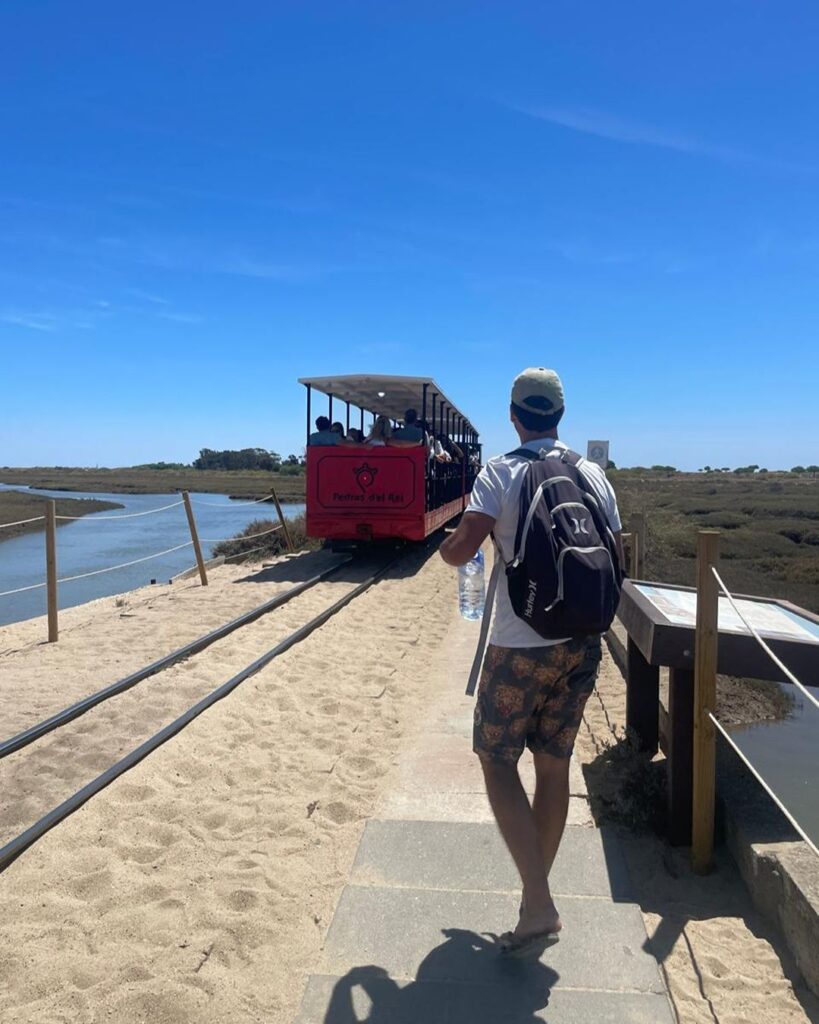
Praia do Barril remains one of my favourite beaches in the entire Algarve. There’s something about the little train, the walk to the beach and the laid-back restaurants nearby that makes the whole outing enjoyable – not just the part where you sit on the sand.
Buses and ferries can lend a hand too!
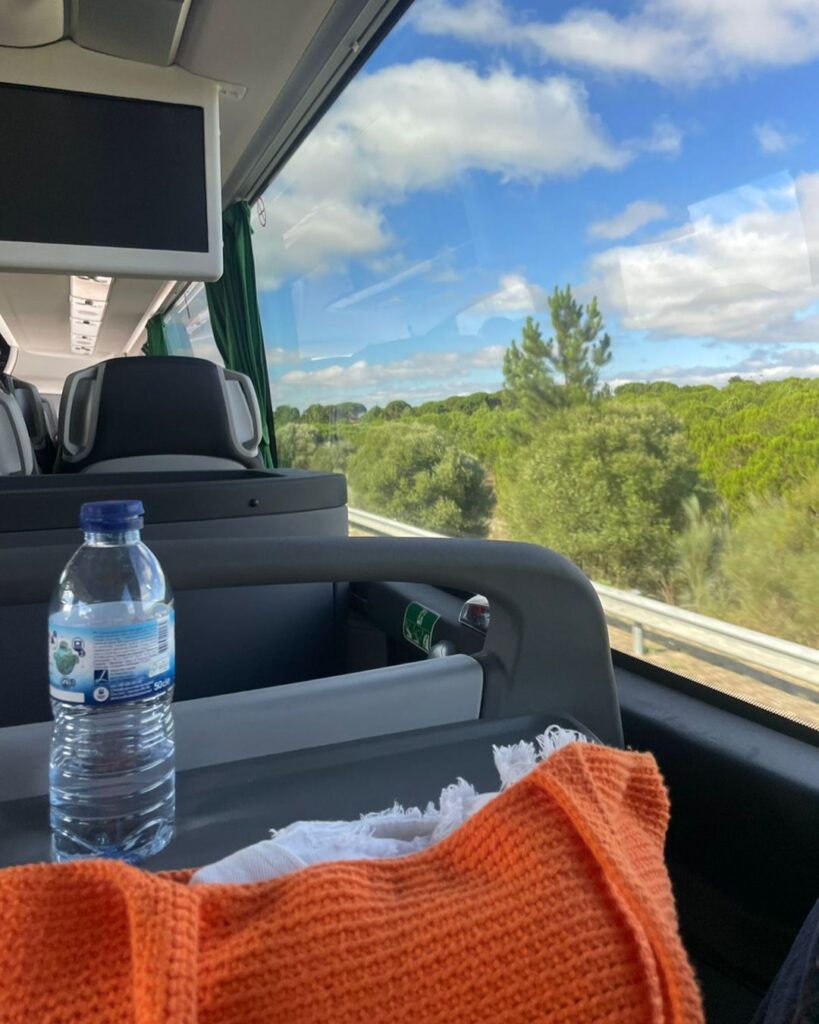
Although the train makes travelling around the Algarve considerably easier, some beaches and coastal villages still require a few extra connections – mainly regional buses and ferries.
Buses
The regional VAMUS Algarve bus network, for example, connects railway stations to beaches and towns where the train simply doesn’t reach.
Timetables: services generally run between 7 am and 8.30 pm
Frequency: buses usually operate once per hour, with more limited schedules at weekends
Prices: tickets generally cost between €1,50 and €6 per journey
Ferries
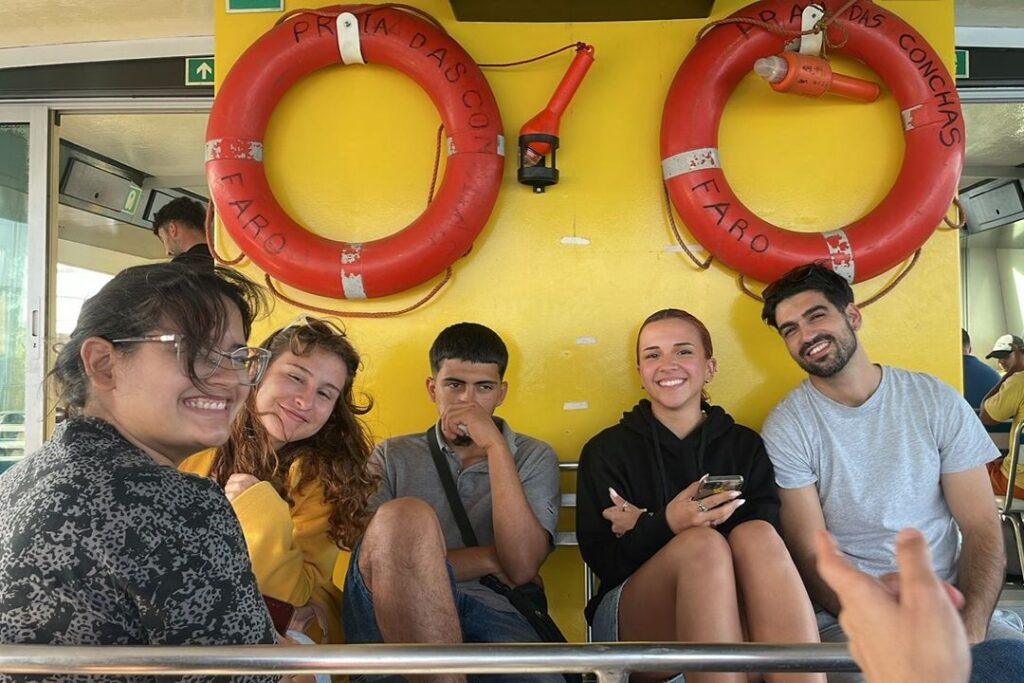
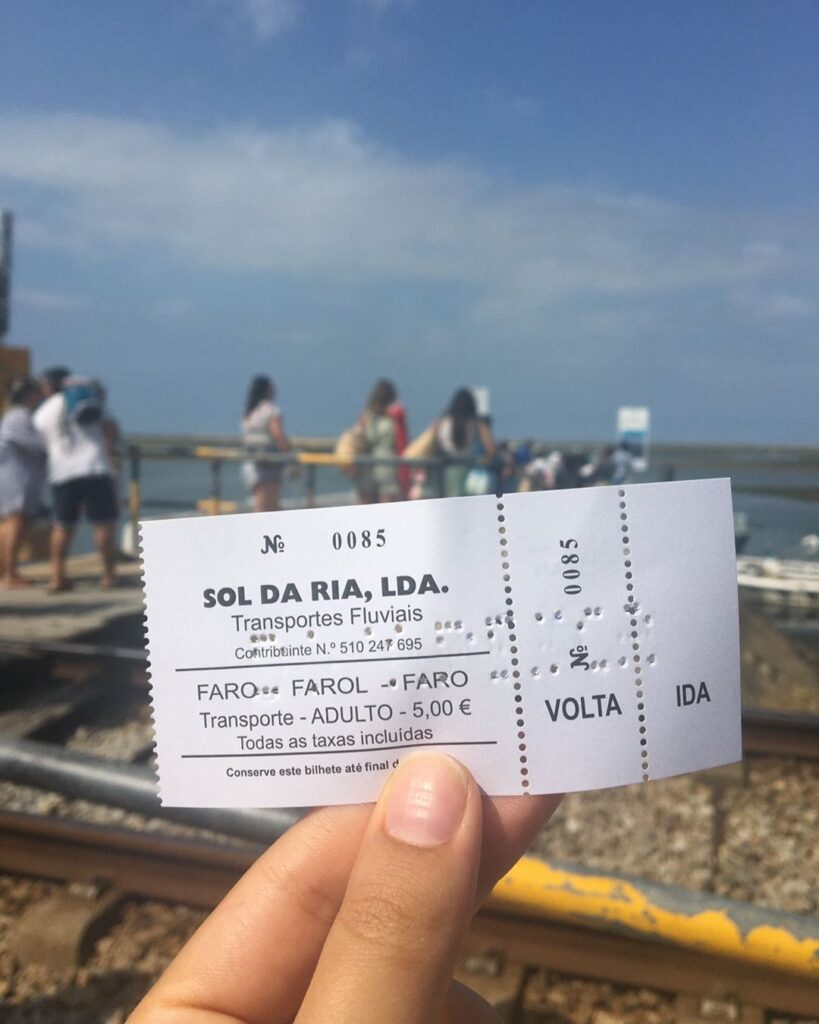
Meanwhile, in the eastern Algarve, ferries are an essential part of local life. Routes connect the mainland to destinations including Ilha Deserta, Ilha da Culatra, Ilha da Armona and Ilha de Tavira.
The boats range from smaller passenger vessels to larger ferries also used by local residents, and depending on the route, crossings usually take between 15 and 40 minutes.
Timetables: services generally operate between 9.30 am and 7.30 pm
Frequency: during summer, departures are usually quite regular – on some routes, every 30 minutes
Prices: tickets generally cost between €2,50 and €6,50 per crossing.
Tickets, please!
Finally, tickets can be purchased directly at the stations, from self-service machines or online through the CP – Comboios de Portugal website and app.
It’s important to board with a valid ticket already in hand. Ticket inspections are fairly common on Algarve regional trains, and passengers travelling without one can face fines of up to €150 – money that could certainly be put to much better use on long seaside lunches or a few extra rounds of sangria, if you ask me.
Does further mean more expensive?
Ticket prices vary depending on the distance travelled, but most regional journeys usually cost somewhere between €2,50 and €10. In practice, travelling by train through the Algarve ends up being a fairly budget-friendly option – especially during summer, when car hire, fuel and parking prices all seem to rise at exactly the same time.
Final stop: monthly passes
For longer stays, CP also offers regional monthly passes starting from €49, with unlimited travel within the selected area for 30 days. It’s usually well worth it for anyone planning to move frequently between different towns across the region. On top of that, younger and older passengers may also be eligible for specific discounts on both single tickets and travel passes. CP, for example, offers reduced fares for passengers up to 25 years old on Regional and InterRegional trains, alongside discounts for senior travellers on selected ticket categories.
So, what do you say – shall we hop aboard the Algarve trains this summer?
Did you know?
The Algarve railway line was fully electrified on 19 July, 2026, bringing major upgrades for visitors travelling across the region. Here is what you can expect from the modernised service:
Direct Journeys: You can now enjoy direct trips between Lagos and Vila Real de Santo António, eliminating the 25-year-old requirement to switch trains in Faro.
Faster Travel Times: Your journey will be noticeably quicker, as the full trip from Lagos to Vila Real de Santo António has been reduced by about 30 minutes, now taking around 2 hours and 39 minutes. A new, faster InterRegional service has also been introduced with fewer stops, making the cross-region trip in about 2 hours and 20 minutes.
More Frequent Trains: The region now benefits from an 18% increase in regional train services, with 16 daily trains running the full route and an increased frequency during rush hours.
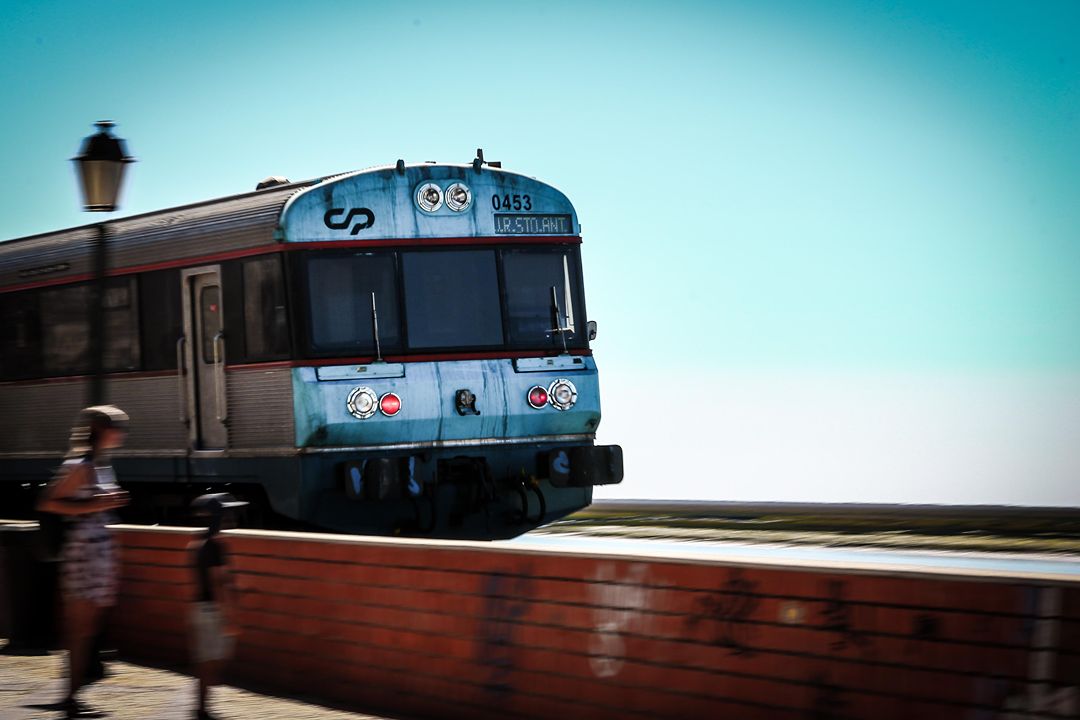
Enhanced Comfort and Capacity: The old blue diesel railcars have been replaced by modern yellow electric trains. These upgraded trains offer nearly 40% more capacity (accommodating up to 536 passengers compared to the previous 388), operate more quietly, and feature improved accessibility, including electronic platform lifts and dedicated wheelchair spaces.
Greener Travel: The transition to 100% electric trains completely eliminates diesel refuelling, which significantly reduces polluting emissions and makes exploring the Algarve coast much more environmentally friendly.
See the stops and time table >