Historically, like most Algarve inland villages, Barão de São João was a quiet, almost self-sustaining community. Agriculture, including almonds and other dryland crops like figs and olives were, and still are, prevalent. Livestock, especially goats and cattle, provided meat, milk and cheese, and the adjacent forest supplied wood and charcoal. Nearly everyone had a vegetable garden with fruit trees. There were small cottage industries such as ceramic production and wood carving. They often traded these for seafood at the markets in Lagos.
The centre of the sleepy little village has changed little, characterised by traditional, narrow street houses and a surrounding national forest (Mata Nacional). However, since the 1960s, the area has seen an influx of expats seeking alternative lifestyles. The movement kicked off in the counter-culture heyday of the 1960s when both Paul McCartney and George Harrison are known to have stayed in the Lagos area. In the 1970s, Barão de São João was nicknamed ‘happy valley’ due to an influx of German hippies and bohemian artists who bought properties in the surrounding hills.
Then, in the 1980s, the village developed into a vibrant hub for alternative lifestyles and vanlife, with a community of travellers parked up on its outskirts. Now, with more regulation, the atmosphere is characterised by a bohemian feel with a strong community ethos. Many of its residents pursue creative, eco-friendly occupations, and a popular flea market is held on the last Sunday of every month, featuring second-hand items, handicrafts and homemade food.
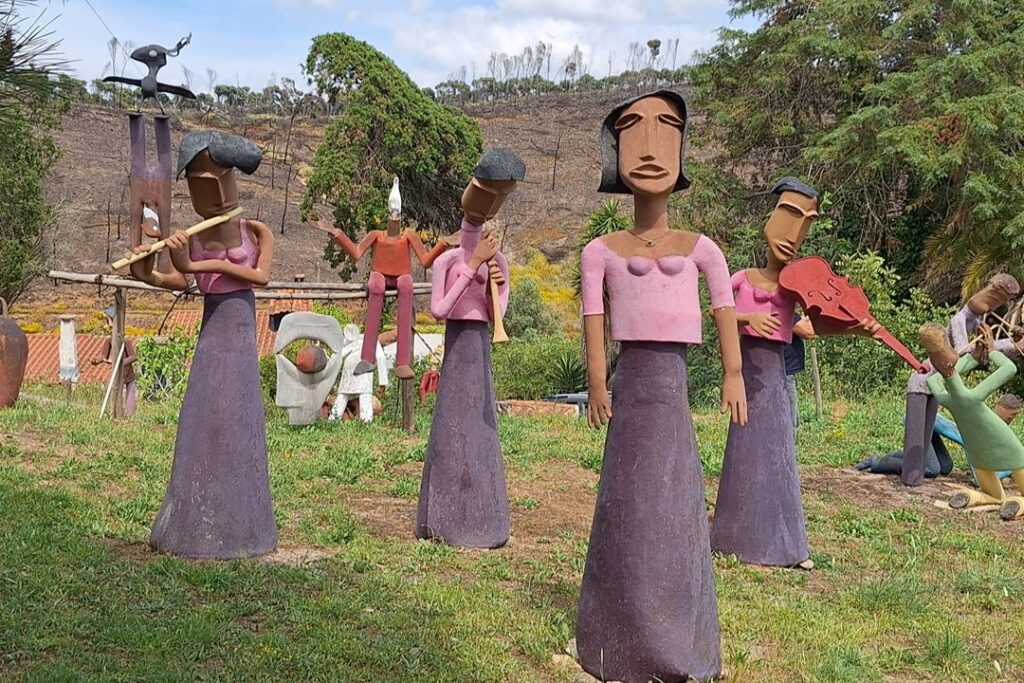
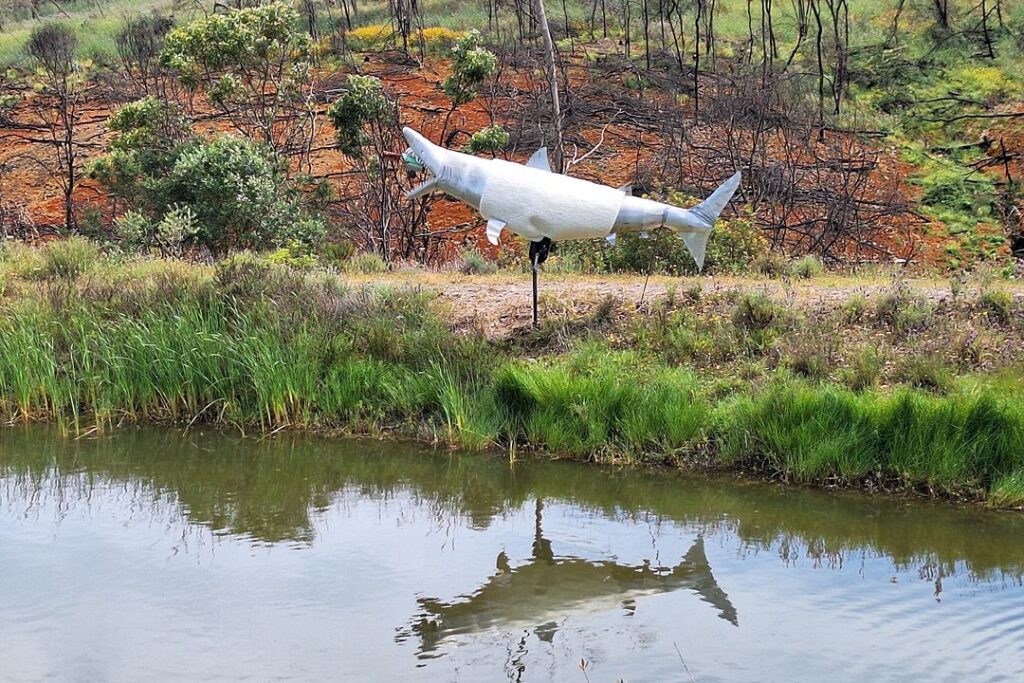
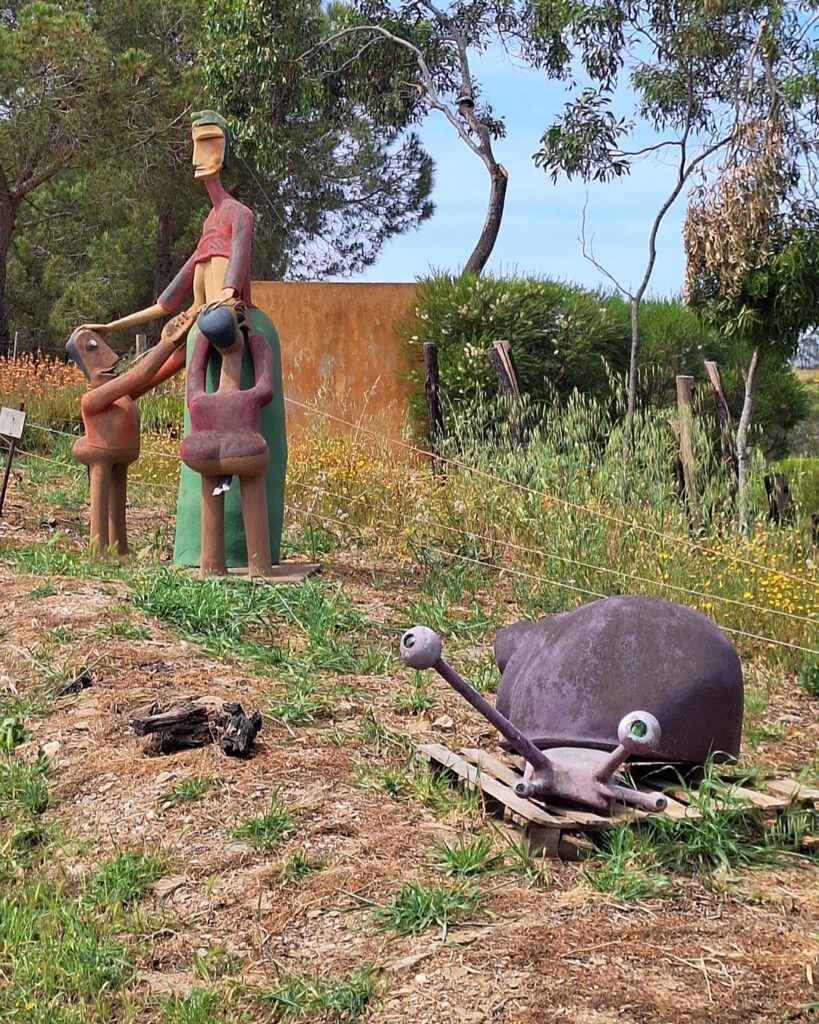
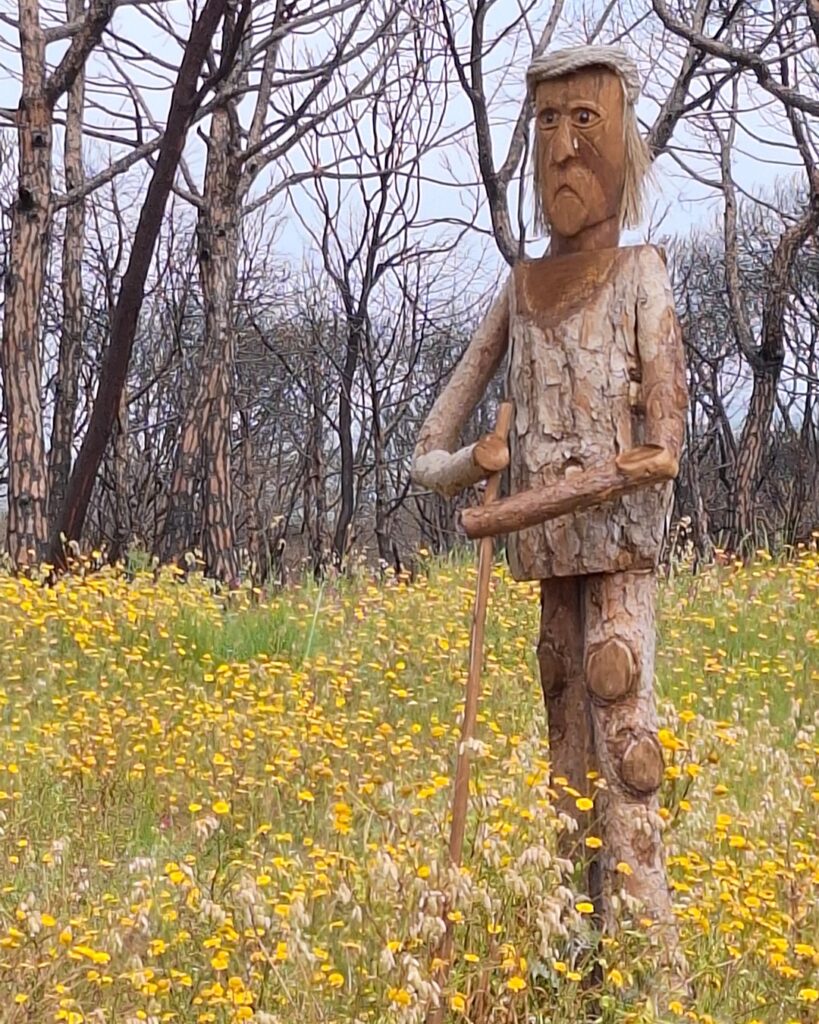
This evolution led to an increase in tourism, enhanced by the establishment of a zoo with over 150 species of animals. Not only that, but right next to the village, you will find the forest with interesting trails and a picnic area. Along one trail, you can see sculptures and poetry engraved in stone, a unique fusion of art, culture and nature. Several times a year, the village hosts special events, such as the November Walk and Art Fest. The programme is long and diverse, withdozens of activitiesfor all tastes: long, short and themed walks (including geology, botany, bird watching, history and drawing), workshops, activities for children and families, mountain biking and wellness activities that invite you to relax and enjoy nature. In May, there’s an event, Escutar a Mata (Listen to the Forest), with walks, dancing, a picnic … and more.
From ancient traditions to alternative lifestyles
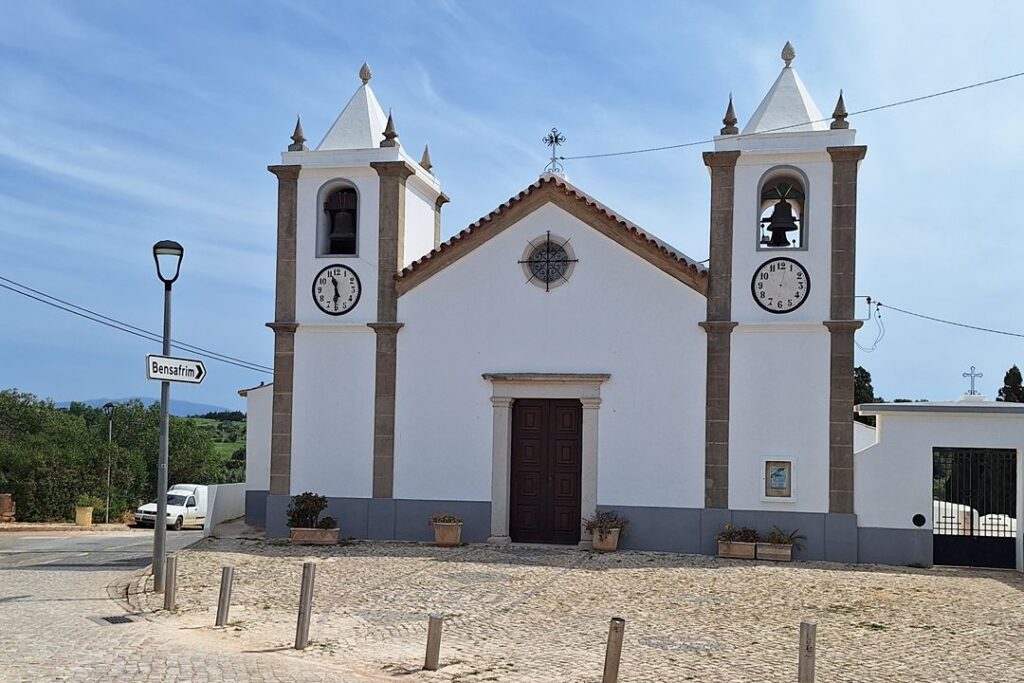
It was a sunny day in April when I visited Barão de São João with friends, Ron and Becca Williams, a fellow contributing writer to Tomorrow, to explore the village and its surroundings. We started in the village centre where the old parish church, Igreja Matriz, stands. The church was built in the mid-1400s during the Portuguese Discoveries, a period when the village experienced significant development due to the timber supply for shipbuilding. The village then took the name of the church, after the saint, John the Baptist and the Baron, a noble, who presumably owned the land.
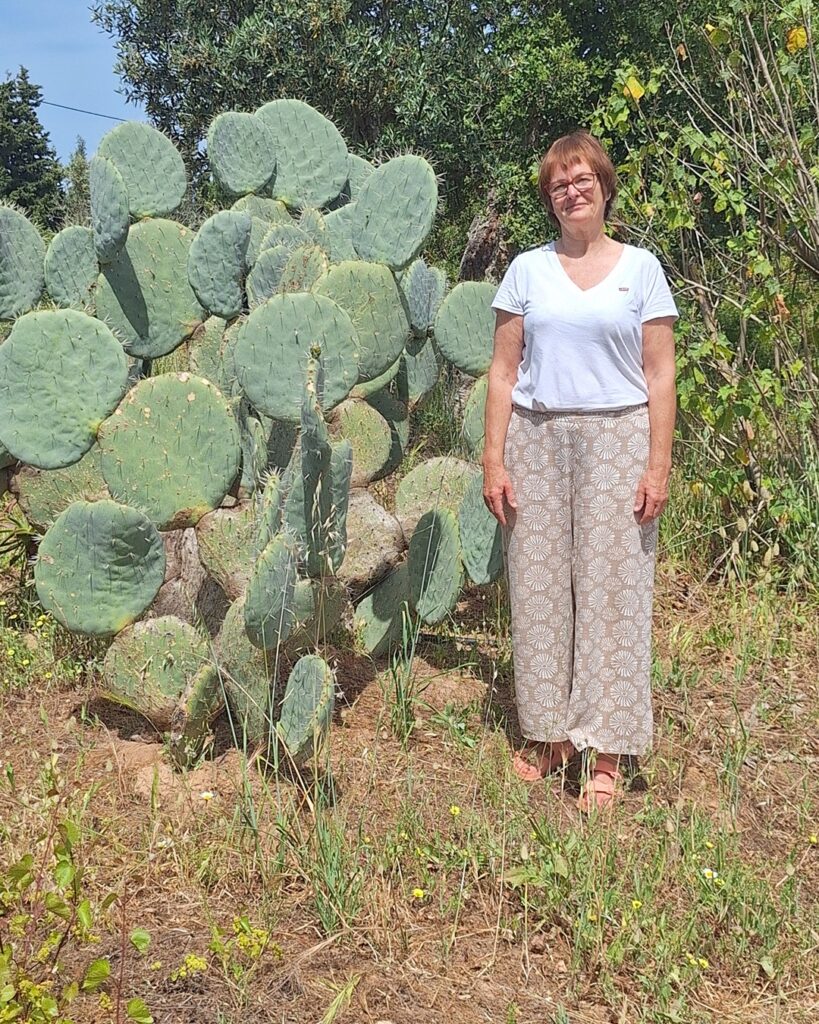
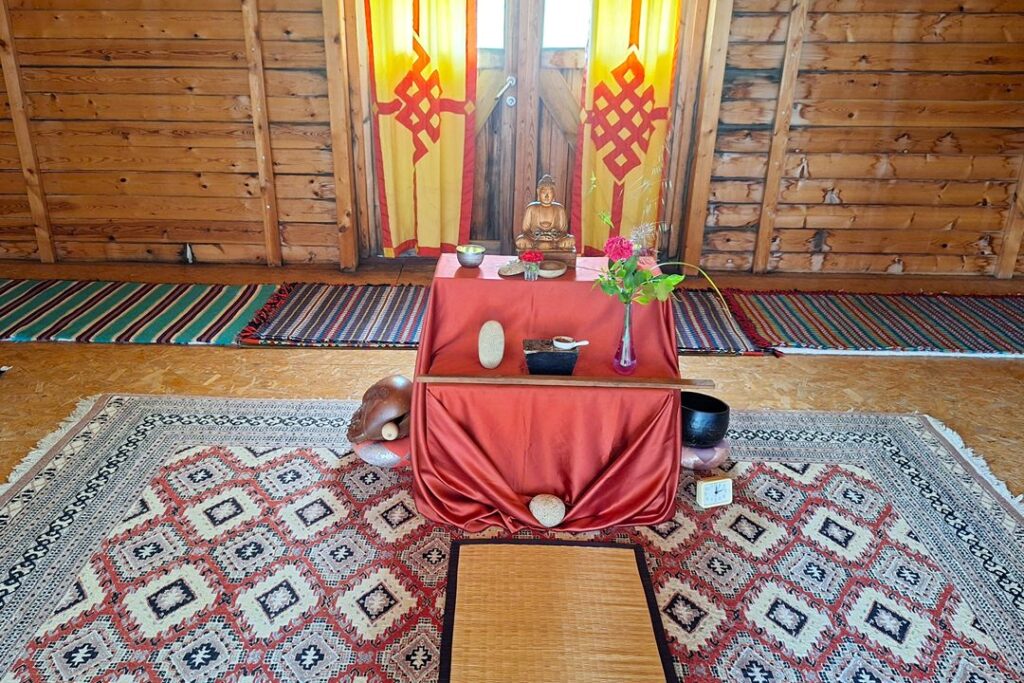
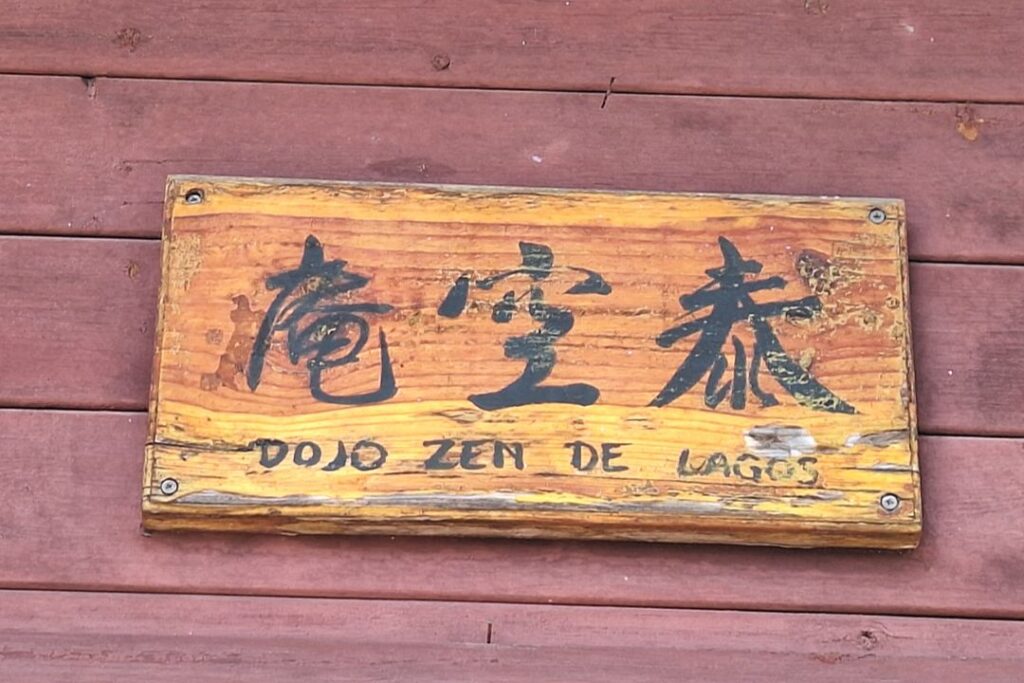
With the objective of exploring alternative lifestyles, I had arranged to meet Annette, a practitioner of Zen Buddhism who hosts a group of enthusiasts twice a week for meditation sessions in a dojo, a ‘place of the way’ (rather than a place of worship). Annette was very gracious in showing us around her delightful property and explaining the meditation practice known as Zazen, which promotes calmness, peace and tranquillity. If anyone is interested in joining the sessions, she encourages them to access the website (see details below).
Annette, who has lived here for about 30 years, gave some insights into the village and its changes. For instance, the local infant school is finally being expanded. It’s a very innovative centre and uses the Waldorf method of teaching. It embodies a holistic approach designed to nurture the whole child – head, heart and hands – and to eventually make a sustainable world for all. It was founded on the insights of the German philosopher Rudolf Steiner, a progressive thinker from 1861 to 1925. The thinking he outlines in The Philosophy of Freedom resonates with today’s counterculture.
We had been recommended Beco de Sol for lunch and found the vegetarian restaurant pleasant, with sunny patio dining or comfortable inside seating. I enjoyed the Pad Thai, rice noodles, tofu and peanut sauce, washed down with the house special red wine. I chatted with the owner, Daniele, who explained that Barão de São João was really on the move: “The town is developing in a really good way,” he said. “Our Waldorf School is expanding with the encouragement of families moving into the area. There is a large eco-friendly housing project beginning on the outskirts of the village, and just today they are having a ground-breaking ceremony.”
We visited the site where the development is about to start. The location is excellent and the plans look enticing. There will be villas, family homes and apartments, all built with state-of-the-art, eco-friendly materials and a decidedly modern visage – a sign of the times.
Today, this vibrant village serves as a true haven for those seeking to escape the conventional world in search of peace, tranquillity and connection. Whether through Zen meditation practices that promote inner calm, a strong local community ethos that champions progressive, holistic education, or the development of modern, eco-friendly housing, Barão de São João has successfully woven its rich, aristocratic historical roots with an alternative lifestyle to create a welcoming sanctuary for mindful, community-driven living.
If anyone is interested in joining the Zen sessions, Annette encourages accessing the website: zendojotaikuan@gmail.org / walkartfest.pt
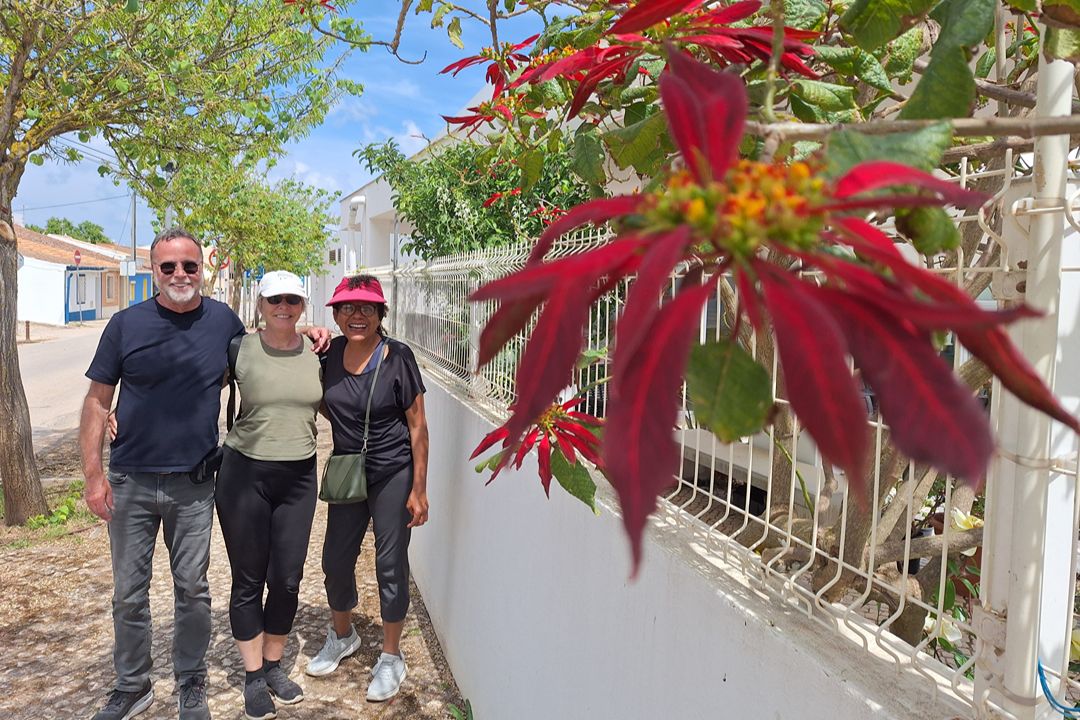
Main image: Ron and Becca Williams and Monique Putley