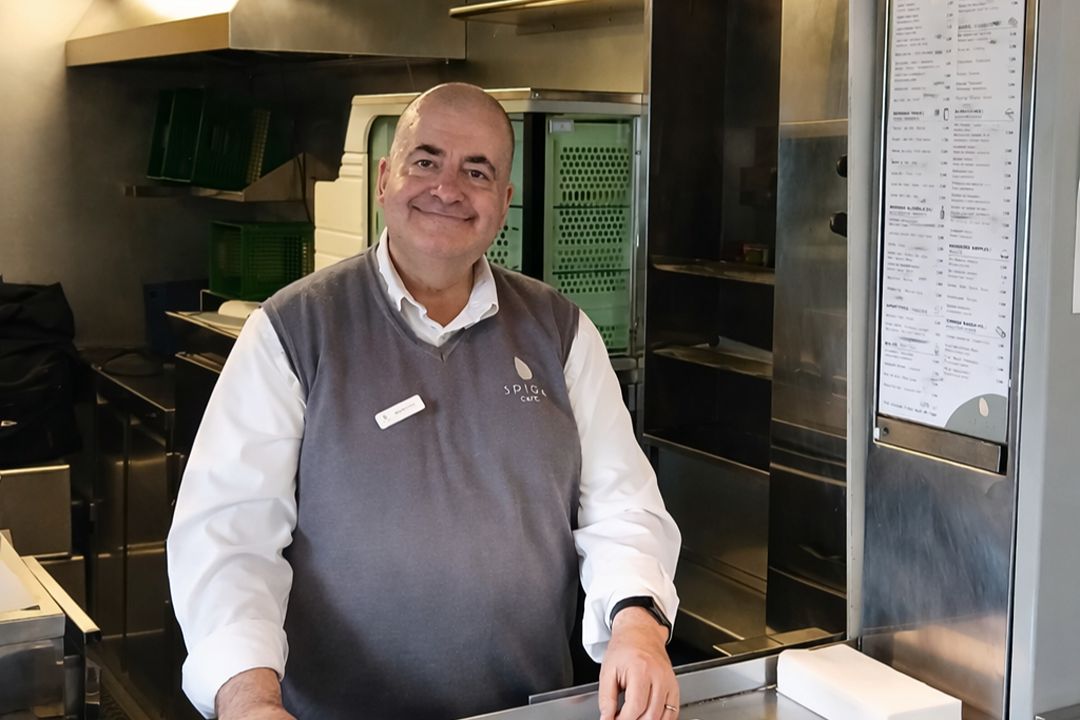
If you’ve travelled on the Faro-Lisbon line, you may well have met António Pinto. If not, you may have heard him: the gentleman in the buffet carriage delivering word-perfect announcements in five languages with remarkable ease and a sense of fun.
When I ordered a coffee with my clumsy Portuguese, I was not completely surprised when the reply came back in English. After all, many Portuguese people speak it brilliantly. What really caught my attention, however, was the accent. It was natural, assured and distinctly English. This was my introduction to the remarkable António Luis Osorio Pinto.
A few minutes later, back in my seat, I listened to António making announcements in five languages with word-perfect precision. The Italian had an Italian rhythm to it. His French, Spanish and English announcements were equally impressive. Standing nearby, the conductor told me that António’s next set of announcements would include Mandarin …
Forty years down the track
António has worked the Faro-Lisbon route for close to 40 years and he’s seen many changes. He told me of a period when speaking English on Portuguese trains was far less common than it is now. When he first began doing it in the 1990s, certain conductors disliked it, perhaps sensing that once passengers heard António speaking English, they would expect the same from them. Over time, though, what António pioneered became the norm and was actively encouraged by the railway companies. “That is how times change,” he told me.
Born in Porto, António grew up in a family where languages had practical value. His father had a business dealing in seeds and agricultural products, and, at that time, French was the primary language for international trade. Perhaps envisaging that his son’s career might follow a similar path, he began teaching the young António the language when he was just five years old. At school, English was taught from the age of seven. Spanish came later and then Italian. “I also speak a little German,” he told me, adding, with characteristic modesty, that he is not fluent.
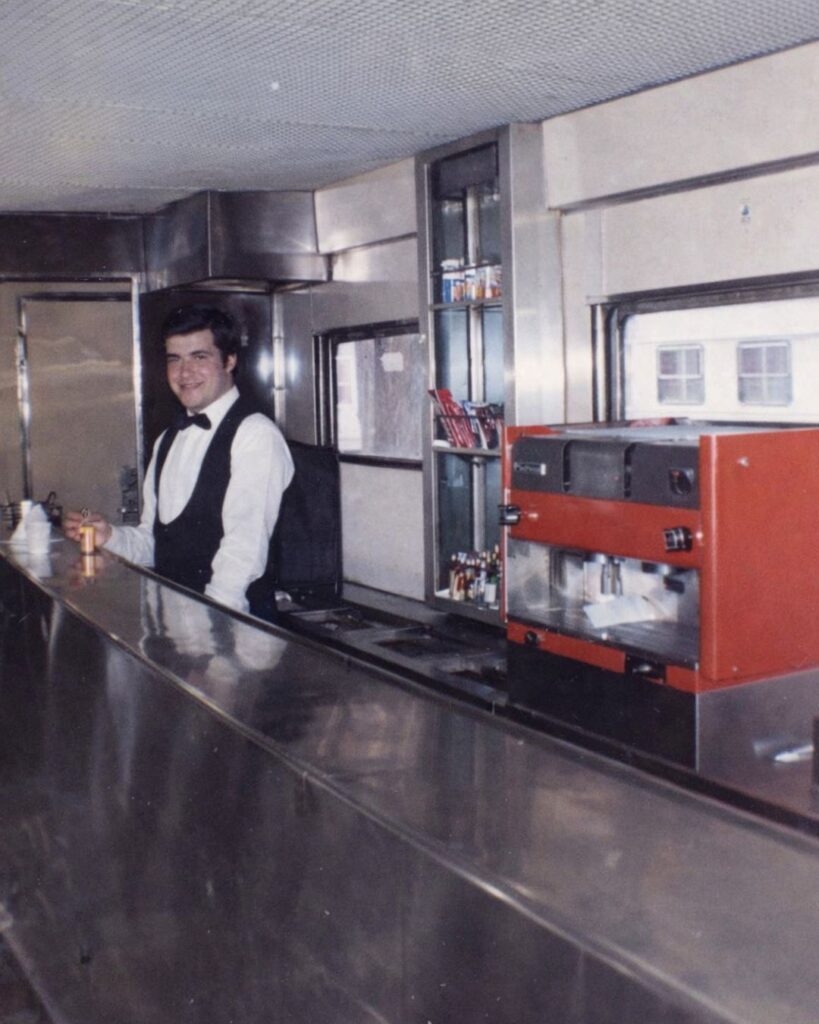
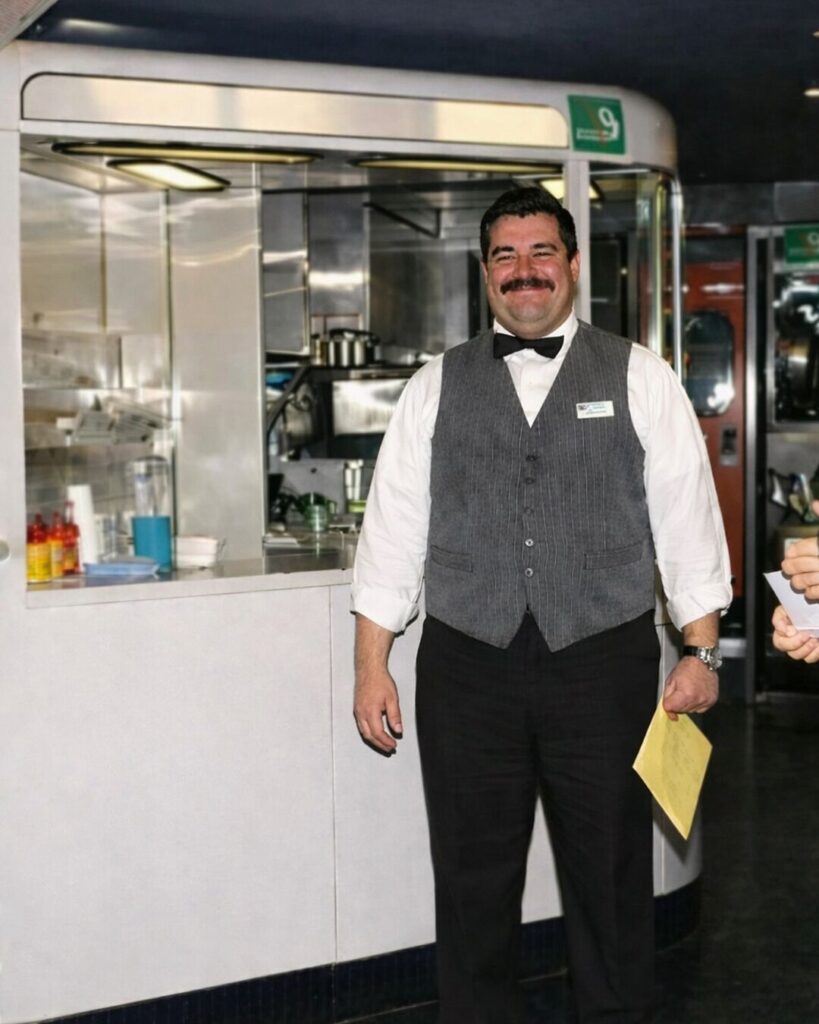
There is, he says, no great secret to his gift for languages. It is simply something that has always come naturally. He is very humble about it and quick to point out that, at school, other subjects, such as mathematics, did not come so easily.
António moved to the Algarve in 2014 and now lives in Cacela. His working day begins long before most of his passengers have opened their eyes. Four days a week, followed by two well-earned days of rest, he takes the regional train to Faro, checks the buffet carriage, and then heads north on the 08:22 service to Lisbon. He likes to say, with understandable satisfaction, that he is “one of the few people who wakes up in the Algarve and has breakfast in Lisbon”.
An arrival back in Faro at 18:32 follows, before he makes the final journey home on the regional line. It is a long day, but he speaks about it warmly, not least because it combines three things he has always loved: trains, travel and meeting people.
Service with a smile
The buffet service is run not by the rail company but by a separate operator, the Instituto Técnico de Alimentação Humana (Technical Institute of Human Nutrition), or ITAU, for short. Still, from the passenger’s point of view, António is one of the recognisable faces of the journey. He takes genuine pride in his work and in providing excellent service. “I say to new colleagues that we serve everyone equally: the person who has been to prison and the judge who sent them there.”
It is a memorable line, and an insightful one. A train carriage compresses society. Different classes, backgrounds and languages all pass through it. Antonio’s view is that each person should be served with the same civility.
He speaks positively about the conductors and drivers he works with. The rapport he has with them is clear to see, as the conductor I met teased me about António’s inability to speak Mandarin, though I have little doubt that António could learn it if he wanted to. Many of his customers have become familiar faces and even friends, with some joking that he spends so much of his working day speaking other languages that he may one day forget how to speak Portuguese. Others, hearing his multilingual delivery for the first time, have wrongly assumed it was a recording.
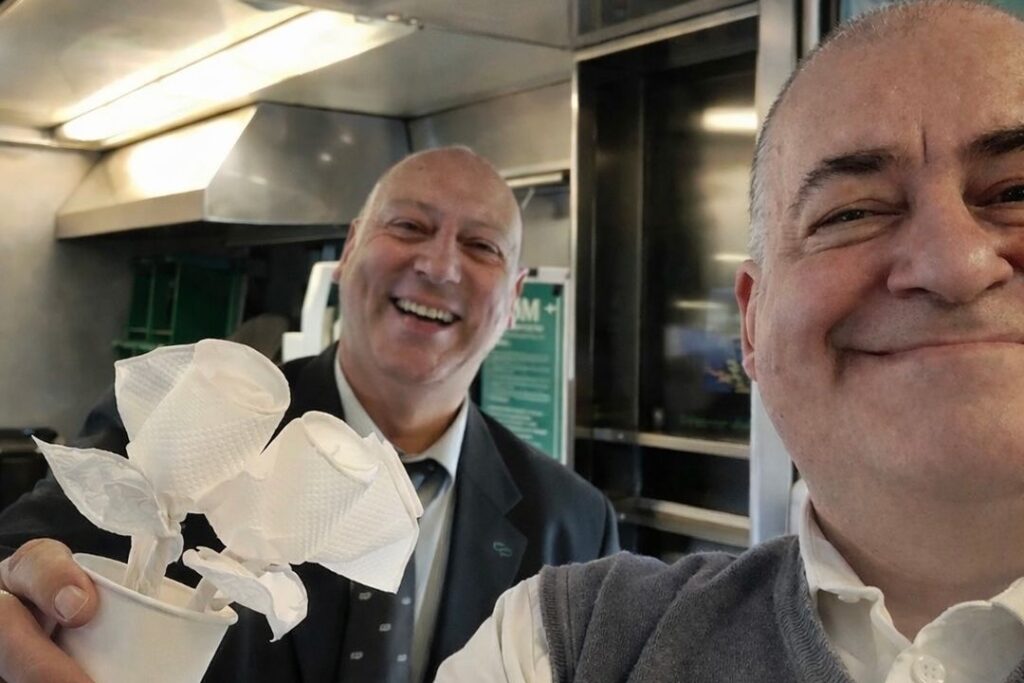
Outside of work, António’s interests include music, cinema and, of course, travel. He speaks warmly of Italy, especially Venice and Genoa, and lists the Netherlands, Germany, London, where his son lives, and Ljubljana, Slovenia, among his favourite destinations. Trains remain his great passion and he speaks about them with the easy authority of someone who has spent a lifetime in the industry.
António has a strong sense of the older romance of rail travel. He can recount tales of how buffet and dining services on trains belong to a long tradition stretching back to the days when passengers would stop at stations to take hurried meals while steam engines took on water. He speaks fondly of how rail travel once carried a greater sense of occasion, including a silver platter. Much of that world has gone, but in António’s carriage a trace of it remains. He still believes that service matters, that human contact matters, and that a journey should be more than simply getting from one place to another.
António asked that I pass on his best wishes to Tomorrow readers and said that anyone who recognises him from this article is very welcome to say hello. He has even promised a free espresso to those who do, though he was, very understandably, keen to make clear that the offer applies only to him and not to other members of staff.
It is hard to imagine a better ambassador for ITAU and rail travel in general. António is unfailingly courteous and humorous, and offers great service while carrying nearly half of the European languages in his head before most of us have properly woken up. In an age when so much of life can feel transactional, António Pinto gives passengers something increasingly rare: a sense of personal service from someone who genuinely cares, and is adept at bringing a little light into the lives of the people he meets.