

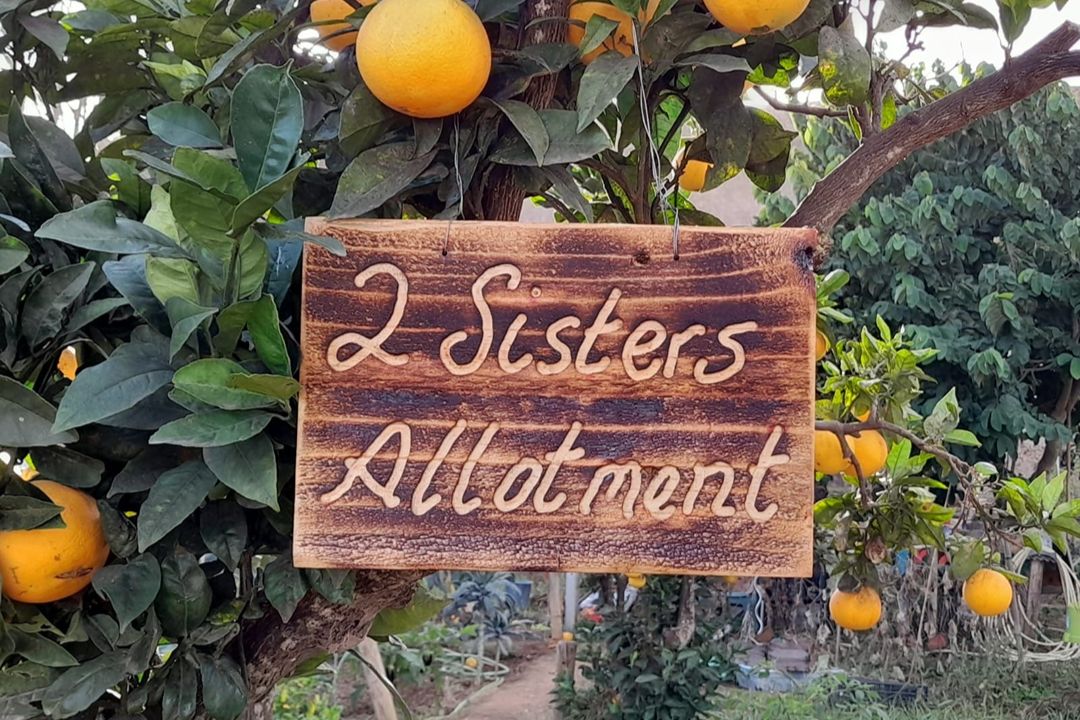
Hi, Gilly here, this time with my sister Jayne, and a new hobby – our Two Sisters Allotment.
This time last year, we took on an allotment, basically a rectangle of uncultivated land, with the intention of growing our own food. Whilst we are very familiar with digging up potatoes, shelling peas and blanching tons of green beans for the freezer (Dad and Grandpa both had allotments), our knowledge and experience of growing our own is very basic. Through this new feature, we hope to share with you details of our progress, problems, successes (and failures) and maybe we’ll share some preserving ideas and recipes too!
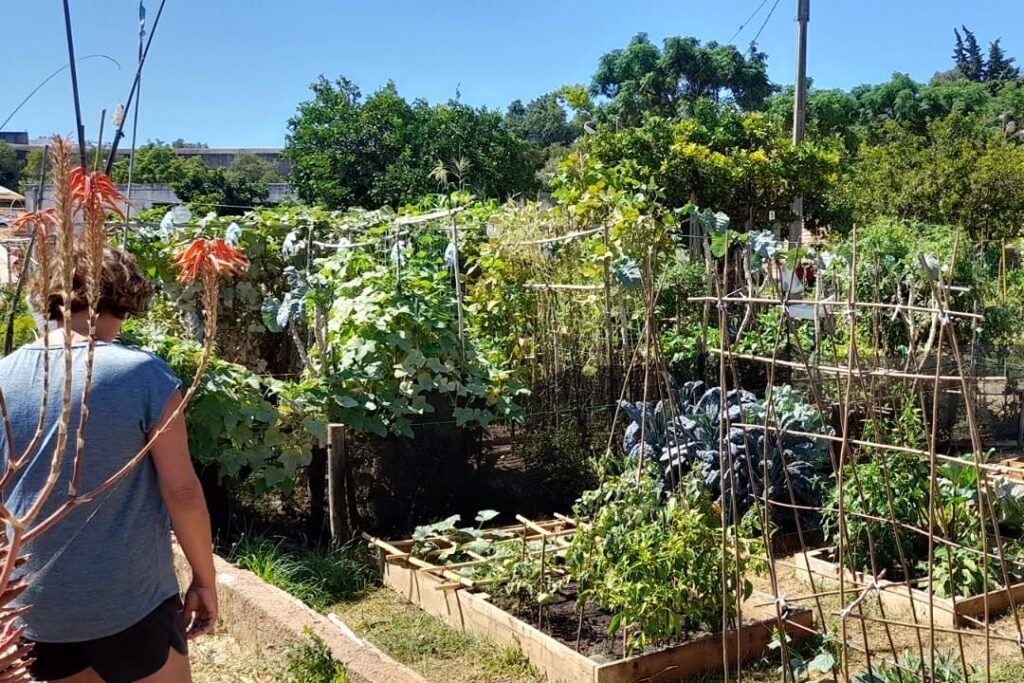
Before a spade touched the soil, we agreed that we would follow the basic principles of organic gardening, use contained beds and develop the allotment one bed at a time.
Organic gardening – put simply, this is the avoidance of synthetic chemicals, so the challenge for us moving forward is to learn about and trial different techniques for enriching the soil, feeding our plants, and controlling pests. We’ll share our findings with you as we go!
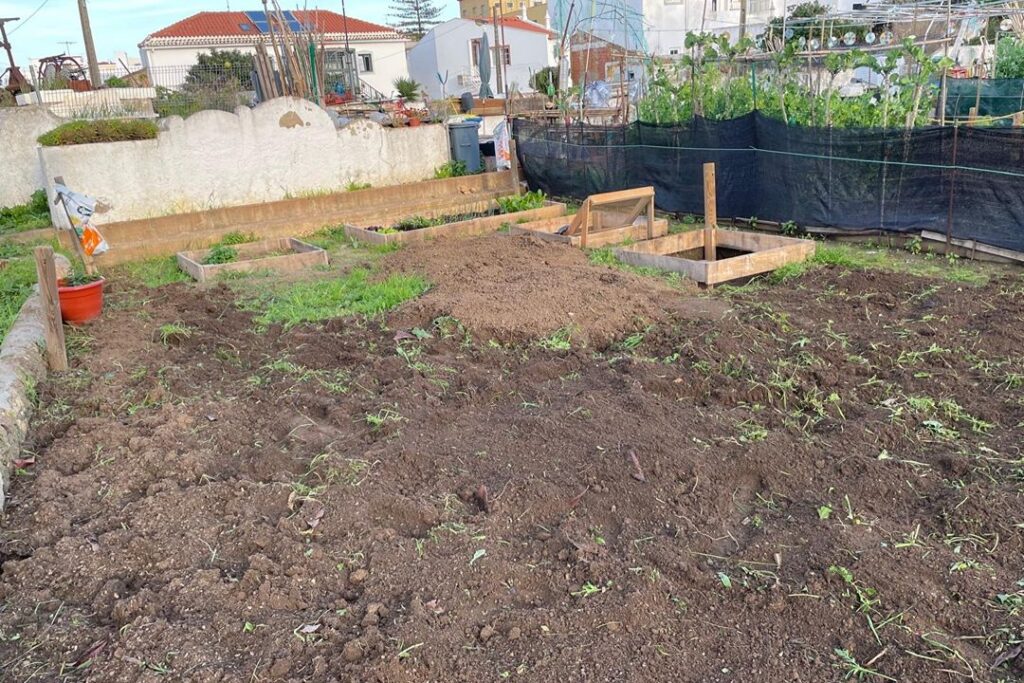
Raised beds – using untreated pallet wood (to avoid chemicals contaminating the soil), we created six boxed beds last year and have space for a further six this year. Whilst they are not actually raised off the ground, they are helping us to define our growing areas, keep the allotment manageable and trial different approaches to soil and pest management. I’m sure lots of traditionalists will be cussing at us for not using every inch of our plot, but for us novices, this will help to keep on top of maintenance, weeding and watering. Also, by focusing on a specific area, the job never seems too big.
Cultivating the plot
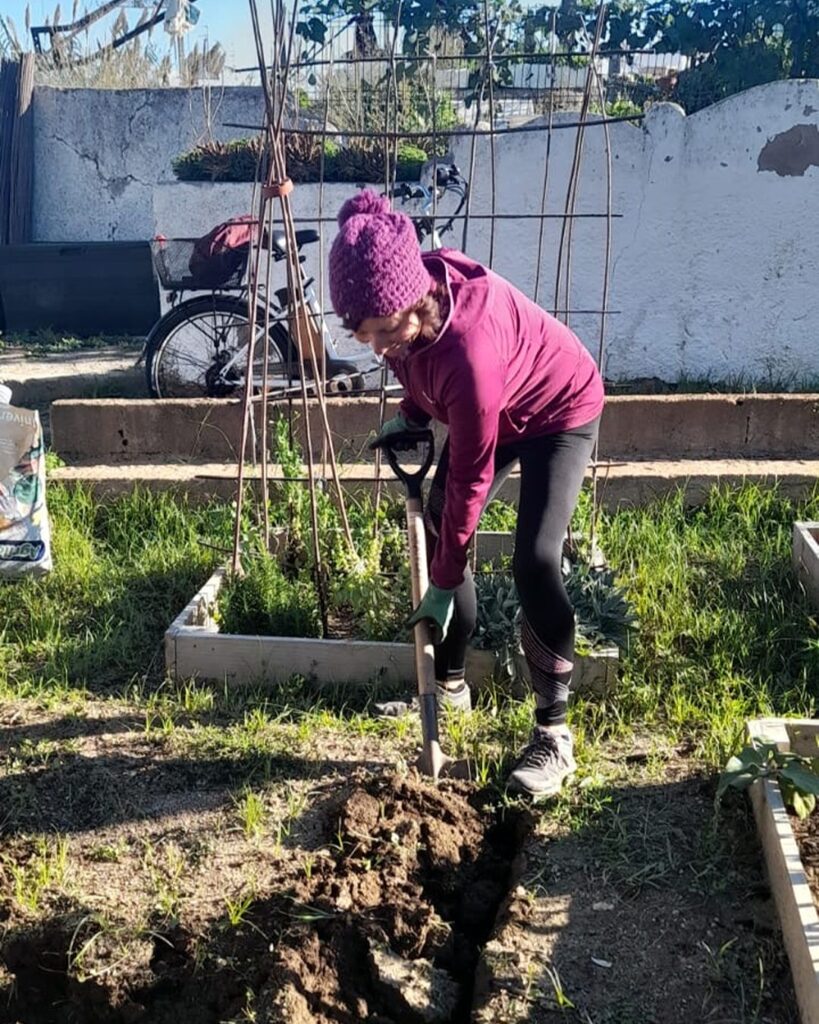
Our first year was hit-and-miss. Hard going initially as the soil had not been cultivated for a while and was very compacted, but when the rains came, we set about digging in earnest. We decided to sieve the soil as there were lots of weeds and tubers and we bought compost and topsoil for ease and speed. We searched the internet, and most gardening sites recommended a 60:40 soil-to-compost-and-organics ratio. Moving forward, we will tailor this depending on what we are planting, but it proved to be a good starting point. Within a month, our first box was established. We were on a roll and before the ground became too hard to dig, we had five fully planted out beds.
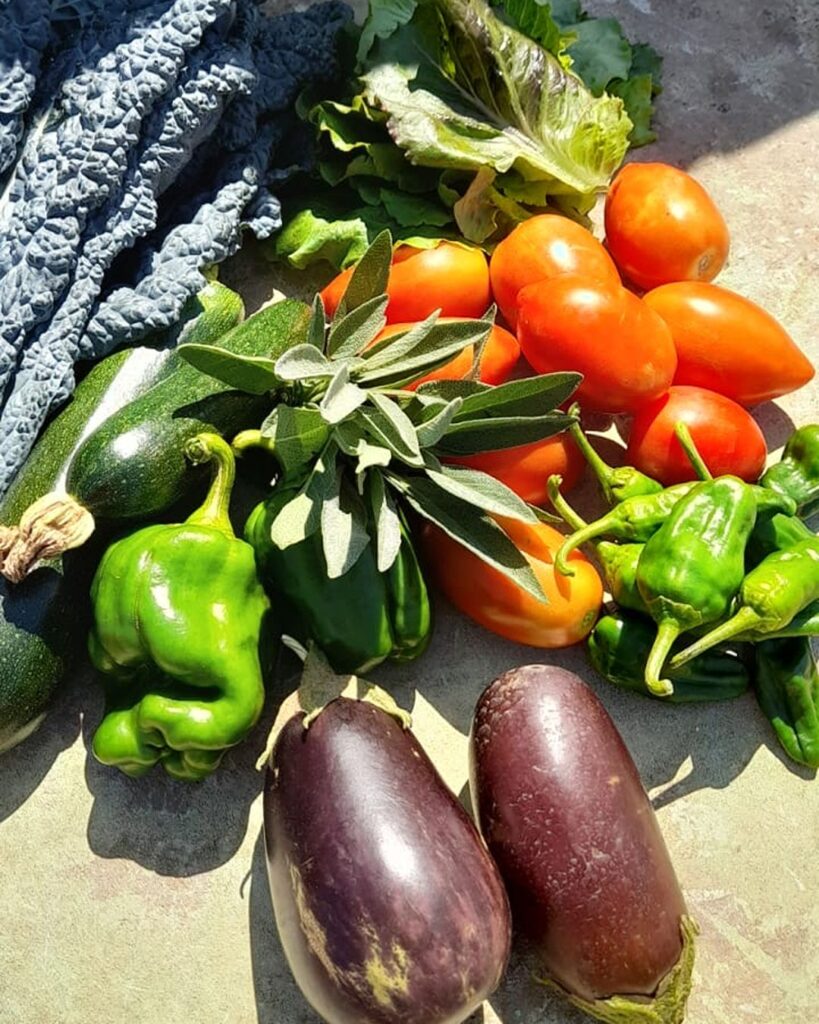
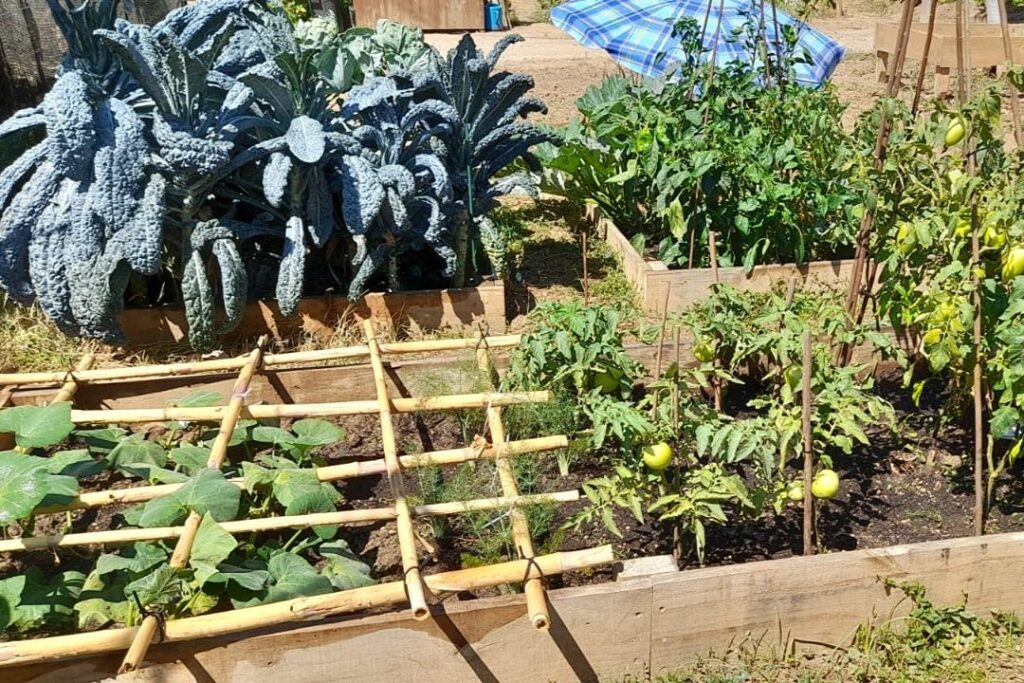
We have grown from seeds, bought plant plugs and gratefully received donated seedlings. Our favourite things have been chard, kale, peppers, beetroot, leeks, butternut squash and herbs. Our courgettes and collard greens were the crops that kept giving, our tomatoes could have been better, and our beans, strawberries and spring onions were non-starters (not helped by me weeding out the spring onions on the one and only time they started to sprout!!). Slugs won over with the cauliflower and sprouts, but we also enjoyed pak choi, padron peppers, broccoli, lettuce, fennel and red cabbage. Writing this and reflecting, we feel proud of what we achieved and, using this knowledge, we look forward to better planning and pest management for greater success this year.
If this has inspired you to think about planting out a small patch or empty containers in your garden or outside space, we hope you will come on this journey with us – we think the veggies always taste better and you make more of an effort with them when they are homegrown. Until next time.