Voters will be heading back to the ballot boxes on 18 January to choose a new President of the Republic. But polling suggests there will be no clear winner, in which case there will have to be a run-off election in February.
President Marcelo Rebelo de Sousa will conclude his second term of office in January and the race is on to find his successor. Unusually, this time there is a wide-open contest, with polls suggesting five major contenders. This could be the first presidential contest since 1986 to require a run-off election between the top two candidates.
Although the office of the President of the Republic is largely ceremonial, the position does carry considerable political influence. The President can appoint and dismiss prime ministers, though this generally follows the results of general elections. The President can dissolve the Assembly if they believe a government has become too unstable, though this would usually be done only after consulting party leaders. More significantly, the President can veto bills passed by the Assembly, though subsequent votes can override this veto, or he can refer proposed laws to the Constitutional Court, which can rule on their validity. De Sousa used all these powers, mostly in his second term, when general elections were proving inconclusive.
The five candidates who have dominated October and November polling in the run-up to the vote are:

Henrique Gouveia e Melo
His entire career has been in the Navy, principally aboard submarines. His stellar naval career culminated in his appointment as an Admiral and Chief of the Navy in 2021. That appointment, made by de Sousa, followed the Admiral’s wide popularity after having successfully led Portugal’s COVID-19 vaccination programme. His campaign stresses his political impartiality; he says, “My party is Portugal.” After Portugal’s last four Presidents, who were all life-long politicians, Gouveia e Melo would echo the first two, who were ex-military figures.
Current poll average 21.3%.

Luís Marques Mendes
An older statesman of the conservative PSD, Mendes has been the party’s leader from 2005 to 2007. Before that, he had held a number of junior positions in PSD-led governments. Since stepping back from front-line politics in 2010, he has been a television commentator on current affairs.
Current poll average 19.7%.

André Ventura
A former tax consultant, author of racy novels, and TV football pundit, Ventura left the conservative PSD in 2019 to found his own right-wing populist party, Chega (Enough). It has rapidly gained support, reaching 22.8% in the 2025 general election, gaining enough seats to make Ventura Leader of the Opposition. He contested the 2021 presidential election, securing 12% of the vote.
Current poll average 17.6%.
António José Seguro
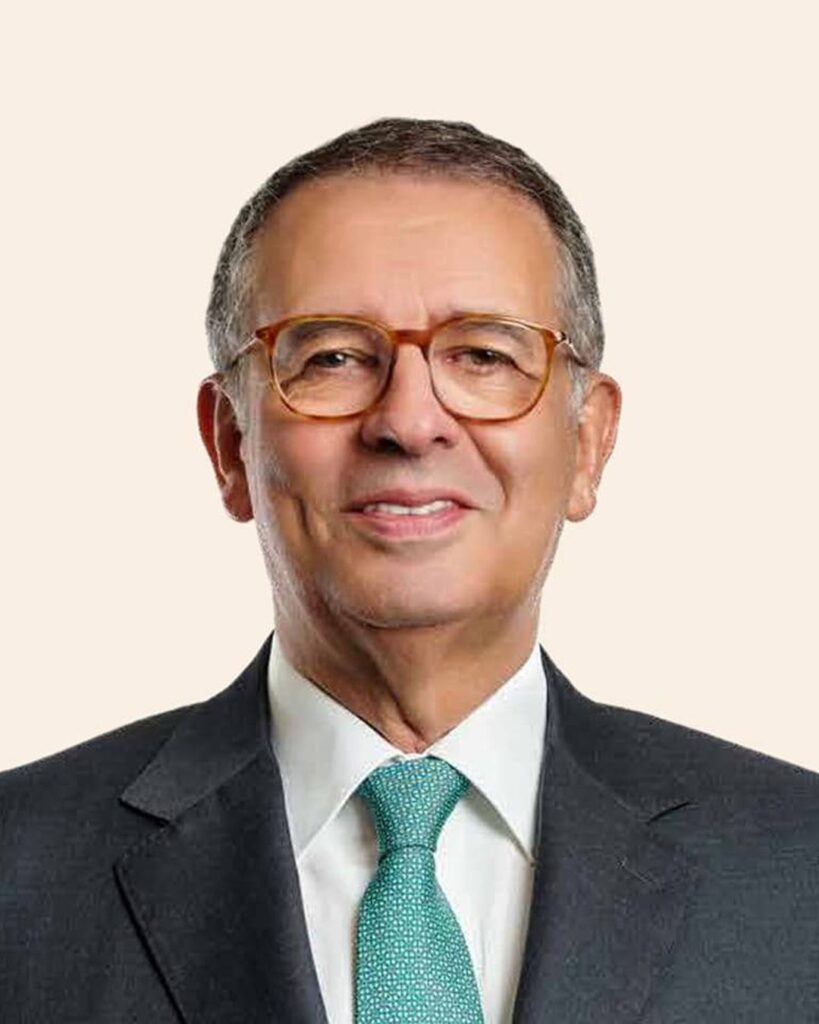
A former leader of the Socialist Party and Leader of the Opposition between 2011 and 2014, Seguro was ousted from his position by Antonio Costa, who went on to become Prime Minister. Since stepping back from the front line, he has been a political commentator on CNN. He says he is running as the only ‘progressive’ with a chance of winning.
Current poll average 14.2%.

João Cotrim de Figueiredo
The first Assembly member for the small conservative Liberal Initiative party, Figueiredo was elected in 2019. He led the party as it gained further seats until 2023. He currently serves as an MEP. A former businessman, he served as the head of Turismo de Portugal between 2013 and 2016.
Current poll average 10%.
As there are at least ten other candidates on the ballot, running either as independents or with the backing of one of the country’s minor political parties, the first-round winning hurdle of 50% plus-1 looks out of reach for any of the candidates.
If the second-round contenders are seasoned politicians from the two main parties, the campaign could be uneventful up to the second round. If, however, de Melo, Ventura, or even Cotrim get through to the final vote, the contest would generate more interest.
Only 39% of the electorate took part in the last presidential election, although that may have reflected the widespread expectation that de Sousa would be the landslide winner.
This time, with a wide-open contest and a tight race to make it to the run-off, participation may be higher,
James Plaskitt was an MP in Tony Blair’s government in the UK and is now retired in the Algarve.