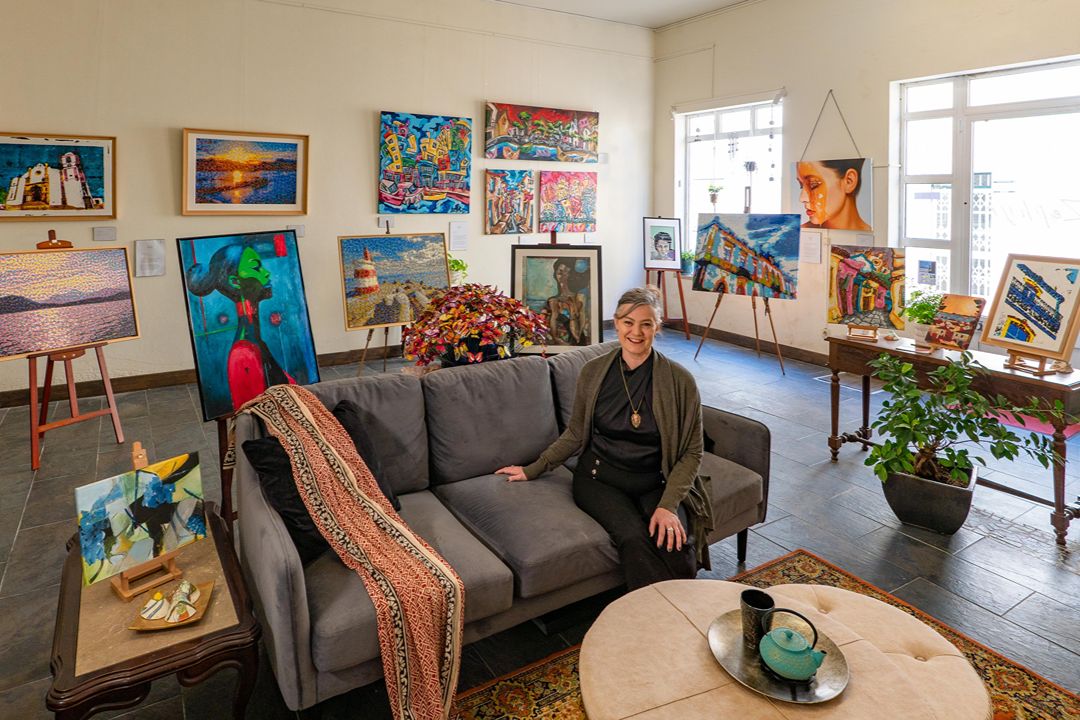
The Modern Shift in Silves.
In a town shaped by centuries of history, Zephyr Gallery is adding something new; not by changing Silves, but by bringing people together within its ancient walls. Whether you arrive out of curiosity or simply pass by and step inside, you become part of that story. And in that shared space, the future of Silves feels a little more open, a little more connected, and very much alive.
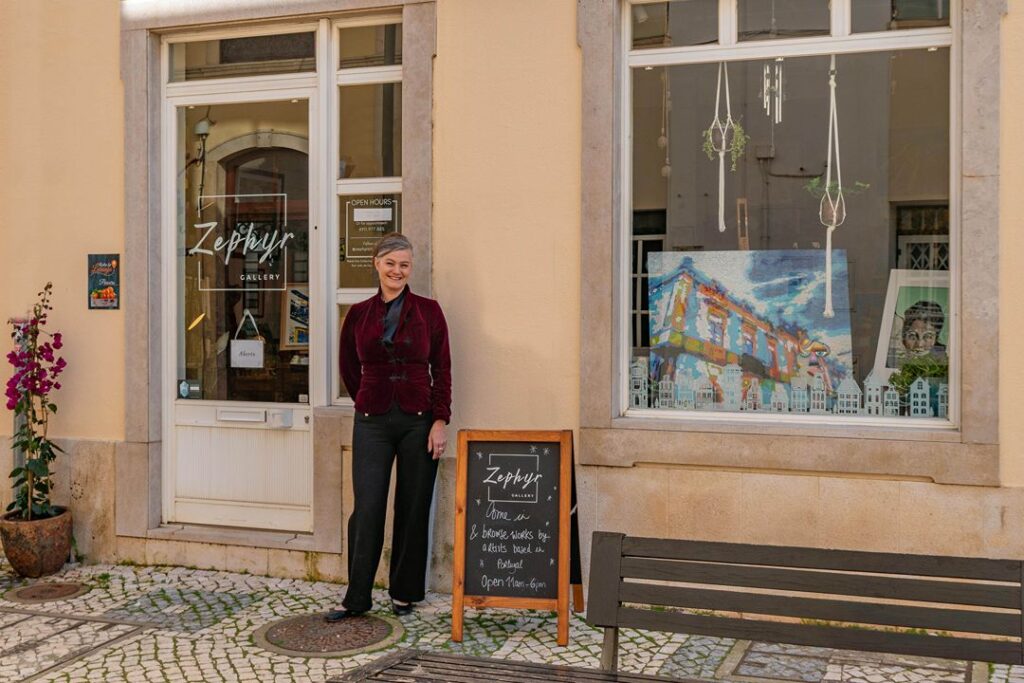
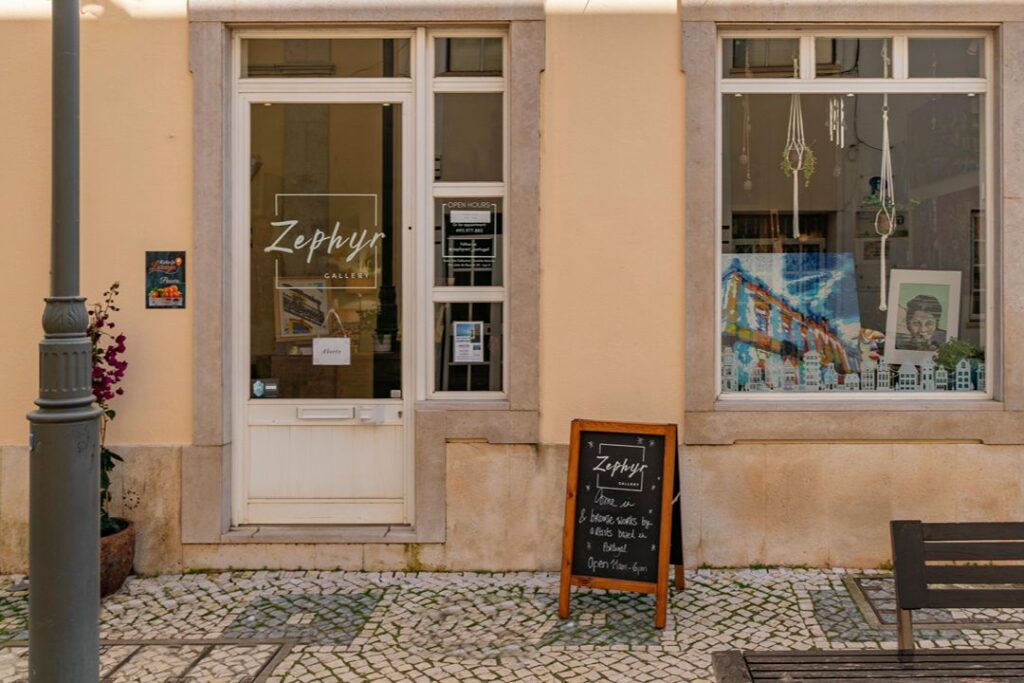
In the heart of the Algarve, where the morning mist often clings to the red sandstone of the ancient castle, a quiet transformation is taking place. Silves is a town traditionally defined by weight: the weight of Moorish history, the echoes of medieval battles, and the literal limestone cobblestones that pave its narrow, winding ascent. Yet, at 20B Rua João de Deus, a new kind of lightness has taken up residence.
This address is the home of Zephyr Gallery, a space where the air carries the scent of fresh paint and old stone – a sensory metaphor for a mission that seeks to bridge centuries of tradition with the pulse of contemporary, cross-cultural art. At the centre of this movement is Carrie Cojocari, a Canadian-born curator whose path to the Algarve was paved with two decades of operational management and a deep-seated devotion to the global art community. Her arrival in Portugal in 2023 was more than a change of scenery; it was the deliberate start of a new chapter designed to weave modern creative expression into the fabric of one of Europe’s most historic regions.
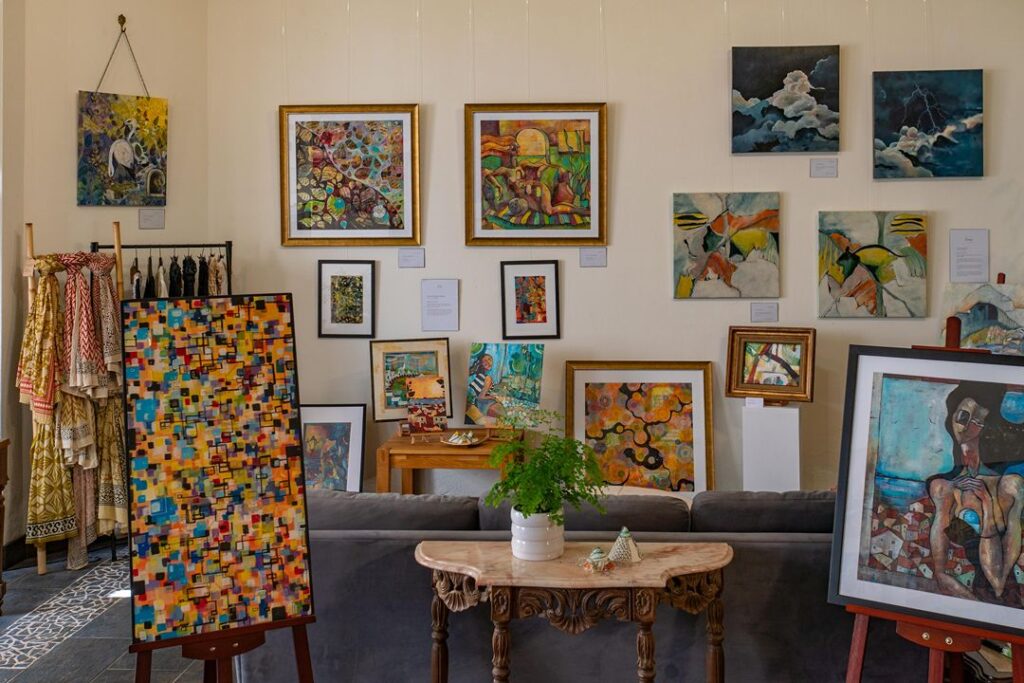
The architect of creative ecosystems
Ms Cojocari does not fit the stereotype of the detached, ethereal gallery owner. Instead, she brings what she calls a “project manager brain” to the canvas. Having spent fifteen years within the Burning Man Project community and supporting mural expos and sculpture festivals in Reno, she views art not merely as a product, but as an ecosystem that must be built with intention.
“For a long time, I didn’t think of myself as an artist,” Carrie admits. Her talent lay in the behind-the-scenes work: the logistics, the support, and the strategic thinking required to help “big ideas come to life”. This background serves as the blueprint for Zephyr. While many see a gallery as a static room for viewing, Carrie sees it through the lens of flow and clarity, understanding how people move through the space, what catches their eye first, and how a collection functions as a cohesive experience rather than a series of individual pieces.
To an outsider, Silves might seem like an unlikely choice for a contemporary art hub. It is a town that wears its history on its sleeve. However, for Carrie Cojocari, who lived in the US and Costa Rica before scouting Portugal, Silves offered something that made the difference: a powerful sense of permanence.
“As the former capital of the Algarve, it carries a long tradition of art, culture, and welcoming newcomers,” Carrie notes. Unlike the seasonal bustle of the beach towns, Silves maintains a year-round community, offering “room for growth and experimentation”. The decision to plant roots here was a bet on the idea that ancient walls do not limit contemporary art; they provide it with a unique, grounded context.
A niche defined by “home”
Zephyr Gallery operates within a very specific and intentional niche: it features “international artists who now call Portugal home”. This isn’t an attempt to import a foreign art scene into the Algarve. Rather, it is an acknowledgement of the current reality of Portugal – a country that has become a landing place for creators from across the globe.
By exhibiting these international voices alongside Portuguese artists, Carrie facilitates a cultural exchange that is already happening in the streets and cafes of the region. The gallery itself acts as a meeting point where “diverse perspectives, techniques and cultural histories” converge. It is about connection, expanding what is possible when different generations and disciplines collide in a shared space.
The Philosophy of “approachably modern”
Walking into a contemporary art gallery can often feel like an exercise in intimidation – a world of white walls and hushed whispers. Zephyr is designed to be the antithesis of that. The space is light-filled and calm, curated to encourage visitors to slow down and, more importantly, to ask questions. Ms Cojocari emphasises that there is no prerequisite for art-world knowledge to enter. “Curiosity is more than enough,” she says. This philosophy has paid dividends in the form of local engagement. Even those who might have felt alienated by modern art find themselves lingering to discuss the process or why a specific piece resonates with them.
This connection to the community has been one of the most rewarding aspects of Carrie’s first year in Portugal. While she admits the struggle of navigating a new system in a new languagecan be challenging, she recognises that “we’re all guests learning how things work” – the curiosity of the locals has created unexpected bonds.
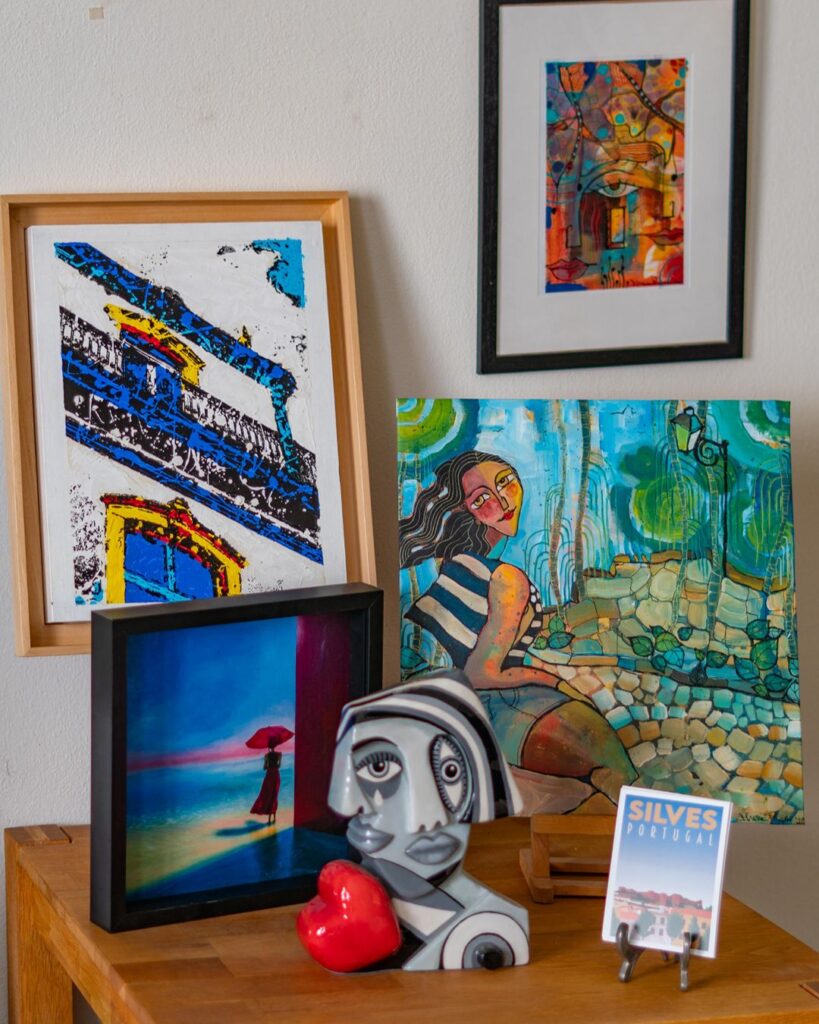
When selecting the work that hangs on the gallery’s walls, Carrie looks for a balance of “integrity and intention”. While emotion plays a vital role – she believes art should make you feel something – Carrie also looks for technical rigour. “I’m drawn to artists who understand their materials, who have a clear point of view, and whose work feels considered,” she explains. This focus on the considered piece is a direct rebellion against the modern age of constant digital image consumption. In a world where we absorb thousands of digital images a day without realising it, Carrie argues that “original art holds time”, and it matters more than ever because of that.
Carrie hopes the gallery will be seen as the spark that helped the town evolve while staying connected to its roots – a place where experimentation was encouraged and new ideas were welcomed without losing sight of the centuries that came before.
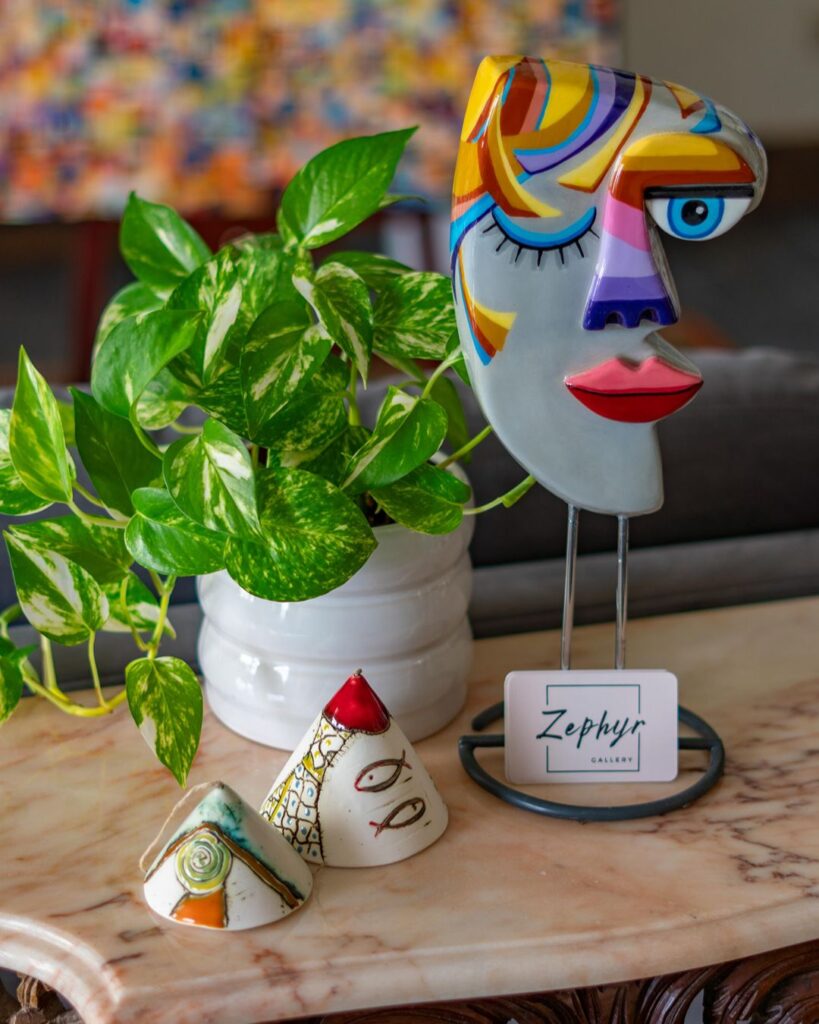
An invitation to linger
As our C&C (chat & coffee) concludes, Carrie Cojocari’s message for the locals and visitors of the Algarve is simple: step inside!
Whether you are a longtime resident or a passing tourist, Zephyr Gallery offers a chance to step out of the digital stream and into a “quiet, ongoing conversation” with a creator. It is a reminder that while the cobblestones of Silves are ancient, the canvas of its future is still being painted, one intentional stroke at a time.
Just around the corner, behind a familiar street, something quietly special is happening. Zephyr Gallery isn’t just a place to see art; it’s a place to feel welcome. And in a close-knit town like Silves, that makes all the difference.
A catalyst for the next fifty years
Carrie Cojocari’s vision for Zephyr extends far beyond the traditional buy-and-sell gallery model. She is already looking towards a future that includes:
Artist residencies: providing a space where artists don’t just show work, but actively create it within the context of Silves.
Collaborative projects: encouraging artists to propose workshops, talks, and creative events.
Community initiatives: ensuring that art becomes a “living, breathing part of everyday life” in the town.
www.instagram.com/zephyrart_portugal
www.facebook.com/zephyrart.portugal