

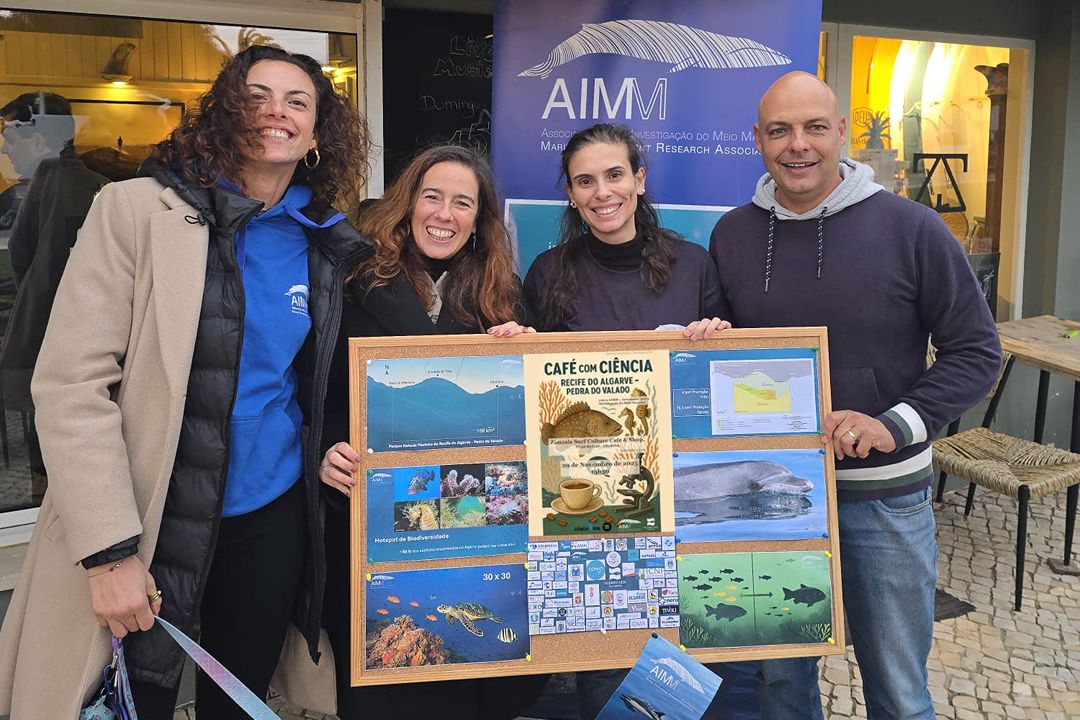
On a sunny, brisk winter’s day in the Algarve, I headed to Praia da Galé, Albufeira, where AIMM (Marine Research Association) hosted a ‘Coffee with Science’ session at the local Zimzala Surf coffee shop. The event showcased the project, the newly protected areas, and the discoveries made so far.
Over lattes and hot chocolates, Patricia Nogueira, AIMM’s Environmental Policies Manager, shared an insider’s view of how the project came to life, its development, current status and long-term goals.
Parque Natural Marinho do Recife do Algarve is a one-of-a-kind initiative that, in 2024, officially became the first marine protected area in the Algarve and along Portugal’s mainland coast in the 21st century. It’s another step towards the global 30×30 goal, which aims to protect 30% of Earth’s land and sea by 2030.
While reefs are often associated with exotic destinations, Pedra do Valado is a large rocky reef just a few miles offshore from Armação de Pêra, stretching west towards Carvoeiro and east towards Albufeira. Now protected, the reef is home to a remarkable variety of marine life, featuring species of all sizes and colours that reflect the region’s extraordinary biodiversity.
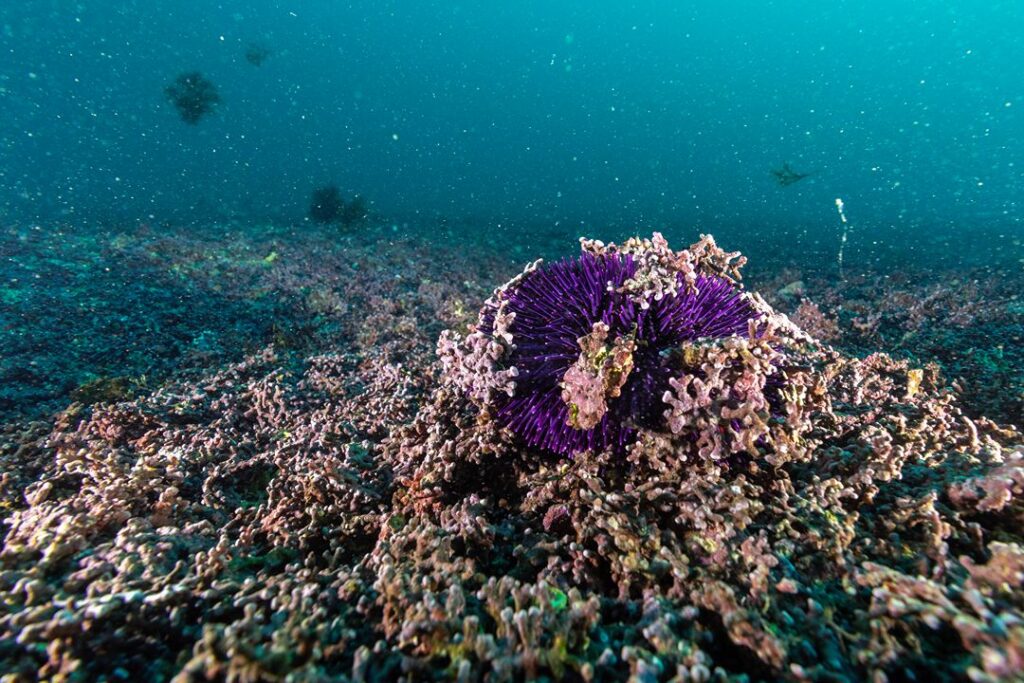
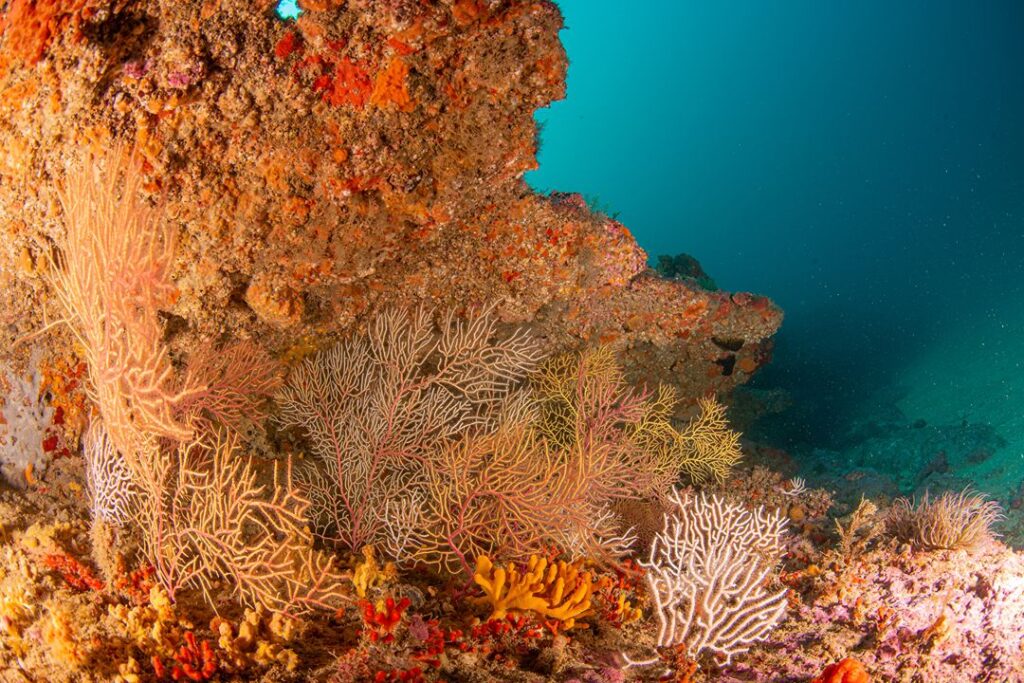
To visit this sanctuary, those qualified to use a self-contained underwater breathing apparatus (SCUBA) at reef depth have a clear advantage, but anyone can enjoy the protected area. Several boat-tour companies operate daily nature-watching trips, where visitors can expect to see dolphins, whales, turtles, and many seabirds. Closer to the coast, the shallow waters provide excellent opportunities for snorkelers to peek beneath the surface and glimpse the abundant biodiversity found here. Even from the shore and along coastal paths, one can spot wading birds and the inhabitants of the ever-popular rock pools.
At the end of the session, I met Patricia and asked her a few questions:
How did this project come to life?
The reef is a very unique and pioneering project in Portugal. It actually started as a community initiative, supported by the Oceano Azul Foundation, the CCMAR from the University of the Algarve, and the municipalities of Silves, Lagoa and Albufeira, who then took the project to the government. It was the first time a protected area was created in this way in Portugal. It took three years and several meetings with the community to reach a consensus. Over 70 entities were present in thesemeetings, including researchers, government officials, NGOs, fishermen’s associations, maritime-tourism companies and much more. The participatory process led to a report over 500 pages long, it is quite impressive!
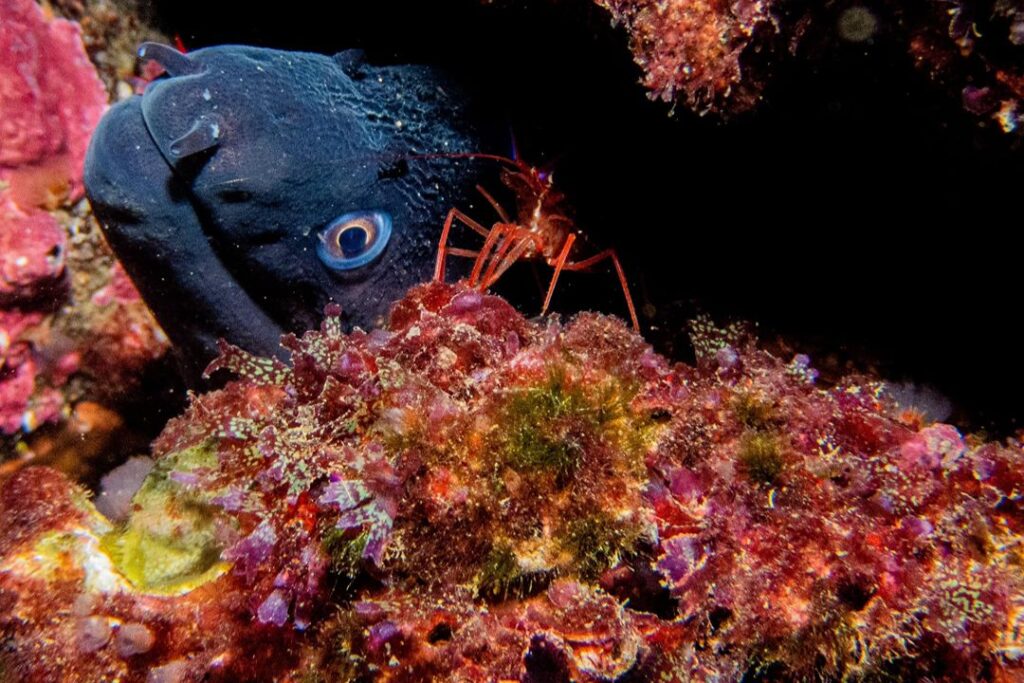
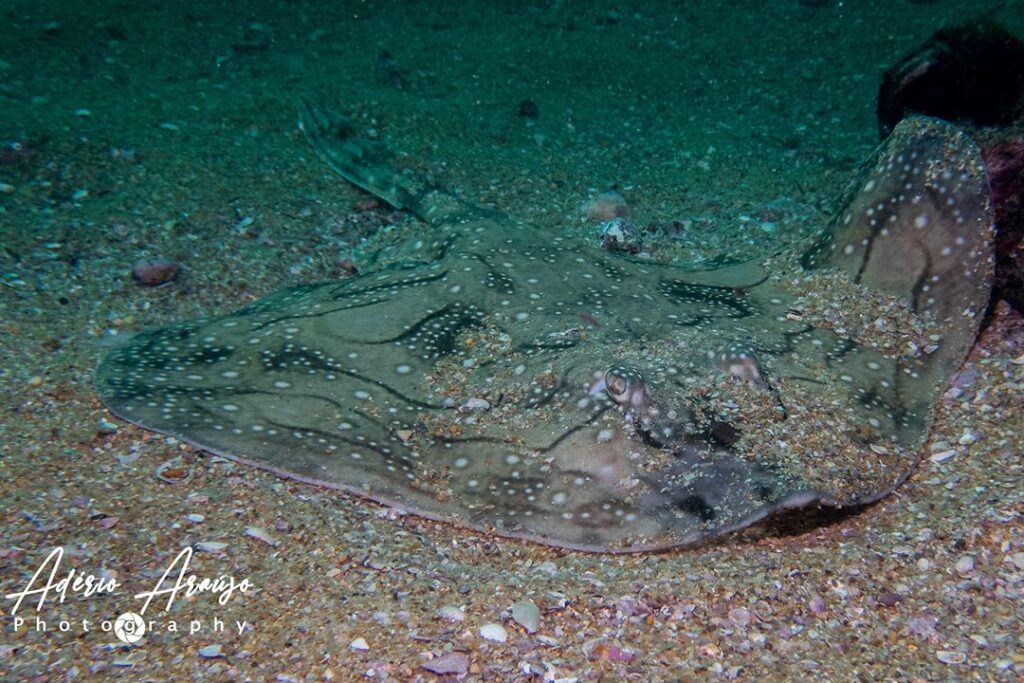
Why this specific location?
This is a hotspot for biodiversity. Around 1,000 species have been recorded here, including protected species and important habitats like gorgonians and maerl beds. This is actually the biggest rocky reef at low depths in mainland Portugal, and close to 70% of the species found along the Algarve coast can be found here. But at the same time, the park was suffering more and more with human pressures, and that was recognised by everyone involved.
How did the local fishing community react?
Naturally, any conservation proposal like this raises some concerns, particularly when people depend on the sea for their livelihood. But in this process, the involvement of the communities from the start was essential. The fishermen’s associations were involved in this process from the beginning and that made a big difference. They recognised the threats the park was facing and also understood how that was affecting their ability to fish here. In the last 20 years, fish landings from the park have decreased by about 60%. Having a marine protected area is really an investment in the future, to ensure the reef remains healthy and productive.
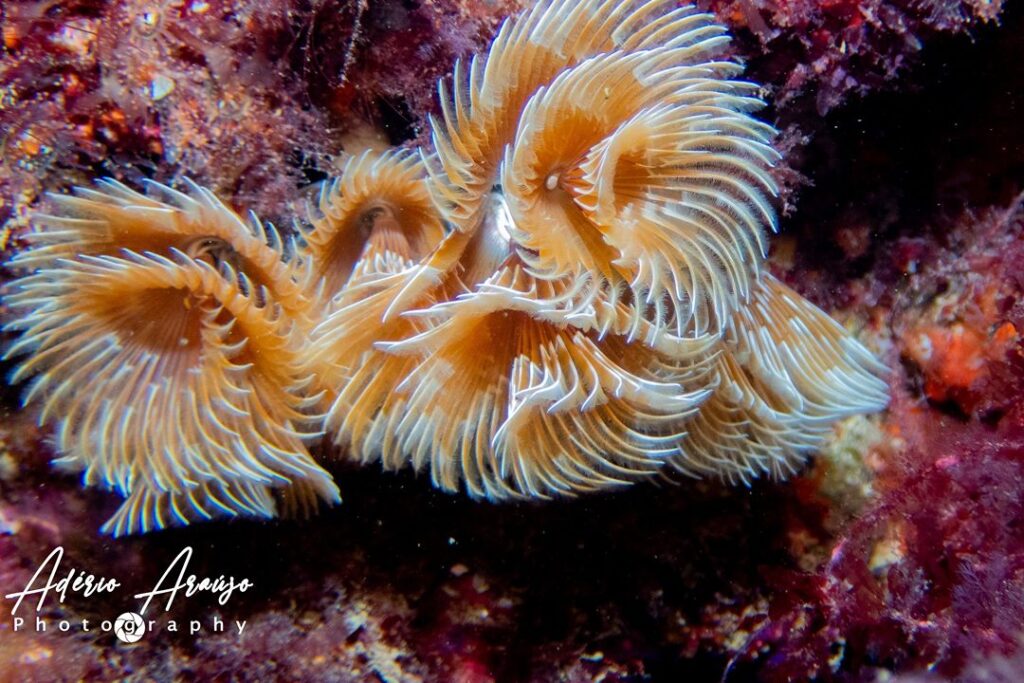
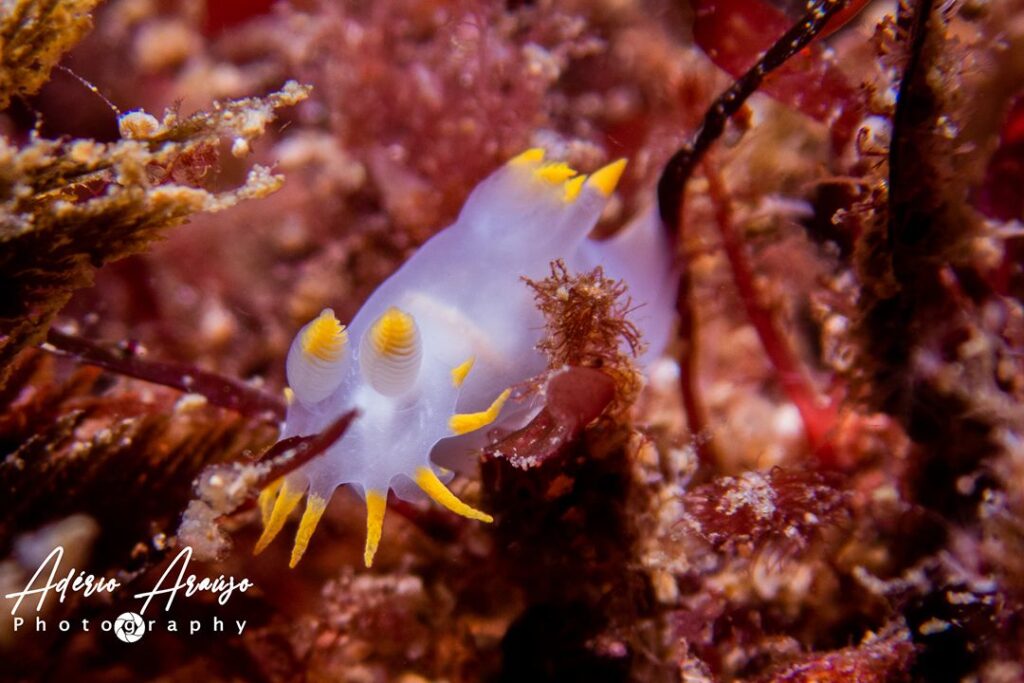
Sea Slug by Adério Araújo Photography
How important is this project for local wildlife?
It’s incredibly important. What we have here is a biodiversity treasure. Putting protection measures in place allows the habitats to recover and the species to reproduce safely. Basically, the protected area gives wildlife space to grow safely.
What results have you seen already?
The park is still very new; it was officially created in January 2024, so we need a bit more time to properly start seeing the benefits of the protection measures. But the first big monitoring campaign, carried out in October, revealed some encouraging signs. The gorgonian fields look healthy and 40 new species were recorded. On the negative side, the seagrass meadows that were recorded in earlier studies seem to have disappeared. That is something that the scientific community will certainly keep a close eye on. Over the next few months, I’m sure we will know more about the results of the campaign.
How long is the research expected to continue?
This is a long-term effort for sure. It is very important to keep monitoring the ecosystem to be able to properly evaluate the outcomes of the creation of the protected area. All the scientific partners involved will certainly continue their research efforts in the area for years to come.
Are there any threats currently affecting the Pedra do Valado reef?
Yes, like many coastal ecosystems, it faces pressures such as pollution, high-intensity human activities, and issues related to climate change. There is also the problem of illegal or unregulated activities. This is why proper monitoring and enforcement are absolutely essential.
How does climate change impact this ecosystem?
Climate change adds an extra layer of vulnerability. Warmer or more acidic water can cause stress or damage to sensitive species, like the gorgonians, for example. We may also see shifts in species distribution, with species that were typically found in warmer waters becoming more common, while others may become rarer. All of these aspects are important to monitor. But what we know is that protected areas help increase ecosystem resilience. A healthier ecosystem is simply better equipped to cope with change.
What economic benefits could this project bring to the region?
There are quite a few. Local fisheries can benefit because the protected area will support the recovery of fish stocks and increase fish biomass. There are also opportunities for sustainable tourism, such as diving, wildlife watching and educational experiences. In many ways, it creates a strong brand that positions the Algarve as a leader in marine conservation. A well-managed marine park can not only generate significant revenue but also improve the quality of life of the coastal communities that live around it.
How can the public support or get involved?
There is a lot each individual person can do. It all starts with having more conscientious and environmentally friendly actions. Simple actions like reducing single-use plastics can have a huge impact, not just here but everywhere. You can also join beach clean-ups, participate in citizen science activities or support local NGOs. And very importantly, spread the word. The more people know about the reef, the more they care.
Will you be holding more Coffee with Science sessions here at Zimzala Surf café or at other locations in the future? Where can we find out dates and events?
Absolutely! This was just the beginning. We plan to bring these conversations and other activities to different places across the Algarve. We will likely be back to Zimzala for another event at Easter time. This is a relaxed way to share knowledge, hear local perspectives and build an engaged community around the park. You can follow AIMM’s website and social media for updates. We will be posting all news and upcoming events there!
Protect the Ocean – Join the Take 3 movement – www.take3.org