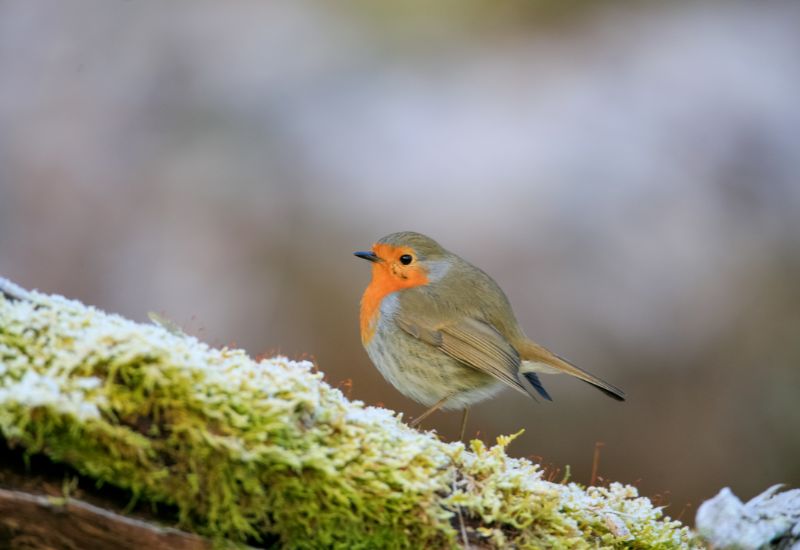
December marks the official start of the Christmas season, and with it comes the arrival of a familiar cast of festive characters. Dressed in festive reds, greens and whites, they form a colourful cast – a mix of the merry and the naughty. Yet none has captured the essence of Christmas quite like the robin redbreast – the little, jolly-looking bird with its glowing chest, perched on a snowy branch outside or printed across Christmas cards, baubles, mugs and just about any piece of holiday paraphernalia.
But how did this unassuming garden bird become such an icon of Christmas? One popular theory takes us back to Victorian England, when postmen wore smart red uniforms and were affectionately nicknamed robins. These ‘robins’ were especially busy at Christmas, delivering cards and gifts throughout the country. Soon, artists began to draw the bird itself carrying letters in its beak – a charming image that captured the spirit of giving and togetherness. From there, the robin became a permanent fixture of the festive landscape, its image as familiar as helping elves or red-nosed reindeer.
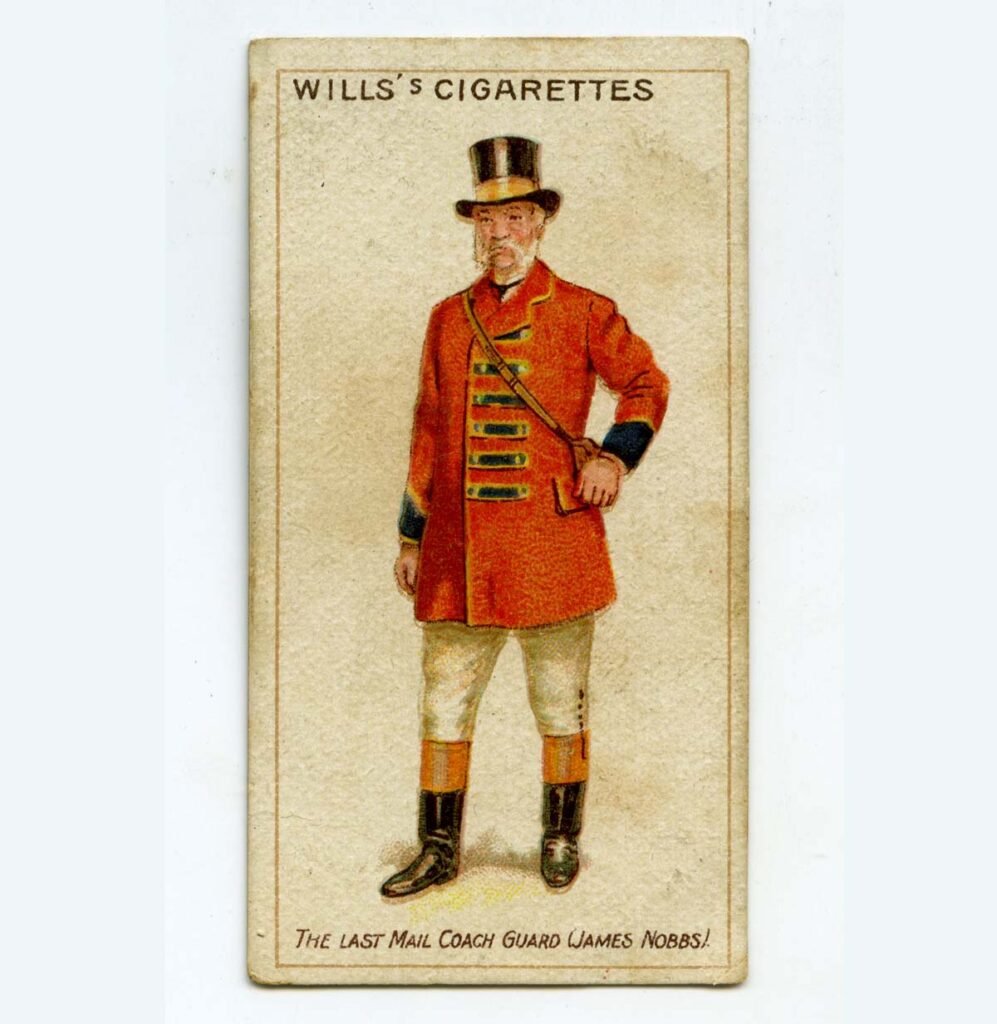
‘The Last Mail Coach Guard (James Nobbs)’ Wills’s Cigarette Card courtesy The Postal Museum
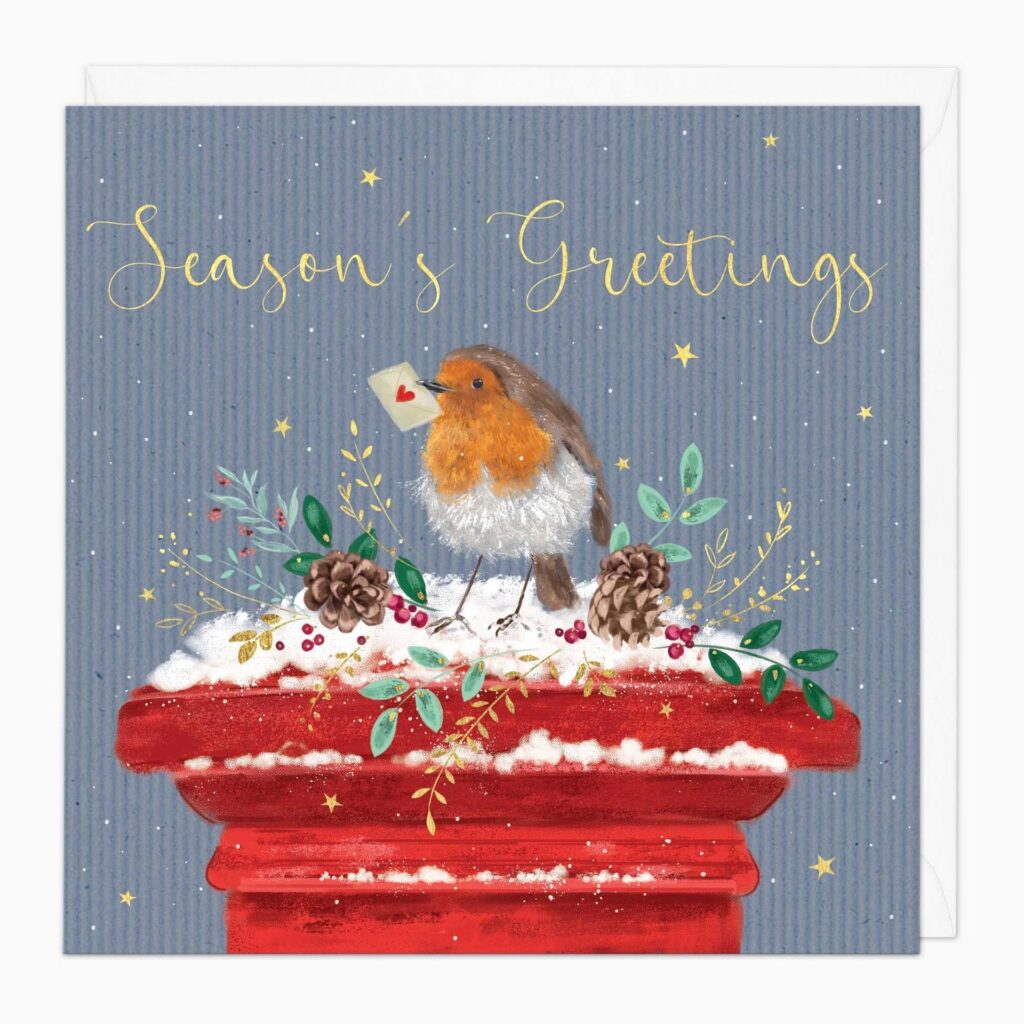
Robin delivering Christmas card © whistlefish.com
The robin’s name, however, hides a small curiosity. Its famous red breast is, in truth, orange. The explanation lies in language, not in feathers: the term redbreast dates from a time long before the word orange existed in English. When the fruit eventually arrived from the Mediterranean and gave its name to that particular hue, the robin had already been christened – and so the name stuck. Its scientific name, Erithacus rubecula, is of Greek and Latin origin and was described by Carl Linnaeus in 1758; it also translates roughly as ‘small red bird’.
Robin redbreast facts
Robins are small passerines with a brown back, white belly, distinctive orange breast and face, and shiny black pin-head eyes. Size-wise, they grow up to 14cm long with a 21cm wingspan. Lightweight birds, they weigh between 14 and 21 grams. Robins are prolific breeders, often producing three to five broods a year, each containing four to five eggs. Longevity is quite low, averaging around 13 months, mainly due to high mortality in the first years. Like any small birds, they are very vulnerable to predators, human disturbance and harsh weather conditions. Once past the dangers of youth, a robin can live into double digits, with a particular record of a specimen living for 19 years!
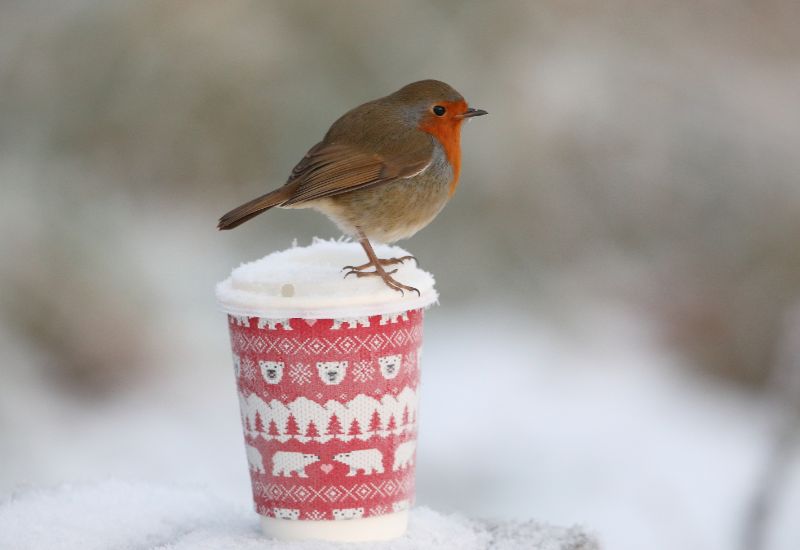
Robins are a great example of sexual monomorphism, which means that both genders look alike. Male and female robins even behave very similarly, making them virtually impossible to distinguish with the naked eye. They live in a wide range of habitats, including the wilderness, rural areas and urban environments. Their diet is a variety of invertebrates such as spiders and worms, as well as fruits, berries and seeds.
To keep up with winter weather, robins need to eat substantially more during cold spells and also puff up their feathers to stay warm. As a result, they can look quite round and fluffy during winter and rather slender and sleek in summer.
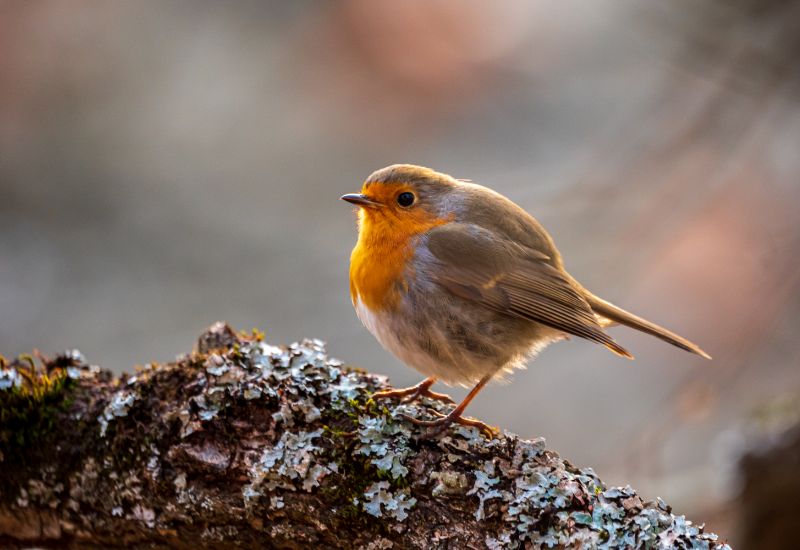
Winter
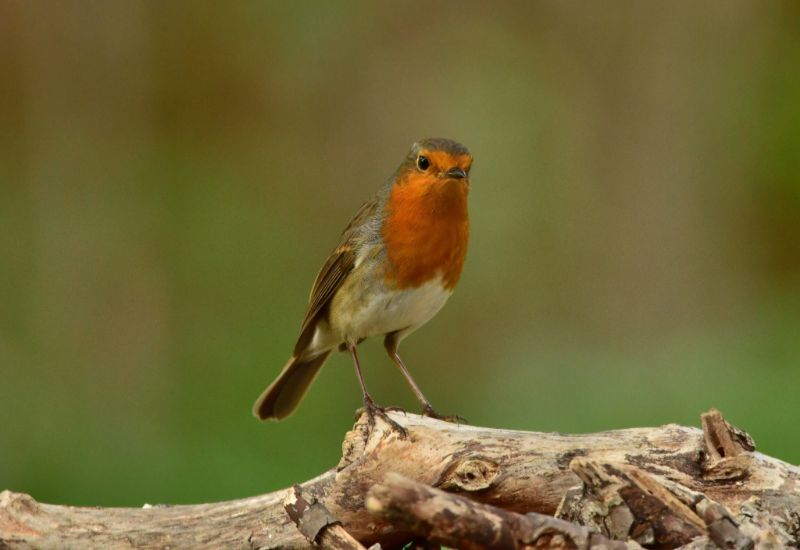
Summer
Despite their cute and friendly appearance, robins are extremely territorial birds. Both sexes live solitary lives, fiercely defending their turf against intruders. The exception is, of course, the mating season, when robins will tolerate a partner to breed and raise their chicks. Once the chicks are fully fledged, the pair separate and return to their solitary lives.
Very vocal birds, they sing their comforting songs throughout the year – often the first chirping is heard in the morning and the last at dusk, sometimes even after dark.
Distribution-wise, the European robin has a wide range, covering the whole European continent, North Africa and Western Siberia. In Portugal, robins are present in every region, including the Azores and Madeira islands.
In the Algarve, they are found in greater numbers in the high hills of Monchique, Espinhaço de Cão and Caldeirão. In springtime, wooded valleys in Aljezur and other forested areas across the region also offer good chances of spotting these birds.
But it is during the winter months that robins become even more noticeable in the Algarve, with the arrival of northern visitors. Although Portugal has a sedentary population of robins, other populations from colder northern regions travel south for the winter, staying through our sun-warmed months.
Their bright presence and cheerful songs during the cold winter months have long made the robin a symbol of winter and, of course, Christmas, acting as small and charming heralds of the festive season.
Fun fact
Unlike other birds that can be very selective of their breeding spots, robins are the complete opposite. They have been known to make their nests in the most unusual of places, such as broken flower pots, under car bonnets, jacket pockets, old wellies, lanterns and watering cans!