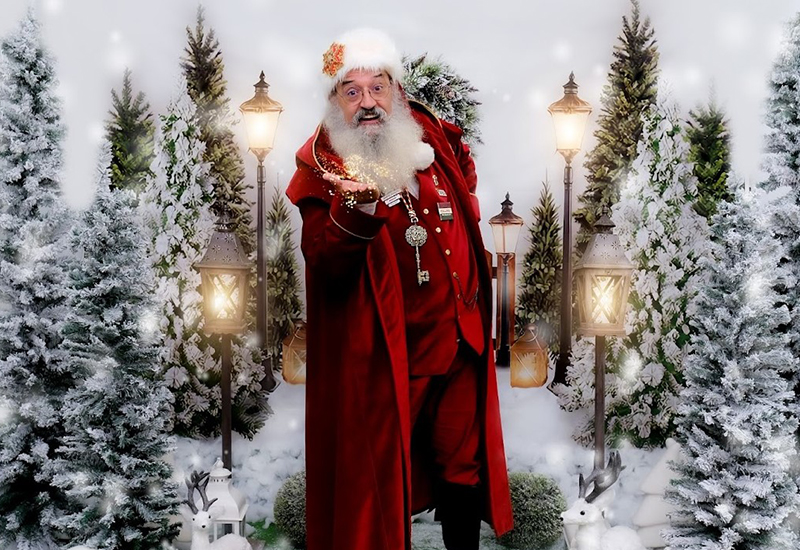
The Moral Standard of the Season: Meet Santa Jackas, The Only Certified Santa on the Iberian Peninsula
During my time at Tomorrow, I have interviewed many exciting people, but this is definitely like all my Christmases have come at once! I am on a video link with Santa, and he is everything I imagined. A long white beard, which is definitely real. While he is not in the full Santa suit, he is wearing what one would imagine Santa would wear on a casual day: a red body warmer and a red-and-white-striped shirt. He has glasses, and while his hair is balding at the front, giving him a friendly demeanour, he has a white ponytail at the back. I literally could not be any more excited if I were a child waiting for him to fall down their chimney.
So you don’t believe me? Well, OK, the man in front of me may not be the ancient St. Nicholas, but he is the closest we are going to get: he is the only certified Santa in the Iberian Peninsula and the only man in Portugal to have taken the Santa oath.


The man behind the beard
Carlos Rocha was born in Lourenço Marques, Africa, in 1962. “My father was stationed there as a militar de infantaria (military/service role). Later, when the colonial war broke out, he was transferred to the middle of the bush (meio do mato) for several years. I rarely saw him. I only started seeing him again regularly after April 25th (the revolution). When I was 2 years old, we moved to Ílhavo in Portugal, where I completed my schooling.”
Carlos Rocha has a significant academic career, including licences in Artistic Expressions in Education, a specialisation in Gerontotherapy, and a doctorate in Educational Sciences and Social Gerontology. He was the first man to earn a degree in Childhood Education in Portugal after the course opened.
I wonder if this is what inspired him to make it his life’s work to embody the role of Santa. “I’ve been doing theatre since I was five years old. And when they asked me to play Santa Claus for the first time when I was 17, I took great pleasure in slipping into Santa’s skin and performing the role. At the beginning, it was more of a character. Today, there is a moral principle behind all this. And I have the obligation to bring joy and hope to children, a principle that never crossed my mind when I was 17.”
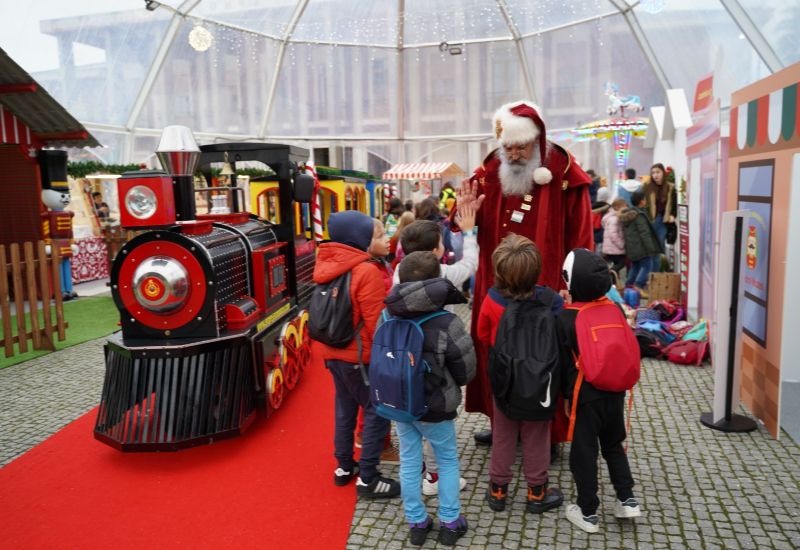

The moral obligation of Santa
Joaquim Carlos Pereira da Rocha has long been known as Jackas (a variation of the French name Jacques). For Santa Jackas, the role is a moral principle that requires adherence to the principles of Saint Nicholas. It is a “moral standard”. He is adamant that children and adults should understand that he is the patron saint of children, not Coca-Cola! He emphasises that the Christmas spirit is rooted in history, not commercialism.
Saint Nicholas was born in the fourth century and is also the patron saint of many Eastern countries because he voluntarily assisted people facing great hardship, asking nothing in return. Jackas explains that this is where the principle of Christmas comes from: “peace, solidarity, equality, sharing and family.”
Jackas came across these principles in 2012, when he set out to learn more about Santa Claus. Although he speaksPortuguese, Spanish and French, he does not speak English, so when he discovered the only school for Santas was in the United States, he was initially disappointed: “I didn’t have the financial or time capability to travel to the school for the training.” Instead, he asked to submit his academic qualifications, as a childhood educator, with a degree in Artistic Expressions, and a doctorate in Educational Sciences.”
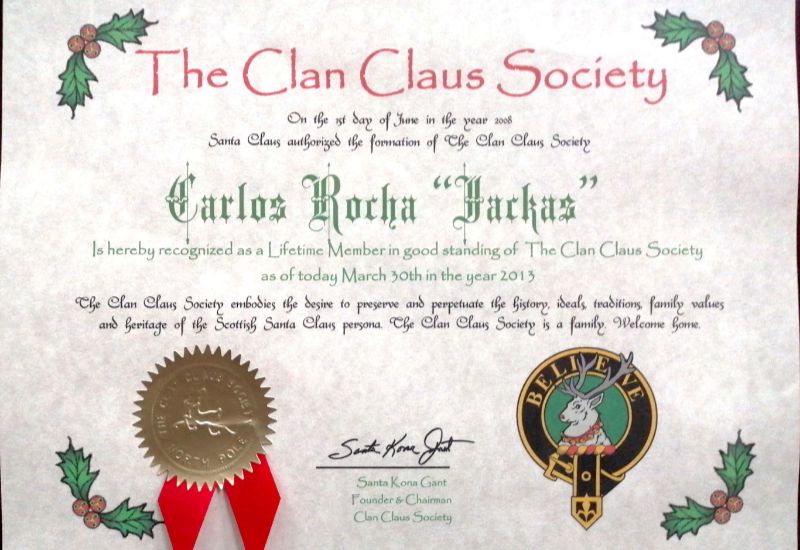
His persistence paid off when he was granted permission to study for the initial Santa Claus training. He received all the information, then had to take the Santa Claus oath in public. “I took the oath in Spanish in the presence of my pupils and teachers, at the school where I was teaching. All participants in the oath had to sign a document as proof of presence. I sent it to the United States and then the oath came in my name and the certification as Santa Claus.”

The oath is really beautiful. My favourite line is, “I understand that the true and only gift I can give, as Santa, is myself.” The foundation’s website explains that: “The eight principles that make up the Santa Claus Oath were written with the ideals of what portraying Santa should be about.”
Santa Jackas emphasises that the Santa role must be handled with respect for the children’s imagination and dignity, rejecting commercial shortcuts. “The Santa character brings children an imaginary world of values, such as humility and sharing.”
As someone so dedicated to his role, he, of course, finds it frustrating when others are not as committed. “I find it upsetting and tiresome when I enter a shopping centre and at the door there is a Santa Claus smoking, or when a child sits on a Santa Claus’s lap and he smells of alcohol, and when he is holding the child with an angry look, a look that says, ‘I’m fed up with being here, let’s just get this over with.’ That’s not the image we should be conveying to the child.”

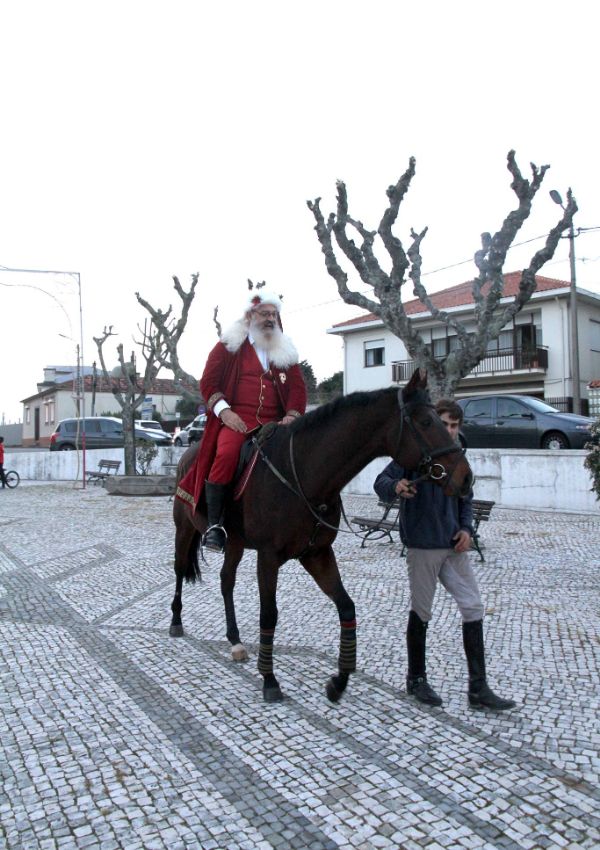
From the north to the south: Santa on tour
Jackas has frequently toured and performed in the Algarve, including in Portimão (gerontology clinic), Tavira, Albufeira, Monchique and Castro Marim. “I did many tours with the Vodafone Foundation. We would start in the north of the country and always finish in the Algarve. The last time we did this, before the pandemic, we travelled the route from Alfândega da Fé, in Trás-os-Montes, to Castro Marim. Other times, we finished in Monchique. Other times in Albufeira.”
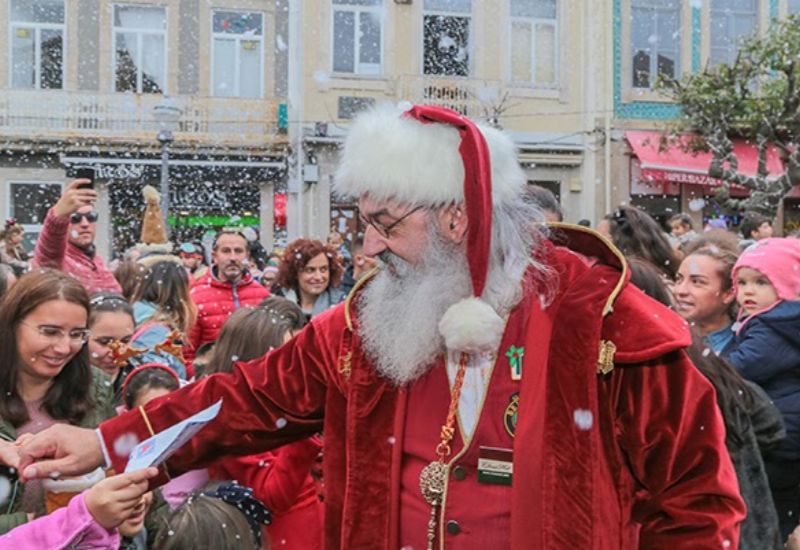

Last Christmas, Santa Jackas found himself facing an unexpected adventure in the Azores. A unique tradition originating in the American military presence in the islands means that every Christmas, Santa Claus arrives by plane, and children gather at the airport to welcome him. Inspired by this custom, Santa Jackas eagerly volunteered. However, plans changed unexpectedly when he was delayed by a lack of flights. Fortunately, a solution was found, and early in the morning, he was taken from his hotel into a rubber dinghy – despite his fear of the sea. Once on Santa Maria, he quickly composed himself to board a tiny aeroplane, which meant he had to travel with his feet outside because of its size. Despite the challenges, Santa Jackas arrived in time to enthusiastically greet the children and continue the cherished tradition.
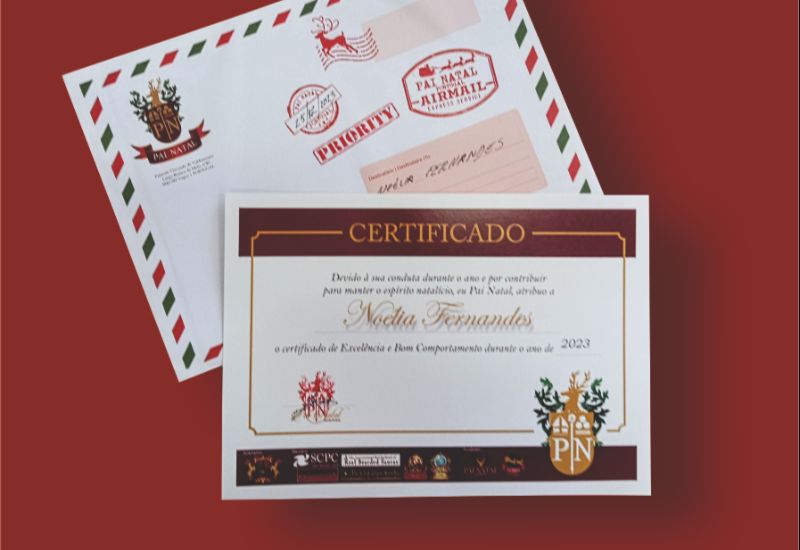
Santa Jackas issues a “certificate of good conduct” to the children who visit him. The certificate is stamped by him, confirmed using a white seal that corresponds to his personal coat of arms of Santa Claus. This emblem features symbols of Saint Nicholas, including the bishop’s staff and the legend of the three gold coins or three oranges, a legend in which Saint Nicholas secretly threw three gold coins through a half-open window, which landed in the stocking of a poor girl, providing her with a dowry for a happier future.
The emotional challenge: children’s requests
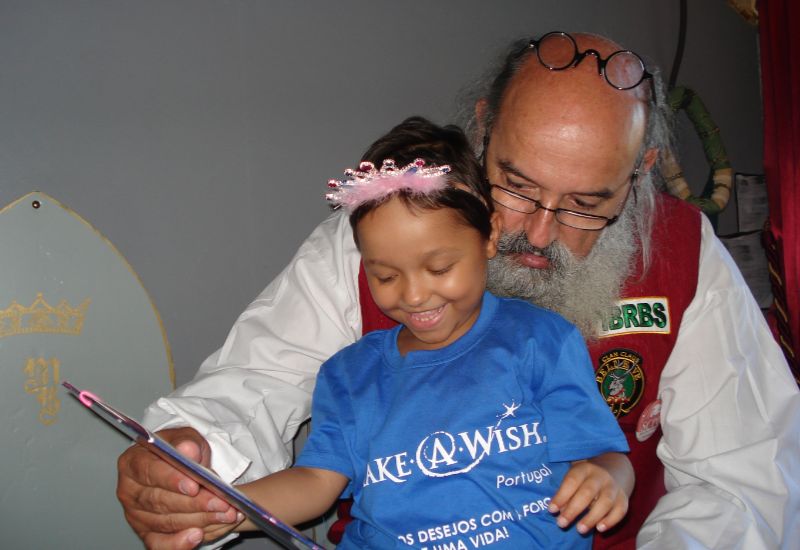
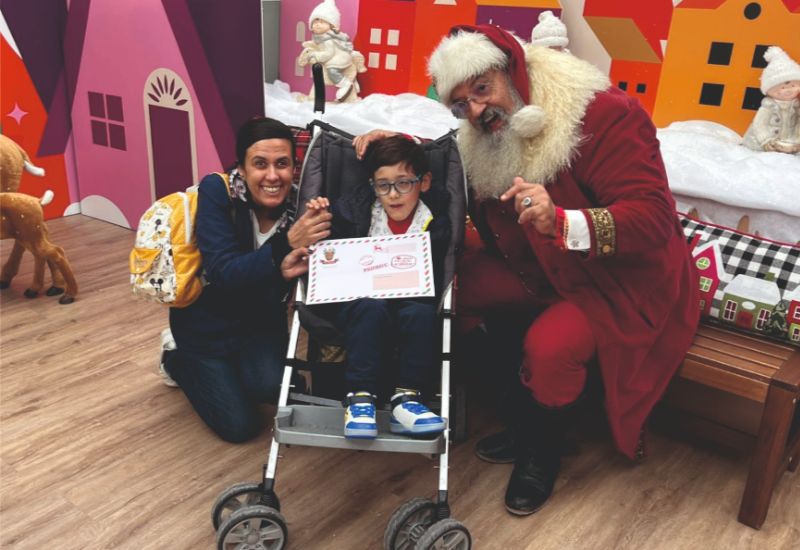
I am keen to understand how Santa Jackas negotiates requests from children and how this reflects our modern world. His response is unsurprising. “In large urban centres (Lisbon and Porto), children request advertised items (iPhone 17, Nintendo 5). In smaller, more deprived areas, requests focus on basic necessities and family health.” He recalls stories of children asking for something to bring normality, such as a car so the father can go to work, or for the mother to leave the hospital in good health.
Jackas finds some of Santa’s work quite emotional, especially hearing the requests of children, particularly those from disadvantaged backgrounds, which often differ significantly from commercial expectations.A 13-year-old girl from a needy family profoundly moved him when she asked, “Santa Claus, why did you never come to my house?”
“I was really upset that this child should not receive presents like the others … But then, before I answered, she said, ‘Santa Claus, but there is no problem because this Christmas is the most beautiful and best Christmas I have had in my whole life’.” (Cristina, who is helping me translate, breaks down in tears at this point).
Five years ago, Santa Jackas went to celebrate Christmas with a child who was in a coma in hospital during December. Fortunately, the boy recovered. Afterwards, invited by the futsal club he attended, Santa Jackas helped give him the Christmas he missed. “I brought him an official futsal ball and shared Christmas with him, with his family, who hadn’t experienced Christmas either, and with his little friends. Christmas isn’t just in December. For me, Christmas is whenever it’s necessary to intervene and give my contribution in terms of the values of Christmas.”
These values inspired Santa Jackas to create the Iberian School of Santa Clauses. “I think it’s still the only one. The training included psycho-pedagogy, voice placement, acting and physical expression. We had five or six trainers in these areas during an intensive month to create that Santa Claus school, which unfortunately stopped due to COVID, and afterwards, we haven’t had the financial means to re-establish it. I would like to train and certify Santa Clauses in Portugal who correspond to the standard of values that Christmas represents.”
Jackas harbours a “big dream” that he has not given up on. He envisions creating Natália and the Land of Santa Claus (Natália e a Terra do Pai Natal). This ambitious project would incorporate a dedicated museum, entertainment, workshops and training, and visits. This vision builds upon previous initiatives. Jackas was involved in organising a similar event in Vagos for six years under the title “Natal(i)a, a Terra do Pai Natal”.
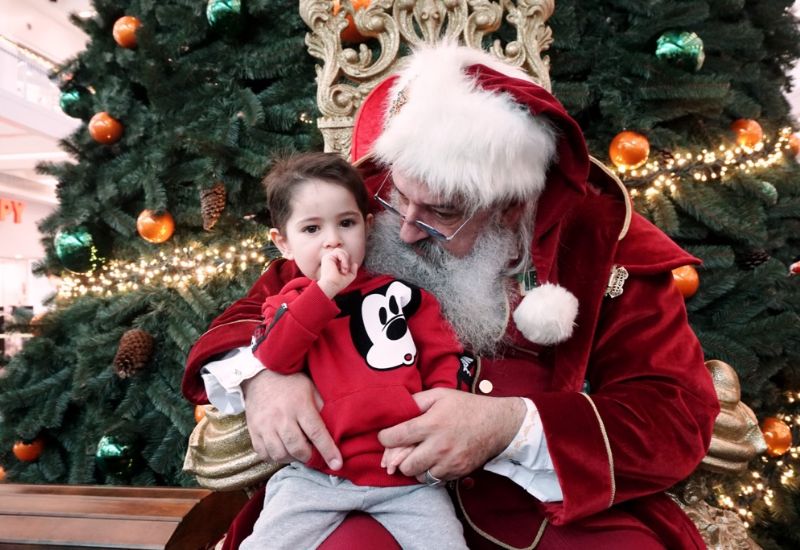
How Santa creates his look!
Throughout the interview, Jackas´s beard, which he stroked intermittently, fascinated me. Does he keep it all year or just grow it for the festive reason!? “I’ve worn a beard since I was 17, only it was black. And what did I do? I put talcum powder on it to make it whiter.” Previously, every year after Christmas, he would cut his beard, but in his later years, he found it grew more slowly, so he maintained his look year-round.
Jackas’s coat is inspired by the gabão, which is widely used in the Aveiro region. “Some of my shirts are handmade in Viana do Castelo by a local lady. My boots are made by a shoemaker from Alentejo, who makes them for me, to measure.” Even the accessories were carefully thought out. “I have the insignia of all the associations I belong to on my waistcoat and cape, a magic key that opens all the doors in the world on Christmas Eve, and a cap with a beautiful star, which came from Buckingham Palace in London. Everything has a very special touch,” he explains.
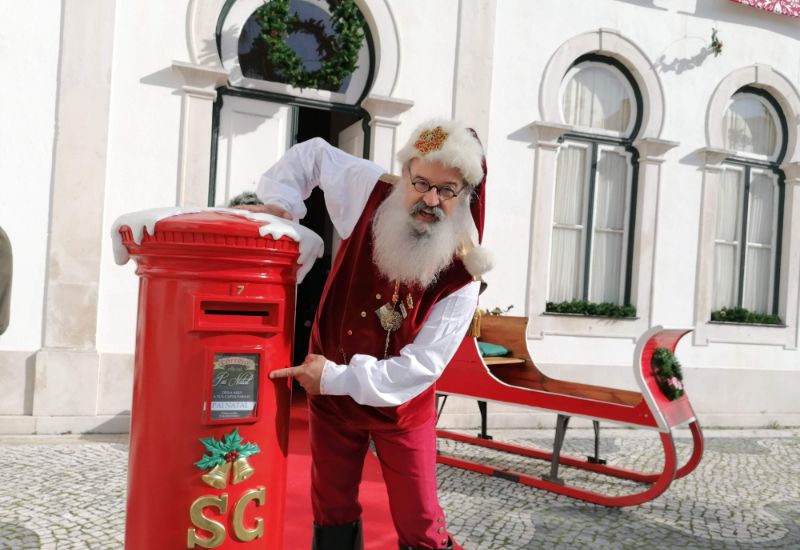
However, this January, Santa Jackas had to face the consequences of eating too many minced pies! “I had to have bariatric surgery to reduce my stomach, because I was carrying a lot of weight. They forced me to cut the entire beard on the 1st of January, because of the oxygen mask. When I went to the bathroom for the first time after the surgery and passed the mirror, I got a bit of a fright because I didn’t recognise myself. That traumatised me a little bit. One of the first conversations I had with the surgeon who operated on me was whether there was anything I could do to have a beard by December, so as not to disappoint the children’s expectations.”
While Santa Jackas values his beard, he has come to realise that he can lose the tummy! “It’s not compulsory for Santa Claus to be heavy. I am preparing a healthy eating campaign alongside a nutritionist using the image of Santa Claus, because today we have a high rate of childhood obesity, and, therefore, due to my academic background, I also have the responsibility to help pave the way towards healthy eating.”
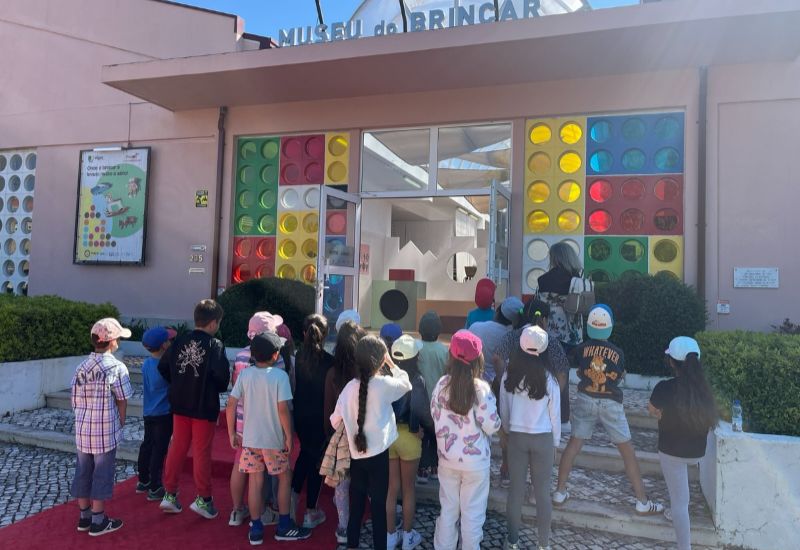
From pedagogy to play
The Museu do Brincar (Museum of Play) is the realisation of a dream that began over 30 years ago, championed initially by Jackas’s wife, Ana Barros. As a fellow academic and theatre figure, she was inspired by her father, a doctor and collector of antiques, who instilled in her the importance of history and collections. Jackas and Ana Barros co-founded the project and located it in Vagos, near Aveiro.
Jackas emphasises that it is a museum of play, deliberately designed to move beyond simple observation. Their museum holds a collection of approximately 20,000 pieces. Rocha notes that 5,000 pieces are typically on display at any given time, allowing for the collection to be rotated to continually attract both existing and new visitors. This collection includes everything related to the child’s universe, such as period clothing, school supplies, children’s literature and baby strollers. They actively accept donations of such items, giving them a “second chance” and preserving the culture of play. Within each gallery, visitors find interactive play areas. The museum’s philosophy is to move beyond passive observation, inviting visitors to “travel through play and to interact with the space, thus making them true players”.

The museum has attracted visitors from all five continents and has garnered multiple awards, including Best Museum for Children and Best Museum for Families from the Pumpkin Awards, as well as TripAdvisor Certificates of Excellence. Since 2023, the museum has been owned by the local câmara, though Jackas and his wife remain involved in its running.
Fostering the spirit of Christmas
Connected to this larger dream is Jackas’s desire to establish the Fundação Pai Natal (Santa Claus Foundation). The foundation’s primary objective would be to support children in need, not only during Christmas but throughout the year. However, establishing the foundation officially is complex and requires an initial capital investment of €150,000. Lacking these financial means, Jackas uses his existing association (linked to the Arlequim Theatre Group, which he also directs) as a legal bridge for projects like the Recolha Imagina (Imagine Collection), which collects donations for disadvantaged institutions. Jackas appeals to the public for contributions and support for these campaigns, emphasising that the true spirit of Christmas lies in these acts – not just in the figure of Santa Claus.
While anyone can put on a red hat, Jackas’s academic expertise, historical knowledge, profound moral commitments, and dedicated pursuit of ethical conduct set a high standard for conveying the true, rich values of the festive season to the public, moving beyond cheap commercialism. But most importantly, Jackas embodies the spirit of Christmas, which lives within us.
So, maybe this Christmas, every time we see a Santa in a shopping mall, we should remember what the red suit stands for: compassion, equality, sharing and family.